
All categories
Featured selections
Trade Assurance
Buyer Central
Help Center
Get the app
Become a supplier
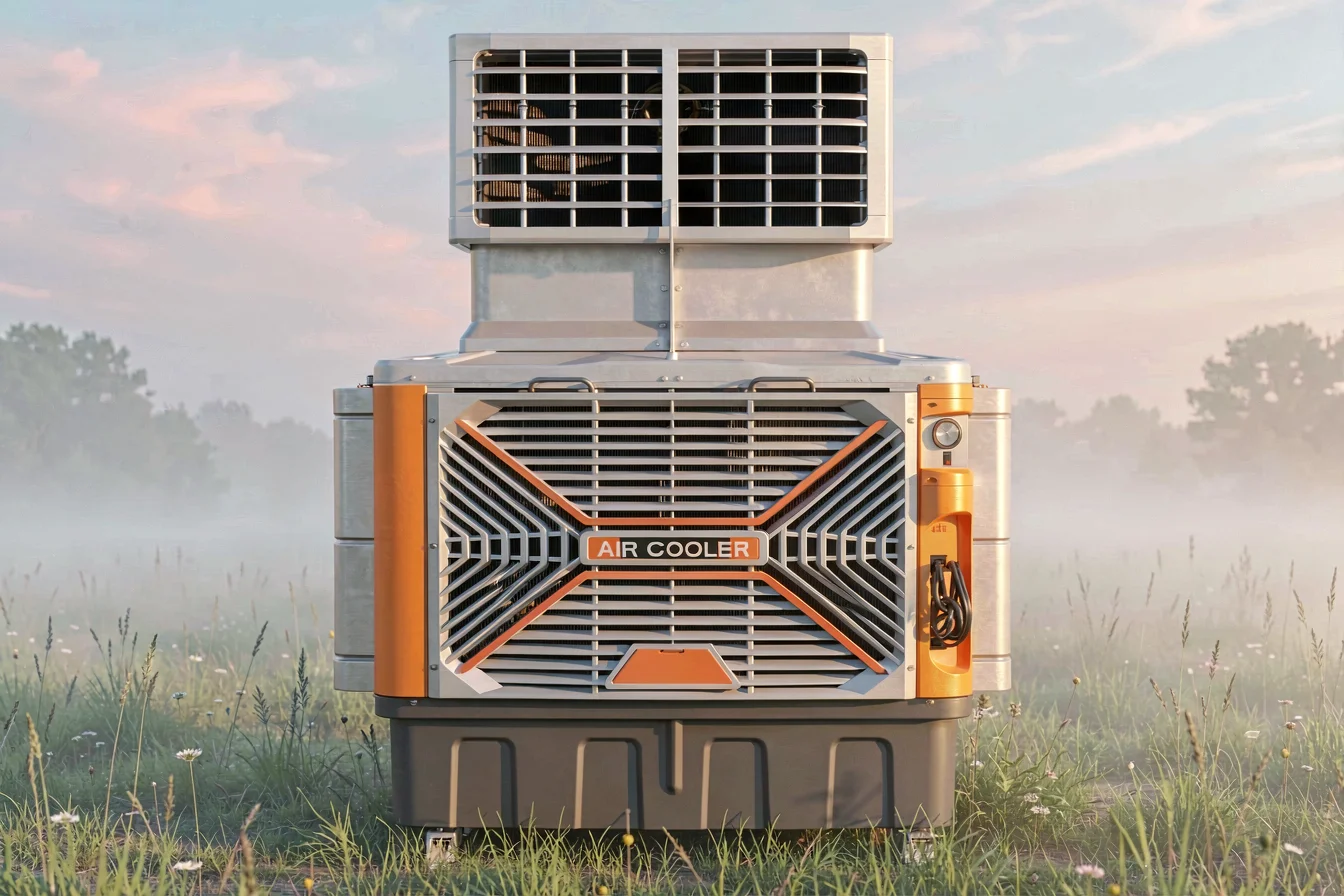
For industrial buyers facing high rack densities (50–100 kW), a 100kw air cooler delivers maximum cooling capacity but demands strict airflow and containment to avoid performance cliffs. A 50kw air cooler is optimal for transitional densities (30–50 kW), offering lower upfront costs and easier maintenance, yet limited scalability. Market trends show rising demand for both, but the 100kW segment faces stricter operational constraints and higher energy consumption, making liquid cooling increasingly viable above 50–60 kW [1][2][3].
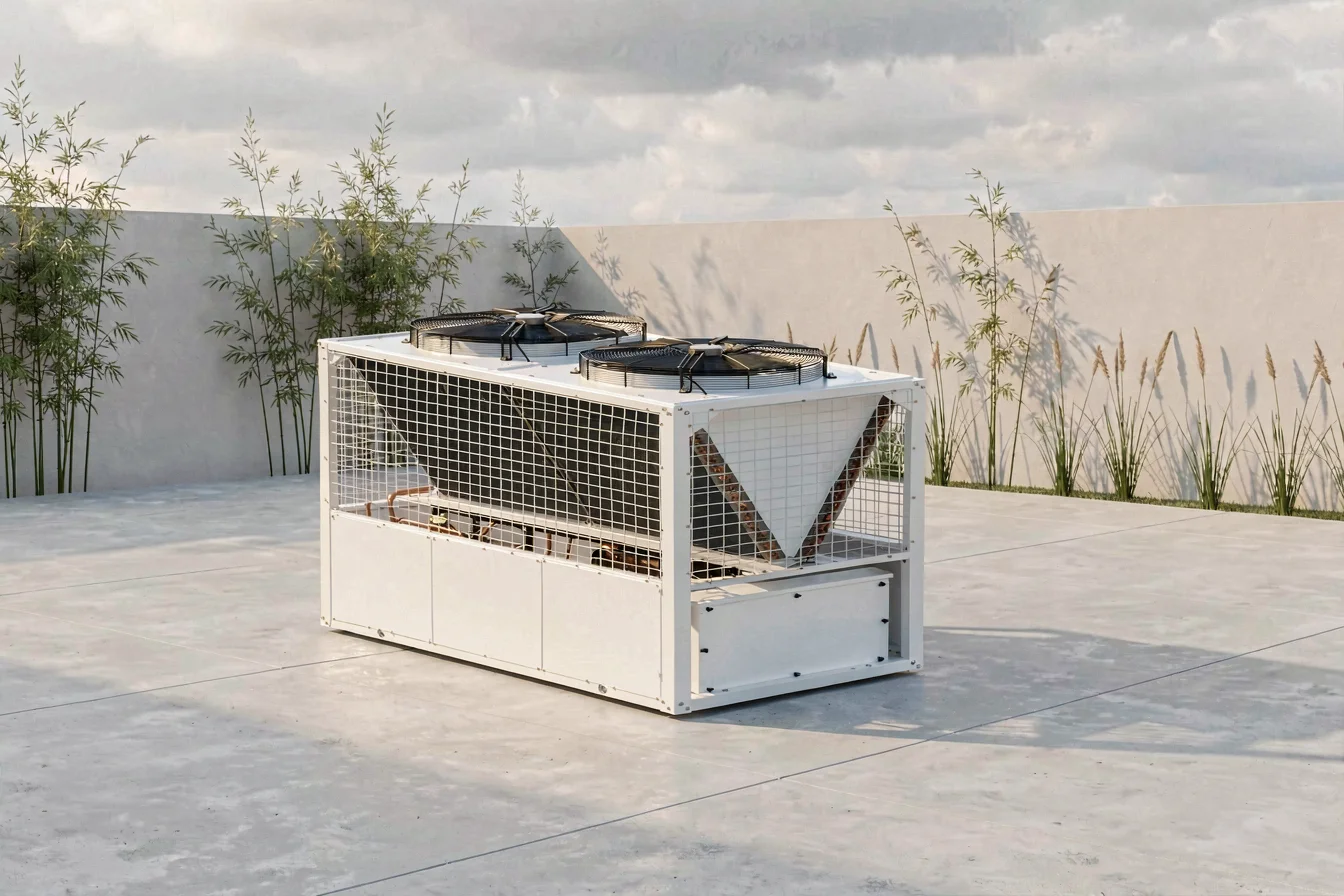
The value proposition of high-density air coolers centers on reliable thermal management for data centers, manufacturing, and commercial facilities. A 100kw air cooler targets racks exceeding 100 kW, delivering maximum airflow but requiring advanced containment and robust infrastructure to avoid hot air recirculation. A 50kw air cooler is ideal for transitional densities (30–50 kW), offering cost-effective cooling with lower energy consumption and simpler maintenance, but its capacity plateaus beyond 50 kW, making it unsuitable for next-gen GPU/HPC applications [2][3][4].
The core differences are rooted in airflow requirements: a 100kw air cooler must move 15,700 CFM at a 20°F temperature differential, while a 50kw air cooler manages 7,850 CFM. The energy consumption escalates rapidly—fan power scales with the cube of speed, so a 10% increase in airflow demands 33% more power, making high-density air cooling increasingly impractical [2]. Technological innovations, such as hot/cold aisle containment and advanced honeycomb pads, extend the operational window for 50kw air cooler units, but the fundamental physics limit their scalability.
| Feature | 100kW Air Cooler | 50kW Air Cooler |
|---|---|---|
| Max Rack Density | 100+ kW (GPU/HPC) | 30–50 kW (AI/HPC transitional) |
| Airflow Requirement | 15,700 CFM (at 20°F ΔT) | 7,850 CFM (at 20°F ΔT) |
| Energy Consumption | High, fan power scales cubically | Moderate, lower scaling |
| Containment Needs | Strict (hot/cold aisle, advanced) | Basic to moderate |
| Upfront Cost | Higher | Lower |
| Scalability | Limited (liquid cooling needed above 50–60 kW) | Good for transitional densities |
For high-density cooling, the 100kw air cooler is viable only with advanced containment and infrastructure, while the 50kw air cooler is best suited for transitional rack densities and easier maintenance.
Durability for both 100kw air cooler and 50kw air cooler units depends on maintenance frequency, pad quality, and airflow optimization. The 100kw air cooler demands regular cleaning, advanced honeycomb pads, and robust motors to sustain performance under high loads, with typical lifespans of 5–8 years if properly maintained [5][10]. The 50kw air cooler is less demanding, with simpler maintenance and longer operational life (7–10 years) in transitional environments [5][10].
Application scenarios diverge: 100kw air cooler units are ideal for GPU/HPC clusters and data centers with rack densities above 50 kW, but face operational cliffs when containment fails or humidity rises. 50Kw air cooler units excel in transitional densities (30–50 kW), open spaces, and environments with moderate humidity, but are ineffective in enclosed, high-humidity settings [6][7][8].
Long-term cost analysis reveals that 100kw air cooler units incur higher upfront and operational costs due to increased fan power and maintenance, while 50kw air cooler units offer lower energy consumption and simpler maintenance but limited scalability. Hidden costs include pad replacement, water usage, and increased humidity, especially in enclosed spaces.
| Cost Factor | 100kW Air Cooler | 50kW Air Cooler |
|---|---|---|
| Initial Purchase | $8,000–$14,000 per kW (10-year) | $6,500–$11,000 per kW (10-year) |
| Maintenance | Frequent (pad, motor, honeycomb) | Moderate (pad, motor) |
| Replacement Frequency | Every 5–8 years | Every 7–10 years |
| Hidden Costs | Humidity, water usage, energy spikes | Humidity, water usage |
| 5-Year TCO | Higher (due to energy and maintenance) | Lower (due to simpler operation) |
The 100kw air cooler is costlier and harder to maintain, but the 50kw air cooler offers better value for transitional densities and easier maintenance.
The core value of high-density air coolers is to enable scalable thermal management for evolving rack densities and high-performance computing. The urgency is driven by AI, GPU, and HPC workloads, which are pushing traditional air cooling to its limits. Market trends show both 100kw air cooler and 50kw air cooler units experiencing sharp search interest spikes from mid-2025 to early 2026, peaking in August and December, reflecting seasonal demand and technology upgrades [1].
The 100kw air cooler excels in high-density GPU/HPC clusters, while the 50kw air cooler is best suited for transitional and open environments.
Google Trends analysis reveals synchronized search interest spikes for both 100kw air cooler and 50kw air cooler units, peaking in August and December 2025–2026 [1]. This suggests seasonal demand aligned with technology upgrades and cooling requirements for AI and HPC workloads. The gap between search interest and actual purchasing is minimal, indicating strong procurement intent for both product types.
Search Interest over Time
Procurement intent is high and synchronized for both 100kw air cooler and 50kw air cooler units, with seasonal peaks indicating readiness for upgrades.
Reddit and TikTok discussions highlight both the strengths and weaknesses of 100kw air cooler and 50kw air cooler units. Two contrasting case studies illustrate distinct buyer personas and outcomes.
Case Study 1: Data Center Operator (100kW Air Cooler)
A data center operator in Phoenix deployed a 100kw air cooler
for a GPU/HPC cluster with 100+ kW rack density. Despite advanced containment and airflow optimization, the operator faced humidity spikes and maintenance challenges. The solution required frequent pad cleaning, honeycomb replacement, and energy consumption monitoring. Reddit comments from similar operators reveal:
“Air coolers not gonna work… unless you use them in a room with AC already.” [7]
“Hot/cold aisle containment is essential—without it, humidity builds up and cooling fails in 75 seconds.” [2]
Case Study 2: Small Office Owner (50kW Air Cooler)
A small office owner in Hyderabad installed a 50kw air cooler
for an open workspace. The unit delivered satisfactory cooling during dry seasons but struggled in humid months. Maintenance was manageable, with pad cleaning every 2–3 weeks. Reddit users recommend:
“Desert coolers are the smart, budget-friendly choice—refreshing cooling in dry climates, but feel sticky in humid coastal areas—opt for AC there instead.” [5]
“In 3k we can get a new cooler… effective for open spaces but not enclosed rooms.” [10]
Sentiment analysis reveals mixed opinions—air coolers are praised for cost savings but criticized for inefficiency in humid climates and high-maintenance demands. The most common complaints are humidity spikes, noise, and ineffective cooling in enclosed spaces.
| Dimension | 100kW Air Cooler | 50kW Air Cooler |
|---|---|---|
| Overall Satisfaction | Mixed (high maintenance, humidity issues) | Positive (cost-effective, moderate maintenance) |
| Most Praised Feature | High cooling capacity | Cost savings |
| Most Common Complaint | Humidity spikes, maintenance | Ineffective in humid climates |
| Community Recommendation Rate | Low for enclosed spaces | High for open environments |
Online communities recommend the 50kw air cooler for open, dry spaces, but warn against the 100kw air cooler in humid, enclosed environments due to maintenance and humidity issues.
Viral content themes include “electric fan vs. air cooler,” “humidity management,” and “maintenance hacks.” Debate points revolve around the effectiveness of air coolers in high-humidity climates, cost savings, and the role of liquid cooling as an alternative. Cultural reception is polarized—air coolers are seen as budget-friendly but ineffective in humid regions, with many users recommending AC or liquid cooling for high-density applications.
Before purchasing, buyers should ask:
Tiered recommendations:
| Tier | Recommended Product | Key Reason |
|---|---|---|
| Budget-Friendly | 50kW Air Cooler | Low upfront cost, easier maintenance, moderate cooling |
| Mid-Range | 50kW Air Cooler | Transitional rack densities, cost-effective, moderate maintenance |
| Premium/High-Density | 100kW Air Cooler | High rack densities, advanced containment, scalable cooling |
Optimization tips:
Choose the 50kw air cooler for cost-effective cooling and transitional densities; reserve the 100kw air cooler for GPU/HPC clusters with advanced containment and airflow management.
Key insights: 100kw air cooler units are viable for high-density GPU/HPC clusters but face operational cliffs beyond 50–60 kW, making liquid cooling increasingly necessary. 50Kw air cooler units offer cost-effective cooling for transitional densities, open spaces, and moderate humidity environments, but their scalability is limited. Market trends show synchronized demand spikes, with procurement intent peaking during technology upgrades and seasonal cooling requirements [1].
Forward-looking recommendation: Buyers should monitor rack density trends and prepare for liquid cooling upgrades as GPU/HPC workloads escalate. For transitional densities, prioritize the 50kw air cooler for cost savings and easier maintenance. For high-density applications, invest in advanced containment and airflow optimization for 100kw air cooler units, but be prepared to transition to liquid cooling as rack densities exceed 50–60 kW.
Act confidently: Share your cooling experiences with peers, and for commercial buyers, source high-density air coolers and liquid cooling solutions on Alibaba.com to optimize procurement and supply-chain resilience.