
All categories
Featured selections
Trade Assurance
Buyer Central
Help Center
Get the app
Become a supplier
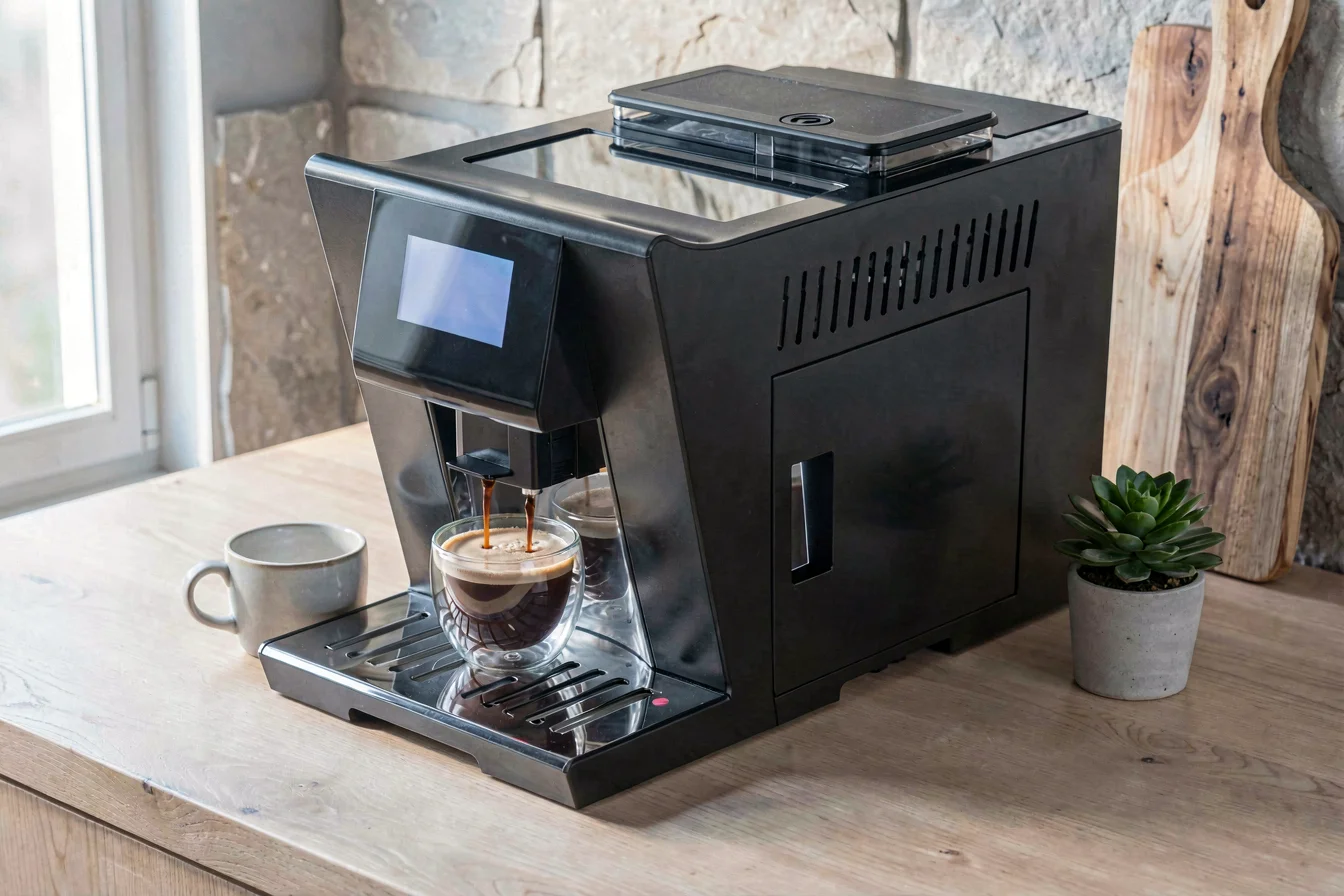
For buyers seeking advanced brewing precision and customization, a 3d coffee maker is gaining momentum due to its science-driven automation and design flexibility. However, traditional coffee maker models remain the go-to for mainstream buyers prioritizing reliability, serviceability, and cost efficiency. In 2026, the decision hinges on whether buyers value innovation and personalization or proven longevity and high-volume operation.
The coffee maker market in 2026 is defined by a dual-track approach: 3d coffee maker models are revolutionizing specialty brewing through advanced automation, modular design, and precise temperature control, while traditional coffee maker models continue to dominate in high-volume, commercial, and budget-conscious settings with their proven reliability and ease of repair. Buyers must weigh the benefits of precision and innovation against the practicality and longevity of classic designs.
3D coffee maker models, such as the PERK, leverage mechanical suspension and recirculating boilers for uniform extraction, targeting specialty and boutique buyers who demand consistent, café-quality results [2]. In contrast, traditional coffee maker models, like the Moccamaster and OXO, focus on simplicity, robust construction, and SCA-certified brewing standards, appealing to both home and commercial users who value durability and low maintenance [6][8].
Procurement logic is shaped by buyer priorities: tech-forward buyers and specialty cafés may prefer 3D models for customization and rapid prototyping, while mainstream buyers and large-scale operations prioritize traditional models for their proven performance and serviceability. The urgency to make an informed decision is driven by evolving consumer expectations, supply chain resilience, and the need for scalable solutions in a competitive market.
| Feature | 3D Coffee Maker | Traditional Coffee Maker |
|---|---|---|
| Brewing Precision | Automated, science-driven uniform extraction | Manual or semi-automatic, SCA-certified |
| Customization | Modular parts, rapid prototyping, 3D design | Fixed design, limited customization |
| Durability | Emerging, depends on materials and maintenance | Proven longevity, robust construction |
| Cost | $299–$600+ (premium, tech-forward) | $100–$300 (mid-range, budget-friendly) |
| Target Audience | Specialty buyers, boutique cafés, tech-forward | Mainstream, commercial, budget-conscious |
| Maintenance | Requires tech expertise, modular repair | Easy, parts widely available |
For buyers prioritizing innovation and customization, 3d coffee maker models offer a compelling edge, but mainstream procurement still favors the reliability and cost efficiency of traditional coffee maker models.
Durability and long-term reliability are critical factors for procurement decisions in the coffee maker segment. 3D coffee maker models, while innovative, are still emerging in the durability spectrum, with their lifespan and performance dependent on material quality, maintenance routines, and the complexity of their modular designs [2][7]. In contrast, traditional coffee maker models, especially those like the Moccamaster, have been validated by years of use, with buyers reporting consistent performance and ease of repair over decades [11][12].
Application scenarios further clarify the fit: 3d coffee maker models excel in boutique cafés, design studios, and prototyping environments, where customization and rapid iteration are valued. Traditional coffee maker models dominate in high-volume commercial kitchens, household settings, and environments where reliability and low maintenance are paramount.
Long-term cost evaluation reveals that while 3d coffee maker models may command a higher upfront investment, their modular design and rapid prototyping capabilities can offset replacement and maintenance costs over time. However, traditional coffee maker models offer a lower total cost of ownership for daily, high-volume usage, with proven serviceability and widespread parts availability.
| Cost Factor | 3D Coffee Maker | Traditional Coffee Maker |
|---|---|---|
| Initial Purchase Price | $299–$600+ | $100–$300 |
| Maintenance | Requires tech expertise, modular repair | Easy, parts widely available |
| Replacement Frequency | Emerging, depends on usage | Low, proven longevity |
| Hidden Costs | Prototyping, materials, tech support | Minimal, serviceable parts |
| 5-Year Cost Outlook | Higher upfront, potential for customization savings | Lower total, proven reliability |
For commercial buyers and high-volume users, traditional coffee maker models deliver the lowest total cost of ownership, while 3d coffee maker models offer long-term savings through customization and rapid prototyping for specialty applications.
The value proposition for 3d coffee maker and traditional coffee maker models is shaped by evolving consumer trends and market demand. 3D coffee maker models are surging in popularity among tech-forward buyers, boutique cafés, and design studios, driven by the desire for precision, customization, and innovation [2][5]. Traditional coffee maker models, on the other hand, continue to dominate mainstream and commercial settings, where reliability, serviceability, and cost efficiency are paramount [6][11].
Market trends indicate that urbanization, e-commerce growth, and multi-generational living are driving demand for both types, but specialty buyers are increasingly adopting 3D models, while commercial buyers remain loyal to traditional models [1][13].
Google Trends data shows a steady rise in search interest for 3d coffee maker models from mid-2025 to early 2026, with normalized search values increasing from 51 to 70, while traditional coffee maker models saw a moderate increase from 35 to 50 [1]. Single Serve Coffee Makers maintained the highest search heat, but both types show rising momentum.
Search Interest over Time
Search interest in 3d coffee maker models is rising, but traditional coffee maker models retain a strong baseline, indicating sustained demand for reliability and serviceability.
Social media and Reddit data offer valuable insights into user experiences and community sentiment around 3d coffee maker and traditional coffee maker models. Case studies reveal contrasting buyer personas: one specialty buyer praises the innovation and precision of 3d coffee maker models, while a commercial buyer highlights the proven durability and reliability of traditional coffee maker models.
Case Study 1: Specialty Buyer (Reddit, r/3DprintEntrepreneurs)
A specialty buyer and entrepreneur, Phillipe, transitioned from a side hustle to a full-time coffee gear business, leveraging 3D printing for prototyping and production. He notes the importance of design, usability, and rapid iteration in developing a modern bean cellar for single dosing coffee lovers. The community responds with mixed feedback: some praise the innovation and inspiration, while others raise concerns about filling methods, food safety, and material quality.
"As a coffee nerd - this is a great idea. As a 3D printing enthusiast, this looks inspirational. My only concern is it won’t fit. As a consumer, that would turn me off." [7]
Case Study 2: Commercial Buyer (Reddit, r/JamesHoffmann)
A commercial buyer and coffee enthusiast, referencing Moccamaster and OXO models, discusses the importance of SCA certification, thermal carafes, and proven longevity. The community emphasizes the value of reliability, ease of repair, and serviceability, with many recommending Moccamaster for its durability and consistent performance.
"If you're in India: Agaro Imperial espresso machine (₹9,990). It's the one machine I've seen people actually stick with long term at a reasonable price. 20-bar pressure, die-cast aluminium boiler, steam wand for milk drinks. It's not a Moccamaster but it punches well above its price point and parts are actually available here." [9]
| Dimension | 3D Coffee Maker | Traditional Coffee Maker |
|---|---|---|
| Overall Satisfaction | Mixed (innovation praised, material concerns) | High (durability, reliability, serviceability) |
| Most Praised Feature | Precision, customization, rapid prototyping | Longevity, consistent performance, ease of repair |
| Most Common Complaint | Filling method, food safety, material quality | Plastic concerns, limited customization |
| Community Recommendation Rate | Moderate (tech-forward, boutique buyers) | High (mainstream, commercial, budget-conscious) |
Viral content themes include debates on design, usability, and food safety for 3d coffee maker models, while traditional coffee maker models are celebrated for their proven durability and serviceability. Cultural reception on platforms like Reddit, TikTok, and YouTube favors innovation for specialty buyers but remains loyal to traditional models for mainstream and commercial applications.
Community sentiment highlights the importance of reliability and serviceability for mainstream buyers, while innovation and customization drive adoption among specialty buyers.
Buyers should begin by clarifying their core needs before selecting between 3d coffee maker and traditional coffee maker models. Key questions include:
Tiered recommendations help buyers optimize procurement decisions:
| Tier | Recommended Product | Key Reason |
|---|---|---|
| Budget-Friendly | Traditional Coffee Maker | Proven reliability, low maintenance, serviceable parts |
| Mid-Range | Traditional Coffee Maker | SCA certification, thermal carafe, consistent performance |
| Premium | 3D Coffee Maker | Precision, customization, rapid prototyping |
Optimization tips for buyers:
Buyers should match their procurement strategy to their use case and budget, prioritizing proven reliability for mainstream needs and innovation for specialty applications.
Synthesizing key insights, the strategic roadmap for coffee maker buyers in 2026 is shaped by rising demand for 3d coffee maker models in specialty and boutique settings, while traditional coffee maker models remain the backbone for mainstream and commercial applications. Forward-looking trends suggest continued innovation in 3D printing, modular design, and rapid prototyping, but proven durability and serviceability will remain critical for high-volume buyers.
For the next 6–12 months, buyers should monitor emerging technologies, supply chain resilience, and evolving consumer preferences. Specialty buyers are encouraged to share their experiences with 3d coffee maker models and engage in online communities for peer-to-peer learning. Commercial buyers are advised to leverage wholesale platforms like Alibaba.com for bulk procurement, optimizing sourcing strategies for reliability, cost efficiency, and serviceability.
Confident buyer action is essential: specialty buyers should embrace innovation, while commercial buyers should prioritize reliability and serviceability. Share your experiences and engage with the coffee maker community for best-in-class procurement outcomes.