
All categories
Featured selections
Trade Assurance
Buyer Central
Help Center
Get the app
Become a supplier

For buyers prioritizing mobility and multi-device charging, portable battery charger is the best choice, offering unmatched flexibility and rapid deployment for travel, emergencies, and field operations. In contrast, stationary battery charger excels in reliability, deep-cycle charging, and long-term maintenance for home, fleet, and industrial applications. The surge in portable charger demand reflects the growing need for off-grid and EV charging solutions, while stationary chargers remain indispensable for high-capacity, fixed-site operations [1][2][3][4].
The portable battery charger category encompasses power banks, solar chargers, and jump-starters, designed for on-the-go, multi-device charging. They are favored by travelers, outdoor workers, and EV owners needing rapid, flexible solutions. In contrast, the stationary battery charger is a fixed, wired device optimized for home, fleet, and industrial use, delivering high-capacity, deep-cycle charging with minimal maintenance [2][3][4]. The urgency of this decision is driven by rising demand for EV charging, off-grid mobility, and rapid device charging, with buyers facing trade-offs between mobility and reliability.
portable battery charger products are engineered for lightweight portability, with capacities from 5,000–50,000 mAh and output up to 100W for laptops and EVs. They support USB, AC, solar, and car input, and often feature wireless charging, LED flashlights, and multi-device compatibility. Limitations include battery degradation, inconsistent performance over time, and limited capacity for deep-cycle charging. Innovations focus on fast-charging, multi-port support, and solar integration [5][6][7].
stationary battery charger units are built for fixed installation, delivering 12–24V output for vehicles and industrial batteries, with capacities up to 250 kW for EVs. They require professional setup, offer precise charging control, and are designed for long-term, high-capacity use. Limitations include lack of mobility, installation complexity, and higher upfront costs. Innovations focus on smart charging, deep-cycle restoration, and solar integration [2][3][4].
| Feature | Portable Battery Charger | Stationary Battery Charger |
|---|---|---|
| Mobility | High—can be carried anywhere | Low—fixed installation |
| Capacity | 5,000–50,000 mAh (small), up to 100 kW (EV) | 12–24V, up to 250 kW (EV) |
| Device Support | Phones, tablets, laptops, EVs, solar | Vehicles, industrial batteries, EVs |
| Installation | Plug-and-play, no installation | Professional setup required |
| Maintenance | Battery degradation, frequent replacement | Low maintenance, longer lifespan |
| Price Range | $15–$120 (consumer), $200–$1,200 (EV) | $50–$500 (consumer), $500–$2,500 (EV) |
Portable battery chargers deliver unmatched mobility and device versatility, while stationary battery chargers provide superior reliability and deep-cycle charging for fixed-site applications.
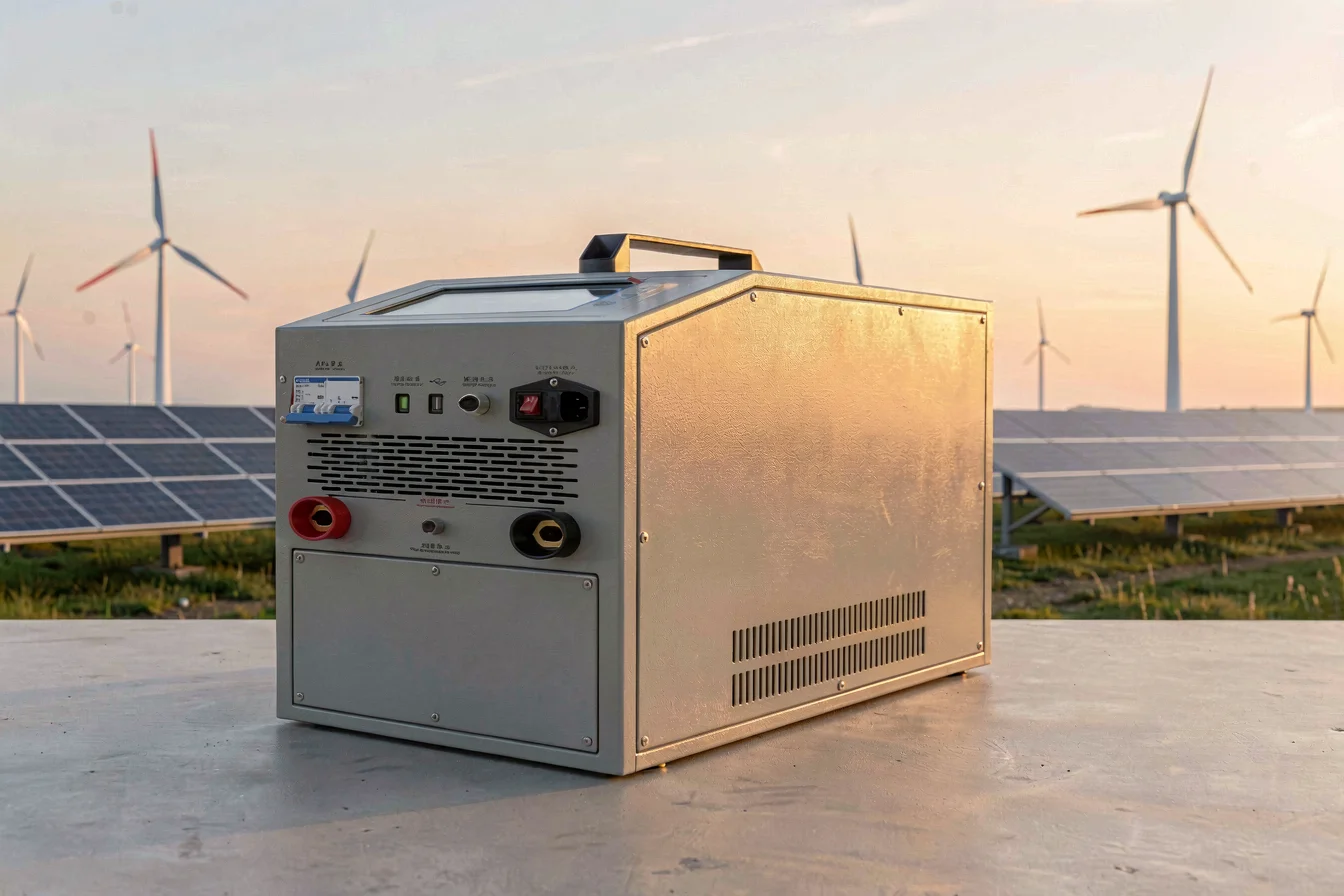
Durability is a critical factor in battery charger selection. Portable battery charger units, especially power banks, typically last 2–3 years under heavy use, with battery capacity dropping by 10–20% annually due to lithium-ion degradation. Users report frequent replacements, especially for high-capacity models used to charge laptops and EVs [7][10]. In contrast, stationary battery charger units, designed for fixed installation, can last 5–10 years with minimal maintenance, delivering consistent performance for vehicle and industrial batteries [2][3].
Key application scenarios: Portable chargers excel in travel, emergencies, outdoor work, and EV charging where mobility is essential. Stationary chargers are best for home, fleet, and industrial settings where reliability and deep-cycle charging matter. Portable chargers may struggle with deep discharge restoration and high-capacity EV charging, while stationary chargers lack portability and require professional installation [2][3][4].
Long-term cost outlook: Initial purchase price for portable chargers is lower, but frequent replacements and battery degradation increase total cost over five years. Stationary chargers have higher upfront costs but lower replacement frequency and maintenance expenses. Hidden costs include installation, battery replacement, and downtime for portable chargers.
| Cost Factor | Portable Battery Charger | Stationary Battery Charger |
|---|---|---|
| Initial Purchase Price | $15–$120 (consumer), $200–$1,200 (EV) | $50–$500 (consumer), $500–$2,500 (EV) |
| Maintenance | Battery replacement every 2–3 years | Minimal, occasional cleaning |
| Replacement Frequency | 1–2 times per 5 years | Rarely, 5–10 years |
| Hidden Costs | Battery degradation, downtime | Installation, battery replacement |
| 5-Year Total Cost | $60–$360 (consumer), $400–$3,600 (EV) | $100–$1,000 (consumer), $1,000–$3,500 (EV) |
Stationary battery chargers deliver lower total cost over five years for fixed-site applications, while portable chargers are best for frequent travelers and field users despite higher replacement costs.
The battery charger market is split between mobility-driven portable chargers and reliability-focused stationary chargers. Urgency is driven by EV adoption, urbanization, and the shift to off-grid living. Portable chargers are essential for travelers, outdoor workers, and EV owners needing rapid, flexible solutions, while stationary chargers dominate home, fleet, and industrial applications requiring deep-cycle charging and long-term reliability [1][3][4].
Portable battery chargers are indispensable for mobility-driven scenarios, while stationary battery chargers remain dominant for reliability-focused, fixed-site applications.
Google Trends data show portable battery charger (power banks) surging in search interest, peaking in August 2025 and February 2026, while stationary battery charger remains stable but slightly lower. Portable solar chargers lag behind both. This reflects the rising demand for flexible, mobile charging solutions, especially among EV owners and travelers [1].
Search Interest over Time
Portable battery chargers are experiencing rapid growth in search interest, signaling a shift toward mobility-driven charging solutions, while stationary chargers remain stable for fixed-site needs.
Reddit and TikTok data reveal distinct buyer personas and pain points for both charger types. Case Study 1: A frequent traveler seeking a durable portable battery charger reports frustration with battery degradation and inconsistent performance, eventually settling on Anker and Amazon Basics for reliability and multi-device support [7][8][11]. Case Study 2: A fleet operator and home user prefers stationary battery charger for vehicle maintenance, praising reliability and deep-cycle charging, but noting installation complexity and limited mobility [13][14].
“I travel a lot and I’m constantly dealing with battery issues… The problem is that most of the best portable phone charger or best portable battery charger options I’ve tried start off great but after a few months they slow down, charge inconsistently, or just don’t perform like they used to even with well-known brands.” [7]
“I have the same problem. What you can do is jump the dead battery with another 12v battery. Stick the smart charger on, then take the jumper cables off and it will charge the dead one.” [13]
| Dimension | Portable Battery Charger | Stationary Battery Charger |
|---|---|---|
| Overall Satisfaction | Mixed—high for short-term, low for long-term | High—reliability and deep-cycle charging |
| Most Praised Feature | Portability, multi-device support | Reliability, deep-cycle charging |
| Most Common Complaint | Battery degradation, frequent replacement | Installation complexity, lack of mobility |
| Community Recommendation Rate | Moderate—Anker, Amazon Basics favored | High—Schumacher, NOCO, Powerex |
Viral content themes: Portable chargers are debated for battery longevity and real-world performance, with recurring complaints about capacity loss and replacement frequency. Stationary chargers are praised for reliability and deep-cycle charging, but installation and lack of mobility are frequent pain points. Cultural reception: Portable chargers are seen as essential for travelers and emergencies, while stationary chargers are valued for fleet and home use.
Social media sentiment highlights the trade-off between mobility and reliability, with portable chargers favored for short-term use and stationary chargers for long-term, fixed-site applications.
Buyers should identify their core needs before selecting a charger. Key questions:
Tiered recommendations:
| Tier | Recommended Product | Key Reason |
|---|---|---|
| Budget-Friendly | Portable Battery Charger | Low upfront cost, high mobility |
| Mid-Range | Portable Battery Charger (high-capacity) | Multi-device support, moderate durability |
| Premium | Stationary Battery Charger | Reliability, deep-cycle charging, low maintenance |
Optimization tips:
Buyers should prioritize mobility and device versatility for portable chargers, and reliability and deep-cycle charging for stationary chargers, optimizing for budget and application needs.
Key insights: Portable battery chargers are surging in demand for mobility, travel, and EV charging, driven by urbanization and off-grid living. Stationary battery chargers remain dominant in home, fleet, and industrial applications, valued for reliability and deep-cycle charging. Buyers should anticipate continued growth in portable charger innovation, especially for EV and solar integration, while stationary chargers will evolve with smart charging and installation efficiency.
Forward-looking recommendation: In the next 6–12 months, buyers should prioritize portable chargers for flexible, multi-device applications, and stationary chargers for fixed-site, high-capacity needs. Share your experiences with both charger types to inform the broader market, and commercial buyers should leverage Alibaba.com for bulk sourcing and OEM/ODM customization.
Confident buyers should select portable battery chargers for mobility and versatility, and stationary battery chargers for reliability and deep-cycle charging, aligning with their specific needs and budget for optimal performance and cost.