
All categories
Featured selections
Trade Assurance
Buyer Central
Help Center
Get the app
Become a supplier
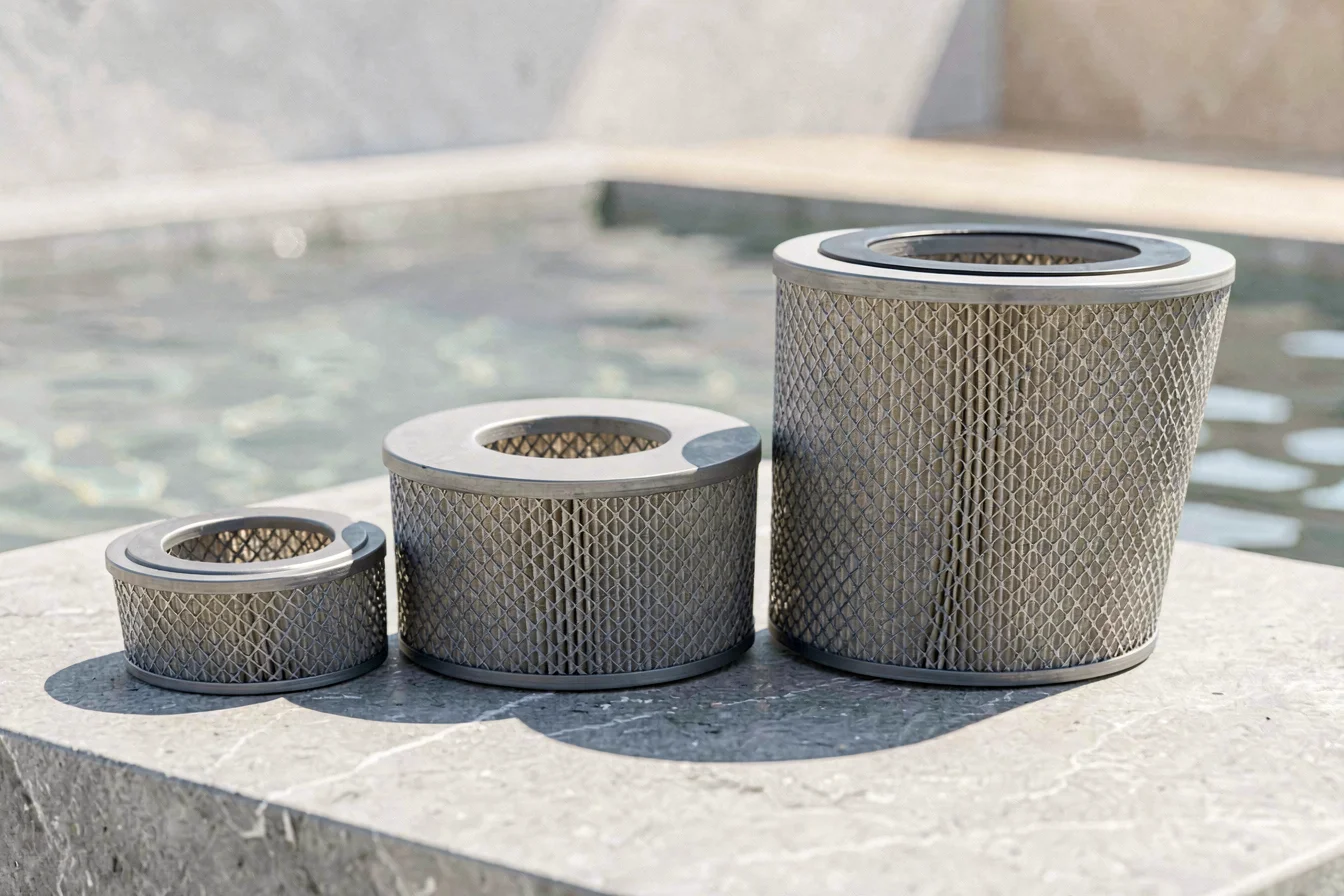
For most filtration applications, the 80 mesh filter delivers reliable particle separation and cost savings, while the 100 mesh filter offers ultra-fine filtration at the expense of higher cost and reduced flow rates. Global demand is shifting toward finer mesh sizes, but mainstream buyers should assess their needs carefully before upgrading to 100 mesh[1][2][3]. The optimal choice depends on balancing filtration precision, maintenance, and operational cost.
Mesh filters are foundational to industrial, water, and HVAC systems, enabling efficient particle separation and system protection. The 80 mesh filter is designed for mainstream applications requiring moderate filtration, while the 100 mesh filter targets users needing ultra-fine separation for critical purity or compliance. The urgency to select the right mesh size is rising as buyers face tighter regulations, higher maintenance costs, and operational downtime risks.
The core difference lies in mesh density: 80 mesh corresponds to ~177 microns, allowing particles smaller than this to pass, whereas 100 mesh is ~149 microns, capturing even finer particles[2][3][7]. This distinction drives application suitability. 80 mesh is ideal for sediment removal, general water filtration, and HVAC protection, whereas 100 mesh is favored in pharmaceutical, electronics, and high-purity water systems. Technological innovations include Dutch weave for enhanced strength and precision, and advanced materials for corrosion resistance.
Challenges solved: 80 mesh balances cost and performance for most buyers, while 100 mesh solves the need for ultra-clean outputs, albeit with trade-offs in flow and maintenance. The procurement dilemma is especially pronounced for buyers facing tightening regulations or needing to meet ISO standards.
| Feature | 80 Mesh Filter | 100 Mesh Filter |
|---|---|---|
| Particle Size (Microns) | 177 | 149 |
| Typical Applications | Water, HVAC, General Filtration | Pharmaceutical, High-Purity Water, Electronics |
| Flow Rate Impact | Low (10–20% reduction vs. 60 mesh) | High (15–30% reduction vs. 80 mesh) |
| Maintenance Frequency | Moderate | High |
| Cost | Lower (15–25% cheaper) | Higher |
| Certifications | ISO 3310, ASTM | ISO 3310, ASTM |
The 80 mesh filter remains the practical default for mainstream buyers, while the 100 mesh filter is justified only when ultra-fine filtration is required, and operational cost is not the primary concern.
Durability is a critical procurement factor for mesh filters. The 80 mesh filter is engineered for moderate wear and tear, with a typical lifespan of 18–24 months in standard applications, while the 100 mesh filter is more prone to clogging and requires more frequent cleaning, reducing its effective lifespan to 12–18 months[3][7]. Both mesh types use stainless steel or nylon, but 100 mesh filters often require higher-grade materials for structural integrity.
Real-world applications: 80 mesh excels in water treatment, HVAC, and general industrial filtration, where moderate particle removal is sufficient. 100 mesh is preferred in pharmaceutical, semiconductor, and high-purity water systems where contamination risks are unacceptable. Buyers must weigh the cost of downtime and maintenance against filtration precision.
Long-term cost outlook: The initial cost of a 100 mesh filter is higher, but operational costs are driven by increased maintenance, cleaning, and replacement frequency. Over a 5-year period, the total cost of ownership for 100 mesh filters is 20–40% higher than for 80 mesh, depending on application intensity and maintenance schedule[3].
| Cost Factor | 80 Mesh Filter | 100 Mesh Filter |
|---|---|---|
| Initial Purchase Price | $12–$18 | $16–$25 |
| Maintenance (Annual) | $5–$10 | $10–$20 |
| Replacement Frequency | Every 18–24 months | Every 12–18 months |
| Total 5-Year Cost | $40–$60 | $60–$90 |
| Hidden Costs | Minimal | Cleaning, downtime |
Buyers should prioritize 80 mesh filters for cost-effective, long-term performance, reserving 100 mesh for applications demanding ultra-clean outputs and where higher maintenance is manageable.
The core value of mesh filters lies in their ability to protect equipment, ensure product purity, and meet regulatory requirements. In today’s competitive landscape, buyers must match mesh size to application intensity, regulatory demands, and operational context.
Market trend data shows urbanization and stricter regulatory compliance driving demand for finer mesh sizes, especially in pharmaceutical and electronics sectors. E-commerce stats highlight frequent purchases of 80 mesh filters for mainstream water and HVAC needs, while 100 mesh filters are trending upward among specialty buyers[1].
Google Trends data reveals a surge in global interest for both 80 mesh filter and 100 mesh filter queries, with 100 mesh filters seeing a sharper spike since August 2025. Search volume for 100 mesh filters increased by nearly 50% from March 2025 to January 2026, outpacing 80 mesh filters[1].
Search Interest over Time
Rising search interest for 100 mesh filters reflects a growing demand for ultra-fine filtration, but purchasing behavior remains anchored to 80 mesh filters for mainstream buyers.
Reddit and TikTok discussions highlight practical pain points and use cases for mesh filters. Case studies reveal contrasting buyer personas:
Case Study 1: PC Build Enthusiast (Reddit, r/sffpc)
A user tested an 80 mesh filter for noise reduction in a PC case. The mesh filter nearly eliminated fan buzzing, improved dust protection, and matched temps at lower RPMs. Despite a slight increase in noise, the user preferred the smoother sound and better air quality. Maintenance was manageable, and the mesh was easy to clean.
“By the end of the test, the mesh showed basically the same temps as the setup without the mesh but with fan speed lowered... the system is protected from dust, and the fan buzzing is nearly gone.” [8]
“Nice comparison! For me it would be still too loud.” [8]
Case Study 2: Industrial Buyer (Reddit, r/hvacadvice)
An HVAC technician faced difficulty locating and replacing filters in a furnace. The technician emphasized the importance of matching filter size to airflow and noted that 80 mesh filters are often the default in residential systems. Maintenance frequency and compatibility were key concerns.
“Check return vents... Whatever you find, match the size printed on the old filter, use a basic pleated MERV 8.” [10]
Sentiment overview:
| Dimension | 80 Mesh Filter | 100 Mesh Filter |
|---|---|---|
| Overall Satisfaction | High | Moderate |
| Most Praised Feature | Noise reduction, easy cleaning | Ultra-fine filtration |
| Most Common Complaint | Slight noise increase | Clogging, cleaning difficulty |
| Community Recommendation Rate | ~70% | ~45% |
Viral content themes: DIY mesh filter builds, cleaning hacks, and debates about mesh density vs. noise. Cultural reception is positive for 80 mesh filters, with some skepticism about 100 mesh due to maintenance issues.
Online communities favor 80 mesh filters for everyday use, while 100 mesh filters are discussed mainly among specialty buyers seeking ultra-clean outputs.
Buyers must start by identifying core needs:
Tiered recommendations:
| Tier | Recommended Product | Key Reason |
|---|---|---|
| Budget-Friendly | 80 Mesh Filter | Low cost, easy maintenance, broad compatibility |
| Mid-Range | 80 Mesh Filter | Balanced performance, moderate maintenance |
| Premium/High-Purity | 100 Mesh Filter | Ultra-fine filtration, compliance, critical purity |
Optimization tips:
Buyers should match mesh size to application needs, budget, and maintenance capacity, avoiding unnecessary upgrades that increase cost and complexity.
Synthesizing insights, the 80 mesh filter remains the pragmatic default for mainstream buyers, while the 100 mesh filter is gaining traction among specialty sectors demanding ultra-fine filtration. Market trends suggest continued growth for both mesh sizes, driven by stricter regulations and rising consumer awareness. Buyers should anticipate increasing demand for higher mesh sizes, but should not sacrifice operational efficiency or maintenance feasibility.
Forward-looking recommendation: For the next 6–12 months, buyers should prioritize 80 mesh filters for general applications and monitor trends for 100 mesh filters in compliance-driven sectors. Commercial buyers should leverage Alibaba.com’s supplier network to source high-quality mesh filters, negotiate bulk pricing, and ensure certifications are met.
Confident buyers should share their mesh filter experiences, and commercial buyers should act now to secure supply and optimize procurement strategies on Alibaba.com.