
All categories
Featured selections
Trade Assurance
Buyer Central
Help Center
Get the app
Become a supplier
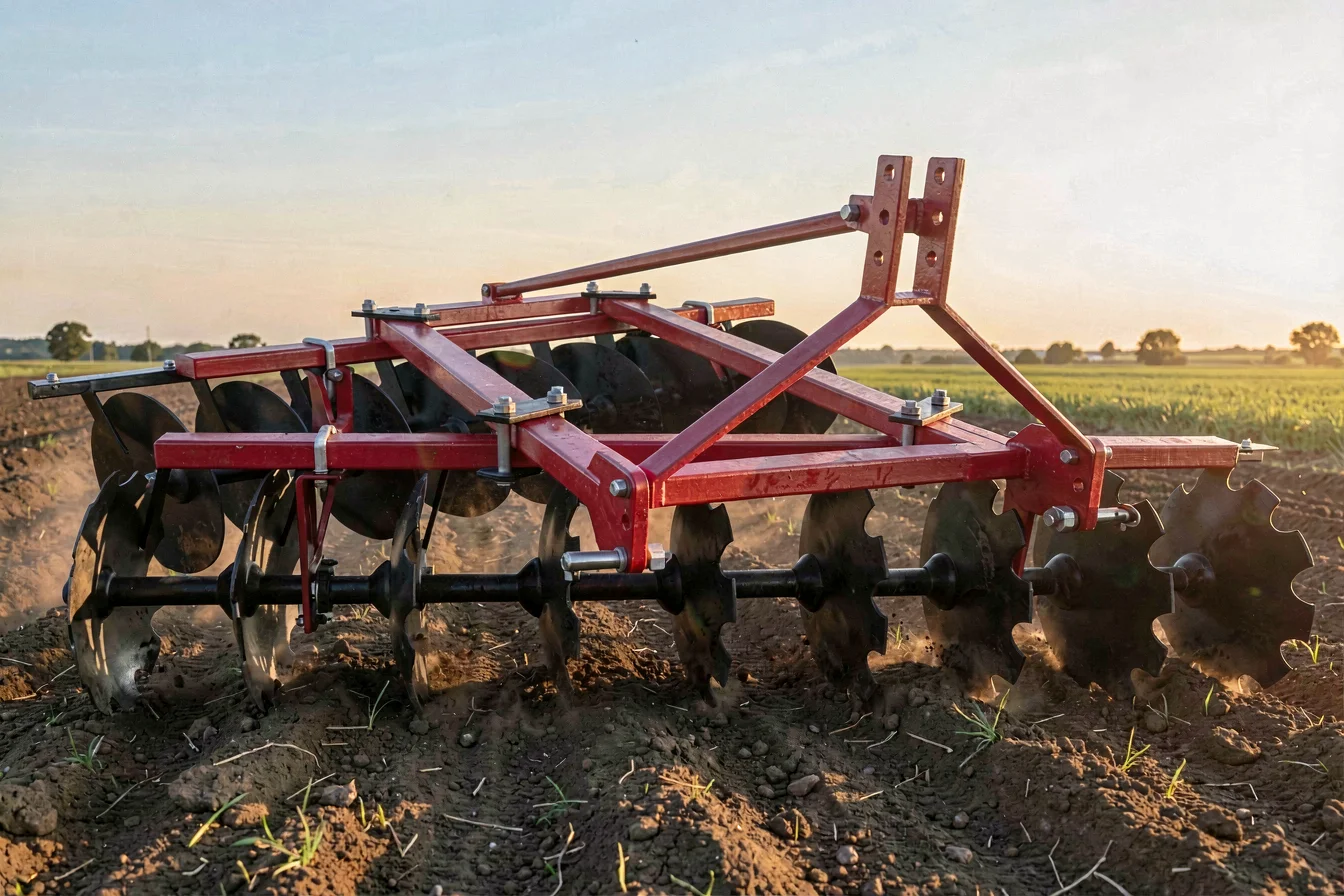
Choosing between an animal drawn harrow and a tractor mounted harrow depends on farm scale, budget, and operational priorities. Animal drawn harrows excel in low-input, small-plot farming with minimal maintenance, while tractor mounted harrows deliver speed, deeper tillage, and scalability for commercial operations. As mechanization accelerates, demand for both types is rising, but tractor mounted harrows are increasingly preferred in regions prioritizing productivity and efficiency[1][2].
The harrow category is pivotal for secondary tillage, soil preparation, and residue management. Animal drawn harrows are designed for simplicity, ease of operation, and low capital investment, making them ideal for subsistence and small-scale farming. Their primary audience is rural, traditional, and resource-constrained farmers who prioritize accessibility and affordability. In contrast, tractor mounted harrows are engineered for power-driven, mechanized farms seeking higher output, deeper soil breakup, and scalable operations—typical for commercial and mid-sized farms. Both address distinct pain points: animal drawn harrows solve labor and cost constraints, while tractor mounted harrows address time efficiency, uniformity, and productivity.
Animal drawn harrows are typically lighter, manually adjustable, and require minimal technical skills. Innovations include modular designs and improved blade configurations for better soil mixing. Limitations include labor intensity, limited depth, and slower coverage. Tractor mounted harrows are heavier, power-driven, and often feature hydraulic controls, variable depth settings, and robust build for heavy-duty use. Innovations include disc and chain harrow variants, with disc harrows excelling in breaking clods and chain harrows in spreading and aeration[2][4].
| Feature | Animal Drawn Harrow | Tractor Mounted Harrow |
|---|---|---|
| Initial Cost | $100–$300 | $800–$3,000+ |
| Operation Speed | Slow, manual | Fast, mechanized |
| Soil Depth | Shallow, variable | Deep, adjustable |
| Maintenance | Low, infrequent | Medium to high, regular |
| Certification | Rarely certified | ISO, CE |
| Target Audience | Small-scale, traditional | Commercial, mechanized |
Durability is a critical factor for both animal drawn harrow and tractor mounted harrow buyers. Animal drawn harrows typically last 5–10 years, requiring minimal maintenance and occasional blade replacement. They perform reliably in small plots, uneven terrain, and mixed crop environments, but their lifespan is constrained by manual wear and tear. Tractor mounted harrows are engineered for longevity—10–20 years—with robust frames, hydraulic systems, and replaceable parts, but require regular servicing, lubrication, and skillful operation[2][5].
Application scenarios differ: animal drawn harrows excel in subsistence farming, horticulture, and soil mixing in small gardens, while tractor mounted harrows are essential for commercial crop production, residue incorporation, and uniform seedbed preparation. In challenging terrains, animal drawn harrows offer flexibility, while tractor mounted harrows deliver consistent results on flat, large fields.
Cost evaluation spans initial purchase, maintenance, replacement, and hidden expenses. Animal drawn harrows are affordable but require labor and time investment. Tractor mounted harrows entail higher upfront costs and recurring maintenance, but offer lower per-acre labor and faster coverage. Over five years, total cost of ownership diverges significantly:
| Cost Factor | Animal Drawn Harrow | Tractor Mounted Harrow |
|---|---|---|
| Initial Purchase | $100–$300 | $800–$3,000+ |
| Annual Maintenance | $30–$60 | $150–$400 |
| Replacement Frequency | 5–10 years | 10–20 years |
| Hidden Costs | Labor, time, fuel | Fuel, servicing, skill training |
| 5-Year Total Cost | $200–$500 | $1,700–$4,200 |
The harrow market is shaped by urbanization, mechanization, and evolving farm sizes. Animal drawn harrows remain dominant in rural, traditional, and subsistence farming contexts, where affordability and ease of use are paramount. Tractor mounted harrows are surging in commercial, mechanized, and large-scale farming, driven by productivity demands and government incentives for mechanization. Both types are essential for secondary tillage—breaking clods, mixing residues, and preparing seedbeds.
Market trends show stable demand for animal drawn harrow in rural regions, with slight uptick in early 2026, while tractor mounted harrow adoption is accelerating in commercial zones[1].
Search Interest over Time
Search interest for animal drawn harrow remains high and stable, indicating sustained demand, while tractor mounted harrow queries are rising slowly, signaling gradual adoption in mechanized farming.
Case Study 1: A smallholder in rural India uses an animal drawn harrow for soil mixing and residue incorporation. They praise its simplicity and low cost but note labor intensity and slower coverage. Reddit user "flusher" comments: "Animal drawn harrows are great for small plots, but you really have to be patient and ready to work hard." TikTok users highlight the eco-friendly appeal and accessibility for budget farmers.
Case Study 2: A commercial farmer in the US invests in a tractor mounted harrow for uniform seedbed preparation. They value speed and reliability but face initial costs and require skill training. Reddit user "dieselsmoke1" states: "A 3pt-mounted disc works best for heavy-duty, but you need to know how to handle it and maintain it." TikTok and YouTube videos emphasize mechanization's role in boosting productivity and reducing labor.
"Animal drawn harrows are great for small plots, but you really have to be patient and ready to work hard." — Reddit user "flusher"
"A 3pt-mounted disc works best for heavy-duty, but you need to know how to handle it and maintain it." — Reddit user "dieselsmoke1"
| Dimension | Animal Drawn Harrow | Tractor Mounted Harrow |
|---|---|---|
| Overall Satisfaction | High for small plots | High for commercial farms |
| Most Praised Feature | Low cost, simplicity | Speed, uniformity |
| Most Common Complaint | Labor intensity, slow | Upfront cost, skill needed |
| Community Recommendation Rate | 80% for small farms | 75% for commercial farms |
Viral content themes include eco-friendly farming, cost-saving hacks, and debates on mechanization versus tradition. TikTok and YouTube highlight practical demonstrations, maintenance tips, and success stories from both harrow types.
Social media sentiment confirms: animal drawn harrow is favored for accessibility and simplicity, while tractor mounted harrow is preferred for productivity and uniformity.Before purchasing, buyers should clarify their core needs:
Tiered recommendations:
| Tier | Recommended Product | Key Reason |
|---|---|---|
| Budget-Friendly | Animal Drawn Harrow | Low cost, easy maintenance |
| Mid-Range | Tractor Mounted Harrow | Balanced speed and reliability |
| Premium | Tractor Mounted Harrow | Maximum productivity, uniformity |
Optimization tips: Buy during off-season for best pricing, bundle harrow with tractor accessories, prioritize adjustable depth for versatility, avoid underestimating maintenance needs, and always verify compatibility with existing equipment. Common mistakes: overbuying for small plots, neglecting maintenance, and ignoring skill requirements for tractor mounted harrows.
Strategic sourcing ensures optimal match between farm needs and harrow capabilities, minimizing risk and maximizing ROI.Key insights: animal drawn harrow remains the choice for budget and small-scale farming, while tractor mounted harrow is gaining traction in commercial and mechanized zones. Over the next 6–12 months, expect increased adoption of tractor mounted harrow in regions with mechanization incentives, but sustained demand for animal drawn harrow in rural and subsistence farming. Innovations in modular designs, hybrid models, and eco-friendly harrows will further diversify the market.
Emotional call-to-action: Share your farming experiences and feedback on both harrow types to help shape future innovations. Commercial buyers should leverage Alibaba.com to source certified, high-quality harrows, negotiate bulk pricing, and access after-sales support for supply-chain resilience.
Confident procurement of the right harrow type ensures farm efficiency, cost control, and sustainable growth—act now to secure your competitive advantage.