
All categories
Featured selections
Trade Assurance
Buyer Central
Help Center
Get the app
Become a supplier

Modern Arabic Jubba dominates global demand, with Google Trends showing a consistent lead since mid-2025, indicating a shift toward contemporary styles for everyday, gifting, and commercial use[1]. Traditional Arabic Jubba remains essential for ceremonial, heritage, and luxury segments, offering superior craftsmanship and customization but facing niche demand. Buyers must weigh trend momentum, application scenarios, and margin potential when deciding between traditional arabic jubba and modern arabic jubba for procurement.
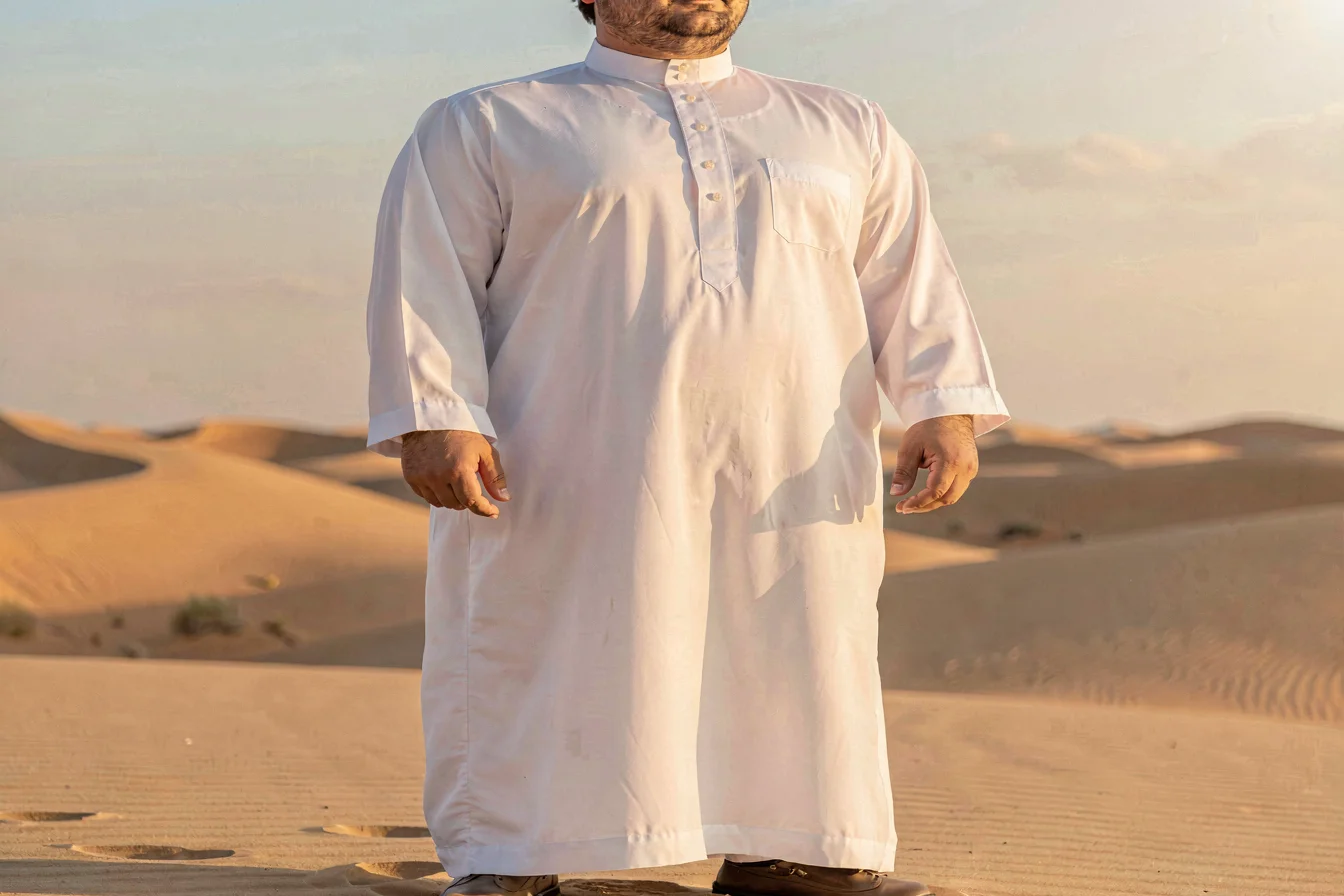
Both traditional arabic jubba and modern arabic jubba serve distinct consumer needs, but the procurement dilemma centers on market momentum, customization, and application. Traditional Jubba is rooted in heritage, ceremonial, and high-end gifting, with buyers prioritizing handcrafted embroidery, beading, and authentic sequence work, often sourced from local markets or boutique suppliers[3]. Modern Jubba, by contrast, appeals to everyday wear, volume gifting, and commercial buyers seeking streamlined designs, faster production, and broader demographic appeal[1]. The urgency for buyers is driven by shifting consumer values—modern Jubba’s trend-driven appeal versus traditional Jubba’s enduring prestige and customization.
Traditional Jubba’s value lies in its craftsmanship, cultural significance, and luxury positioning, with pain points including sourcing authentic designs, quality control, and higher unit costs. Modern Jubba solves for mass-market appeal, easier logistics, and faster turnaround, but may lack the bespoke detail and heritage status of its traditional counterpart. Technological innovations in modern Jubba include improved fabrics, digital embroidery, and eco-friendly materials, while traditional Jubba relies on artisanal techniques and local supply chains.
| Feature | Traditional Arabic Jubba | Modern Arabic Jubba |
|---|---|---|
| Target Audience | Heritage, ceremonial, luxury, gifting | Everyday wear, mass gifting, commercial |
| Customization | High (hand embroidery, bespoke sizing) | Medium (digital embroidery, standard sizing) |
| Procurement Complexity | Complex (local sourcing, artisan verification) | Simplified (factory supply, bulk orders) |
| Price Range | High ($150–$1,000+) | Medium ($50–$250) |
| Market Momentum | Stable, niche, luxury | Rapid growth, trend-driven |
| Seasonality | Peak during weddings, Ramadan, Eid | Year-round, with spikes in gifting seasons |
Modern Arabic Jubba is favored for trend-driven procurement, while Traditional Arabic Jubba secures high-margin sales and cultural prestige.
Durability is a key differentiator in the traditional arabic jubba versus modern arabic jubba procurement debate. Traditional Jubba, crafted with premium materials like handwoven cotton, silk, and detailed embroidery, often lasts decades with proper care, making it a long-term investment for ceremonial use or family heirlooms[3]. Modern Jubba, typically manufactured with synthetic blends or lighter fabrics, offers everyday durability but may require more frequent replacement, especially for high-use commercial applications.
Application scenarios diverge sharply: Traditional Jubba is preferred for weddings, religious ceremonies, and formal gifting, where prestige and authenticity are paramount. Modern Jubba dominates daily wear, gifting for corporate events, and international e-commerce, offering flexibility and broader demographic appeal[1]. Buyers must weigh the intended use—heritage versus utility—and consider the cost implications of maintenance, replacement, and hidden logistics.
| Cost Factor | Traditional Arabic Jubba | Modern Arabic Jubba |
|---|---|---|
| Initial Purchase Price | $150–$1,000+ | $50–$250 |
| Maintenance | Low (hand-wash, dry-clean) | Low–Medium (machine-wash, quick dry) |
| Replacement Frequency | Rare (decades) | Frequent (1–2 years) |
| Hidden Costs | Sourcing, artisan fees | Bulk logistics, packaging |
| 5-Year Cost Outlook | Stable, high-value | Variable, volume-driven |
Traditional Jubba delivers unmatched durability and heritage value, while Modern Jubba is optimized for cost-effective, high-volume procurement.
The core value of both traditional arabic jubba and modern arabic jubba lies in their ability to meet evolving consumer needs—cultural pride, gifting, and commercial utility. In 2026, market momentum for modern Jubba is accelerating, fueled by urbanization, multi-generational living, and e-commerce expansion. Traditional Jubba remains a mainstay for weddings, religious ceremonies, and luxury gifting, with demand peaking during Ramadan, Eid, and wedding seasons[1].
Market data confirms modern Jubba’s dominance in search interest and purchasing behavior, with Google Trends showing normalized values consistently above traditional Jubba since mid-2025. The gap is most pronounced during gifting and wedding seasons, reflecting broader consumer adoption of modern designs[1].
Google Trends data shows search interest for modern arabic jubba outpacing traditional arabic jubba globally, with values ranging from 61–79 versus 37–53 from March 2025 to February 2026[1]. Peaks occur during Ramadan, Eid, and wedding seasons, validating seasonality and the importance of trend-driven procurement. Platform discrepancies reveal higher SKU turnover and buyer reviews for modern Jubba on Alibaba.com and Amazon, while traditional Jubba remains concentrated in boutique and local markets.
Search Interest over Time
Modern Jubba’s rising search interest signals a procurement shift toward trend-driven, volume-centric sourcing.
Case studies and social media sentiment reveal distinct buyer personas and use cases for traditional arabic jubba and modern arabic jubba . On Reddit, buyers in Saudi Arabia and the Middle East highlight the challenge of sourcing authentic, high-quality traditional Jubba, with recommendations to visit local markets and boutique shops for bespoke sequence work and beading[3]. Modern Jubba is praised for its versatility, with buyers seeking streamlined designs for weddings, corporate gifting, and everyday wear, but some users express concern over the loss of cultural authenticity.
Case Study 1: Traditional Jubba Buyer (Saudi Arabia)
A buyer in Makkah searches for high-quality beaded embroidery, sequence work, and matching rumal for a wedding. Local vendors in Souq Al Khalil and Aziziyah district are recommended for authentic craftsmanship. The user emphasizes the importance of visiting evening hours and local boutiques for the best results, noting that mall brands often lack the same level of detail. Community sentiment praises the uniqueness and cultural pride of traditional Jubba, but highlights the difficulty of sourcing and higher price points.
“That dress is absolutely stunning and the butterfly detail is very unique. For high quality beaded embroidery and sequence work you should visit the Souq Al Khalil near the Haram in Makkah.”
“The embroidery on that piece is very detailed and elegant. For that specific style of sequence work I recommend looking into the local boutiques in the Aziziyah district of Makkah. They usually carry more traditional designs compared to the main malls.”
Case Study 2: Modern Jubba Buyer (Global)
A buyer in Dubai and UAE prefers modern Jubba for daily wear, corporate gifting, and weddings. Social media discussions highlight the ease of sourcing, faster turnaround, and broader demographic appeal. Users note that English is widely used in Dubai, but some Arabic knowledge is appreciated for cultural respect. Modern Jubba is favored for its streamlined design and affordability, but some users lament the loss of traditional craftsmanship.
“You won’t need Arabic. English is everywhere... But it’s always fun to learn a new language.”
“Modern Jubba is much easier to find online and offers flexible sizing for different occasions.”
| Dimension | Traditional Arabic Jubba | Modern Arabic Jubba |
|---|---|---|
| Overall Satisfaction | High (cultural pride, craftsmanship) | High (versatility, affordability) |
| Most Praised Feature | Embroidery, sequence work | Streamlined design, fast delivery |
| Most Common Complaint | Sourcing difficulty, price | Lack of authenticity |
| Community Recommendation Rate | Moderate (niche, luxury) | High (mass-market, trend-driven) |
Viral content themes include debates about cultural authenticity, the role of traditional craftsmanship, and the impact of modernization on heritage. TikTok and YouTube highlight both the beauty of traditional Jubba and the practicality of modern designs, with recurring discussions on sourcing, pricing, and gifting scenarios. Reddit communities reinforce the importance of local sourcing for traditional Jubba and the convenience of online procurement for modern Jubba.
Traditional Jubba is celebrated for cultural pride and craftsmanship, while Modern Jubba is praised for versatility and mass-market appeal.
Buyers should begin by identifying their core needs through a procurement checklist:
Tiered recommendations:
| Tier | Recommended Product | Key Reason |
|---|---|---|
| Budget-Friendly | Modern Arabic Jubba | Affordable, mass-market, fast delivery |
| Mid-Range | Modern Arabic Jubba | Versatile, flexible sizing, reliable supply |
| Premium | Traditional Arabic Jubba | Heritage, customization, luxury appeal |
| Ceremonial/Heritage | Traditional Arabic Jubba | Cultural prestige, artisanal sourcing |
Optimization tips:
Buyers should match product choice to use case, budget, and cultural priorities for optimal procurement outcomes.
Synthesizing all findings, modern arabic jubba is poised for continued growth in 2026, driven by urbanization, trend-driven consumer preferences, and e-commerce expansion. Traditional arabic jubba remains a vital segment for heritage, ceremonial, and luxury gifting, offering high-margin sales and cultural prestige. Buyers should anticipate further segmentation, with modern Jubba dominating mass-market procurement and traditional Jubba securing niche, high-value sales. Forward-looking recommendations include investing in trend-driven SKUs for volume, prioritizing artisanal suppliers for heritage segments, and leveraging platform data for real-time demand tracking.
Confident procurement requires aligning product choice with market momentum, application, and cultural priorities—act decisively for optimal sourcing outcomes.
Share your experiences with traditional arabic jubba and modern arabic jubba to help shape future trends. Commercial buyers should explore wholesale platforms like Alibaba.com to secure the best supply and pricing for upcoming seasons.