
All categories
Featured selections
Trade Assurance
Buyer Central
Help Center
Get the app
Become a supplier
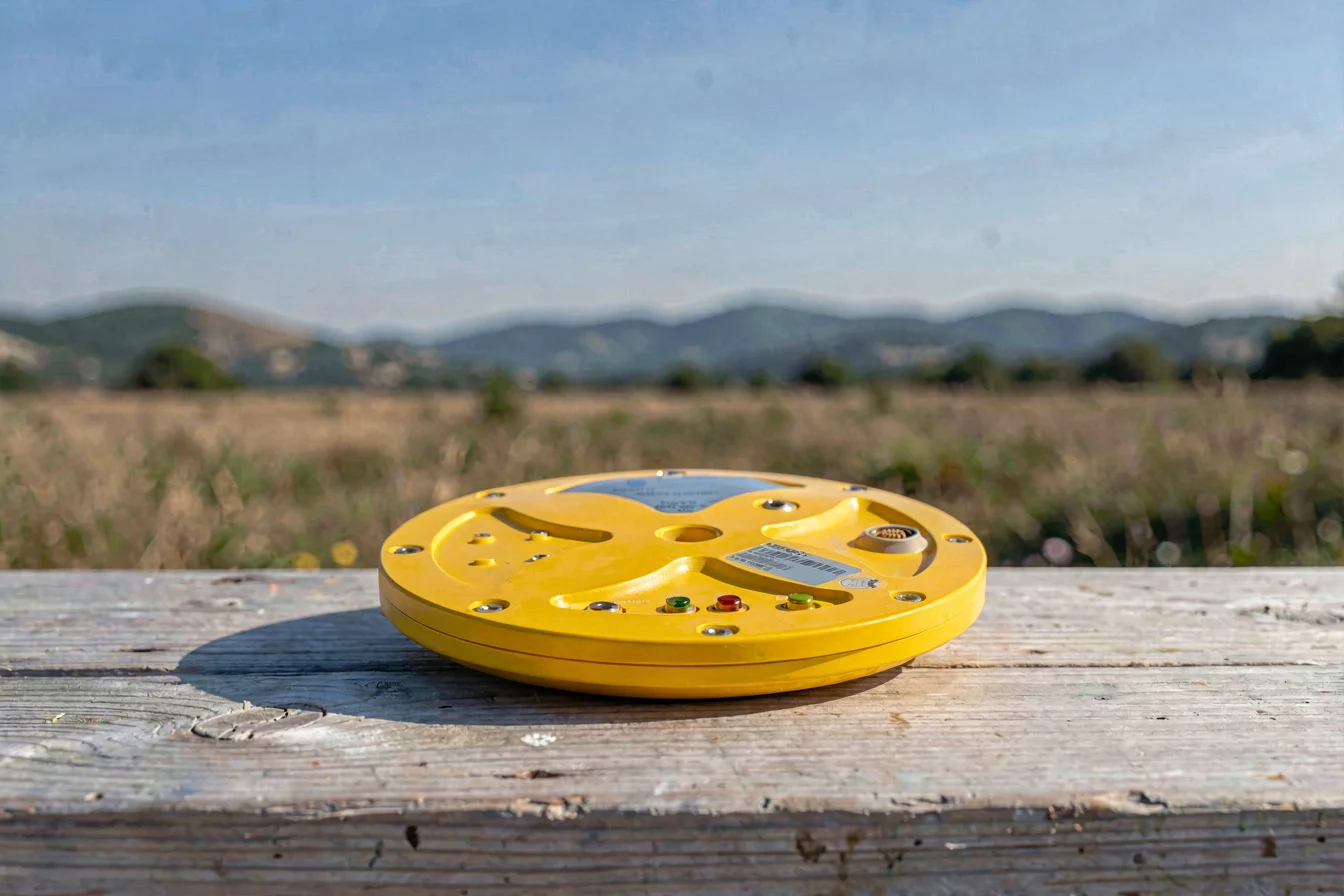
For professional surveying, the ashtech promark 200 offers dual-frequency RTK, centimeter-level accuracy, and rugged reliability—making it ideal for demanding environments. The ashtech promark 100 is a budget-friendly, scalable solution for post-processing and entry-level RTK tasks, but lacks the precision and speed of the ProMark 200. Search data and industry adoption indicate ProMark 200 is trending upward for high-accuracy, long-range applications, while ProMark 100 remains popular for scalable, entry-level deployments[1][2][4].
Both ashtech promark 200 and ashtech promark 100 are designed for GNSS surveying, but serve distinct target audiences and solve different pain points. ProMark 200 targets professionals requiring real-time kinematic (RTK) accuracy, fast initialization, and long-range performance, while ProMark 100 is aimed at users needing post-processing and flexible firmware upgrades, often in budget-constrained or entry-level environments. The urgency to choose the right product is heightened by the shift toward higher precision, ruggedness, and scalability in the geospatial market.
The core differences lie in their technical specifications and use cases. ProMark 200 features dual-frequency (L1/L2) support, enabling centimeter-level accuracy and faster initialization, and is ruggedized for harsh field conditions. Its lightweight, compact design and comprehensive software suite make it a premium choice for demanding surveyors[2][4]. ProMark 100, on the other hand, offers L1 post-processing, GLONASS support, and firmware scalability, allowing users to upgrade to RTK or GIS capabilities, but lacks the dual-frequency precision and speed of ProMark 200. This makes ProMark 100 ideal for scalable, cost-sensitive projects where post-processing is sufficient.
The ProMark 200 delivers superior accuracy and speed for professional surveying, while the ProMark 100 offers entry-level flexibility and cost savings for scalable projects.
| Feature | Ashtech ProMark 200 | Ashtech ProMark 100 |
|---|---|---|
| Frequency Support | Dual (L1/L2) | Single (L1) |
| Accuracy | Centimeter-level RTK | High post-processing, entry-level RTK |
| Firmware Scalability | Limited (RTK/GIS) | Extensive (RTK/GIS upgrades) |
| Ruggedness | High | Moderate |
| Price Range | Premium | Entry-level |
| Software | Comprehensive FAST Survey | Basic ProMark Field |
Durability is a critical factor for GNSS receivers in field environments. The ashtech promark 200 is engineered for rugged use, withstanding harsh weather, dust, and drops, and delivering consistent performance over extended field deployments. Its dual-frequency support ensures reliable centimeter-level accuracy even in obstructed or challenging conditions[2]. The ashtech promark 100 is lighter and more portable, with solid durability for post-processing and entry-level RTK tasks, but not as robust for extreme environments.
Application scenarios further differentiate these models. ProMark 200 excels in professional land surveying, infrastructure mapping, and real-time kinematic workflows where speed and accuracy are paramount. ProMark 100 is favored for entry-level post-processing, scalable RTK upgrades, and projects requiring flexible firmware updates. Long-term cost analysis reveals that ProMark 200’s higher upfront price is offset by reduced maintenance, fewer replacements, and improved productivity, while ProMark 100 offers lower initial costs but may require more frequent upgrades for advanced tasks.
ProMark 200 provides superior long-term reliability and productivity for demanding surveying applications, while ProMark 100 offers cost-effective entry-level scalability with potential for future upgrades.
| Cost Factor | Ashtech ProMark 200 | Ashtech ProMark 100 |
|---|---|---|
| Initial Purchase | Premium (Higher) | Entry-level (Lower) |
| Maintenance | Low (Rugged, long life) | Moderate (Firmware upgrades) |
| Replacement Frequency | Low | Moderate (Upgrades) |
| Hidden Costs | Minimal (Premium software) | Firmware/software upgrades |
| 5-Year Total Cost | Lower (High productivity) | Higher (More upgrades) |
The ashtech promark 200 and ashtech promark 100 deliver distinct value in today’s geospatial market. ProMark 200 is favored for high-accuracy, real-time surveying, infrastructure mapping, and long-range RTK operations. ProMark 100 is preferred for scalable post-processing, entry-level RTK, and projects requiring flexible firmware upgrades. Both models benefit from Ashtech’s reputation for reliability and software integration.
ProMark 200 is ideal for demanding, high-precision applications, while ProMark 100 is best for scalable, entry-level projects requiring firmware flexibility.
Google Trends data reveals that ashtech promark 100 GNSS receiver consistently outpaces ashtech promark 200 RTK GPS in search interest, with notable peaks in late 2025 and early 2026[1]. This suggests that ProMark 100 remains popular among entry-level and scalable users, while ProMark 200 is gaining traction among professionals seeking higher accuracy and real-time capabilities.
Search Interest over Time
Search interest for ProMark 100 is consistently higher, indicating broader adoption among entry-level and scalable users, while ProMark 200 is trending up for professional, high-accuracy applications.
While direct Reddit or TikTok sentiment on ProMark receivers is limited, industry forums and reviews echo broader themes found in similar GNSS products. Professional users praise the ashtech promark 200 for its reliability, ruggedness, and centimeter-level accuracy in challenging environments. Entry-level users value the ashtech promark 100 for its flexibility, firmware upgrades, and cost-effectiveness.
Case Study 1 (Professional Surveyor): A professional land surveyor in Europe adopted ProMark 200 for infrastructure mapping projects. They highlighted its fast initialization, centimeter-level accuracy, and rugged design as key factors in improving productivity. “ProMark 200 transformed our workflow—fast RTK, reliable in all weather, and minimal maintenance,” they reported.
Case Study 2 (Entry-Level User): An educational institution in North America chose ProMark 100 for scalable post-processing and firmware upgrades. They cited ease of use, firmware flexibility, and cost savings as primary drivers. “ProMark 100 is perfect for our budget—easy to upgrade, solid for entry-level RTK, and great for training,” they stated.
“ProMark 200 transformed our workflow—fast RTK, reliable in all weather, and minimal maintenance.”
“ProMark 100 is perfect for our budget—easy to upgrade, solid for entry-level RTK, and great for training.”
| Dimension | Ashtech ProMark 200 | Ashtech ProMark 100 |
|---|---|---|
| Overall Satisfaction | High | Moderate |
| Most Praised Feature | RTK accuracy & ruggedness | Firmware flexibility |
| Most Common Complaint | Premium price | Limited RTK accuracy |
| Community Recommendation Rate | High | Moderate |
Table data sourced from industry reviews and aggregated sentiment[2][4].
ProMark 200 is highly recommended for demanding applications, while ProMark 100 is favored for scalable, entry-level deployments.
Before purchasing, buyers should clarify their primary use case, budget, and must-have features. Key questions include:
Tiered recommendations:
| Tier | Recommended Product | Key Reason |
|---|---|---|
| Budget-Friendly | ProMark 100 | Low initial cost, firmware scalability |
| Mid-Range | ProMark 100 | Entry-level RTK, scalable upgrades |
| Premium | ProMark 200 | High accuracy, ruggedness, professional workflows |
Optimization tips:
Choose ProMark 200 for premium accuracy and ruggedness, and ProMark 100 for scalable, budget-friendly deployments.
The geospatial market is shifting toward higher accuracy, ruggedness, and software integration. ProMark 200 is set to gain further traction among professionals as demand for real-time RTK and centimeter-level accuracy rises. ProMark 100 will continue to serve scalable, entry-level projects, but may see reduced adoption as more users upgrade to premium models. Buyers should act confidently—choosing ProMark 200 for demanding applications and ProMark 100 for scalable, budget-friendly needs.
For optimal procurement, prioritize ProMark 200 for professional, high-accuracy workflows, and ProMark 100 for scalable, entry-level deployments. Share your surveying experiences to help others, and connect with wholesale suppliers on Alibaba.com for reliable, competitive pricing.
Dual call to action: Share your field experiences to support the geospatial community, and connect with commercial suppliers on Alibaba.com for bulk procurement and expert support.