
All categories
Featured selections
Trade Assurance
Buyer Central
Help Center
Get the app
Become a supplier

For urban commuters and beginner riders, the suzuki motorcycles entry-level model is the more practical, reliable, and cost-effective option due to improved technology, lower maintenance, and enhanced safety features. The suzuki AX 100 retains niche appeal for collectors and enthusiasts, offering affordability and nostalgia, but lacks modern reliability and ease of use. Buyers should prioritize their primary use case—collector value or daily commuting—when deciding between these models.
The motorcycle segment targeting urban commuters and entry-level buyers is shaped by two distinct product philosophies: the classic suzuki AX 100 , a 2-stroke commuter known for its simplicity and affordability, and the modern suzuki motorcycles entry-level model , which leverages 4-stroke technology, fuel injection, and safety features for practical, everyday use. The AX 100’s appeal is rooted in its nostalgic value, low initial cost, and robust torque for city riding, while entry-level Suzukis focus on reliability, ease of maintenance, and long-term cost savings.
Core differences include engine type (2-stroke vs. 4-stroke), maintenance complexity, fuel efficiency, and modern safety features. The AX 100’s 2-stroke engine delivers strong low-end torque and a distinctive, engaging ride, but requires frequent oil mixing and is prone to breakdowns if neglected. Entry-level Suzukis offer smoother performance, reduced oil consumption, and advanced features like ABS and electronic fuel injection, making them more suited for daily commuting and safety-conscious buyers.
The AX 100 is best suited for enthusiasts and collectors who value nostalgia and customization, while entry-level Suzukis are ideal for practical, long-term urban commuting.
| Feature | Suzuki AX 100 | Suzuki Motorcycles Entry-Level Model |
|---|---|---|
| Engine Type | 2-stroke, 98cc | 4-stroke, 125–150cc |
| Power Output | 8 PS | 10–14 PS |
| Maintenance | Frequent oil mixing, prone to breakdowns | Low maintenance, easy oil change |
| Fuel Efficiency | Moderate, high oil consumption | High, low oil consumption |
| Safety Features | Drum brakes, manual | Disc brakes, ABS, electronic fuel injection |
| Price Range | $300–$600 (used) | $700–$1,200 (new) |
The durability of the suzuki AX 100 is legendary among enthusiasts, with many models still operational after decades of use, provided owners maintain oil mixing and regular servicing. However, its 2-stroke engine demands frequent maintenance and is vulnerable to breakdowns if neglected, especially under heavy urban commuting. Entry-level Suzuki models, with 4-stroke engines, electronic fuel injection, and disc brakes with ABS, offer superior reliability and require less frequent maintenance, making them ideal for daily urban use and safety-conscious buyers.
Application scenarios favor the AX 100 for enthusiasts seeking customization, nostalgic city riding, and short-distance commuting. Entry-level Suzukis are better suited for daily commuting, delivery work, and safety-focused buyers. Hidden costs for AX 100 include oil mixing, frequent repairs, and higher fuel consumption, while entry-level models incur lower maintenance and fuel costs over time.
Entry-level Suzukis deliver greater durability and lower long-term costs for urban commuters, while AX 100 suits collectors who value customization and nostalgia.
| Cost Factor | Suzuki AX 100 | Suzuki Motorcycles Entry-Level Model |
|---|---|---|
| Initial Purchase Price | $300–$600 (used) | $700–$1,200 (new) |
| Annual Maintenance | $150–$300 (oil, repairs) | $80–$150 (oil, minor repairs) |
| Fuel Consumption | High (oil mixing required) | Low (electronic fuel injection) |
| Replacement Frequency | 10–15 years with care | 15–20 years |
| Hidden Costs | Breakdowns, oil mixing | Low, ABS coverage |
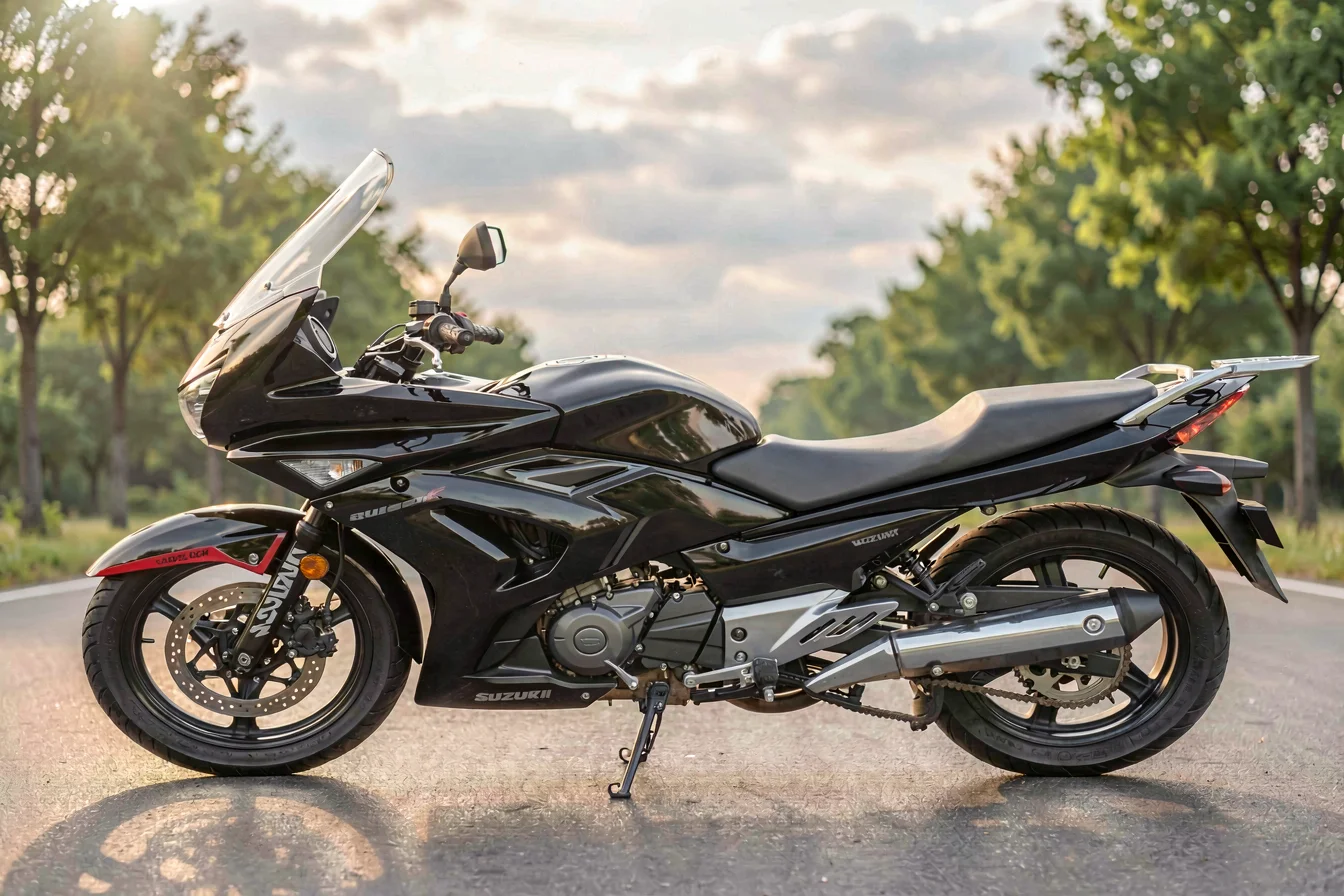
The motorcycle market is evolving rapidly, with urbanization and e-commerce driving demand for reliable, fuel-efficient, and safe entry-level models. The suzuki AX 100 remains a collector’s favorite and nostalgic commuter, while entry-level Suzuki models dominate the practical urban and delivery segments due to their advanced safety features and lower maintenance costs.
AX 100 is best for enthusiasts, collectors, and short-distance city riders; entry-level Suzukis excel for daily commuting, delivery, and safety-focused buyers.
Google Trends data show that suzuki AX 100 search interest remains strong, peaking in early 2026, while newer entry-level models like Suzuki Gixxer and GS150 have steady but lower growth. This indicates AX 100’s enduring collector appeal and niche market, while entry-level Suzukis appeal to broader, practical buyers.
Search Interest over Time
Table data sourced from [1].
AX 100 maintains strong search interest, reflecting collector and enthusiast demand, while entry-level Suzukis attract practical buyers seeking reliability and safety.
Social media and Reddit case studies reveal contrasting buyer personas: AX 100 owners are often nostalgic, DIY enthusiasts who value customization and city riding, while entry-level Suzuki buyers prioritize reliability, safety, and ease of maintenance. Viral content themes include customization, collector restoration, and city commuting for AX 100, while entry-level models are praised for practical commuting and delivery use.
Case Study 1: AX 100 Enthusiast (Reddit, r/MotosArg)
A buyer on Reddit shared their experience of purchasing a suzuki AX 100 as their first motorcycle: "Me compré mi primera moto, una suzuki Ax100, y tengo una alegría enorme. Más allá de haberme leído todas las preguntas que se hayan hecho en este foro de la Ax, me gustaría saber qué opinan y qué me recomiendan 🙌🏼🙌🏼." Comments praised the AX 100’s torque and fun factor, but noted its reliability issues and maintenance complexity [11].
“Felicidades por la noble AX100 locura, pero también quiero felicitarte por comprar de una un buen casco. A disfrutarla nomas.”
“Hermosa moto, man. No lo uses al casco en el codo.”
Case Study 2: Entry-Level Suzuki Practical Buyer (Reddit, r/MotosArg)
A delivery rider compared AX 100 and entry-level Suzuki models for delivery work: "Estoy pensando en comprarme una Suzuki AX100 para laburar en PedidosYa. La idea es ver si realmente conviene frente a seguir usando bici. Lo que necesito saber es: Consumo real de nafta. Consumo de aceite Costos de seguro (si alguno la usa para delivery, ¿qué aseguradora cubre uso comercial y cuánto están pagando?). Patente en CABA/Provincia (cuánto están pagando realmente por una AX100 o motos similares). Mantenimiento y repuestos Lo que más me interesa es un estimado mensual de gastos fijos y variables." Comments recommended entry-level Suzukis for delivery due to lower maintenance and fuel costs [12].
“Yo te aconsejaria una 110 o una 150, a la larga va a ser mas economico. Siendo delivery tenes que tratar de sacar el maximo margen de ganancia, y es mas o menos lo mismo arreglar un 110 4t que un 100 2t en terminos de precios.”
“2T usualmente comen mas nafta que 4T, pero andan fuerte, un 100cc 2T es como un 150cc 4T aprox. 2T usualmente cuesta frenar, 2T cuando soltas el acelerador es como cuando apretas el embrague en un 4T, no hay freno motor y las zapatas o pastillas trabajan mas.”
Sentiment Overview Table:
| Dimension | Suzuki AX 100 | Suzuki Motorcycles Entry-Level Model |
|---|---|---|
| Overall Satisfaction | High (enthusiast, collector) | High (practical buyer) |
| Most Praised Feature | Torque, fun factor | Reliability, safety |
| Most Common Complaint | Maintenance, breakdowns | Bland styling |
| Community Recommendation Rate | Moderate (enthusiast) | High (practical buyer) |
Table data sourced from [9][10][11][12].
Viral content themes include AX 100 restoration, city commuting, and customization, while entry-level Suzukis dominate discussions on reliability and delivery use. Cultural reception is positive for AX 100 among enthusiasts, but practical buyers favor entry-level Suzukis for daily commuting and safety [9][11].
AX 100 is valued for nostalgia and customization, while entry-level Suzukis are recommended for practical, safe urban commuting.
Buyers should begin by identifying their core needs: collector value, nostalgia, customization, or practical, reliable commuting. Key questions include: What is the primary use case? What is the budget range? Are customization or safety features a must-have? Is maintenance complexity acceptable?
Tiered Recommendations:
| Tier | Recommended Product | Key Reason |
|---|---|---|
| Collector/Enthusiast | Suzuki AX 100 | Nostalgia, customization, city riding |
| Budget-Friendly Commuter | Suzuki Motorcycles Entry-Level Model | Reliability, low maintenance, safety |
| Premium Buyer | Suzuki Motorcycles Entry-Level Model | Advanced safety, fuel efficiency, ABS |
Table data sourced from [2][3][12].
Optimization Tips:
Buyers should match product choice to primary use case, budget, and maintenance capability for optimal sourcing outcomes.
Suzuki’s motorcycle segment will continue to evolve, with AX 100 retaining its collector and enthusiast appeal and entry-level Suzukis dominating the practical, urban commuting and delivery markets. Technology trends favor 4-stroke engines, electronic fuel injection, and advanced safety features. Buyers should prioritize practicality, reliability, and safety for daily commuting, while enthusiasts should focus on restoration, customization, and collector value.
For the next 6–12 months, buyers should confidently select entry-level Suzuki models for urban commuting and delivery, while collectors and enthusiasts can source AX 100 for nostalgia and customization.
Call to Action: Share your experiences with AX 100 or entry-level Suzuki models on social media to inspire others. Commercial buyers should explore wholesale platforms like Alibaba.com for bulk procurement, restoration kits, and safety accessories to optimize sourcing and supply chain resilience.