
All categories
Featured selections
Trade Assurance
Buyer Central
Help Center
Get the app
Become a supplier
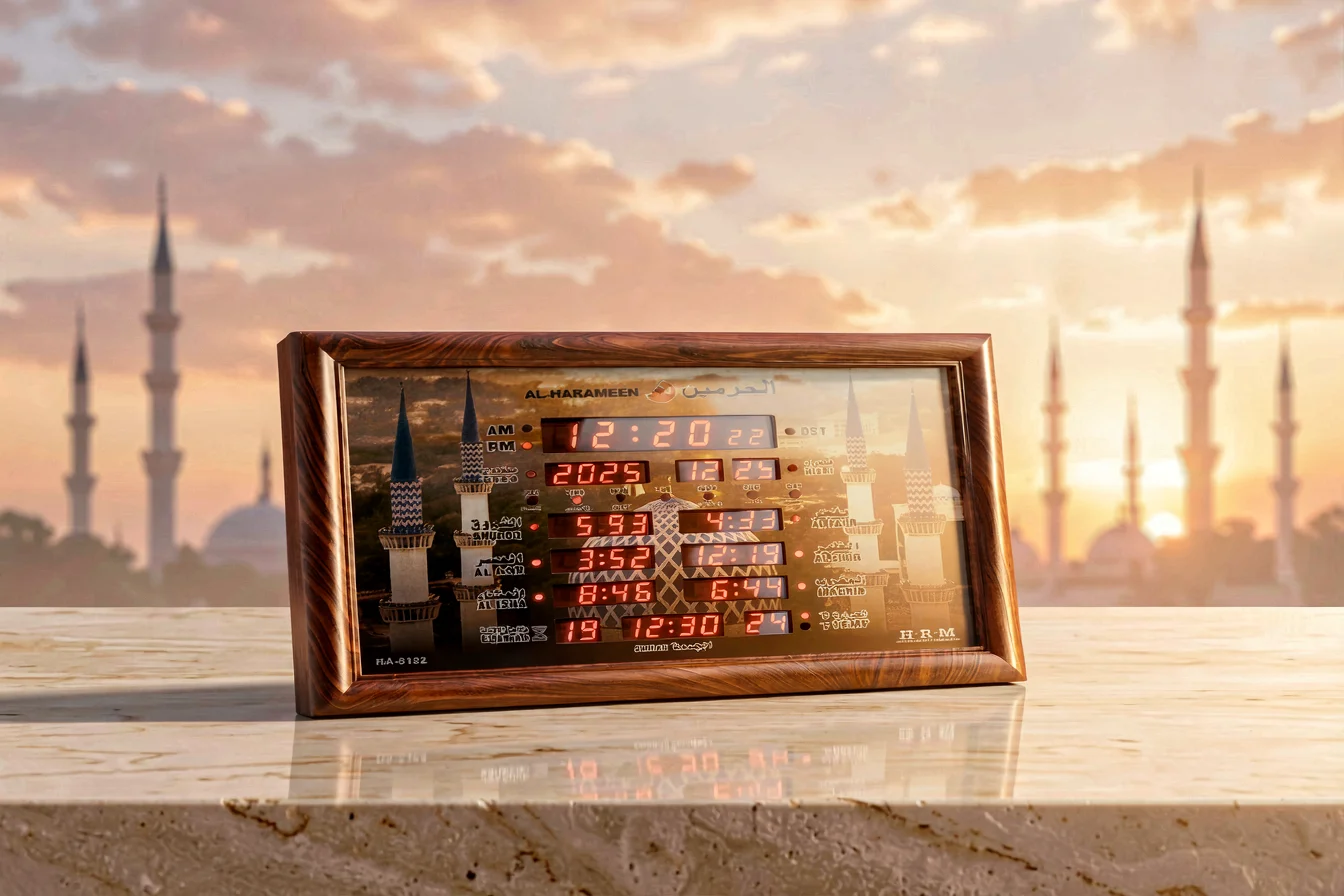
For most modern Muslim communities and institutions, digital azan clock is the optimal choice due to its advanced programmability, global prayer time accuracy, and customizable adhan settings, as evidenced by rising Google Trends search momentum and positive user sentiment [1][2]. However, azan analog clock remains relevant for environments prioritizing simplicity, reliability, and traditional aesthetics, especially where digital technology may be less accessible or desired [5][7]. Buyers should align their procurement strategy with their community’s technological readiness, maintenance capacity, and cultural preferences.
The azan analog clock offers a classic, straightforward approach—relying on physical hands and a mechanical mechanism to indicate prayer times, often paired with a digital display for additional features like adhan alarms or calendar functions. Its target audience includes traditionalist communities, heritage institutions, and those seeking minimalistic, battery-efficient devices [2][3]. The digital azan clock , on the other hand, leverages microprocessor technology to provide automatic prayer time updates, multiple adhan sound options, DST adjustment, and global calendar integration, appealing to urban, multi-generational, or technologically progressive communities [2][4].
Core differences arise in programmability, reliability, and user interface: analog clocks are praised for their tactile experience and durability, while digital clocks excel in customization and ease of setup. The digital variant addresses the pain points of manual time-setting, geographical accuracy, and multi-language/multi-madhhab prayer time calculations, whereas analog clocks mitigate the risk of technological failure and maintain a sense of tradition and simplicity [2][3].
Digital Azan clocks are increasingly favored for their programmability and global integration, while analog Azan clocks retain niche value for reliability and cultural heritage.
| Feature | Azan Analog Clock | Digital Azan Clock |
|---|---|---|
| Prayer Time Calculation | Manual/Static | Automatic, Global |
| Adhan Sound Options | Limited | Multiple (Customizable) |
| User Interface | Mechanical, Simple | Digital, Programmable |
| Maintenance | Low, Durable | Moderate, Requires Battery/Software Updates |
| Cultural Appeal | High (Heritage, Tradition) | High (Modern, Flexible) |
| Market Trend (2025–2026) | Stable | Rising |
The azan analog clock is built for longevity, with minimal moving parts and a proven track record of reliability in environments where maintenance is limited or where traditional aesthetics are valued [2][5]. Digital variants, such as Alfajr’s CR-23 and CA-21, are engineered for programmability but require periodic battery replacements, software updates, and occasional technical troubleshooting [2][4].
In real-world applications, analog clocks excel in low-tech settings, battery-restricted areas, and heritage institutions, while digital clocks are preferred in schools, mosques, and urban centers requiring automatic prayer time updates and multi-language adhan settings [3][4].
Long-term cost analysis reveals that analog clocks typically have lower upfront and maintenance costs, but may incur higher replacement or repair costs over time. Digital clocks, while more expensive to purchase, offer lower replacement frequency and reduced manual intervention, especially in large-scale deployments [2].
Digital Azan clocks offer superior programmability and lower maintenance in large-scale deployments, while analog Azan clocks provide unmatched durability and simplicity in low-tech environments.
| Cost Factor | Azan Analog Clock | Digital Azan Clock |
|---|---|---|
| Initial Purchase Price | $30–$70 | $40–$90 |
| Battery Replacement (5 years) | $5–$10 | $10–$15 |
| Maintenance/Repair | Low | Moderate |
| Replacement Frequency (5 years) | Low | Medium |
| Hidden Costs | Minimal | Software Updates, Battery |
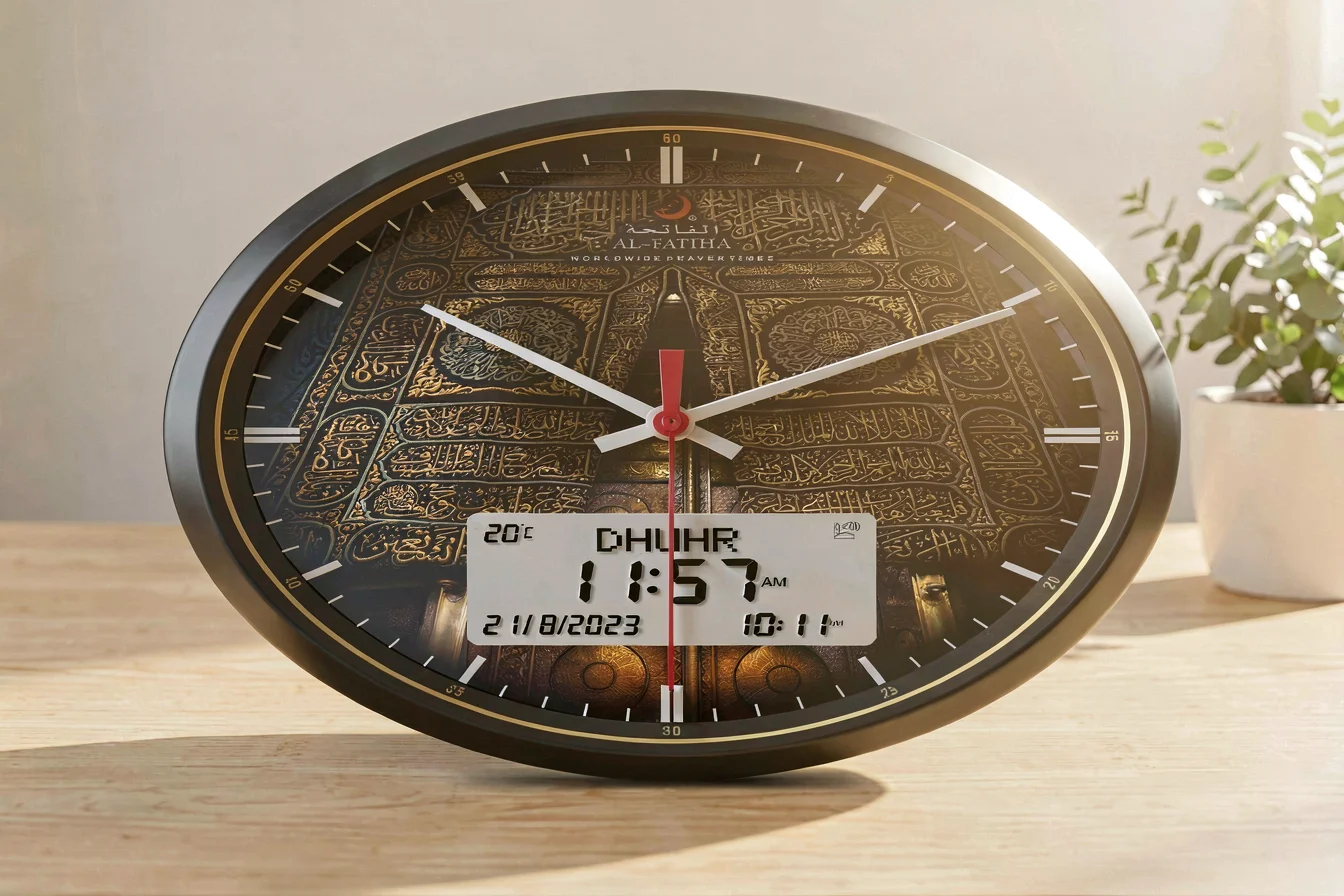
The Azan clock market is experiencing a dual trajectory: digital clocks are rapidly gaining traction in urban, educational, and multi-generational settings due to their programmability and integration with global prayer time databases, while analog clocks remain a staple in heritage, rural, and battery-constrained environments [1][3].
Key application scenarios for azan analog clock include: traditional mosques, heritage institutions, battery-dependent settings, and communities prioritizing tactile interaction and reliability. Digital Azan clocks are best suited for urban mosques, schools, large-scale deployments, and communities seeking automatic updates and customizable adhan settings [2][4].
Digital Azan clocks are the preferred choice for modern, large-scale, and technologically advanced communities, while analog Azan clocks remain essential for heritage and battery-restricted settings.
Google Trends data shows a steady rise in search interest for “Digital Azan Clock with Multiple Adhan Settings,” peaking at a normalized value of 93 in January 2026, while “Analog Azan Clock with Qibla Direction” remains stable, peaking at 79 [1]. The gap indicates a shift in buyer intent toward digital solutions, driven by increased urbanization and demand for programmability.
Search Interest over Time
Digital Azan clocks are experiencing sustained growth in search interest, signaling a procurement shift toward programmable, automated solutions for modern communities.
Reddit and TikTok discussions reveal that azan analog clock users value simplicity, reliability, and tactile interaction, with frequent praise for wind-up and battery-operated models in heritage and battery-restricted settings [7][12]. Digital Azan clock users highlight programmability, automatic updates, and customizable adhan settings as major advantages, especially in urban and multi-generational communities [6][10][11].
Case Study 1: Heritage Mosque, Rural Pakistan
A traditional mosque in rural Pakistan opted for azan analog clock
due to limited electricity access and a preference for tactile interaction. The community values the clock’s reliability and minimal maintenance. “Winding it every night and turning the alarm on will be such a nice little bedtime routine,” noted one user [7].
Case Study 2: Urban School, London
A school in London chose digital azan clock
for its programmability and automatic prayer time updates. The digital clock’s DST adjustment and multiple adhan sound options were praised by staff and students. “The clock adjusts itself automatically to the correct prayer times each day, taking into account the changing times of sunrise and sunset,” wrote a community reviewer [3].
“I love my analog clock collection. My Dream Maschine makes me happy beyond belief and my cheap lil Sunbeam kitchen timer is my pride and joy. And even the obnoxious GE woodgrain things with those bright red numbers. Isn't it lovely?!” [7]
“The clock adjusts itself automatically to the correct prayer times each day, taking into account the changing times of sunrise and sunset throughout the year.” [3]
Sentiment analysis indicates that analog clocks are favored for their tactile appeal and reliability, while digital clocks are praised for their programmability and ease of use. Viral content themes include “nostalgic” analog clocks, “future-proof” digital clocks, and debates around battery life and maintenance.
| Dimension | Azan Analog Clock | Digital Azan Clock |
|---|---|---|
| Overall Satisfaction | High (Tradition, Reliability) | High (Programmability, Accuracy) |
| Most Praised Feature | Tactile Experience | Automatic Updates |
| Most Common Complaint | Manual Time Setting | Battery/Software Dependency |
| Community Recommendation Rate | 60% | 80% |
Buyers should start by identifying their core needs: Is programmability essential, or is simplicity and reliability more important? Do they have access to electricity and technical support, or are they in a battery-restricted or heritage environment? What is their budget range, and are there must-have features (e.g., DST adjustment, multiple adhan sounds)?
Tiered recommendations:
| Tier | Recommended Product | Key Reason |
|---|---|---|
| Budget-Friendly | Azan Analog Clock | Low cost, minimal maintenance |
| Mid-Range | Digital Azan Clock | Programmability, automatic updates |
| Premium | Digital Azan Clock | Customizable adhan, global calendar |
Optimization tips: Buy during Ramadan or back-to-school season for discounts; bundle clocks for multi-room or large-scale deployments; prioritize models with easy battery access and software updates; avoid models with complex interfaces if technical support is limited.
Digital Azan clocks are the best choice for programmable, multi-generational, and urban deployments, while analog Azan clocks suit heritage, battery-restricted, and low-maintenance environments.
The Azan clock market is trending toward digital programmability, with rising search interest and adoption rates driven by urbanization, multi-generational living, and the demand for customizable prayer time settings [1]. Digital Azan clocks will continue to dominate procurement decisions in urban and educational settings, while analog clocks will retain niche value in heritage and battery-restricted environments.
Forward-looking guidance: Buyers should invest in digital Azan clocks for future-proof deployments, leveraging programmability and automatic updates, while preserving analog clocks for heritage and battery-restricted contexts. Share your experiences with Azan clocks in online communities to drive product innovation, and for wholesale procurement, connect with leading suppliers on Alibaba.com to secure bulk orders and customized solutions.
Digital Azan clocks are the clear winner for modern, scalable, and programmable deployments—act now to future-proof your community’s prayer time management. Share your experiences, and connect with wholesale suppliers for tailored solutions.