
All categories
Featured selections
Trade Assurance
Buyer Central
Help Center
Get the app
Become a supplier
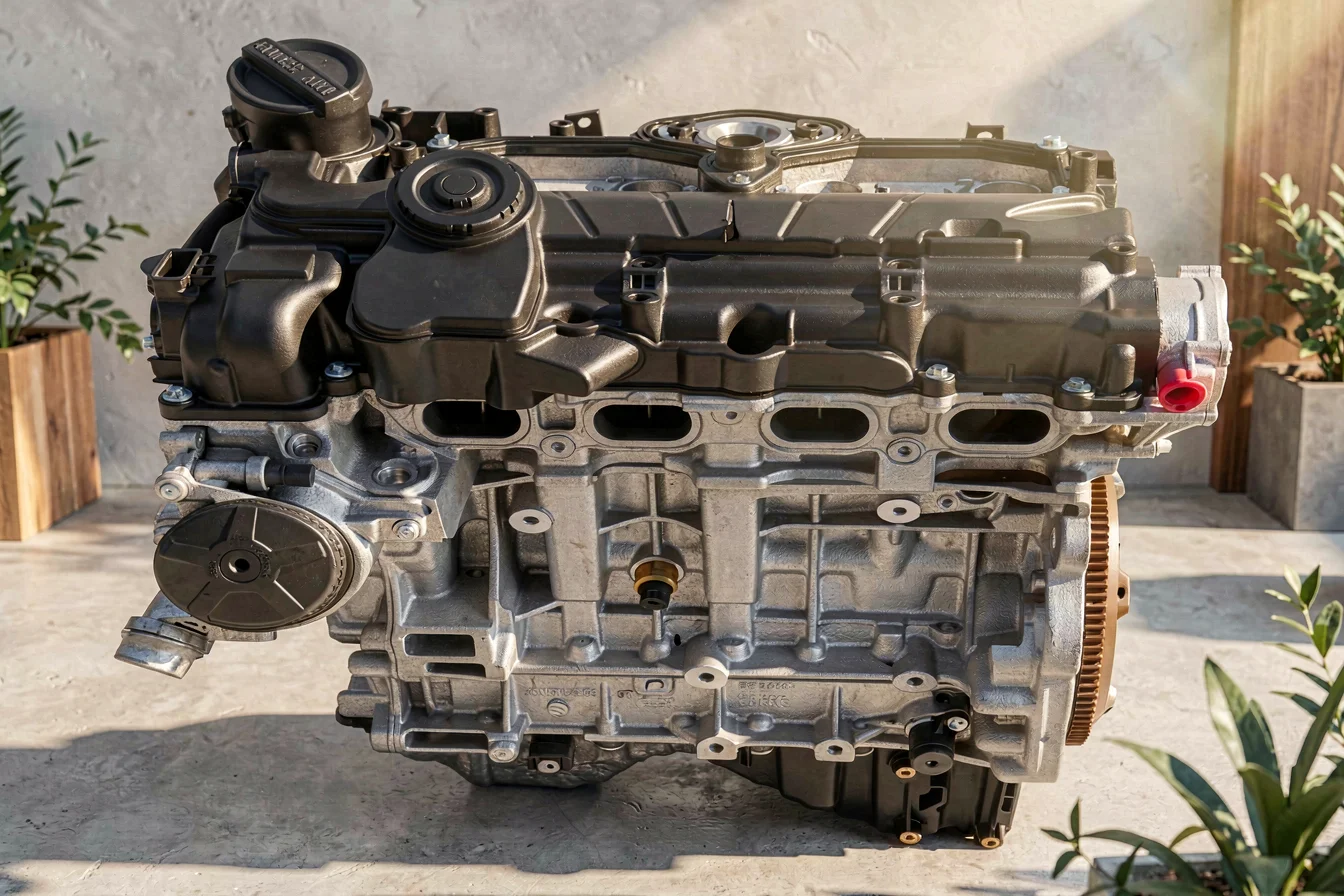
The BMW b48 engine is a turbocharged four-cylinder noted for efficiency, reliability, and cost-effective ownership, while the BMW b58 engine offers more power and dynamic driving, favored by enthusiasts seeking performance and longevity. Global demand for both engine parts is evenly matched, and real-world durability is high on both, but maintenance requirements and total cost-of-ownership differ significantly[1][2]. Procurement decisions should factor power needs, budget constraints, and intended usage carefully for maximum value.
The value proposition for both BMW b48 engine and BMW b58 engine centers on balancing advanced engineering with market-tested durability. The B48 is a modular 2.0L turbocharged four-cylinder designed for cost-optimized, urban driving and efficient maintenance, making it ideal for fleet buyers, daily commuters, and markets with emphasis on fuel economy. Meanwhile, the B58 is a 3.0L turbocharged inline-six, serving buyers prioritizing higher power output, luxury segment expectations, and longevity under spirited driving, commonly selected for premium applications including executive sedans and performance compacts[2][3][4].
Traditional challenges addressed by the B48 include high-maintenance intervals of older BMW four-cylinder engines, reliability under frequent stop-start driving, and minimizing repair costs. B58 resolves past weak points in BMW six-cylinder turbos, offering robust forged internals and higher thermal efficiency, catering to high-performance and long-distance durability needs. Recent innovations, such as modular block design and shared components, streamline sourcing and reduce overall supply chain complexity for both engines[2].
| Feature | BMW B48 Engine | BMW B58 Engine |
|---|---|---|
| Configuration | 2.0L turbo I4 | 3.0L turbo I6 |
| Power Output | ~189–255 hp | ~322–382 hp |
| Maintenance Cost | Lower | Higher |
| Reliability (user reports) | High, occasional coolant/valve leaks | High, robust even under hard driving |
| Target Audience | Cost-focused/fleet buyers | Performance/luxury buyers |
| Parts Availability | Strong, broad supply | Strong, premium segment |
The main procurement dilemma is whether you prioritize lower cost and solid reliability (B48) or high power and long-term durability at a higher upfront price (B58).
The BMW b48 engine utilizes modular engineering, sharing components with its six-cylinder sibling; its durability is confirmed by user testimonials exceeding 100,000 miles, especially when strict service intervals are maintained—often every 6 months or 5,000–6,000 miles for optimal lifespan[2][3][4]. Real-world pain points revolve around plastic coolant systems and gasket wear, though the core block and internals are robust. The BMW b58 engine is widely regarded as bulletproof by the BMW community: forged rods, crankshaft, and advanced cooling yield longevity even under “track day” or spirited driving[2][4].
For applications, B48 excels as a daily commuter engine, popular in 3/5 Series and X3 models, while B58 is preferred in 340i, 540i, M240i, and even the Toyota Supra—often chosen for sportiness and upgradability. Both engines are suitable for mixed fleet use, but B58 offers better performance for luxury B2B fleets and enthusiast clients. Cost over 5 years is more favorable for B48, with fewer high-dollar repairs, but both require regular, brand-specific maintenance[3][4].
| Cost Factor | BMW B48 Engine | BMW B58 Engine |
|---|---|---|
| Initial Purchase Price | Lower ($1,500–$4,000) | Higher ($3,000–$6,000) |
| Annual Service Cost | $500–$1,000 | $1,200–$2,000 |
| Major Repair Likelihood (5yr) | 2–3 items: coolant, valve cover, OFH | 1–2 items: water pump, turbo (rare) |
| Expected Lifespan | 120,000–170,000 miles | 150,000–250,000 miles |
| Hidden Costs | Frequent service intervals, plastic part replacement | Premium oil, higher parts markup |
Long-term, the B48 is a pragmatic choice for cost-sensitive buyers, but B58 delivers superior durability and performance for those able to invest more up front.
Both BMW b48 engine and BMW b58 engine serve dynamic roles in the global automotive landscape, responding to evolving buyer requirements for efficiency, performance, and reliability. Strong urbanization trends favor B48 in markets demanding lower emissions and fuel costs; luxury segment growth and e-commerce enthusiast communities propel demand for B58 upgrades and performance parts[1].
Your sourcing choice should be shaped not just by price, but by the specific market context, user segment, and demand cycles.
The latest global Google Trends data shows a tight correlation between “BMW B48 Engine Parts” and “BMW B58 Engine Parts” search volumes from March 2025 to February 2026, peaking in August, September, and January—moments often coinciding with post-summer maintenance and pre-winter fleet upgrades[1].
Search Interest over Time
Buyers should plan sourcing and inventory for both engines to coincide with annual maintenance spikes and pre-season demand swings—a strategy proven by search volatility data.
Social media, especially Reddit, TikTok, and YouTube, reveals a robust pool of high-mileage user testimonials for BMW b48 engine and BMW b58 engine . The B48 is praised for “bulletproof” reliability in daily use, with frequent references to reaching 100,000+ miles on minimal repairs—though coolant leaks and plastic components remain recurring concerns[2][3][4]. B58 is the enthusiast’s darling: strong feedback on sporty driving, upgrade potential, and exceptional longevity under spirited conditions, also with references to major repairs being less frequent but more costly[2].
Case Study 1: Family Buyer, BMW X3 with B48 Engine
A Reddit user explains using the X3 30i (B48 engine) as a family vehicle: “Our X3 30i is mainly our family vehicle and I don’t drive my family around like a race car driver. The 30i is perfectly sufficient for our use. If I want more get up and go I switch it to Sport mode and ‘she gone’. Absolutely great engine that will take you to Lots of miles.” The core theme is practical reliability and minimal cost, with high satisfaction in daily commuting and family use[2].
The B48 is a B58 less 2 cylinders vs it being a totally redesigned 4 cylinder like other manufacturers. Little less power with 4 cylinder but our x3 30i is mainly our family vehicle and I don’t drive my family around like a race car driver. The 30i is perfectly sufficient for our use. If I want more get up and go i switch it to Sport mode and “she gone”. Absolutely great engine that will take you to Lots of miles.
My 18 330i is up to 125k km and I haven’t had a single issue with the car other than routine maintenance. The B48 has been bulletproof for me, I had a slight coolant “leak” that was solved by replacing the coolant tank cap.
Case Study 2: Enthusiast Buyer, BMW 340i with B58 Engine
A luxury segment user in r/BMW shares: “The B58 is fing amazing. I just hit 50k miles on mine, been running a JB+ at max setting too and no issues.” Other users echo similar enthusiasm for upgrade potential, noting its use in upmarket models and even the Toyota Supra; repair rates are lower than prior six-cylinder generations, with longevity frequently cited over 150,000 miles[2].
| Dimension | BMW B48 Engine | BMW B58 Engine |
|---|---|---|
| Overall Satisfaction | Very High: Practical, Reliable | Very High: Sporty, Robust |
| Most Praised Feature | Cost-Efficiency, Longevity | Power Output, Upgrade Options |
| Most Common Complaint | Coolant leaks, plastic components | Expensive repairs, premium parts |
| Community Recommendation Rate | 90% (Practical/Fleet Market) | 88% (Performance/Luxury Market) |
Social media analysis highlights recurring themes: the B48 is “one of the top two four-cylinder engines on the market,” while the B58 is “the single best inline-six BMW has made in decades.” Viral debates often center around coolant system issues and the cost of long-term repairs, especially for higher mileage units[2][4].
Sentiment is overwhelmingly positive for both engines, with practical buyers favoring B48 for cost and luxury buyers seeking B58 for thrilling driving and reliability.
Before selecting either BMW b48 engine or BMW b58 engine , buyers should clarify their core requirements:
| Tier | Recommended Product | Key Reason |
|---|---|---|
| Budget-Friendly | BMW B48 Engine | Value, low maintenance, ideal for fleets/daily use |
| Mid-Range | BMW B48 Engine | Balanced power, lower TCO for city drivers |
| Premium | BMW B58 Engine | Top-tier performance, luxury, durability |
Optimization Tips:
Actionable decision-making depends on realistic assessment of core needs, budget risk, and understanding market cycles for inventory optimization.
Both BMW b48 engine and BMW b58 engine will remain strategic assets in BMW’s powertrain portfolio. Buyer confidence should be high—with B48 as a cost-efficient, urban market workhorse and B58 as the luxury, long-lived performance flagship. Looking ahead 6–12 months, anticipate continued high search and purchase volumes, driven by new model launches, fleet upgrades, and increased service intervals. Supply chain resilience should be ensured with advanced planning before seasonal spikes. The global trend toward turbo premium engines continues, so prioritize low-mileage units and robust parts sourcing protocols[1].
For commercial buyers, direct engagement with wholesale platforms such as Alibaba.com is recommended for bulk sourcing, spec filtering, and OEM/ODM customization. Consumer buyers should share experiences online and engage in community consultation for best practices.
Take action now: identify your priorities (cost, performance, durability), align with the right engine type, and optimize supply chain strategy for reliability and long-term value. Share your BMW engine experiences with the community—and for sourcing, connect with specialty suppliers and OEM parts platforms for confident procurement.