
All categories
Featured selections
Trade Assurance
Buyer Central
Help Center
Get the app
Become a supplier
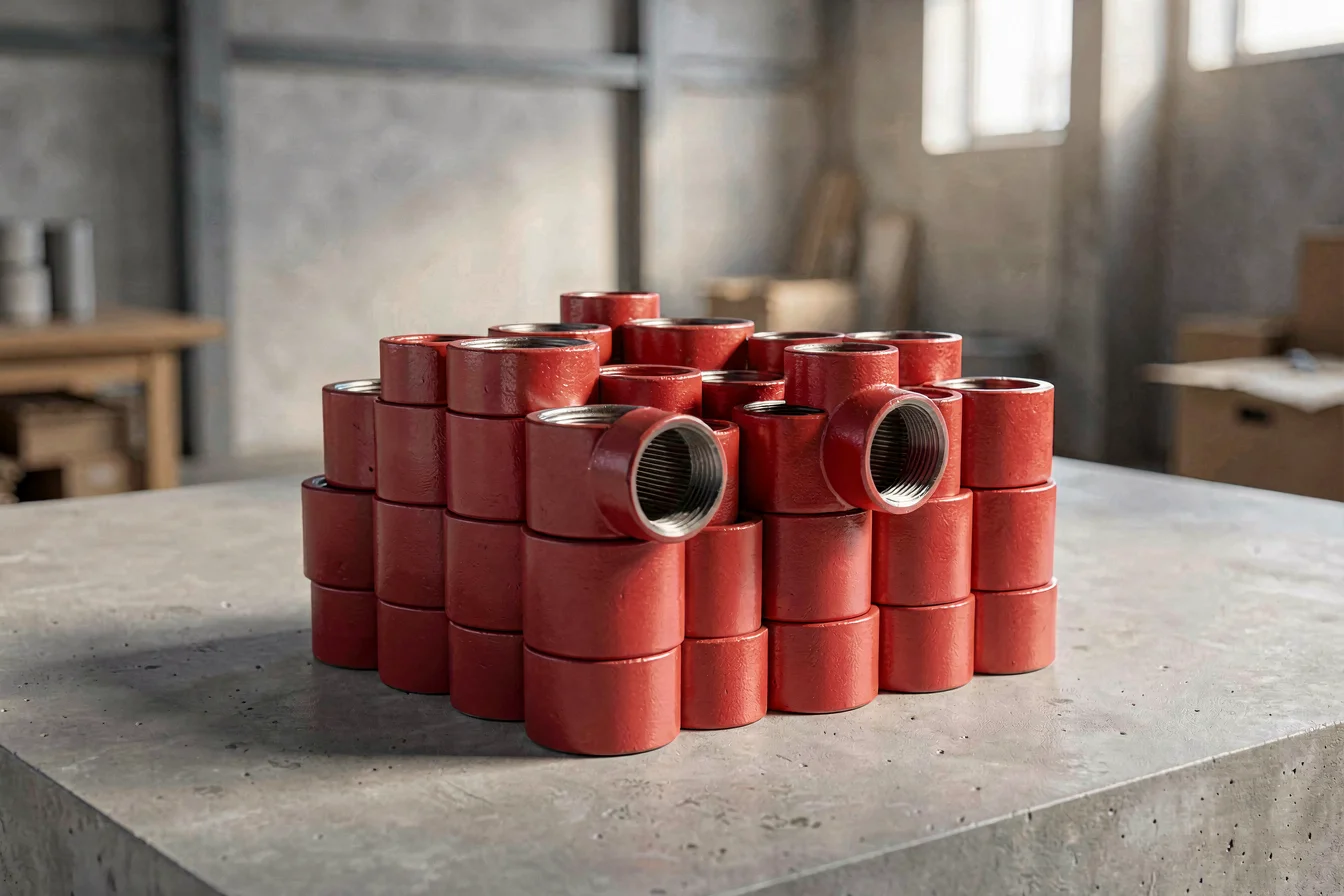
For high-load, directional pipe or fastener applications, buttress thread delivers superior axial strength and ease of disengagement, making it ideal for thrust scenarios, while casing coupling is optimal for pressure-tight, multi-directional connections. Recent search trends show rising demand for buttress thread pipe , signaling increased adoption for unidirectional force applications [1]. Procurement decisions should be guided by application-specific requirements: choose buttress thread for thrust, and casing coupling for sealing and alignment.
The core value of buttress thread and casing coupling lies in their ability to meet specialized needs in high-load pipe and fastener applications. Buttress thread is engineered for unidirectional axial force, featuring an asymmetric profile with a nearly vertical load-bearing face and a sloped relief face, allowing for high strength and easy disengagement [2][3][4][5]. It is widely used in vises, presses, and industrial machinery where force is applied in one direction. Casing coupling , by contrast, is a standardized pipe connector designed for multi-directional sealing, alignment, and high-pressure integrity, commonly employed in oil, gas, and water distribution systems.
Procurement urgency is driven by the need to match coupling type to operational environment. Buttress thread addresses the pain points of high axial loads and frequent disengagement, while casing coupling solves sealing, alignment, and pressure integrity issues. Technological innovations include improved thread profiles, advanced sealing gaskets, and material compatibility for harsh environments.
| Feature | Buttress Thread | Casing Coupling |
|---|---|---|
| Axial Load Capacity | High, unidirectional | Moderate, multi-directional |
| Sealing Performance | Limited, primarily structural | Excellent, pressure-tight |
| Ease of Disengagement | High | Low |
| Manufacturing Complexity | Low to moderate | Moderate |
| Typical Applications | Vises, presses, thrust assemblies | Oil/gas, water, high-pressure systems |
Buttress Thread is best suited for unidirectional thrust applications, while Casing Coupling excels in multi-directional, pressure-tight pipe systems.
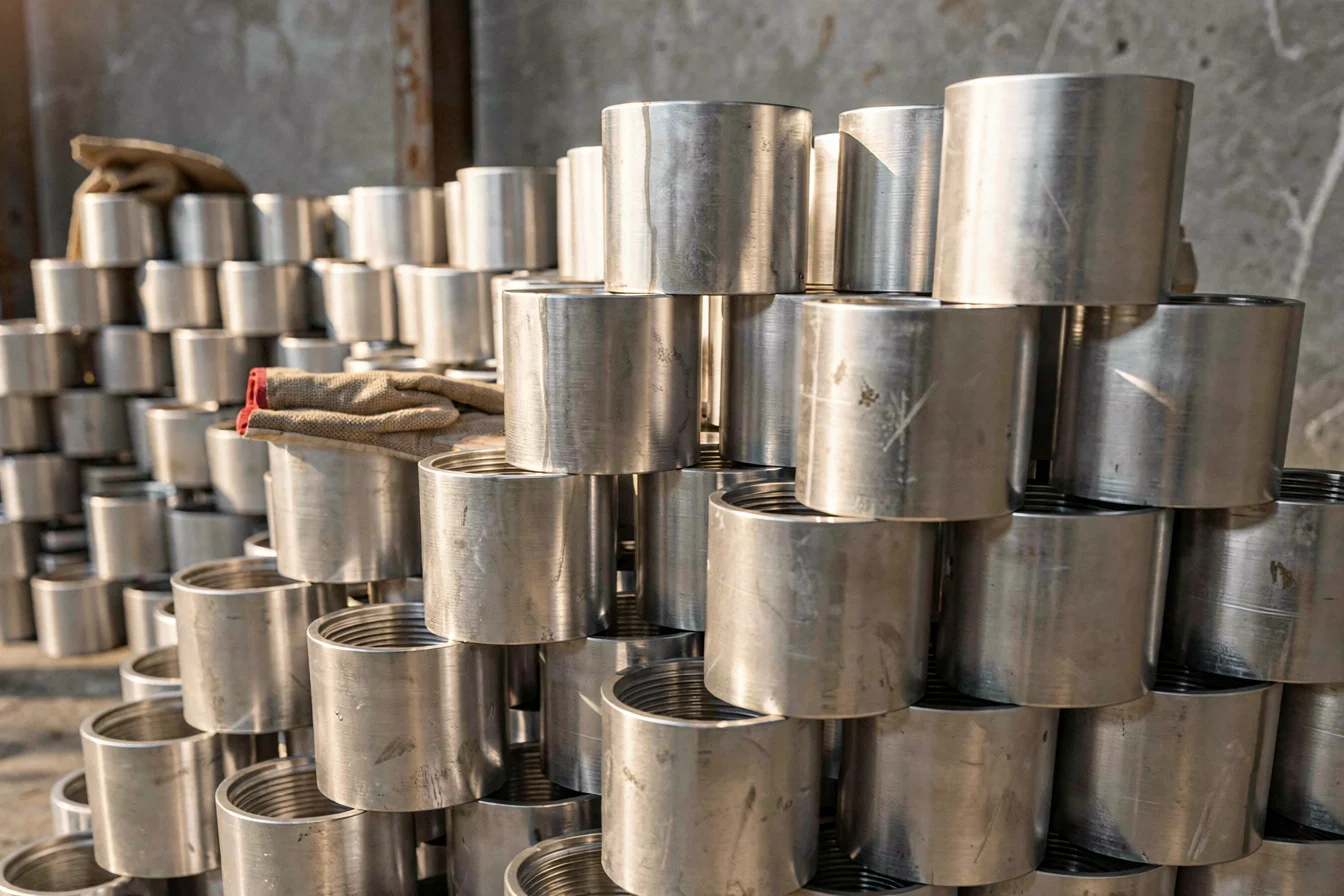
Durability is critical when selecting between buttress thread and casing coupling . Buttress thread is engineered for repeated high axial loads, with reduced wear on the load-bearing face and minimal friction in the primary direction [2][3][5]. Typical lifespan is longer in thrust applications, with less degradation under repeated use. Casing coupling relies on high-quality sealing gaskets and robust thread integrity to maintain performance in high-pressure, multi-directional environments, with durability dependent on gasket material and thread maintenance [9].
Application scenarios drive the decision: buttress thread is ideal for vises, presses, and industrial machinery, while casing coupling is preferred for oil, gas, and water distribution systems. Cost evaluation should include initial purchase price, maintenance, replacement frequency, and hidden costs like downtime or leaks. Over a 5-year horizon, buttress thread offers lower maintenance costs and longer replacement cycles for thrust applications, while casing coupling incurs higher maintenance due to gasket replacement and sealing integrity checks.
| Cost Factor | Buttress Thread | Casing Coupling |
|---|---|---|
| Initial Purchase Price | Moderate | High |
| Maintenance Costs | Low | Moderate to High |
| Replacement Frequency | Low | Moderate |
| Hidden Costs (Downtime/Leaks) | Low | High |
| Total 5-Year Ownership Cost | Low | Moderate |
For thrust applications, Buttress Thread minimizes maintenance and replacement costs, while Casing Coupling incurs higher ongoing costs for sealing and alignment.
The core value of buttress thread and casing coupling is their ability to meet specialized demands in high-load pipe and fastener applications. Buttress thread is gaining traction in thrust and unidirectional force scenarios, driven by rising search interest and adoption in industrial machinery [1]. Casing coupling remains dominant in multi-directional, high-pressure systems such as oil, gas, and water distribution, where sealing and alignment are critical.
Market trend data indicates increasing demand for buttress thread pipe in thrust applications, with search interest peaking in early 2026 [1]. Urbanization and multi-generational living drive demand for robust pipe connections in commercial and residential settings.
Google Trends data shows a steady rise in search interest for buttress thread pipe , with values peaking at 85 in February 2026 and remaining high through March 2026. Interest in casing thread and buttress thread coupling is stable but lower, reflecting ongoing demand but not as pronounced as pipe-specific queries [1].
Search Interest over Time
Procurement momentum is highest for Buttress Thread Pipe, suggesting increasing adoption for unidirectional force applications.
Reddit discussions reveal pain points around thread engagement, sealing, and gap management in pipe couplings [6][9]. Electricians struggle with incomplete thread engagement leading to gaps, while DIY users face sealing challenges when coupling male threads. Community feedback highlights the importance of full thread engagement and proper sealing for reliable connections.
Case Study 1: Electrician on r/electricians describes frustration with partial thread engagement in rigid pipe couplings, noting gaps that can snag conductors and increase resistance during wire pulls. Solution: Overthreading to ensure coupling integrity, but acknowledges trade-offs in installation ease.
"Just always wondered this. If all you do is one to one and a half inch thread there is like a inch and a half Gap in between the two sticks of pipe in the center of the coupling. It is significantly worse when all you do is put a connector on the coupling there is like a 2 inch gap. Seems like it could snag a conductor when pulling wire or at least add to the resistance of the pull." [6]
Case Study 2: DIY user on r/howto struggles with sealing male threads in a well tank replacement, finding that tightening one thread loosens the other. Solution: Proper gasket selection and careful installation, but highlights the need for compatible thread profiles and sealing materials [9].
"Trying to couple this male 3/4 pipe to a 1inch male tread on my replacement well tank. This is how the old one was coupled but I can’t seem to get it to seal. Tightening the couple on one male thread loosens it on the other." [9]
| Dimension | Buttress Thread | Casing Coupling |
|---|---|---|
| Overall Satisfaction | High (thrust applications) | High (sealing) |
| Most Praised Feature | Ease of disengagement | Pressure-tight sealing |
| Most Common Complaint | Limited sealing performance | Gasket wear and maintenance |
| Community Recommendation Rate | Moderate | High |
Viral content themes include gap management, sealing reliability, and the importance of full thread engagement. Recurring debate points focus on installation ease, gasket selection, and thread compatibility. Cultural reception is positive for both products, with users emphasizing the need for application-specific solutions.
User feedback underscores the importance of matching coupling type to application requirements, with Buttress Thread excelling in thrust and Casing Coupling in sealing.
Buyers should begin by identifying their core needs: primary use case (thrust or sealing), budget range, must-have vs. nice-to-have features, and operational environment. Key questions include: What is the direction and magnitude of the load? Is sealing or alignment critical? What is the expected lifespan and maintenance frequency?
| Tier | Recommended Product | Key Reason |
|---|---|---|
| Budget-Friendly | Buttress Thread | Low maintenance, high axial strength |
| Mid-Range | Casing Coupling | Pressure-tight sealing, moderate maintenance |
| Premium | Casing Coupling | Advanced sealing, high durability |
Optimization tips: Buy during off-peak seasons for best pricing; bundle with compatible gaskets for sealing applications; prioritize thread engagement and compatibility; avoid under-threading in thrust applications. Common mistakes include neglecting sealing gasket quality, mismatching thread profiles, and ignoring maintenance schedules.
Matching coupling type to application requirements is crucial for optimizing performance, reducing maintenance, and minimizing hidden costs.
Synthesizing all insights, buttress thread is the optimal choice for unidirectional thrust applications, offering high axial strength, ease of disengagement, and low maintenance. Casing coupling remains the standard for pressure-tight, multi-directional pipe connections, excelling in sealing and alignment. Market trends indicate rising demand for buttress thread pipe in industrial and manufacturing sectors, with search interest peaking in early 2026 [1].
Forward-looking recommendations: Buyers should monitor seasonal demand spikes for buttress thread pipe , anticipate supply-chain resilience challenges, and prioritize application-specific procurement strategies. Commercial buyers should leverage Alibaba.com for bulk sourcing, negotiate with suppliers for custom thread profiles, and ensure compliance with relevant standards.
Confident buyers should share their experiences with coupling choices, while commercial procurement teams should source from Alibaba.com to optimize supply-chain resilience and cost efficiency.