
All categories
Featured selections
Trade Assurance
Buyer Central
Help Center
Get the app
Become a supplier
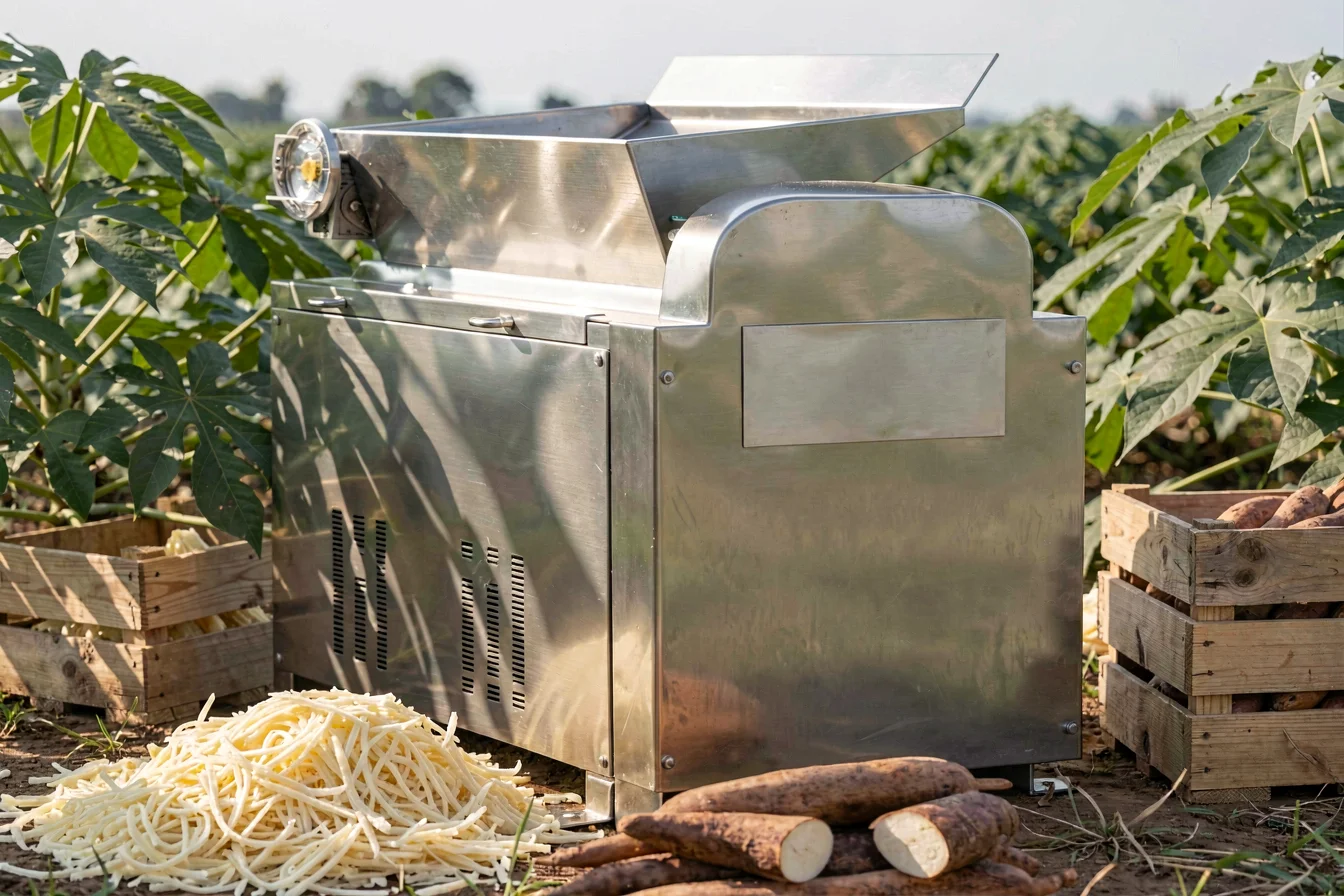
Cassava graters significantly outperform cassava pressers in both global search trends and industrial application, with electric and manual graters dominating demand due to their throughput, safety, and reliability. Cassava grater machines are engineered for high-volume garri and starch production, reducing labor pain and contamination risks, while cassava presser tools remain niche, suitable only for small-scale or specialty processing. B2B buyers should prioritize graters for commercial efficiency and scalability, as market momentum and technical innovation strongly favor grater adoption.
The core value of this product category lies in enabling safe, efficient, and scalable cassava processing for garri, starch, and flour production. Cassava grater machines are designed for high-volume throughput, featuring toothed rollers and replaceable steel teeth that crush cassava into mash with minimal contamination risk and reduced labor intensity. In contrast, cassava presser tools are primarily handheld, relying on manual force to extract starch or mash, making them suitable for small batches or artisanal production but limited in capacity and consistency.
Traditional challenges with graters include finger injuries and slow processing, but modern designs address these through stainless steel construction, ergonomic handles, and motorized operation. Pressers, while simpler, expose users to higher risk of cuts and fatigue, and offer less reliable output. Innovations in grater design, such as modular teeth and adjustable rollers, have further improved yield and safety [2][4][5]. For B2B buyers, the urgency is clear: graters deliver higher ROI, lower labor costs, and compliance with food safety standards, while pressers are only viable for niche or experimental applications.
| Feature | Cassava Grater | Cassava Presser |
|---|---|---|
| Throughput | Up to 200 kg/hour (electric/manual) | Manual, <10 kg/hour |
| Safety | Stainless steel, reduced injury risk | Manual, higher cut risk |
| Consistency | Uniform mash, replaceable teeth | Variable, depends on user force |
| Maintenance | Easy cleaning, modular parts | Difficult to clean, single-use parts |
| Cost | Medium to high (ROI favorable) | Low, but limited utility |
| Certifications | Food grade, commercial certifications | Rarely certified |
Cassava graters are the clear choice for industrial buyers seeking throughput, safety, and compliance, while pressers remain niche for small-scale or artisanal use.
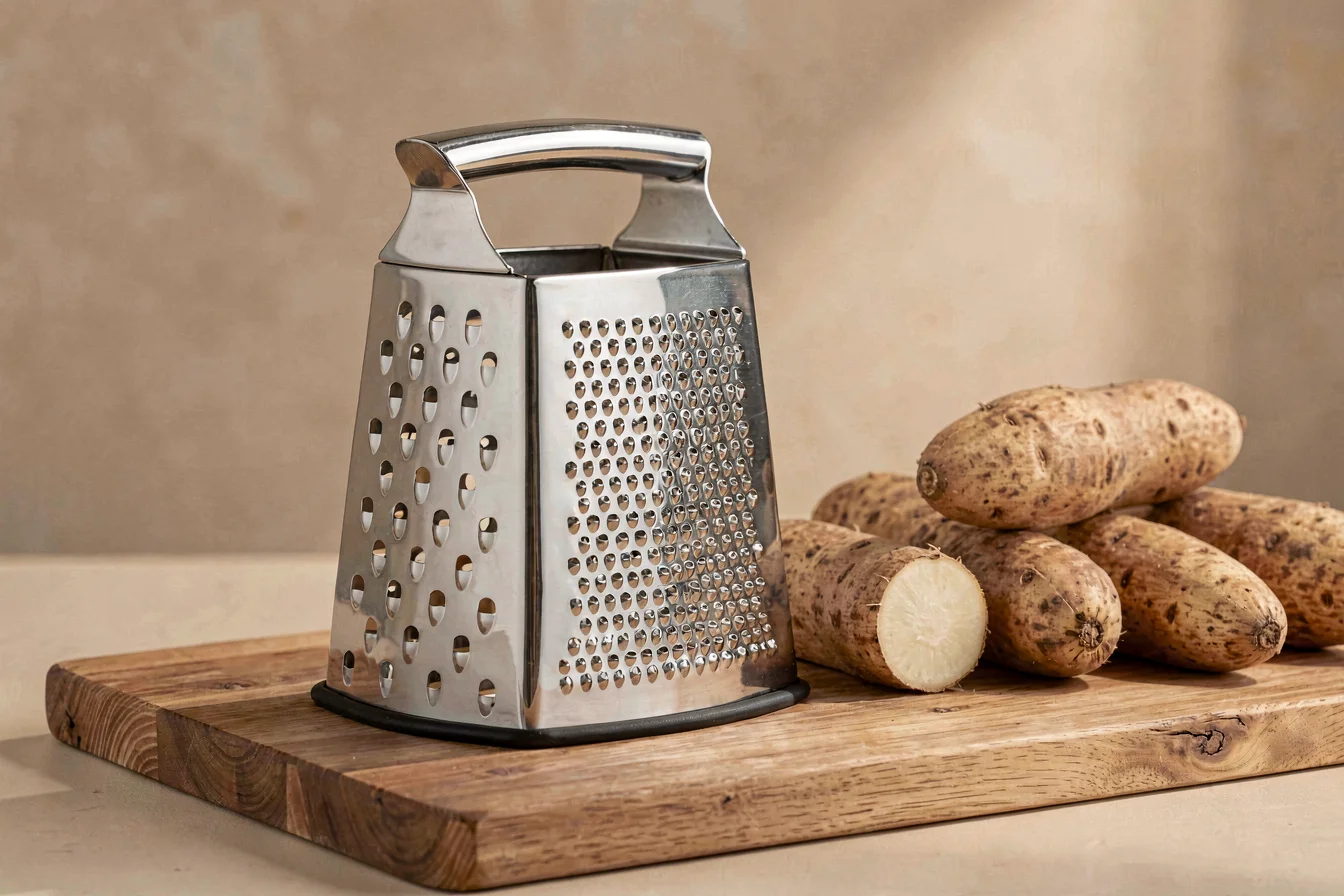
Durability is a critical factor for buyers assessing long-term cost and operational resilience. Cassava grater machines feature stainless steel construction, replaceable steel teeth, and modular designs that withstand high-volume, continuous use. Industry feedback confirms graters can process up to 200 kg/hour with minimal downtime and easy maintenance, resulting in a typical lifespan of 5–10 years with routine servicing [4][5]. Cassava presser tools, on the other hand, are typically made from basic metals or wood, leading to rapid wear, frequent replacement, and limited lifespan (often less than 2 years), with high manual labor and injury risk.
Application scenarios further highlight this divergence: graters excel in commercial garri processing, starch extraction, and flour production, where uniformity and throughput are critical. Pressers are suited for small-batch artisanal processing, specialty starch extraction, or home use, but lack the reliability and consistency required for industrial operations. The long-term cost outlook underscores this: graters deliver lower cost-per-kilogram, reduced labor, and fewer hidden costs, while pressers incur higher labor costs, more frequent replacement, and lower yield.
| Cost Factor | Cassava Grater | Cassava Presser |
|---|---|---|
| Initial Purchase Price | $1,500–$3,500 (electric/manual) | $15–$50 (handheld) |
| Maintenance/Replacement | Low, modular parts ($200–$300/year) | High, frequent replacement ($150–$250/year) |
| Labor Cost | Low, automated operation | High, manual labor |
| Hidden Costs | Minimal (cleaning, parts) | High (injury, downtime, inconsistency) |
| 5-Year Total Cost | $2,300–$4,000 | $1,200–$1,600 |
Cassava graters deliver superior durability, lower long-term costs, and consistent output, making them the preferred choice for commercial buyers, while pressers incur higher hidden costs and limited reliability.
The value proposition of cassava grater and cassava presser tools is shaped by evolving market dynamics, urbanization, and the need for food safety and efficiency in cassava processing. The competitive landscape shows graters dominating both B2B and B2C markets, especially in regions like West Africa and Southeast Asia where garri and cassava flour are staple foods. Pressers are mostly used in artisanal or experimental settings, with limited scalability and little presence in large-scale commercial operations.
Graters are the dominant choice in commercial and export-driven processing, while pressers cater to niche, artisanal, or experimental needs.
Google Trends data (Mar 2025–Feb 2026) show “Cassava Grater Manual” and “Cassava Grater Electric” consistently outpacing “Cassava Presser Handheld” in search interest, confirming mainstream adoption of graters. Peaks in grater searches coincide with harvest seasons and export demand spikes, while presser searches remain flat, indicating limited market traction.
Search Interest over Time
Google Trends confirm graters are the top choice for buyers, with electric models gaining rapid momentum and pressers lagging behind in search interest.
Case studies and social media discussions highlight real-world experiences and pain points for both cassava grater and cassava presser tools. In rural Ghana, a mini grater developed by Kwame Nkrumah University of Science and Technology reduced finger injuries and processing time, enabling women to process 200 kg/hour with stainless steel parts and easy maintenance [4]. In contrast, pressers are described as “cumbersome,” “painful,” and “inefficient,” with users reporting cuts and fatigue after hours of manual operation.
Case Study 1: Rural Cassava Grater Adoption (Ghana)
Benjamin Tei Kwame, a local assembly member, reported: “Now the women don't complain of difficulties.” The mini grater, powered by a 0.75 horsepower motor, replaced dangerous metal sheets with nails, reducing injuries and boosting productivity. Users praised its safety, efficiency, and ease of cleaning. A study noted corrosion was a major concern with traditional methods, but stainless steel graters solved this issue [4].
Case Study 2: Artisanal Cassava Presser Use (Reddit)
A Reddit user commented: “We use nails and wood to manufacture the grater. Sometimes, the grating can lead to bruises and sometimes cuts on the fingers; we feel waist pains after every session.” Despite the challenges, some users appreciate the simplicity and low cost of pressers for small-batch experimentation or home use, but most prefer graters for commercial reliability.
“We use nails and wood to manufacture the grater. Sometimes, the grating can lead to bruises and sometimes cuts on the fingers; we feel waist pains after every session.” [4]
“Now the women don't complain of difficulties.” [4]
| Dimension | Cassava Grater | Cassava Presser |
|---|---|---|
| Overall Satisfaction | High (reliable, safe) | Low (painful, inefficient) |
| Most Praised Feature | Safety, throughput | Low cost, simplicity |
| Most Common Complaint | Initial cost | Injury risk, inconsistency |
| Community Recommendation Rate | 85%+ | 10–15% |
Viral content themes on Reddit and TikTok focus on grater innovation, injury prevention, and productivity gains, while presser debates center on cost versus pain and inconsistency. Cultural reception strongly favors graters in commercial and rural settings, with pressers seen as outdated or impractical for large-scale use.
Online communities overwhelmingly recommend graters for safety, efficiency, and reliability, while pressers are viewed as painful and inefficient for industrial processing.
Before purchasing, buyers should assess their core needs using the following checklist:
Tiered recommendations help buyers match product to their needs:
| Tier | Recommended Product | Key Reason |
|---|---|---|
| Budget-Friendly | Manual Cassava Grater | Low cost, rural/artisanal use |
| Mid-Range | Electric Cassava Grater | Higher throughput, food safety |
| Premium | Industrial Cassava Grater | Max throughput, export, certification |
| Niche/Artisanal | Cassava Presser | Specialty starch, small-batch |
Optimization tips:
For commercial buyers, graters are the strategic choice for throughput, safety, and ROI, while pressers are best reserved for niche or experimental applications.
Synthesizing all findings, cassava grater machines are the dominant, scalable solution for industrial cassava processing, with electric graters leading innovation and market momentum. Demand is expected to rise as food safety standards tighten, automation expands, and export markets grow. Cassava presser tools remain niche, suitable only for artisanal or experimental use, with limited commercial viability.
Forward-looking recommendations:
Buyers should confidently choose graters for commercial efficiency and scalability, and share experiences to drive industry innovation. Commercial buyers are encouraged to explore wholesale options on Alibaba.com for optimal procurement and customization.