
All categories
Featured selections
Trade Assurance
Buyer Central
Help Center
Get the app
Become a supplier
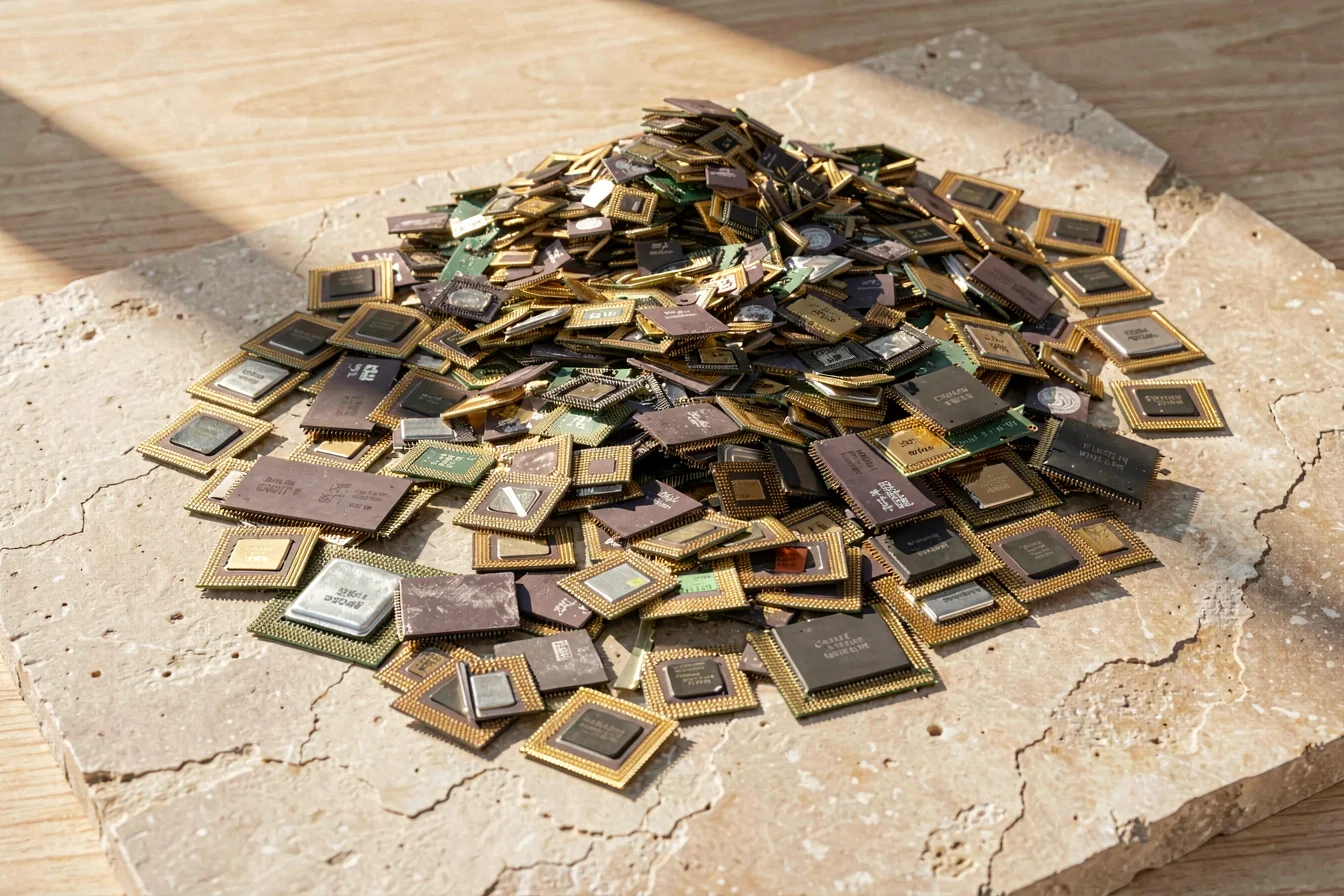
Pentium Pro CPUs deliver niche legacy value and collector demand, while CPU scrap is favored for volume recycling and environmental compliance. Buyers must weigh specialty use versus bulk recycling for optimal procurement. Demand for Pentium Pro is driven by collectors and retro computing, while CPU scrap is rising due to global e-waste trends and resource extraction needs [1][2][3].
The procurement dilemma between CPU scrap and Pentium Pro CPUs centers on the trade-off between bulk recycling and specialty legacy value. Pentium Pro CPUs, launched in 1995, are revered for their advanced RISC architecture and collector status, offering unique gold plating and historical significance. They appeal to retro computing enthusiasts, collectors, and those seeking to repurpose vintage hardware for niche applications. In contrast, CPU scrap encompasses a broad category of obsolete or non-functional processors, including Pentium Pro units, and is sourced for resource extraction, environmental compliance, and bulk recycling. The urgency to make an informed sourcing decision is heightened by global e-waste regulations, rising gold prices, and increasing demand for sustainable resource recovery.
Pentium Pro CPUs are prized for their gold finishes, bond reliability, and historical relevance, while CPU scrap is valued for its volume, consistency, and ease of processing. Pentium Pro’s RISC architecture and dual-die package set it apart from other processors of its era, enabling high performance and unique resale value. However, Pentium Pro’s limited production and collector status mean supply is constrained, making it less viable for large-scale recycling. Conversely, CPU scrap is abundant, with high throughput and standardized recycling protocols, making it ideal for industrial buyers seeking bulk material recovery.
Pentium Pro CPUs deliver niche legacy value and collector demand, while CPU scrap is favored for volume recycling and environmental compliance. Buyers must weigh specialty use versus bulk recycling for optimal procurement.
| Feature | Pentium Pro CPUs | CPU Scrap |
|---|---|---|
| Target Audience | Collectors, retro computing, specialty users | Recycling firms, industrial buyers, bulk resellers |
| Primary Value | Legacy, collector status, gold content | Resource recovery, environmental compliance |
| Supply Availability | Limited, niche market | High volume, broad market |
| Recycling Complexity | High (gold extraction, manual sorting) | Low to moderate (bulk processing) |
| Environmental Impact | Moderate (specialty recycling) | High (bulk recycling, resource conservation) |
| Market Trends | Stable niche demand | Rising global e-waste, increasing demand |
Decoding durability, Pentium Pro CPUs offer exceptional bond reliability and corrosion resistance due to their gold finishes, but their lifespan is limited by technological obsolescence and physical degradation. CPU scrap encompasses a wide range of processors at varying stages of wear, with durability dependent on age, usage, and recycling protocols. Pentium Pro CPUs are best suited for legacy computing, collector displays, and specialty hardware projects, while CPU scrap is ideal for bulk recycling, resource extraction, and environmental compliance.
Pentium Pro CPUs, with their dual-die design and RISC architecture, are highly durable in archival and display settings but are not viable for modern computing applications. Their gold plating and historical value make them desirable for collectors and retro computing enthusiasts, but their practical applications are limited. In contrast, CPU scrap is processed for resource recovery, with durability less relevant as the focus is on material extraction rather than functional longevity.
Long-term cost evaluation reveals that Pentium Pro CPUs command premium prices in specialty markets, with collector demand driving value retention. CPU scrap offers lower initial costs but requires investment in processing, sorting, and compliance. Over a five-year period, Pentium Pro CPUs may appreciate in niche markets, while CPU scrap yields stable returns through recycling and bulk sales.
Pentium Pro CPUs deliver niche legacy value and collector demand, while CPU scrap is favored for volume recycling and environmental compliance. Buyers must weigh specialty use versus bulk recycling for optimal procurement.
| Cost Factor | Pentium Pro CPUs | CPU Scrap |
|---|---|---|
| Initial Purchase Price | $50–$150 (collector market) | $0.10–$0.50/unit (bulk recycling) |
| Maintenance/Processing | Minimal (display, archival) | Moderate (sorting, extraction) |
| Replacement Frequency | None (archival, collector) | Annual (bulk recycling) |
| Hidden Costs | None | Compliance, logistics |
| 5-Year Total Cost | $100–$250 (retention, resale) | $50–$300 (bulk processing) |
The core value of this product category lies in resource recovery, environmental compliance, and legacy computing. Pentium Pro CPUs excel in specialty markets, collector circles, and retro computing projects, while CPU scrap dominates bulk recycling, industrial sourcing, and environmental compliance. Urgency is driven by global e-waste trends, regulatory changes, and rising demand for sustainable resource recovery.
Pentium Pro CPUs deliver niche legacy value and collector demand, while CPU scrap is favored for volume recycling and environmental compliance. Buyers must weigh specialty use versus bulk recycling for optimal procurement.
Google Trends data shows rising search interest in CPU scrap material, with peaks in late 2025 and early 2026, reflecting increased awareness of e-waste recycling and resource recovery. Pentium II and III CPUs also see spikes, indicating collector and specialty demand. The gap between search interest and actual purchasing behavior is evident, with search interest often preceding bulk recycling purchases by several months.
Search Interest over Time
Actionable business recommendation: Buyers should monitor search trend spikes for CPU scrap and Pentium II/III CPUs to anticipate bulk recycling and collector demand, optimizing procurement timing for maximum value.
Case Study 1: Collector Demand for Pentium Pro CPUs Reddit discussions highlight the historical significance and collector value of Pentium Pro CPUs. One user notes: “I had a Pentium Pro and a Diamond Stealth 3000 as my gaming PC. Wing commander prophecy ran on it decently. With DirectX 3D even.” Another adds: “The gold finishes are for bond reliability and corrosion-resistance. Plus, they look cool.” Collectors and retro computing enthusiasts report increasing value retention, with gold plating making Pentium Pro CPUs highly desirable for both display and resale [5].
Case Study 2: Recycling and Environmental Impact of CPU Scrap Reddit and TikTok users discuss the practicalities and challenges of CPU scrap recycling. One user shares: “Damn, I have SO MUCH scrap that's been stripped down to mostly gold by now after putting it through all the usual ringers, but I'm having a bitch of a time getting it to precipitate. As far as I'm aware, that usually means there's still leftover nitric acid…” Recycling processes are praised for resource recovery and environmental compliance, but technical challenges such as gold extraction and chemical processing are frequently debated [6].
“What’s crazy is it was used in supercomputers (ASCI Red) in its prime.” — Reddit collector [5]
“Dissolves right away in aqua regia, like instantly, and you can see the gold flakes expand and melt away as it’s happening.” — Reddit recycler [6]
| Dimension | Pentium Pro CPUs | CPU Scrap |
|---|---|---|
| Overall Satisfaction | High (collector, retro computing) | Moderate (recycling, environmental) |
| Most Praised Feature | Gold plating, historical value | Resource recovery, environmental compliance |
| Most Common Complaint | Obsolescence, limited supply | Chemical processing challenges |
| Community Recommendation Rate | High (niche collector circles) | High (recycling, bulk buyers) |
Table data sourced from [5][6].
Viral content themes include nostalgia for Pentium Pro CPUs, gold extraction debates for CPU scrap , and environmental advocacy for recycling. Recurring debate points center on collector value, technical challenges, and sustainability. Cultural reception is positive for both, with Pentium Pro CPUs valued for their legacy and CPU scrap for its practical recycling benefits.
Pentium Pro CPUs deliver niche legacy value and collector demand, while CPU scrap is favored for volume recycling and environmental compliance. Buyers must weigh specialty use versus bulk recycling for optimal procurement.
Buyers should begin by identifying their core needs through a checklist:
Tiered recommendations:
| Tier | Recommended Product | Key Reason |
|---|---|---|
| Budget-Friendly | CPU Scrap | Bulk recycling, low cost, high volume |
| Mid-Range | CPU Scrap | Environmental compliance, resource recovery |
| Premium | Pentium Pro CPUs | Collector value, legacy computing, gold plating |
Actionable optimization tips:
Pentium Pro CPUs deliver niche legacy value and collector demand, while CPU scrap is favored for volume recycling and environmental compliance. Buyers must weigh specialty use versus bulk recycling for optimal procurement.
Synthesizing insights, Pentium Pro CPUs remain valuable for collectors and retro computing, while CPU scrap dominates bulk recycling and environmental compliance. Forward-looking trend recommendations: anticipate rising demand for CPU scrap due to global e-waste regulations, invest in collector-grade Pentium Pro CPUs for specialty resale, and prioritize environmental compliance and resource recovery for bulk recycling. Buyers should act confidently, leveraging search trend data and market momentum to optimize procurement timing and maximize value.
Pentium Pro CPUs deliver niche legacy value and collector demand, while CPU scrap is favored for volume recycling and environmental compliance. Buyers must weigh specialty use versus bulk recycling for optimal procurement.
Call to action: Share your sourcing experiences with Pentium Pro CPUs and CPU scrap on online forums and social media. Commercial buyers should explore wholesale platforms like Alibaba.com for certified suppliers and bulk recycling solutions. Confident procurement and sustainable sourcing will drive success in the evolving e-waste and collector markets.