
All categories
Featured selections
Trade Assurance
Buyer Central
Help Center
Get the app
Become a supplier

DMPT is a versatile aromatic amine with strong demand in polymer science and chemical synthesis, while Dimethyl Propiothetin is a specialized aquatic attractant and growth promoter with high efficacy in aquaculture. Procurement logic points to DMPT for chemical and polymer supply chains, and Dimethyl Propiothetin for aquaculture and animal feed, with demand diverging by sector and application [4][5]. Buyers must align their sourcing strategy to end-use requirements, as each compound addresses distinct industrial and commercial pain points.
The DMPT (N,N-Dimethyl-p-toluidine) is a tertiary aromatic amine widely used as a co-initiator in UV-curing systems, chemical intermediate, and in polymer synthesis [4]. Its value lies in accelerating polymerization and acting as a photoinitiator, making it indispensable in industries such as textiles, plastics, and electronics. In contrast, dimethyl propiothetin (DMPT 40%) is a sulfur-containing compound, marketed as a fourth-generation aquatic attractant and growth promoter, with superior efficacy compared to traditional attractants like choline chloride and glycine betaine [5].
DMPT targets industrial buyers seeking high-performance chemical reagents, while Dimethyl Propiothetin addresses aquaculture and animal feed producers requiring enhanced feed intake, meat quality, and shell growth. Technological innovation in DMPT centers on purity, solubility, and UV-curing efficiency, while Dimethyl Propiothetin’s innovation is in attractant potency and economic protein sourcing.
Traditional challenges: DMPT buyers face supply chain volatility and purity requirements; Dimethyl Propiothetin buyers must ensure regulatory compliance and attractant efficacy. Procurement urgency is highest for DMPT in polymer and electronics sectors, and for Dimethyl Propiothetin in aquaculture and feed sectors.
| Feature | DMPT | Dimethyl Propiothetin |
|---|---|---|
| Chemical Structure | Aromatic amine (C9H13N) | Sulfur-containing compound (C5H11SO2Cl) |
| Primary Use | Photoinitiator, chemical intermediate | Aquatic attractant, growth promoter |
| Target Industry | Polymer, electronics, textiles | Aquaculture, animal feed |
| Procurement Pain Point | Purity, supply volatility | Regulatory compliance, attractant efficacy |
| Innovation Focus | UV-curing, polymerization efficiency | Attractant potency, protein economics |
DMPT is the compound of choice for chemical and polymer supply chains, while Dimethyl Propiothetin dominates aquatic feed and attractant markets, with procurement logic dictated by sector-specific requirements.
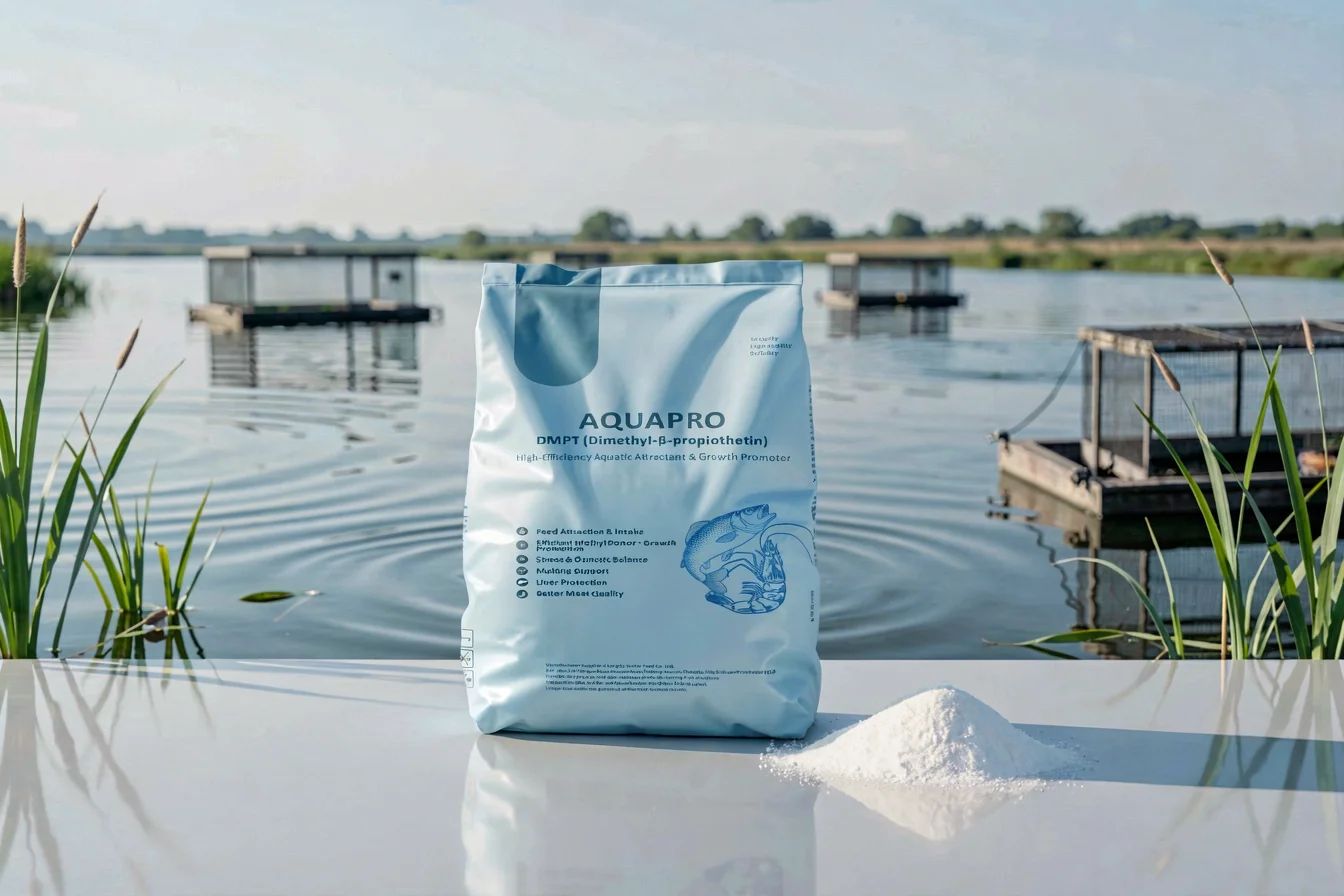
Durability is a key concern for both DMPT and dimethyl propiothetin , but their application environments and degradation profiles differ. DMPT, as a tertiary aromatic amine, is stable in dry conditions but susceptible to photodegradation and decomposition when exposed to light or high temperatures, which impacts its shelf life and performance in UV-curing systems [4]. In contrast, Dimethyl Propiothetin is a sulfur-containing compound with high stability in aquatic feed environments, maintaining efficacy even under varying pH and temperature conditions, essential for consistent attractant performance [5].
Application scenarios: DMPT excels in polymer synthesis, textile finishing, and electronics manufacturing, where rapid polymerization and chemical reactivity are required. Dimethyl Propiothetin is optimal in aquaculture feed, where enhanced feed intake, meat quality, and shell growth are critical. Buyers must evaluate their operational environment: DMPT for high-tech manufacturing, Dimethyl Propiothetin for aquatic feed and attractant formulations.
Long-term cost outlook: DMPT’s initial price is moderate, but buyers must factor in purity requirements, replacement frequency due to photodegradation, and hidden costs from supply chain disruptions. Dimethyl Propiothetin’s cost is higher due to specialized formulation and certification, but its growth-promoting and attractant effects reduce replacement frequency and improve overall economic value in aquaculture.
| Cost Factor | DMPT | Dimethyl Propiothetin |
|---|---|---|
| Initial Purchase Price | Moderate | High |
| Replacement Frequency | Medium (photodegradation) | Low (stable in feed) |
| Maintenance Cost | Moderate (purity, storage) | Low (regulatory compliance) |
| Hidden Costs | Supply chain disruption, purity | Certification, attractant efficacy |
| 5-Year Total Cost | Moderate to high (industrial use) | High to very high (aquaculture) |
Durability and cost evaluation show DMPT is best suited for high-tech manufacturing, while Dimethyl Propiothetin delivers long-term economic value in aquaculture and feed markets.
The DMPT and dimethyl propiothetin market landscape is shaped by sector-specific demand, regulatory frameworks, and technological innovation. DMPT’s core value lies in its role as a chemical intermediate and co-initiator, driving efficiency and product quality in polymer and electronics sectors. Dimethyl Propiothetin’s value is in its attractant and growth-promoting properties, revolutionizing aquaculture feed and enhancing economic returns for producers.
DMPT excels in:
Dimethyl Propiothetin excels in:
Market trend data: Urbanization and e-commerce drive demand for DMPT in polymer and electronics sectors, while multi-generational aquaculture and feed innovation fuel growth for Dimethyl Propiothetin [5].
Google Trends data reveals distinct search patterns for DMPT and related queries, with “DMPT powder” showing the highest search momentum (index value 81–94) from Q3 2025 to Q1 2026, peaking in August and September 2025 [1]. “Dimethyl Propiothetin supplement” lags behind, with values 21–46, indicating lower consumer interest but stable industrial demand. “DMPT chemical reagent” also shows moderate but steady growth, reflecting ongoing industrial procurement.
Search Interest over Time
Search interest spikes for DMPT powder indicate strong industrial procurement cycles, while Dimethyl Propiothetin supplement maintains stable but lower demand, reflecting sector-specific purchasing behavior.
Buyers should start by identifying their core needs: Is the primary use case chemical synthesis, polymer manufacturing, or aquaculture feed? What is the budget range, and are there must-have features (e.g., purity, attractant efficacy, regulatory certification)? Key questions to ask:
Tiered recommendations:
| Tier | Recommended Product | Key Reason |
|---|---|---|
| Budget-Friendly | DMPT | Moderate price, wide availability |
| Mid-Range | Dimethyl Propiothetin | Superior attractant efficacy, stable in feed |
| Premium | DMPT (high purity) | OEM/ODM customization, regulatory compliance |
Optimization tips:
Segmented sourcing strategies enable buyers to align procurement with end-use requirements, optimizing cost and performance for each sector.
Synthesizing insights from all modules, buyers should prioritize DMPT for chemical and polymer supply chains, leveraging its versatility and OEM/ODM customization. For aquaculture and feed producers, Dimethyl Propiothetin offers unmatched attractant and growth-promoting properties, delivering economic value and regulatory compliance [5]. Market momentum for DMPT is expected to remain strong in polymer and electronics sectors, while Dimethyl Propiothetin will see steady growth in aquaculture and feed markets.
Forward-looking recommendation: Monitor search interest spikes for DMPT powder and chemical reagent to time procurement cycles, and ensure regulatory compliance for Dimethyl Propiothetin in feed formulations. Buyers should share procurement experiences and feedback to drive innovation, and commercial buyers are encouraged to source high-purity DMPT and certified Dimethyl Propiothetin from Alibaba.com for supply chain resilience.
Confident sourcing of DMPT and Dimethyl Propiothetin is critical for optimizing industrial and commercial supply chains, with clear sector-specific advantages and procurement strategies.