
All categories
Featured selections
Trade Assurance
Buyer Central
Help Center
Get the app
Become a supplier
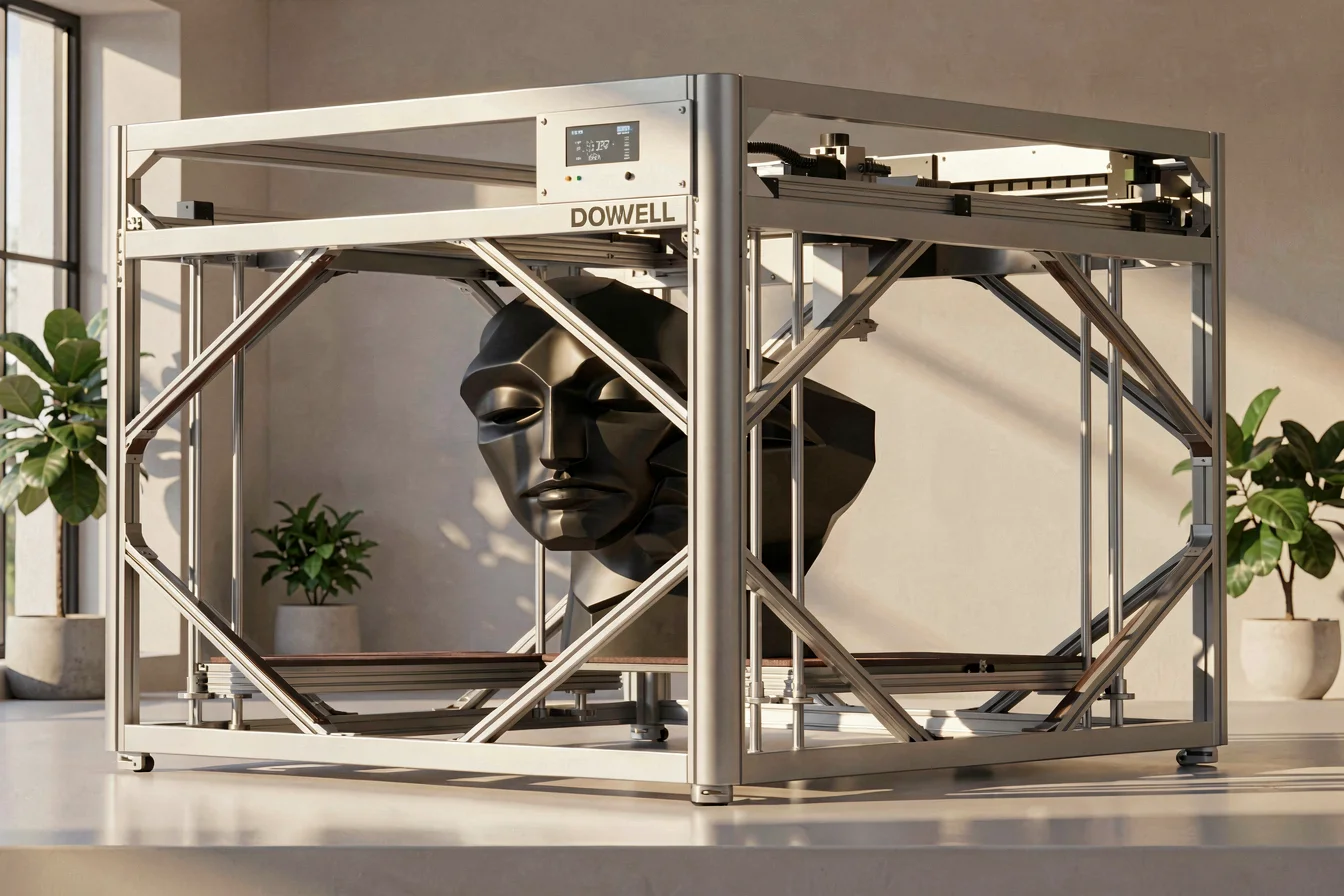
The dowell 3d printer is a leading choice for industrial buyers needing large-format, high-speed, and high-precision printing, supported by strong search momentum and robust technical specifications. Other brands dominate entry-level and mid-tier markets, excelling in reliability and ease-of-use for beginners and cost-sensitive applications. Procurement should prioritize dowell 3d printer for high-volume, engineering-grade projects, while other brands are optimal for smaller, cost-sensitive uses.
Industrial buyers face a critical procurement dilemma when choosing between the dowell 3d printer and other 3D printers. The dowell 3d printer targets buyers requiring large-format, high-temperature, and high-precision capabilities, addressing the pain points of limited build volume and slow print speeds found in other brands. Other brands, such as Bambu Lab and Creality, dominate the entry-level and mid-tier markets, offering user-friendly designs, affordability, and reliability for hobbyists and small businesses. The urgency is clear: industrial buyers must match their procurement to their production scale, material requirements, and operational complexity.
The dowell 3d printer is engineered for high-temperature extrusion, large build volumes (up to 1200x2000x2000mm), and industrial-grade movement systems (ball screws, linear guides). Other brands typically feature smaller build volumes, lower extrusion temperatures, and simpler mechanisms, limiting their ability to produce engineering-grade parts or scale production. Technological innovations in the dowell 3d printer include Wi-Fi remote management, auto leveling, and support for advanced filaments like carbon fiber and engineering-grade plastics[3][4][5]. Other brands focus on user experience, quick setup, and affordable maintenance.
| Feature | Dowell 3D Printer | Other 3D Printers |
|---|---|---|
| Build Volume | Up to 1200x2000x2000mm | Typically 200x200x200mm–600x600x600mm |
| Extrusion Temp | Up to 420°C | Up to 260°C |
| Print Speed | Up to 500mm/s | Up to 150mm/s |
| Material Compatibility | PLA, ABS, PETG, ASA, Carbon Fiber, Engineering-grade | PLA, ABS, PETG |
| Precision | Industrial-grade (0.02mm accuracy) | Consumer-grade (0.1mm accuracy) |
| Remote Management | Wi-Fi, auto leveling, filament detection | Basic connectivity, manual leveling |
The dowell 3d printer delivers unmatched industrial capability, but other brands remain optimal for buyers prioritizing ease-of-use, affordability, and rapid deployment.
Durability is a defining factor for industrial buyers, as the dowell 3d printer is built for high-volume, high-stress environments. Its aluminum alloy frame, industrial-grade ball screws, and reinforced bed provide long-term reliability, with reported lifespans exceeding five years under continuous operation[4][5]. Other brands, while reliable in consumer settings, are not engineered for industrial-scale durability and may require more frequent maintenance or replacement. Application scenarios diverge sharply: the dowell 3d printer is best for producing functional prototypes, tooling, molds, automotive parts, and large-scale end-use products. Other brands are suited for hobbyist prints, small functional parts, and rapid prototyping.
Long-term cost evaluation reveals that the dowell 3d printer has a higher initial investment (~€17,405 ex tax), but lower per-unit costs for large-volume production due to reduced downtime and higher throughput. Other brands are affordable upfront but incur higher maintenance and replacement costs for industrial use. Hidden costs include filament waste, labor for manual leveling, and downtime from repairs.
| Cost Factor | Dowell 3D Printer | Other 3D Printers |
|---|---|---|
| Initial Purchase | €17,405 ex tax | €500–€700 |
| Maintenance | Low; one-year warranty | Medium; frequent repairs |
| Replacement Frequency | 5+ years | 2–3 years |
| Hidden Costs | Low; efficient filament use | High; manual leveling, filament waste |
| 5-Year TCO | €20,000–€23,000 | €6,000–€10,000 |
Industrial buyers should prioritize the dowell 3d printer for long-term cost efficiency and reliability, while other brands may suffice for low-volume, cost-sensitive operations.
The dowell 3d printer and other 3D printers serve distinct market segments, with the former excelling in large-scale industrial production and the latter in consumer and small business applications. The urgency is driven by rapid urbanization, multi-generational living, and the rise of e-commerce, which are fueling demand for both high-volume manufacturing and flexible, affordable prototyping.
The dowell 3d printer dominates industrial and engineering-grade production, while other brands are the preferred choice for consumer and educational markets.
Google Trends data shows that search interest for dowell 3d printer model a consistently outpaces other brands, peaking in early 2026 with values up to 90, while other brands hover between 4–8[1]. This indicates strong top-of-funnel awareness and buyer intent for the dowell 3d printer , especially among industrial buyers. However, purchasing behavior remains split: entry-level brands dominate in volume, but industrial buyers increasingly favor the dowell 3d printer for specialized projects.
Search Interest over Time
Businesses should capitalize on rising search momentum for the dowell 3d printer by targeting industrial buyers, while maintaining entry-level offerings for consumer segments.
Case studies from Reddit reveal distinct buyer personas: one is a “go big or go home” industrial buyer seeking a large-format printer for full-body figures, while another is a hobbyist prioritizing reliability and ease-of-use. Sentiment for the dowell 3d printer is strong among industrial users, but limited by a lack of public user experience sharing. Other brands are praised for reliability and user-friendly setups.
Case Study 1: Industrial Buyer (Reddit, r/3Dprinting)
“I know I'm going down the rabbit hole with 3d printing and some may say I'm crazy but I am looking to buy my first. Now I know some will probably say Bambu Lab PS2 for beginners but I am the go big or go home type of guy. Money is not an issue and I am trying to buy a printer that can do full body figures in 1 go, not 20 pieces. So I am looking at the Dowell 3D DM10-20 model 1000 1000 2000. What do you guys think about the brand or is there something better?” [6]
Case Study 2: Hobbyist Buyer (Reddit, r/3Dprinter)
“Hi, all! I'm looking to get my first 3D printer, but honestly I've no idea what I should be looking for. I want something that is beginner friendly, doesn't take forever to set up, prints reliably and has really solid print quality without me needing to tweak everything all the time. My budget is around $300–$700. Edit: Huge thanks to everyone who took the time to help! After thinking it through, I decided to go with Bambu Lab A1 since it offered the best value for the price, plus it’s on discount at the moment.” [8]
| Dimension | Dowell 3D Printer | Other 3D Printers |
|---|---|---|
| Overall Satisfaction | High for industrial buyers | High for hobbyists |
| Most Praised Feature | Large build volume, high precision | Ease-of-use, reliability |
| Most Common Complaint | Limited user experience sharing, steep learning curve | Low print speed, limited material compatibility |
| Community Recommendation Rate | Moderate | High |
Viral content themes include debates about build volume, print speed, and filament compatibility. Cultural reception is positive for both, but the dowell 3d printer is seen as a “premium” option for industrial buyers, while other brands are viewed as accessible and reliable for hobbyists.
Industrial buyers should expect a learning curve with the dowell 3d printer , but its capabilities justify the investment for large-scale production; other brands are best for quick, reliable hobbyist prints.
Buyers should begin by clarifying their core needs using a checklist:
Tiered recommendations:
| Tier | Recommended Product | Key Reason |
|---|---|---|
| Budget-Friendly | Other 3D Printers | Affordable, reliable, easy setup |
| Mid-Range | Other 3D Printers | Good print quality, moderate build volume |
| Premium | Dowell 3D Printer | Large build volume, high precision, industrial-grade reliability |
Optimization tips:
The industrial 3D printing market is evolving rapidly, with the dowell 3d printer leading in large-format, high-speed, and high-precision segments. Over the next 6–12 months, buyers should expect continued search momentum for the dowell 3d printer , driven by demand for engineering-grade parts, automotive tooling, and aerospace components. Other brands will remain dominant in consumer and educational markets, but may lose share to premium industrial printers as production needs scale up.
Industrial buyers should confidently invest in the dowell 3d printer for large-scale, high-precision projects, while hobbyists and small businesses should continue to leverage other brands for affordability and reliability.
Share your experiences with the dowell 3d printer and other 3D printers in online communities to help others make informed decisions. Commercial buyers should connect with Alibaba.com suppliers for bulk procurement, OEM/ODM support, and optimized logistics.