
All categories
Featured selections
Trade Assurance
Buyer Central
Help Center
Get the app
Become a supplier
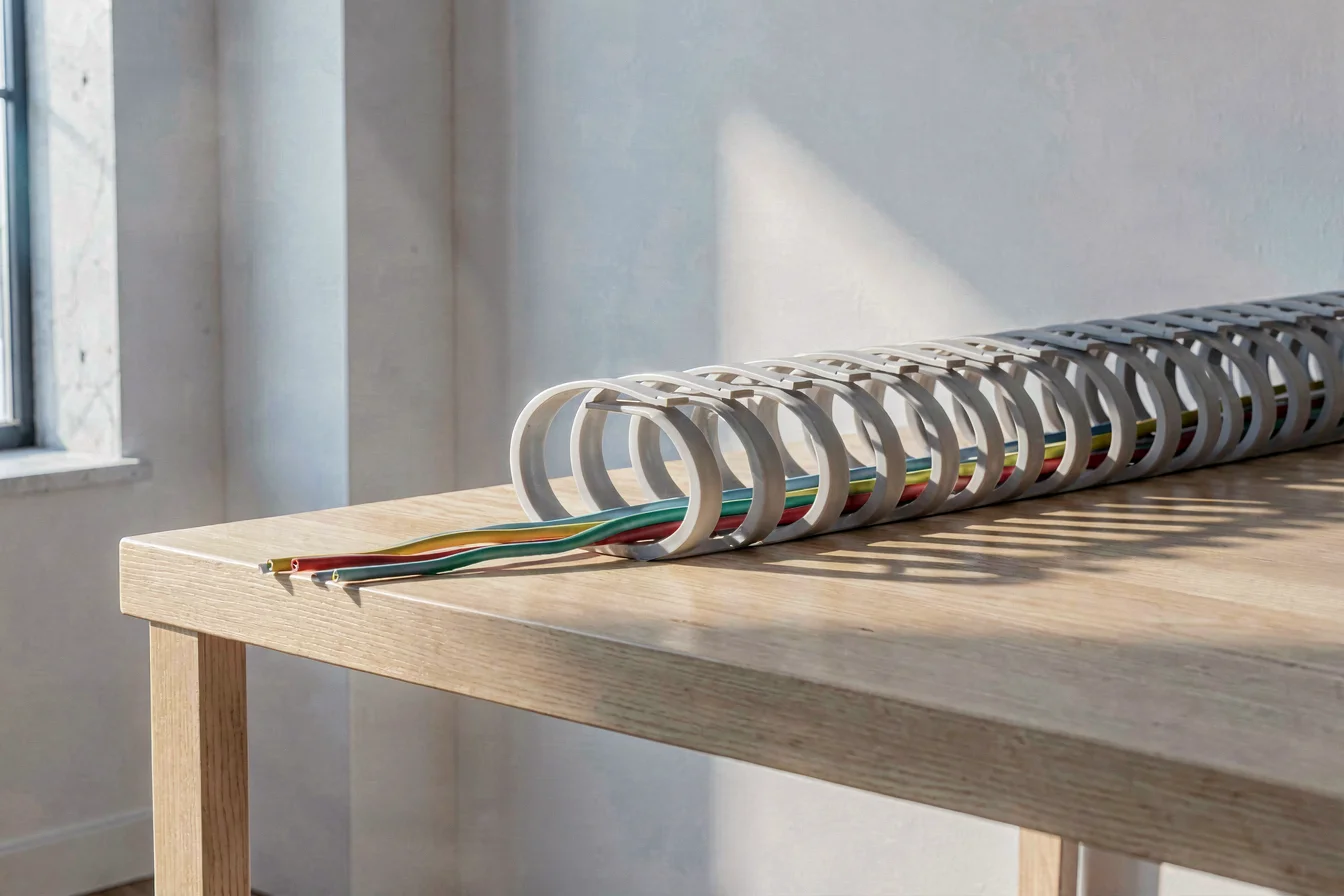
Deciding between flexible cable channel and rigid cable channel depends on your environment’s dynamics and installation complexity. Flexible channels suit applications requiring frequent movement, tight bends, or modular setups, while rigid channels excel in static, high-load, or safety-critical installations. As automation and modular design drive demand for flexibility, buyers must align channel choice with project lifecycle, compliance, and long-term cost efficiency [1][4][7][8].
The flexible cable channel category addresses the need for adaptability in environments where cables must bend, twist, or move repeatedly—such as robotics, automation, and temporary installations. In contrast, the rigid cable channel targets static, structured setups where stability, cable protection, and compliance with safety standards are critical—typical in industrial control panels, permanent infrastructure, and high-density wiring. The urgency in today’s market is shaped by rapid adoption of automation, modular workspace design, and increasing demand for scalable, flexible solutions.
Flexible channels are engineered with materials like PVC, TPE, or silicone, allowing millions of bending cycles and easy routing in confined spaces, but they require careful attention to bending radius and insulation to prevent premature failure [4][5][7]. Rigid channels, typically made from ABS, steel, or polycarbonate, offer robust protection against physical damage, dust, and moisture, but are harder to install in non-linear or evolving layouts.
Technological innovations include modular flexible channels for drag chains, robotic arms, and CNC machines, while rigid channels now feature quick-release locking systems, flame-retardant materials, and EMI shielding for advanced applications. Key limitations: flexible channels may degrade faster in harsh environments or under continuous load, and rigid channels can be costly or impractical for retrofitting in dynamic spaces.
| Feature | Flexible Cable Channel | Rigid Cable Channel |
|---|---|---|
| Flexibility | High: bends, twists, fits complex routing | Low: fixed shape, hard to modify |
| Installation Ease | Easy: adapts to tight spaces | Difficult: requires precise planning |
| Durability | Moderate: depends on insulation and movement | High: robust, long service life |
| Cost | Higher upfront, longer life in dynamic use | Lower upfront, best for static use |
| Certifications | UL, CE, RoHS, IP ratings | UL, CE, RoHS, IP ratings, EMI shielding |
| Typical Applications | Robotics, automation, drag chains, temporary setups | Industrial panels, permanent infrastructure, high-load environments |
Flexible cable channels offer superior adaptability for dynamic projects, while rigid channels deliver unmatched stability and protection in static, high-load settings.

Durability is the central factor in channel selection, as flexible channels must withstand repeated bending, torsion, and variable motion, while rigid channels focus on long-term structural integrity and resistance to environmental hazards. Flexible channels are typically engineered with stranded copper conductors and high-strength insulation, enabling them to endure 50,000–10,000,000 bending cycles depending on design, but require careful routing to avoid strain or insulation breakdown [4][5]. Rigid channels, constructed from robust polymers or metals, offer superior protection against mechanical damage, dust, and moisture, with service lives often exceeding 10 years in static applications [8].
In real-world scenarios, flexible channels excel in robotics, drag chains, CNC machines, and temporary installations, where cables must bend, twist, or move frequently. Rigid channels are preferred in industrial control panels, permanent infrastructure, and environments requiring high cable density or compliance with safety standards. Flexible channels are easier to install in complex, evolving layouts, but may require more frequent replacement in harsh environments. Rigid channels, while harder to install, provide greater longevity and reduced maintenance in static settings.
Long-term cost evaluation must consider initial purchase price, maintenance, replacement frequency, and hidden costs. Flexible channels typically cost 10–20% more upfront, but can last up to 10x longer in dynamic applications, reducing downtime and replacement costs. Rigid channels are cheaper to buy but may incur higher installation and maintenance costs if modifications are needed [4][8].
| Cost Factor | Flexible Cable Channel | Rigid Cable Channel |
|---|---|---|
| Initial Purchase Price | $8–$30 per meter | $5–$25 per meter |
| Installation Cost | Low: easy to route, fast install | High: requires precise planning, slow install |
| Maintenance Cost | Moderate: may require replacement in dynamic use | Low: minimal maintenance in static use |
| Replacement Frequency | High in dynamic, low in static | Low in static, high if modified |
| Hidden Costs | Downtime, insulation breakdown, retrofitting | Installation labor, modifications, compliance |
| 5-Year Total Cost | $150–$400 (dynamic use) | $120–$300 (static use) |
Flexible channels deliver greater long-term value in dynamic applications, while rigid channels minimize ongoing costs in static, high-load environments.
The cable channel market is rapidly evolving, driven by automation, modular workspace design, and increasing demand for scalable solutions. Flexible channels are favored in robotics, automation, drag chains, and temporary installations, where adaptability and frequent movement are critical. Rigid channels dominate in industrial control panels, permanent infrastructure, and high-density wiring, where stability, cable protection, and compliance are paramount. Market data shows stable interest in both, but modular cable management channels are outpacing both, indicating a broader shift toward adaptable, multi-use solutions [1].
Flexible channels excel in dynamic, modular, and evolving environments, while rigid channels are indispensable in static, compliance-driven, or high-load applications.
Google Trends reveals stable global interest in both flexible cable channel and rigid cable channel , with search volumes fluctuating between 14–22 for flexible and 14–20 for rigid channels from March 2025 to March 2026. Modular cable management channels are outpacing both, indicating a broader shift toward adaptable solutions [1].
Search Interest over Time
Flexible and rigid channels maintain steady demand, but modular cable management channels are gaining momentum as buyers seek adaptable solutions for evolving environments.
Social media and Reddit reveal contrasting user experiences for flexible cable channel and rigid cable channel . Flexible channels are praised for their “softness,” “fitting anywhere,” and ease of installation, especially in home and office environments. Users often recommend flexible channels for temporary setups, modular workspaces, and tight bends, but complain about durability and strain resistance. Rigid channels are valued for their “stability,” “neatness,” and compliance with safety standards, though criticized for inflexibility in retrofitting and installation complexity.
Case Study 1: A Reddit user on r/DeskCableManagement spent a week 3D printing flexible cable channels for their desk setup. They praised the adaptability, ease of installation, and satisfaction with the result, but noted the challenge of moving or upgrading cables in a hurry. “This is everything. Until you need to unplug/move/upgrade/find space for a new cable in a hurry… I'm sure encasing them in a nice neat square block of polished resin would have a similar effect.” [12]
Case Study 2: On r/pcmods, users discussed rigid cable channels for permanent installations, emphasizing stability and neatness. “Oh, those are SLICK! I don't have a 3D printer. I'll have to see if I can mod this for subtractive manufacture (CNC or laser).” [13]
“Flexible channels are perfect for tight spaces and quick setups, but I worry about strain and insulation breakdown over time.” (Reddit, r/UsbCHardware)
“Rigid channels are great for stability and protection, but are harder to install in evolving layouts.” (Reddit, r/DeskCableManagement)
| Dimension | Flexible Cable Channel | Rigid Cable Channel |
|---|---|---|
| Overall Satisfaction | High for adaptability, moderate for durability | High for stability, moderate for flexibility |
| Most Praised Feature | Softness, easy installation | Stability, protection |
| Most Common Complaint | Durability, strain resistance | Installation complexity, inflexibility |
| Community Recommendation Rate | High for temporary/modular setups | High for permanent/static installations |
Viral content themes include “DIY cable management,” “3D printing solutions,” “modular workspace design,” and “cable tangling solutions.” Recurring debate points center on durability versus adaptability, installation complexity, and the trade-off between upfront cost and long-term value. Cultural reception favors flexible channels for home/office use and rigid channels for industrial/commercial applications.
Flexible channels are celebrated for adaptability and ease of installation, while rigid channels are valued for stability and protection, with users recommending each type for distinct use cases.
Buyers should begin by identifying their core needs through a checklist:
Tiered recommendations:
| Tier | Recommended Product | Key Reason |
|---|---|---|
| Budget-Friendly | Flexible Cable Channel | Easy installation, fits tight spaces |
| Mid-Range | Flexible Cable Channel | Adaptability, modular setups |
| Premium | Rigid Cable Channel | Stability, compliance, long-term durability |
Optimization tips: Buy flexible channels during peak demand for automation upgrades, bundle with modular accessories for adaptability, prioritize insulation and bending radius for dynamic use. Avoid over-specifying rigid channels for evolving layouts, and always verify certifications for safety-critical applications. Common mistakes include underestimating dynamic loads, ignoring compliance requirements, and failing to plan for future modifications.
Buyers should align channel choice with project lifecycle, compliance, and long-term cost efficiency, selecting flexible channels for dynamic, modular needs and rigid channels for static, high-load environments.
Key insights: Flexible cable channels are trending upward, driven by automation, modular workspace design, and increasing demand for adaptable solutions. Rigid cable channels remain strong in static, high-load, and safety-critical applications, but are being outpaced by modular cable management channels. Buyers should expect further innovation in flexible channels—drag chain systems, robotic integration, and quick-release locking for modular setups—while rigid channels will continue to evolve with EMI shielding, flame-retardant materials, and advanced compliance features [1][4][8].
Forward-looking recommendation: Over the next 6–12 months, prioritize flexible channels for dynamic, modular, and evolving projects, and rigid channels for permanent, high-load, or compliance-driven installations. Buyers should share their experiences to inform future procurement strategies and commercial buyers should leverage wholesale platforms like Alibaba.com to source certified, high-performance channels tailored to their specific needs.
Confident buyers should act now, aligning channel selection with project lifecycle and long-term cost efficiency, and share experiences to drive innovation and supply-chain resilience.