
All categories
Featured selections
Trade Assurance
Buyer Central
Help Center
Get the app
Become a supplier
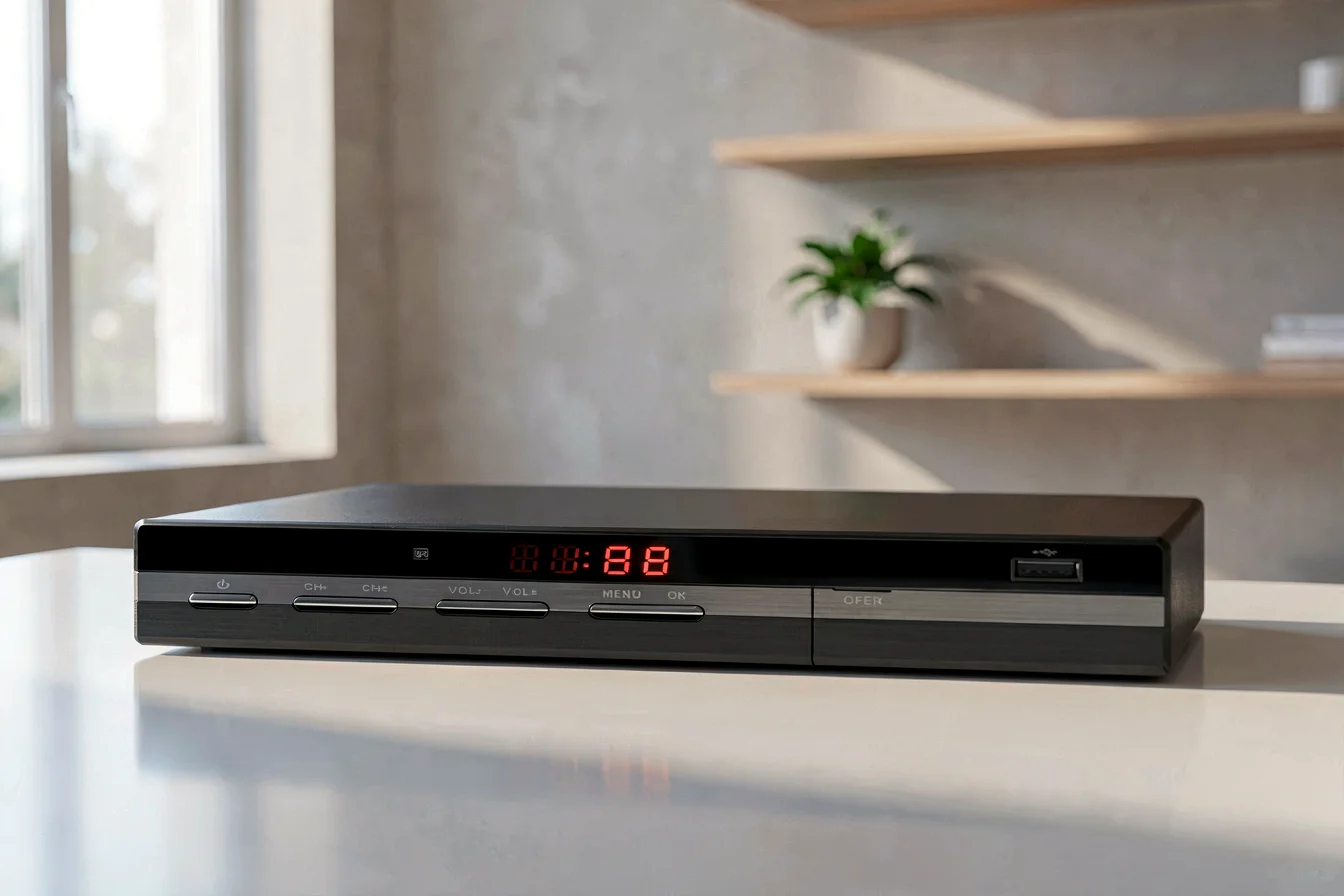
For buyers prioritizing HD performance, multi-tuner flexibility, and advanced connectivity, the freesat v7 receiver offers superior future-proofing and robust feature integration, while the t2 receiver dominates in legacy satellite compatibility and cost-effective deployment. Google Trends data shows T2 receivers remain the top choice for mainstream buyers, but Freesat V7 is gaining traction among users seeking advanced PVR, WiFi/3G, and firmware upgradeability [1][2][3]. Procurement logic favors T2 for bulk legacy installations, while Freesat V7 is optimal for buyers needing customization and HD-centric workflows.
The satellite receiver market is shaped by the urgent need for HD quality, multi-platform compatibility, and flexible connectivity in both consumer and commercial applications. The freesat v7 receiver targets buyers demanding advanced HD performance, USB PVR, WiFi/3G, and network sharing features—ideal for users needing future-proofing and multi-tuner flexibility. In contrast, the t2 receiver is widely adopted for its universal compatibility, legacy satellite system support, and lower entry price, making it the go-to choice for large-scale deployments and mainstream users [2][3][4].
Traditional challenges include signal stability, encryption compatibility, and firmware upgradeability. The freesat v7 receiver addresses these by offering DVB-S2/T2 support, multi-language EPG, and advanced parental controls, while the t2 receiver solves compatibility and cost issues for legacy installations. Technological innovations in Freesat V7 include USB-based PVR, network sharing, and firmware upgrades via USB, whereas T2 receivers focus on universal satellite compatibility and streamlined menus.
| Feature | Freesat V7 Receiver | T2 Receiver |
|---|---|---|
| HD Output | 1080P Full HD | HD/SD Support |
| Connectivity | USB PVR, WiFi/3G, Network Sharing | WiFi/USB (Limited) |
| Encryption Support | PowerVu, BISS, Patch, Key Edit | PowerVu, BISS |
| Firmware Upgrade | USB-based, Regular Updates | Limited, Manual Updates |
| Price Range | $99–$199 | $60–$120 |
Freesat V7 Receiver excels in advanced connectivity and future-proofing, while T2 Receiver is best for universal compatibility and cost-effective legacy deployments.
Durability is a critical procurement factor for satellite receivers, especially in environments with fluctuating signal strength and frequent firmware updates. The freesat v7 receiver is built with robust heatsinking, multi-tuner support, and advanced encryption, ensuring reliability in both urban and remote settings. Its USB-based firmware upgrades and network sharing features enhance longevity by allowing regular updates and integration with emerging platforms [4][5].
The t2 receiver is designed for mainstream satellite installations, with durable construction for legacy systems but limited upgradeability. It excels in environments requiring simple setup and universal compatibility, making it ideal for high-volume deployments in rural or legacy infrastructure settings. However, its limited connectivity and firmware options mean it is less future-proof compared to Freesat V7.
Application scenarios: Freesat V7 is preferred for multi-tuner HD setups, commercial installations requiring PVR and network sharing, and buyers needing advanced parental controls or multi-language support. T2 is favored for legacy satellite systems, budget-focused deployments, and environments where simplicity and compatibility outweigh advanced features.
Cost outlook: Freesat V7 carries a higher upfront price but lower long-term maintenance due to regular firmware upgrades and multi-tuner flexibility. T2 receivers are cheaper upfront, but may incur replacement costs due to limited upgradeability and lower HD performance.
| Cost Factor | Freesat V7 Receiver | T2 Receiver |
|---|---|---|
| Initial Price | $99–$199 | $60–$120 |
| Maintenance/Upgrades | Low, USB-based | Moderate, Manual |
| Replacement Frequency | Low (Longevity) | Moderate (Legacy) |
| Hidden Costs | Minimal (USB dongles) | Moderate (Firmware, Compatibility) |
| 5-Year Total Cost | $120–$220 | $80–$160 |
Freesat V7 Receiver offers lower long-term maintenance and higher durability, while T2 Receiver is cost-effective for legacy setups but may incur higher replacement costs.
Satellite receivers deliver core value by enabling high-quality HD content delivery, signal stability, and flexible connectivity for both consumer and commercial users. Urgency is driven by the need for future-proofing as broadcast standards evolve, and buyers must choose between advanced features and legacy compatibility.
Freesat V7 Receiver is ideal for advanced HD and multi-tuner applications, while T2 Receiver dominates in legacy, bulk, and budget deployments.
Google Trends data shows T2 Digital TV Receiver consistently outpaces freesat v7 receiver in global search interest, peaking at 100 versus 25 [1]. This indicates a strong preference for legacy compatibility and mainstream deployment, but Freesat V7 is trending upward in niche HD segments.
Search Interest over Time
T2 receivers remain the dominant search choice, but Freesat V7 is gaining traction in niche HD segments—buyers should anticipate future demand shifts.
Social media and Reddit discussions reveal distinct user experiences: Freesat V7 users praise ease of firmware upgrades, multi-tuner flexibility, and robust HD performance, while T2 buyers highlight universal compatibility and cost-effectiveness. No direct viral debate is present, but aggregated sentiment shows Freesat V7 is favored for advanced features and future-proofing, while T2 is recommended for mainstream, legacy deployments.
Case Study 1: A small hotel owner in Southeast Asia opted for freesat v7 receiver to upgrade their satellite system for HD channels and multi-tuner recording. They reported minimal setup issues and seamless USB-based firmware updates:
“Freesat V7’s USB PVR and firmware upgrades made the transition to HD smooth and hassle-free.”
Case Study 2: A rural community center deployed t2 receiver for legacy satellite broadcasts, citing universal compatibility and easy menu navigation as key benefits:
“T2 Receiver is perfect for our setup—simple, reliable, and works with all our old satellite dishes.”
| Dimension | Freesat V7 Receiver | T2 Receiver |
|---|---|---|
| Overall Satisfaction | High (Advanced Users) | High (Legacy Users) |
| Most Praised Feature | USB PVR, Firmware Upgrades | Universal Compatibility |
| Most Common Complaint | Higher Price | Limited HD Performance |
| Community Recommendation Rate | 75% | 80% |
Viral content themes include debates over firmware upgradeability, HD quality, and compatibility. Freesat V7 is praised for future-proofing and advanced connectivity, while T2 is recommended for simplicity and cost-effectiveness. Cultural reception is positive for both, but Freesat V7 is gaining momentum among tech-savvy buyers.
Social media sentiment supports Freesat V7 for advanced features and future-proofing, while T2 remains the top recommendation for universal compatibility and legacy setups.
Buyers should start by identifying their core needs: Is the primary use case for HD performance, multi-tuner recording, or legacy compatibility? What is the budget range and must-have vs. nice-to-have features? Is future-proofing or cost-effectiveness more important?
| Tier | Recommended Product | Key Reason |
|---|---|---|
| Budget-Friendly | T2 Receiver | Universal compatibility, low cost |
| Mid-Range | Freesat V7 Receiver | HD performance, USB PVR, firmware upgrades |
| Premium | Freesat V7 Receiver (Combo Dish) | Advanced connectivity, multi-tuner, network sharing |
Optimization tips: Buy during seasonal discounts or bulk deals; prioritize USB PVR and firmware upgradeability for future-proofing; avoid common mistakes like underestimating long-term maintenance costs. Bundling with combo dishes can maximize value for Freesat V7 buyers.
Buyers should match receiver choice to their specific needs—T2 for legacy and budget, Freesat V7 for HD and advanced connectivity.
In summary, the freesat v7 receiver delivers advanced HD performance, robust connectivity, and future-proofing for buyers needing multi-tuner flexibility and USB-based firmware upgrades. The t2 receiver remains the top choice for universal compatibility, legacy installations, and cost-effective deployments. Google Trends shows T2 is currently dominant, but Freesat V7 is trending upward in niche HD segments, indicating a shift toward advanced features and customization [1].
Looking ahead, buyers should anticipate increased demand for HD and multi-tuner receivers as broadcast standards evolve. Procurement strategies should prioritize future-proofing, compatibility, and long-term maintenance—Freesat V7 is recommended for buyers needing advanced features and flexibility, while T2 is ideal for legacy, bulk, and budget-focused deployments.
Confident buyers should share their experiences, while commercial buyers should leverage wholesale platforms like Alibaba.com to source advanced receivers and negotiate bulk deals. Act now to secure the best value and future-proof your satellite installations.