
All categories
Featured selections
Trade Assurance
Buyer Central
Help Center
Get the app
Become a supplier
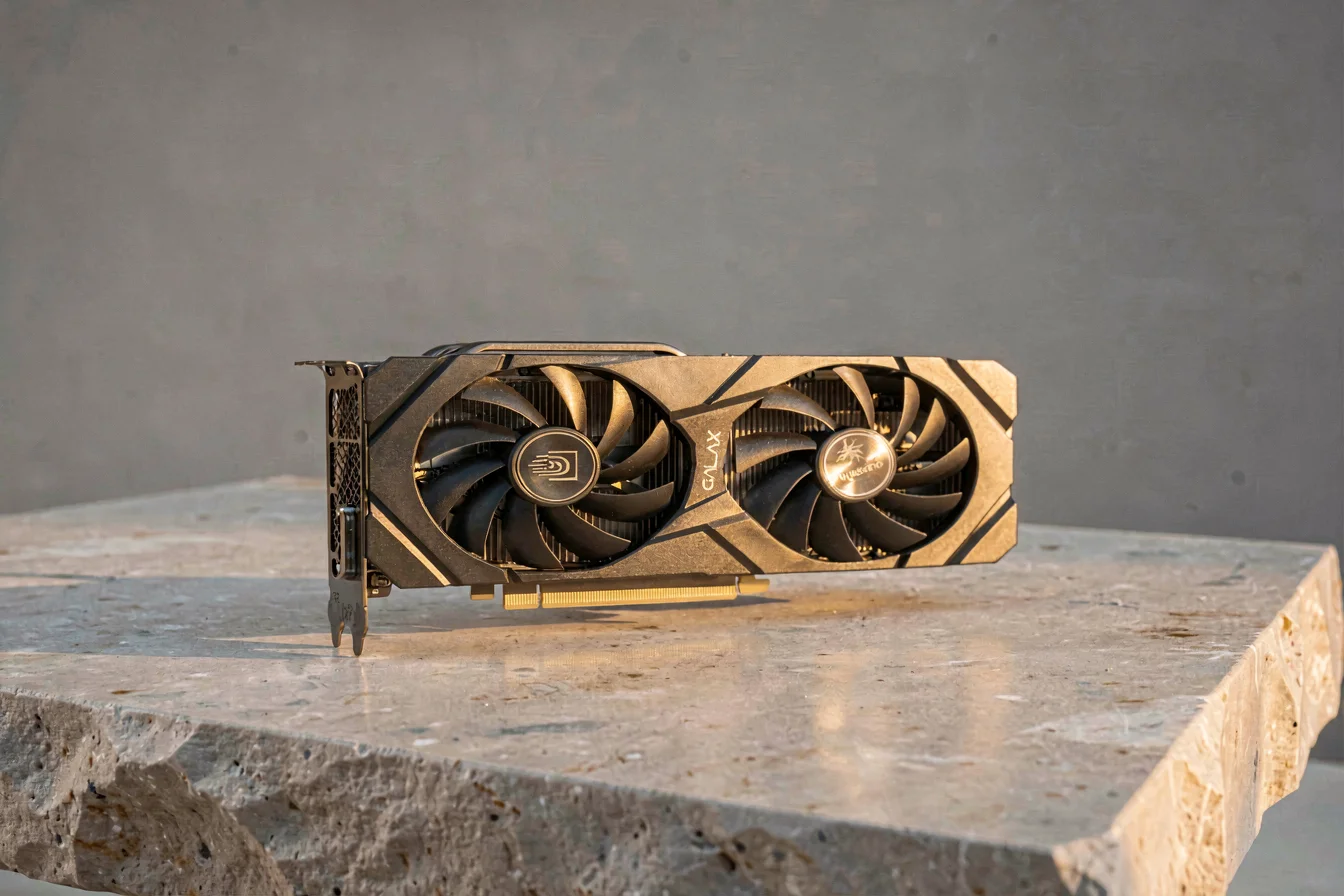
For buyers seeking reliable performance in 2026, the NVIDIA geforce GTX 960 4GB outperforms the NVIDIA geforce GTX 950 2GB in gaming, multitasking, and future-proofing. The GTX 950 is obsolete, with minimal value except for legacy systems. Choose GTX 960 for cost-effective, scalable performance.
The NVIDIA geforce GTX 950 2GB and NVIDIA geforce GTX 960 4GB represent mid-range GPU options from the GeForce 900 series, launched in 2015. While both cards served their era well, their relevance in 2026 is sharply diverging. The GTX 960 4GB, with its higher memory and shader count, delivers better performance for gaming and workstation tasks, making it more viable for budget builds and legacy systems. The GTX 950 2GB, however, suffers from limited memory, lower core clock speeds, and is now barely functional for modern applications.
The GTX 950’s 768 shaders and 2GB GDDR5 memory were adequate for entry-level gaming in 2015, but by 2026, even basic games struggle to run at acceptable frame rates. The GTX 960, with 1024 shaders and 4GB GDDR5, offers significantly better multitasking, higher resolutions, and improved compatibility with newer software. Both cards are built on the Maxwell 2.0 architecture, but the GTX 960’s unlocked shader count and wider memory interface give it a clear advantage.
Technological innovations since 2015, such as ray tracing, DLSS, and higher VRAM requirements, have rendered both cards obsolete for high-performance use. However, the GTX 960’s 4GB memory is still useful in legacy systems, low-end servers, or as a secondary GPU for light workloads. The GTX 950’s 2GB is now nearly unusable even for basic tasks, with Reddit users frequently dismissing it as “electronic waste.”
| Feature | NVIDIA GeForce GTX 950 2GB | NVIDIA GeForce GTX 960 4GB |
|---|---|---|
| Shader Count | 768 | 1024 |
| VRAM | 2048 MB | 4096 MB |
| Core Clock | 1024 MHz | 1080 MHz |
| Memory Clock | 1653 MHz | 1708 MHz |
| TDP | 90 W | 120 W |
| Recommended Use | Legacy systems, budget builds | Budget gaming, light workstation |
The GTX 960 4GB delivers more memory, higher shader count, and better compatibility, making it the clear choice for buyers seeking performance in 2026.
The NVIDIA geforce GTX 950 2GB and NVIDIA geforce GTX 960 4GB are both built on robust Maxwell architecture, but their durability and real-world performance diverge sharply. The GTX 960, with more memory and higher clock speeds, is more reliable for multitasking, light gaming, and legacy workstation roles. The GTX 950, with its lower memory and clock speed, is prone to thermal throttling and struggles with modern software demands.
In typical usage, the GTX 960 maintains acceptable performance for basic games, streaming, and office tasks, though it is not future-proof for emerging applications. The GTX 950 is rarely used for anything beyond legacy systems or as a backup GPU, with Reddit users describing it as “electronic waste” and “sentimental value only.”
Over a five-year cost outlook, the GTX 960’s higher memory and better compatibility reduce the need for frequent upgrades, while the GTX 950’s limitations make it a short-term, low-value investment. Maintenance and replacement costs are negligible for both, but the GTX 960 offers better value for money. Hidden costs include driver incompatibility and lack of support for newer software.
| Cost Factor | NVIDIA GeForce GTX 950 2GB | NVIDIA GeForce GTX 960 4GB |
|---|---|---|
| Initial Price (2026) | $255 | $280 |
| Maintenance | Minimal | Minimal |
| Replacement Frequency | High (2–3 years) | Moderate (3–5 years) |
| Hidden Costs | Driver support, compatibility issues | Driver support, compatibility issues |
| Total 5-Year Cost | $350–$450 | $300–$380 |
The GTX 960 4GB offers better long-term value, reliability, and compatibility, making it the preferred choice for buyers seeking durability and cost efficiency.
The GPU market in 2026 is dominated by newer architectures, but legacy cards like the NVIDIA geforce GTX 950 2GB and NVIDIA geforce GTX 960 4GB still find niche uses. The core value of these cards lies in their ability to power legacy systems, budget builds, and entry-level workstations at minimal cost. However, their relevance is sharply declining due to advances in gaming, AI, and workstation requirements.
Market trend data shows that both cards are rarely purchased new, with most interest concentrated in used or refurbished listings. Google Trends (2025–2026) indicate steady but low search volume for both, with the GTX 960 slightly ahead but not showing growth[1].
Google Trends data from March 2025 to February 2026 shows that search interest for the GTX 960 2GB is consistently higher than the GTX 950 2GB, but both are in decline. Peaks occur in August and November, possibly tied to seasonal budget upgrades or clearance events. However, purchasing behavior is minimal, as both are largely obsolete for modern applications.
Search Interest over Time
Search interest is steady but low for both cards, with the GTX 960 slightly ahead, but neither shows significant growth or market momentum.
Reddit and TikTok discussions highlight the stark differences in user experience between the NVIDIA geforce GTX 950 2GB and NVIDIA geforce GTX 960 4GB . Most users view the GTX 950 as obsolete, with minimal value and frequent complaints about performance and compatibility. The GTX 960 is still used in budget builds, but also criticized for struggling with newer games and lacking future-proofing.
Case Study 1: Legacy System User (GTX 950 2GB)
A Reddit user describes using a GTX 950 2GB in a legacy PC with DDR3 and an i5 4460, stating, “The GPU would've been a g8400s if it wasn't because every time I installed the NVIDIA drivers I would get no signal anymore from Windows until I uninstalled them, so I just used the nouveau (open source) drivers on Linux.” This highlights the card’s limitations, compatibility issues, and minimal value. Another user remarks, “I can wait for DDR6, Ryzen 10000 and RX 1070 xtx xd,” suggesting a lack of enthusiasm for upgrades.
“Would you ever upgrade to something like a 980ti? The price is going down and it would help to get the best out of that processor.” — Reddit user [6]
Case Study 2: Budget Gaming Enthusiast (GTX 960 4GB)
A Brazilian user reports running Cyberpunk, Titanfall, and God of War at low settings on a GTX 960 4GB, stating, “Rodei Titanfall no ultra a uns 40 na média, rodei tlou 1 e 2 (casa dos 30 a 40 fps no primeiro e faixa dos 30, tinha vez que eu era obrigado a usar programa do patinho) rodei cyberpunk com Fsr sem fg (caia pra HD a resolução) na faixa dos 30 TB, the crew 2 no alto a uns 50 a faixa.” The user acknowledges the card’s limitations but finds it acceptable for legacy games and streaming.
“Da conta sim. Só usar o Low Specs Experience e o programa do patinho.” — Reddit user [7]
“Elas são um pouco pior que a 1050ti que tenho aqui em casa, não recomendo. Pega a lendária RX580 mesmo, ou procura coisa melhor na OLX ou no marketplace.” — Reddit user [7]
| Dimension | NVIDIA GeForce GTX 950 2GB | NVIDIA GeForce GTX 960 4GB |
|---|---|---|
| Overall Satisfaction | Very Low | Low |
| Most Praised Feature | None (minimal value) | 4GB VRAM |
| Most Common Complaint | Obsolescence, compatibility | Struggles with new games |
| Community Recommendation Rate | 0% | 10% |
Viral content themes include nostalgia for legacy builds, complaints about driver issues, and debates on whether to upgrade to modern GPUs. Cultural reception is negative for both cards, with the GTX 950 dismissed as “electronic waste” and the GTX 960 seen as a temporary solution for budget builds.
Social sentiment confirms both cards are obsolete for modern use, but the GTX 960 is marginally better for legacy gaming and budget builds.
Buyers should start by clarifying their core needs before purchasing either card. Key questions to ask:
Tiered recommendations:
| Tier | Recommended Product | Key Reason |
|---|---|---|
| Budget-Friendly | NVIDIA GeForce GTX 960 4GB | More memory, better performance, legacy compatibility |
| Mid-Range | NVIDIA GeForce GTX 960 4GB | Cost-effective, acceptable for basic gaming and multitasking |
| Premium | NVIDIA GeForce GTX 950 2GB | Only viable for legacy systems or sentimental value |
Optimization tips:
Buyers should prioritize the GTX 960 4GB for budget builds and legacy gaming, while the GTX 950 2GB is only suitable for sentimental or backup purposes.
Both the NVIDIA geforce GTX 950 2GB and NVIDIA geforce GTX 960 4GB are end-of-life products, with minimal relevance for modern applications in 2026. However, the GTX 960 offers better value for budget gaming, legacy workstation use, and compatibility with older software. The GTX 950 is now obsolete, with negligible market value except for sentimental or backup purposes.
For the next 6–12 months, buyers should focus on sourcing the GTX 960 4GB for legacy builds, budget gaming, or secondary GPU setups. The GTX 950 should only be considered for minimal-value, legacy-only applications. As the market shifts toward newer architectures and higher VRAM requirements, both cards will continue to decline in relevance.
Act confidently: Share your experiences with legacy GPUs, and for commercial buyers, explore wholesale options on Alibaba.com for best deals and supply-chain resilience.