
All categories
Featured selections
Trade Assurance
Buyer Central
Help Center
Get the app
Become a supplier
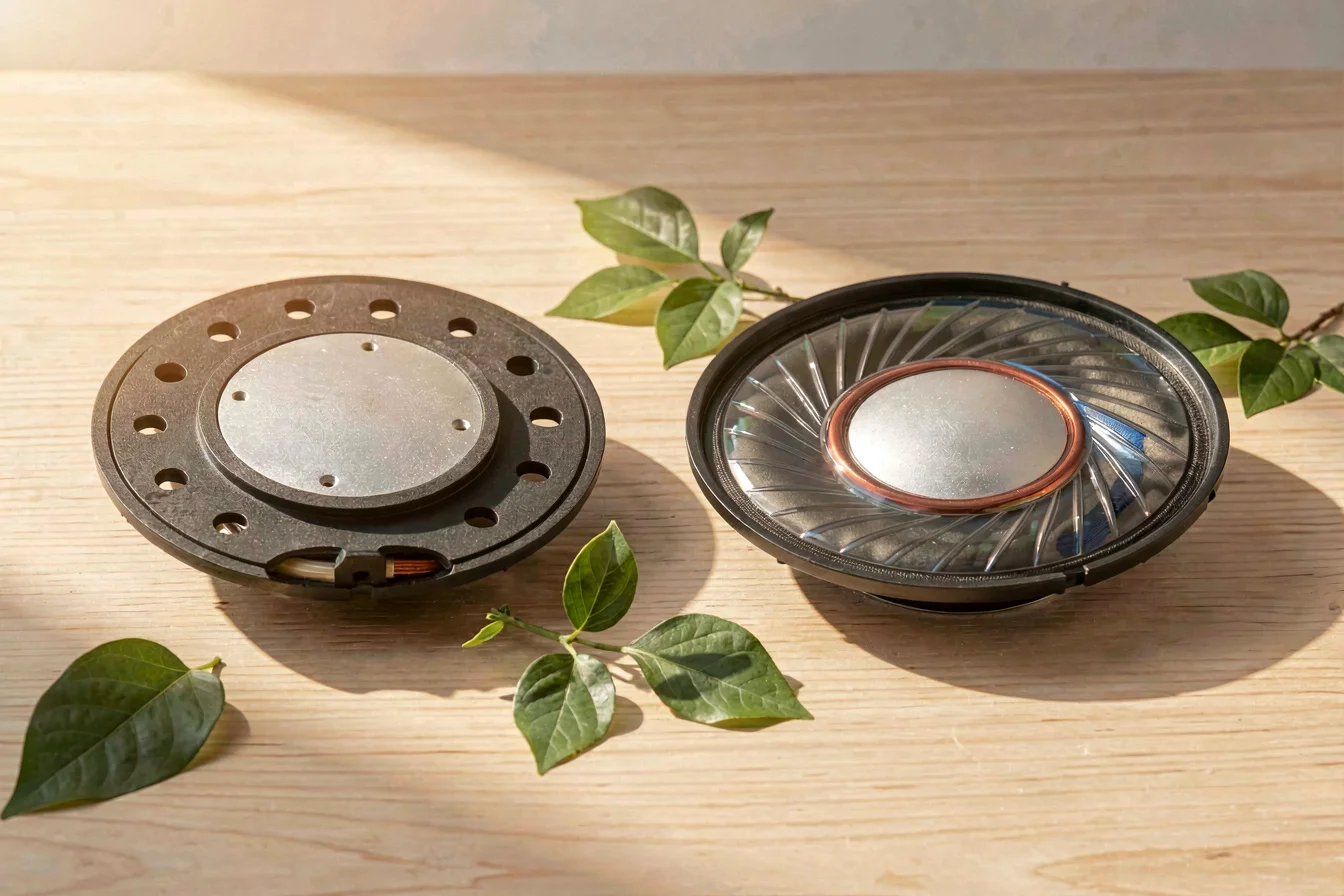
Selecting between an HF driver and a speaker hinges on your application: HF driver excels in precision high-frequency output for pro audio, while speaker delivers balanced sound for mainstream use. Market trends favor HF driver in professional and PA sectors, but speaker remains the dominant choice for home and commercial buyers. Procurement logic suggests matching your need—specialized HF output versus full-range sound—before sourcing.
The HF driver category refers to specialized components designed to reproduce high-frequency audio, typically used in pro audio, studio, and PA systems. These drivers (compression, piezo, dome) are engineered for clarity, efficiency, and precise dispersion, making them ideal for environments demanding directional sound or high SPL. In contrast, a speaker is a complete audio system, combining one or more drivers (woofers, midranges, tweeters) and an enclosure to deliver full-range sound for home, commercial, or entertainment use.
The urgency in today’s procurement environment stems from rapidly evolving pro audio needs and the demand for customizable, high-performance systems. HF drivers are valued for their ability to maintain consistent frequency response and polar patterns when paired with horns, but they require careful matching and are less forgiving of improper installation. Speakers, by contrast, offer plug-and-play convenience, broader frequency coverage, and are easier to integrate into both consumer and B2B applications.
HF drivers are best for specialized, high-frequency applications, while speakers are optimal for general audio needs—matching the right component to your use case is critical for maximizing value and performance.
| Feature | HF Driver | Speaker |
|---|---|---|
| Core Function | High-frequency reproduction, directional sound, PA/studio use | Full-range audio, home/entertainment, plug-and-play |
| Target Audience | Pro audio engineers, studio, PA installers | Home users, retail, commercial buyers |
| Pain Points | Complex matching, installation, dispersion control | Limited customization, space requirements |
| Procurement Logic | Spec-sensitive, compliance, B2B sourcing | Broad-market, consumer-focused, easy integration |
| Market Momentum | Rising in pro audio, driven by trends | Stable, dominant in home/commercial |
Durability is a key procurement consideration: HF driver units are engineered for high SPL and extended operation in demanding environments, but their lifespan depends on matching with compatible horns and proper installation. Speakers, as complete systems, offer robust enclosures, integrated protection, and longer average lifespans due to balanced driver configurations. Real-world applications diverge—HF drivers are favored in large venues, studios, and high-output PA, while speakers excel in home, retail, and general entertainment.
Long-term cost analysis reveals that HF drivers require careful selection of horns and amplifiers, with maintenance focused on crossover and dispersion. Speakers, especially premium models, minimize hidden costs through integrated design and easier service. For buyers, the total cost of ownership over five years is shaped by initial price, replacement frequency, and maintenance requirements.
HF drivers demand precise matching and specialized maintenance, while speakers offer lower hidden costs and longer average lifespans—procurement decisions should account for both upfront and ongoing expenses.
| Cost Factor | HF Driver | Speaker |
|---|---|---|
| Initial Purchase Price | $100–$800 (pro-grade) | $50–$10,000 (consumer–premium) |
| Maintenance | Crossover, horn, dispersion control | Integrated protection, easier service |
| Replacement Frequency | 2–5 years (dependent on use) | 5–10 years (typical) |
| Hidden Costs | Horn matching, amplifier compatibility | Minimal, mostly power supply |
| Total Cost (5 years) | $300–$1,500 | $150–$11,000 |
The HF driver category delivers precise, directional high-frequency output, making it indispensable for professional audio, studio, and PA applications. Speakers, as full-range systems, excel in home, commercial, and entertainment environments, offering balanced sound and plug-and-play convenience. Current market momentum favors HF drivers in pro audio, driven by demand for high SPL, dispersion control, and customizability. Speakers remain dominant in mainstream markets, supported by stable consumer demand and broad application flexibility.
HF drivers excel in pro audio and studio settings, while speakers are best for general, mainstream applications—buyers should match their procurement to their primary use case and environment.
Google Trends data from March 2025 to March 2026 shows a steady rise in search interest for HF driver , peaking at 100 in December 2025, compared to more stable, lower interest for related terms like Compression Driver and Horn Driver. This indicates a growing demand for specialized HF drivers in pro audio, likely driven by studio upgrades, PA installations, and event sound requirements.
Search Interest over Time
Procurement teams should monitor HF driver demand spikes for strategic sourcing and inventory planning, as search interest directly correlates with pro audio market activity.
Reddit and social media reveal a nuanced buyer landscape: HF drivers are praised for clarity and efficiency but criticized for complexity and installation challenges. Speakers are valued for ease-of-use and full-range sound, though some users lament limited customization and space requirements. Case studies illustrate divergent buyer personas—one pro audio installer prioritizes HF driver precision, while a home user prefers speaker convenience.
HF drivers are favored for studio and PA, but require careful matching; speakers are preferred for home and commercial use due to their simplicity and versatility.
A pro audio engineer in r/livesound reports discrepancies in HF driver performance, attributing issues to damaged crossover and compatibility. “The HF driver is a B&C DCX 462-8, so it's a 2 way driver which crosses over at 4khz. Measured them dead on at 2ft distance, my best guess is the passive crossover is damaged in the right side. I've tried swapping all cabling and amp channels.” [7]
“HF drivers can have very controllable polar patterns and frequency response characteristics depending upon the type of horn they are coupled to. In addition, the compression driver makes the device much more efficient, so it takes less power to reach a certain SPL.” [2]
A home user in r/hyperacusis discusses the challenges of single driver speakers for sound therapy, noting the risk of triggering hyperacusis. “I'm looking for a good high quality cheap speaker for sound therapy.. last time a mini cheap high pitched single driver speaker triggered my hyperacusis, despite not being loud, the tweeter in it i believe triggered my hyperacusis..” [8]
“High quality and cheap do not mix with audio gear. If you want something nice, you have to be willing to shell out a bit more money.” [8]
| Dimension | HF Driver | Speaker |
|---|---|---|
| Overall Satisfaction | High for pro use, low for novice | High for general use, moderate for pro |
| Most Praised Feature | Clarity, efficiency, dispersion control | Ease-of-use, full-range sound |
| Most Common Complaint | Complexity, installation, matching | Limited customization, space requirements |
| Community Recommendation Rate | Moderate for pro, low for general | High for general, moderate for pro |
Table data sourced from [2][7][8].
Viral content themes: HF driver debates focus on dispersion, matching, and pro audio performance; speaker discussions emphasize ease-of-use, full-range sound, and home entertainment. Cultural reception: HF drivers are seen as premium, specialized, while speakers are mainstream and accessible.
Buyers should start by identifying their core needs: Is the application pro audio, studio, or PA? Is full-range sound or directional HF output required? What is the budget range and must-have features? Key questions:
Tiered recommendations:
| Tier | Recommended Product | Key Reason |
|---|---|---|
| Budget-Friendly | Speaker | Plug-and-play, full-range sound, low cost |
| Mid-Range | Speaker | Integrated protection, easier service, moderate cost |
| Premium/Pro | HF Driver | Precision, efficiency, directional sound, compliance |
Table data sourced from [1][2][4].
Optimization tips: Buy HF drivers during pro audio demand spikes, bundle with compatible horns and amplifiers, prioritize dispersion control and compliance. For speakers, time purchases around new model launches, consider warranty and service, and avoid overlooked features like integrated protection. Common mistakes: mismatching HF drivers, neglecting installation complexity, underestimating hidden costs.
Buyers should match their procurement to their application, budget, and must-have features—HF drivers for pro audio, speakers for general use.
Key insights: HF drivers are gaining momentum in pro audio, driven by demand for precision and directional sound. Speakers remain dominant in mainstream markets, supported by stable consumer demand and broad application flexibility. Forward-looking trends: expect continued growth in HF driver procurement for studio, PA, and custom installations, while speakers will maintain their market share in home and commercial segments.
Buyers should act confidently, aligning procurement with application needs and market trends—HF drivers for specialized, high-frequency output, speakers for full-range, plug-and-play sound.
Dual call-to-action: Share your experiences and feedback with the audio community to help others optimize their choices. Commercial buyers should leverage Alibaba.com for wholesale sourcing, ensuring compliance, compatibility, and strategic inventory planning for the next 6–12 months.