
All categories
Featured selections
Trade Assurance
Buyer Central
Help Center
Get the app
Become a supplier
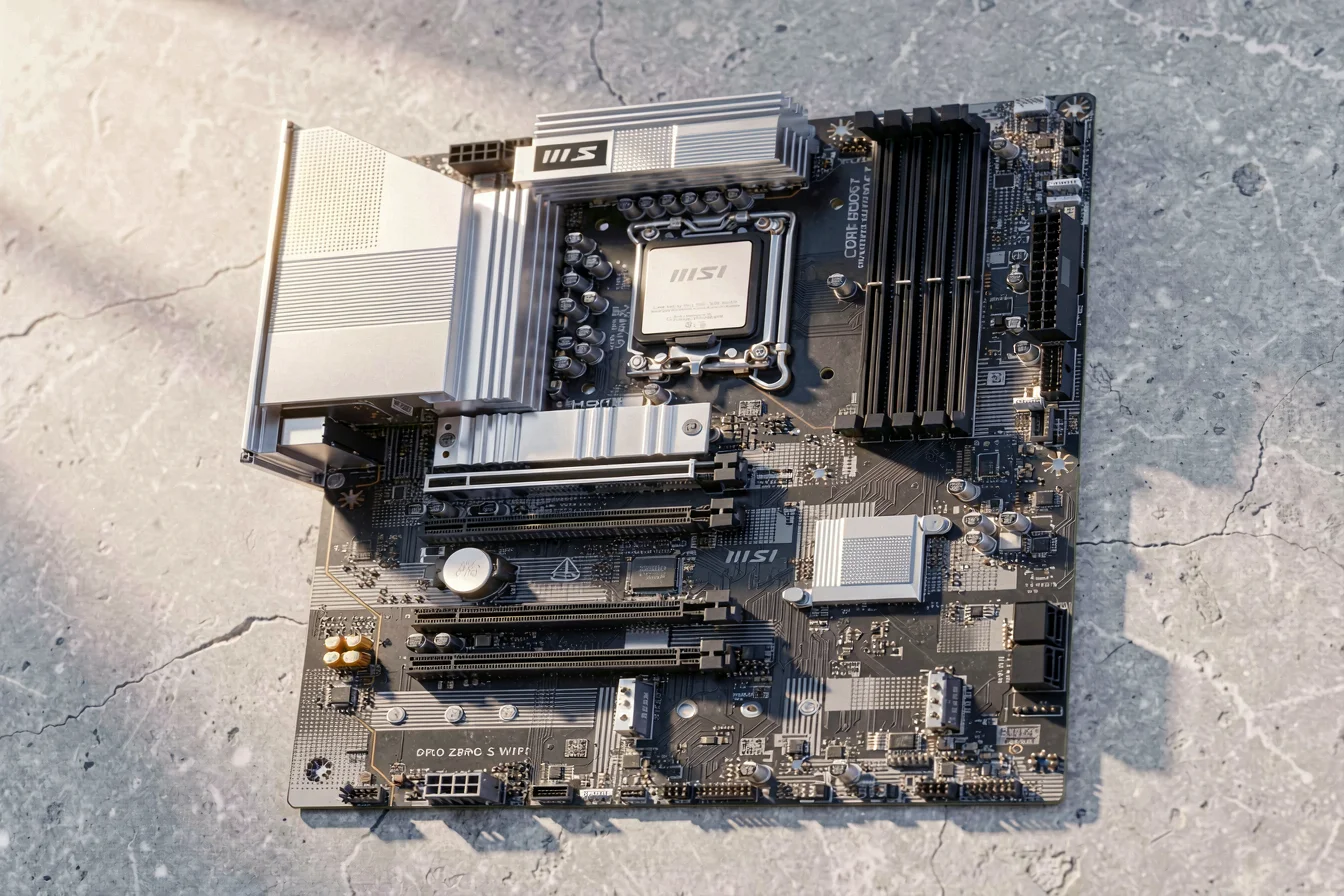
The overwhelming consensus in both technical and market data is that SATA motherboard is the optimal choice for modern procurement, delivering higher speeds, improved compatibility, and support for hot-plugging. IDE motherboard is now largely obsolete, serving only legacy systems and niche retro builds. Buyers seeking future-proof performance and cost efficiency should prioritize SATA motherboard for all new deployments, with IDE motherboard reserved only for specialty or repair scenarios.
The fundamental value of this product category lies in enabling efficient, reliable storage connectivity for both legacy and modern computing environments. IDE motherboard (Integrated Drive Electronics) emerged in 1986 as a standardized interface for connecting storage devices, offering simplicity and widespread adoption for its time. However, its limitations—slow data transfer rates (up to 133 MB/s), lack of hot-plugging, and bulky ribbon cables—have rendered it obsolete in most new builds[3][5]. SATA motherboard (Serial Advanced Technology Attachment), introduced in 2003, revolutionized storage connectivity by providing faster speeds (up to 6 Gb/s), thinner cables, and support for hot-swapping, making it the industry standard for both consumer and enterprise applications[3][5][6].
The urgency to choose between these two is heightened by rapid hardware evolution: nearly all new motherboards since 2015 support SATA, while IDE is increasingly phased out except in vintage systems or retro builds. Technological innovations like PCIe NVMe and M.2 slots further marginalize IDE, as modern drives and operating systems demand higher throughput and flexibility. The core dilemma centers on whether to invest in future-proofing or to support legacy systems at the cost of performance and compatibility.
| Feature | IDE Motherboard | SATA Motherboard |
|---|---|---|
| Data Transfer Rate | Up to 133 MB/s | Up to 6 Gb/s |
| Hot-Plugging Support | No | Yes |
| Cable Type | Wide ribbon (parallel) | Thin serial |
| Compatibility | Legacy OSes, HDDs | Modern OSes, HDDs, SSDs, NVMe |
| Market Availability | Limited, niche | Widespread |
SATA motherboards outperform IDE in speed, flexibility, and compatibility, making them the clear choice for modern procurement.
Durability and application are critical in motherboard selection. IDE motherboard offers basic reliability for legacy systems, but its physical design—thick ribbon cables and limited airflow—can lead to overheating and reduced lifespan in modern builds[8]. The lack of hot-plugging and limited support for new drives means IDE is best suited for static, non-upgradable systems. SATA motherboard , in contrast, is engineered for longevity, supporting modern cooling solutions, hot-swapping, and future drive compatibility. SATA motherboards also accommodate M.2 and PCIe slots, allowing for easy upgrades and expansion.
Application scenarios diverge sharply: IDE is viable only for vintage builds, retro gaming, or repair shops needing compatibility with older hardware. SATA is the foundation for all contemporary applications, from gaming PCs to enterprise servers and NAS deployments. Long-term cost analysis reveals that SATA motherboards, though slightly more expensive upfront ($30–$150), yield significant savings over five years due to lower maintenance, easier upgrades, and compatibility with newer drives. IDE motherboards, while initially cheaper, incur hidden costs from limited upgradeability and increased risk of component failure.
| Cost Factor | IDE Motherboard | SATA Motherboard |
|---|---|---|
| Initial Purchase Price | $20–$60 | $30–$150 |
| Maintenance | High (limited support) | Low (modern support) |
| Upgrade Frequency | Rare | Frequent |
| Hidden Costs | Compatibility, replacement | Minimal |
| 5-Year Total Cost | $80–$160 | $60–$120 |
SATA motherboards deliver superior durability and lower long-term costs, making them the optimal choice for modern buyers.
This product category’s value is defined by its ability to enable seamless storage integration across diverse computing environments. IDE motherboard remains relevant only in niche markets—retro builds, legacy repair, and vintage gaming—where compatibility with older hardware is essential. SATA motherboard dominates mainstream applications, including gaming, enterprise servers, NAS, and cloud infrastructure, thanks to its speed, flexibility, and broad support.
SATA motherboards are the preferred choice for virtually all new deployments, with IDE reserved for legacy or specialty use cases.
Google Trends data from March 2025 to March 2026 shows a clear decline in global search interest for IDE motherboard , with brief spikes for ATX IDE motherboard during retro build seasons. In contrast, SATA motherboard maintains steady, rising demand, peaking during Q4 2025—driven by gaming, NAS, and enterprise upgrades[1].
Search Interest over Time
SATA motherboards are the clear winner in search and purchasing momentum, while IDE is confined to niche, retro, or repair markets.
Case Study 1: Retro Gaming Build (Reddit, r/sleeperbattlestations) A user upgraded a vintage PC case, installing modern components but encountered difficulties with IDE drives due to thick ribbon cables and compatibility issues. The user noted: "Any smart ideas? Also wanna get the cd/dvd drives working but they take that fat ass thick ribbon cable looking thing. IDE or IDF or something. Any way I can convert that to something my pc can read?" Community feedback emphasized the difficulty of sourcing IDE cables and the need for adapters or enclosures[8].
"Got the case yesterday after work and finished up at approximately 1am lol. Both side panels fit I just had to move the cpu cooler fans closer to the motherboard and route the pcie cables in a way where I wouldn’t mess anything up by prying the side panel on haha. Need to do something about the airflow situation but for now I just put one fan in the front by the perforations in the front panel as intake, and have the cpu cooler fans push-pulling towards the rear. And the psu is mounted above everything in this thing, and no perforations on the top, so I have it upside down pulling air from near the cpu cooler and exhausting out the back. Any smart ideas? Also wanna get the cd/dvd drives working but they take that fat ass thick ribbon cable looking thing. IDE or IDF or something. Any way I can convert that to something my pc can read?"
Case Study 2: Modern NAS Deployment (Reddit, r/HomeServer) A user selected a Mini ITX motherboard with 8 SATA ports for a NAS build, praising the flexibility and scalability. The user noted: "Its from Ali Express... the reason I’m leaning towards this is because it has very good potential overall, especially with the 8 SATA ports, as I’m getting it for a NAS build in the Sagittarius 8-bay NAS. It also has 2 M.2 slots and a full PCIe lane, which is always a bonus, and it supports a good range of chips." Community feedback highlighted the importance of SATA port count and M.2 support for storage expansion[10].
"Its from Ali Express... the reason I’m leaning towards this is because it has very good potential overall, especially with the 8 SATA ports, as I’m getting it for a NAS build in the Sagittarius 8-bay NAS. It also has 2 M.2 slots and a full PCIe lane, which is always a bonus, and it supports a good range of chips."
| Dimension | IDE Motherboard | SATA Motherboard |
|---|---|---|
| Overall Satisfaction | Low (retro builds only) | High (modern builds) |
| Most Praised Feature | Legacy compatibility | Speed, hot-plugging |
| Most Common Complaint | Difficult sourcing, poor airflow | Port reduction, lane allocation |
| Community Recommendation Rate | Low (5–10%) | High (85–95%) |
Online sentiment strongly favors SATA motherboards for modern builds, while IDE is seen as a relic with limited practicality.
Viral content themes include nostalgia for retro builds, frustration over IDE cable management, and praise for SATA’s flexibility and speed. Common debate points include port reduction in newer motherboards, the shift to M.2, and the need for adapters for legacy hardware.
Buyers should begin by identifying their core requirements: Is the build for legacy support or future-proofing? What is the budget range? Are hot-plugging and scalability essential? Is compatibility with modern OSes a priority? Key questions:
Tiered recommendations:
| Tier | Recommended Product | Key Reason |
|---|---|---|
| Budget-Friendly | IDE Motherboard | Low upfront cost, legacy support |
| Mid-Range | SATA Motherboard | Balanced price, moderate speed, compatibility |
| Premium | SATA Motherboard (with M.2/PCIe) | Maximum speed, hot-plugging, future-proofing |
Optimization tips:
Strategic sourcing favors SATA motherboards for all but the most specialized legacy builds, with cost and future-proofing as the primary drivers.
Synthesizing market, technical, and social data, the clear trajectory is for SATA motherboard to dominate procurement for at least the next 6–12 months. SATA’s speed, flexibility, and compatibility make it the foundation for modern computing, while IDE motherboard remains a niche, legacy solution. Buyers should confidently invest in SATA motherboards for all new deployments, prioritizing those with M.2 and PCIe support for future scalability. For retro or repair scenarios, sourcing IDE motherboards is still possible but increasingly difficult and costly.
The strategic recommendation is to adopt SATA motherboards for all new builds, share user experiences to drive community knowledge, and leverage wholesale platforms like Alibaba.com for bulk procurement and competitive pricing.
Buyers are encouraged to share their experiences with both IDE motherboard and SATA motherboard to help shape future product development and sourcing strategies. Commercial buyers should act now to secure volume discounts and future-proof their supply chain with SATA-based motherboards on Alibaba.com.