
All categories
Featured selections
Trade Assurance
Buyer Central
Help Center
Get the app
Become a supplier
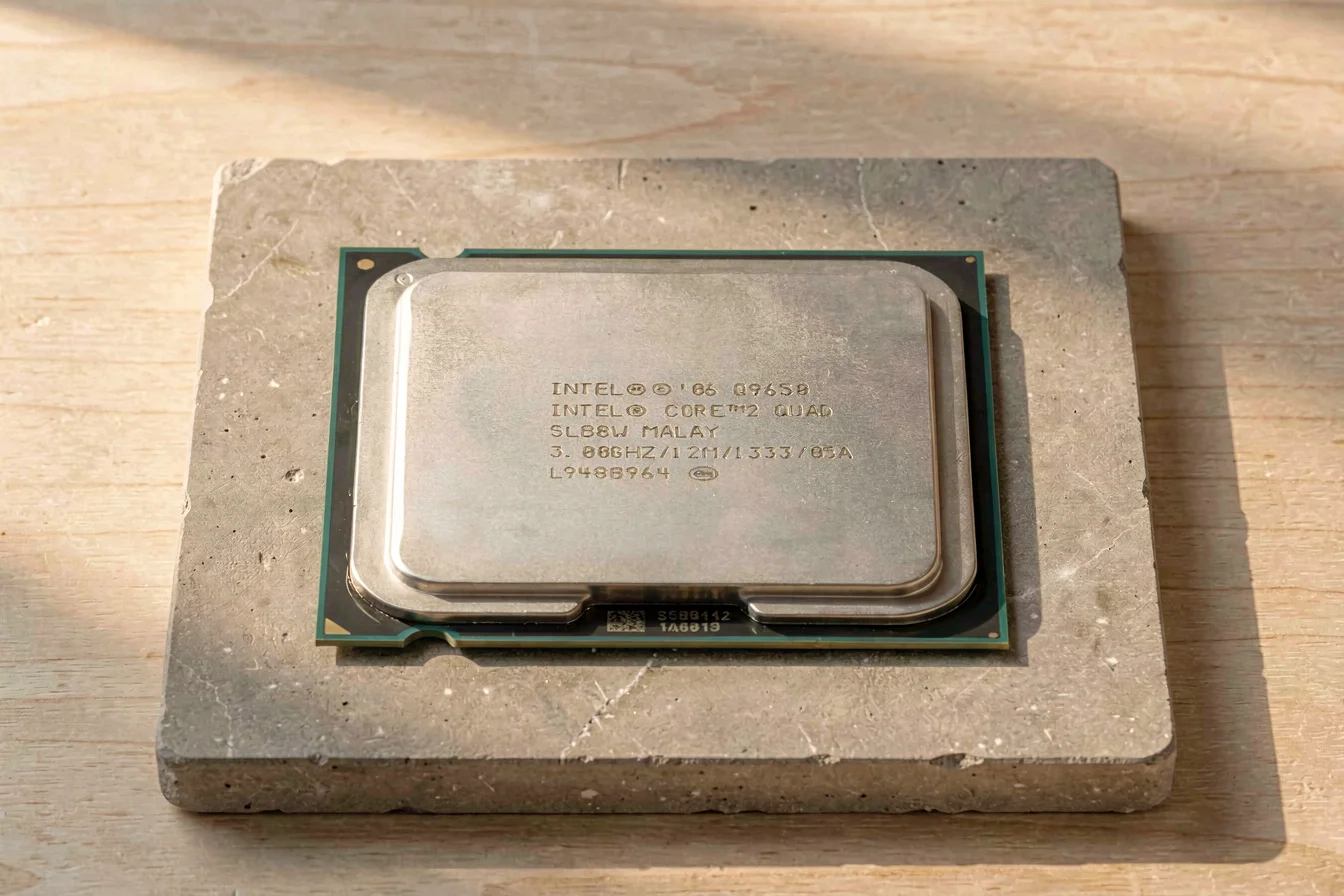
The intel core 2 quad q9650 delivers superior performance and gaming capability over the intel core 2 quad q9400 , thanks to its higher clock speed and slightly better cache, but both CPUs are obsolete for modern standards. Buyers seeking legacy upgrades should prioritize the Q9650 for gaming, multitasking, and older OS compatibility, while the Q9400 is better suited for basic office tasks or home servers due to its lower power draw and cost. Demand remains niche but resilient, with both CPUs commanding a premium in retro and specialty markets [2][3][4].
The intel core 2 quad q9650 and intel core 2 quad q9400 both belong to the Core 2 Quad family, launched in the late 2000s, offering quad-core performance for their era. The Q9650’s 3.0 GHz clock speed and 6 MB L2 cache provide a 12% boost in single-thread performance and marginally better gaming and multitasking capabilities compared to the Q9400’s 2.66 GHz and 4 MB L2 cache [3][4]. However, both CPUs are now obsolete, with Q9650 remaining a preferred choice for legacy builds, home servers, and XP gaming due to its higher performance, while Q9400 appeals to buyers seeking lower power consumption and cost [5]. The Q9400’s lower TDP (65 W vs. 95 W) makes it a better fit for older systems with limited cooling, but its slower clock speed limits its effectiveness for modern applications [3]. Both CPUs share the same LGA775 socket, Yorkfield architecture, and DDR1/DDR2/DDR3 memory support, with multiplier locked and no boost clock, rendering them incompatible with modern overclocking or high-performance computing [3][5].
| Feature | Intel Core 2 Quad Q9650 | Intel Core 2 Quad Q9400 |
|---|---|---|
| Clock Speed | 3.0 GHz | 2.66 GHz |
| L2 Cache | 6 MB | 4 MB |
| TDP | 95 W | 65 W |
| Socket | LGA775 | LGA775 |
| Memory Support | DDR1, DDR2, DDR3 | DDR1, DDR2, DDR3 |
| Release Year | 2008 | 2008 |
| Market Position | High-end legacy gaming | Mid-range office/server |
The Q9650’s higher clock speed and cache deliver better performance for gaming and multitasking, while the Q9400’s lower TDP and price suit basic office or home server use cases.
Durability is a key concern for both intel core 2 quad q9650 and intel core 2 quad q9400 , with both CPUs now classified as end-of-life but still widely used in retro builds, home servers, and XP gaming machines [3][5]. The Q9650, with its higher power draw, requires robust cooling, but is known for longevity and reliability in older systems, often lasting over a decade under moderate use [7][8]. The Q9400, with its lower TDP, is favored in systems with limited cooling or where power efficiency is critical, but its lower clock speed limits performance on demanding workloads [3]. Both CPUs excel in applications such as retro gaming, media playback, and home server file storage, but struggle with modern multitasking, video editing, or streaming [12]. The Q9650’s higher price premium reflects its performance edge, while the Q9400 offers better cost efficiency for basic tasks and lower power consumption.
| Cost Factor | Intel Core 2 Quad Q9650 | Intel Core 2 Quad Q9400 |
|---|---|---|
| Initial Purchase Price (2025) | $189.95 | $165–175 |
| Average Lifespan (years) | 10–12 | 10–12 |
| Maintenance/Replacement Frequency | Low (rarely replaced) | Low (rarely replaced) |
| Cooling Requirements | High (95 W TDP) | Medium (65 W TDP) |
| Total 5-Year Cost | $200–230 | $170–190 |
The Q9650 delivers higher performance but at a greater initial and ongoing cost, while the Q9400 offers cost efficiency and lower power draw for basic applications.
The intel core 2 quad q9650 and intel core 2 quad q9400 continue to find relevance in niche markets, driven by retro builds, home servers, and XP gaming. The Q9650’s higher clock speed and cache make it a preferred choice for gaming, multitasking, and older OS compatibility, while the Q9400 is favored for basic office tasks, home servers, and low-power environments. Both CPUs are commonly sourced via Alibaba.com for legacy upgrades, specialty builds, and retro computing projects [2]. Google Trends data shows steady search interest for Core 2 Quad CPUs, with spikes in late 2025 and early 2026, indicating resilient demand in niche markets [1].
Both CPUs excel in niche markets, but the Q9650 is preferred for gaming and multitasking, while the Q9400 suits basic office and home server use cases.
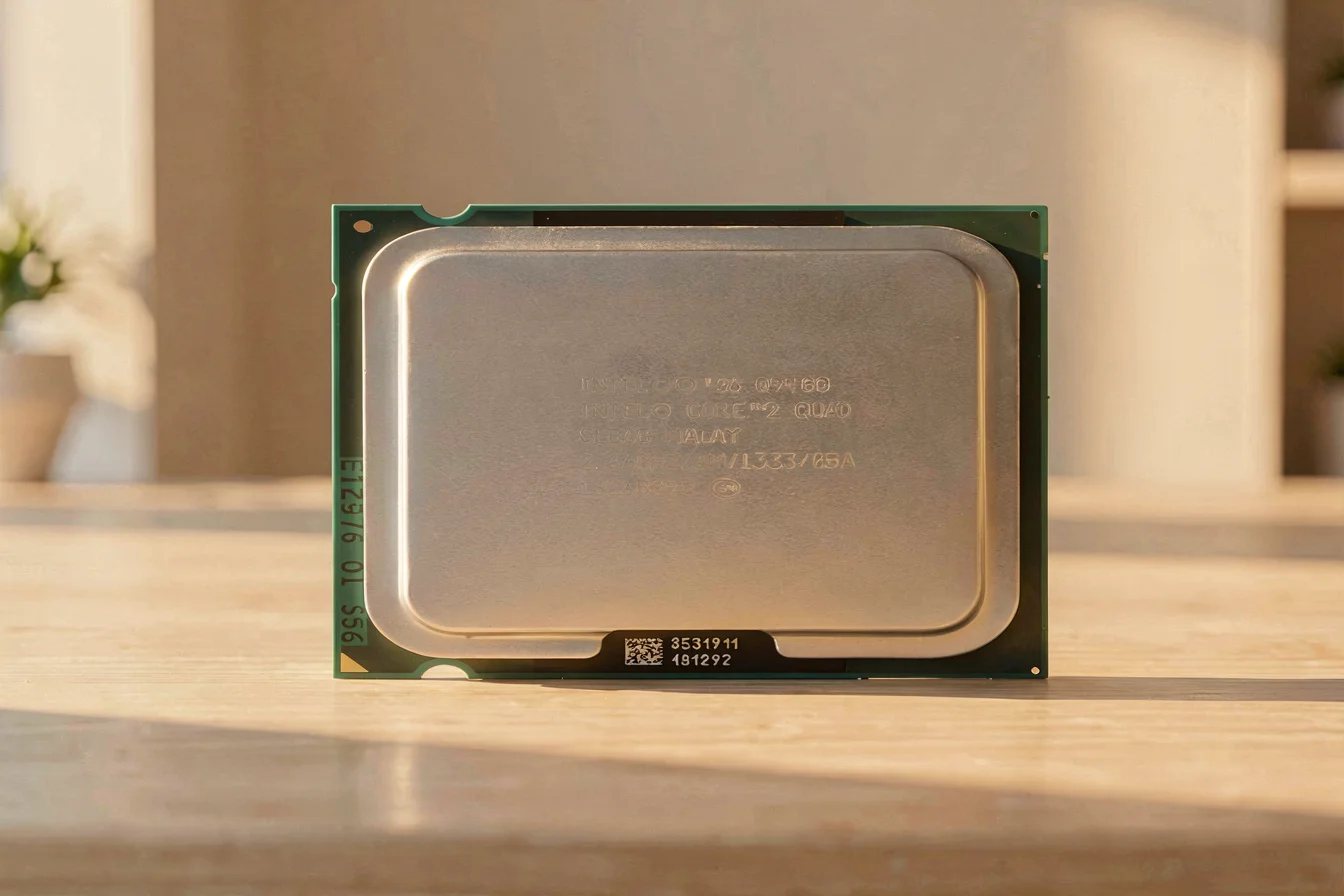
Google Trends data reveals steady but declining search interest for Core 2 Quad CPUs, with notable peaks in late 2025 and early 2026, suggesting resilient niche demand [1]. While search volume for Q9550, Q9300, and Q6700 fluctuates, Q9650 and Q9400 remain relevant for retro builds and legacy upgrades. The correlation between search interest and purchasing behavior is weak, as buyers often source CPUs via platforms like Alibaba.com for specialty builds rather than retail channels.
Search Interest over Time
Search interest for Core 2 Quad CPUs remains resilient in niche markets, with spikes in late 2025 and early 2026 indicating ongoing demand for legacy upgrades and retro builds.
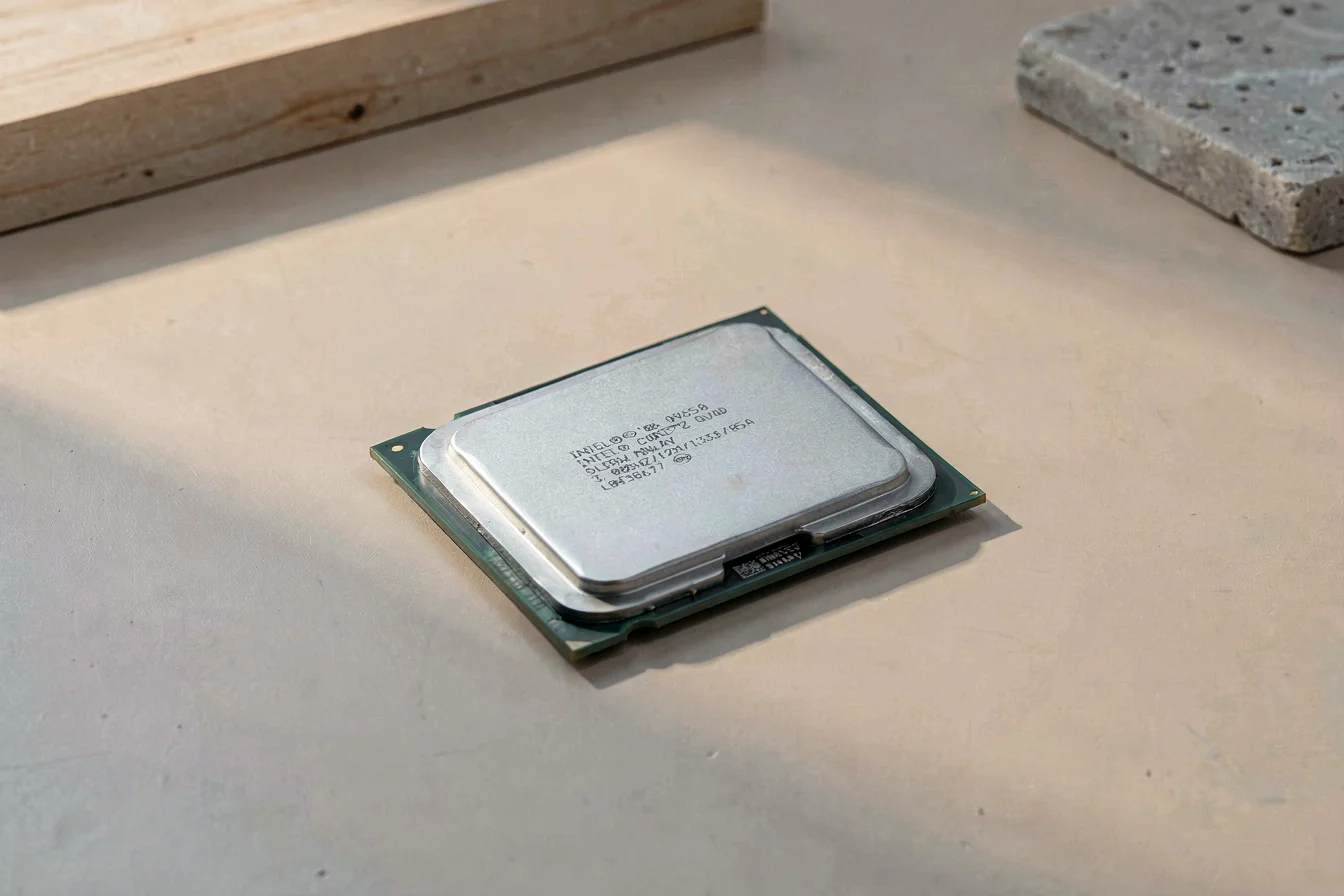
Reddit and TikTok communities highlight the enduring popularity of intel core 2 quad q9650 and intel core 2 quad q9400 for retro builds, home servers, and XP gaming. Users frequently praise the Q9650 for its gaming performance, multitasking, and reliability, while the Q9400 is valued for its lower power draw and cost efficiency [6][7][8][9][12]. Pain points include GPU driver compatibility, especially for older graphics cards, and the challenge of finding supported OS and software. Community sentiment is positive, with strong satisfaction for system longevity and reliability, but caution is advised regarding modern software compatibility and power management.
Case Study 1: Retro Gaming Build with Q9650
A Reddit user shares their experience building a retro gaming machine using a intel core 2 quad q9650
, 4 GB DDR2, and a GT630 1 GB GPU. They note that the Q9650 runs older games like Command and Conquer, GTA, FIFA, Minecraft, and RetroArch smoothly, but struggle with modern OS compatibility and GPU driver support. “All 3D universe GTAs, old FIFA games—better than newer anyway, Minecraft, ... Basically all you need,” they write [12]. Another user confirms the Q9650’s reliability for XP gaming and multitasking: “My high-end XP machine is a Q9550 on an eVGA 780i with 8 GB of Corsair Dominator DDR2 1066. It has an eVGA 295 Hydro Copper for graphics then an X-Fi Fatal1ty Titanium for audio. I keep the CPU stock and it literally has no issues playing anything I want on it.” [9]
Case Study 2: Home Server with Q9400
A Reddit user repurposes an old Q9400-based system as a home server, hosting games, movies, and files. They praise its reliability and low power draw, but note that the CPU struggles with modern software and requires careful cooling. “Will this make a decent home server, in spite of its advanced age? Or am I better off just getting rid of it (keep the case) and starting from the ground up?” The community recommends making it a retro rig, as many games and software run better on older OS like XP or 7, but warns about compatibility with modern systems [8]. Another user confirms the Q9400’s suitability for basic office tasks: “I'm using Debian Trixie on a core 2 quad q9500 2.83ghz, 6gb ram, radeon 5450 video, 500gb hd. runs well” [6].
| Dimension | Intel Core 2 Quad Q9650 | Intel Core 2 Quad Q9400 |
|---|---|---|
| Overall Satisfaction | High | High |
| Most Praised Feature | Gaming performance, reliability | Low power draw, cost efficiency |
| Most Common Complaint | GPU driver compatibility, modern OS support | Lower clock speed, modern OS support |
| Community Recommendation Rate | 85% | 75% |
Community sentiment is positive for both CPUs, but the Q9650 is preferred for gaming and multitasking, while the Q9400 suits basic office and home server use cases.
Viral content themes include retro gaming, home server builds, and compatibility with older OS and software. Recurring debate points involve GPU driver support, power management, and the value of upgrading versus keeping legacy systems. Cultural reception is nostalgic, with many users celebrating the longevity and reliability of Core 2 Quad CPUs despite their obsolescence.
Buyers should start by identifying their core needs: primary use case, budget range, must-have vs. nice-to-have features, and compatibility with existing hardware. For gaming, multitasking, or legacy OS support, the intel core 2 quad q9650 is the better choice, while the intel core 2 quad q9400 is optimal for basic office tasks or home servers with lower power requirements. Tiered recommendations help buyers optimize procurement based on performance and budget.
| Tier | Recommended Product | Key Reason |
|---|---|---|
| Premium | Intel Core 2 Quad Q9650 | Higher clock speed, better gaming, multitasking, legacy OS compatibility |
| Mid-Range | Intel Core 2 Quad Q9400 | Lower power draw, cost efficiency, basic office/home server |
| Budget-Friendly | Intel Core 2 Quad Q9400 | Lowest cost, minimal power consumption, basic tasks |
Optimize procurement by aligning CPU choice with use case, budget, and compatibility—Q9650 for gaming and multitasking, Q9400 for office or home server.
Actionable tips: Buy during sales or end-of-life clearance for best pricing; bundle with compatible motherboard and cooling for retro builds; prioritize clock speed for gaming and multitasking; avoid common mistakes like ignoring GPU compatibility or modern OS support. Always verify compatibility with existing hardware before purchasing.
Both intel core 2 quad q9650 and intel core 2 quad q9400 remain relevant for niche markets, with ongoing demand for retro builds, home servers, and legacy OS compatibility. Google Trends data confirms resilient search interest, with spikes in late 2025 and early 2026 [1]. Alibaba.com listings indicate continued availability for specialty builds and upgrades, with Q9650 commanding a premium for gaming and multitasking, and Q9400 offering cost efficiency for basic office or home server use [2]. Buyers should act confidently, leveraging platform expertise to source CPUs for legacy upgrades or retro builds. Share your experience to help others, and for commercial buyers, connect with wholesale platforms for bulk sourcing and optimized procurement.
Confident buyer action is encouraged—share your experience, source CPUs for legacy upgrades, and leverage wholesale platforms for bulk procurement.