
All categories
Featured selections
Trade Assurance
Buyer Central
Help Center
Get the app
Become a supplier
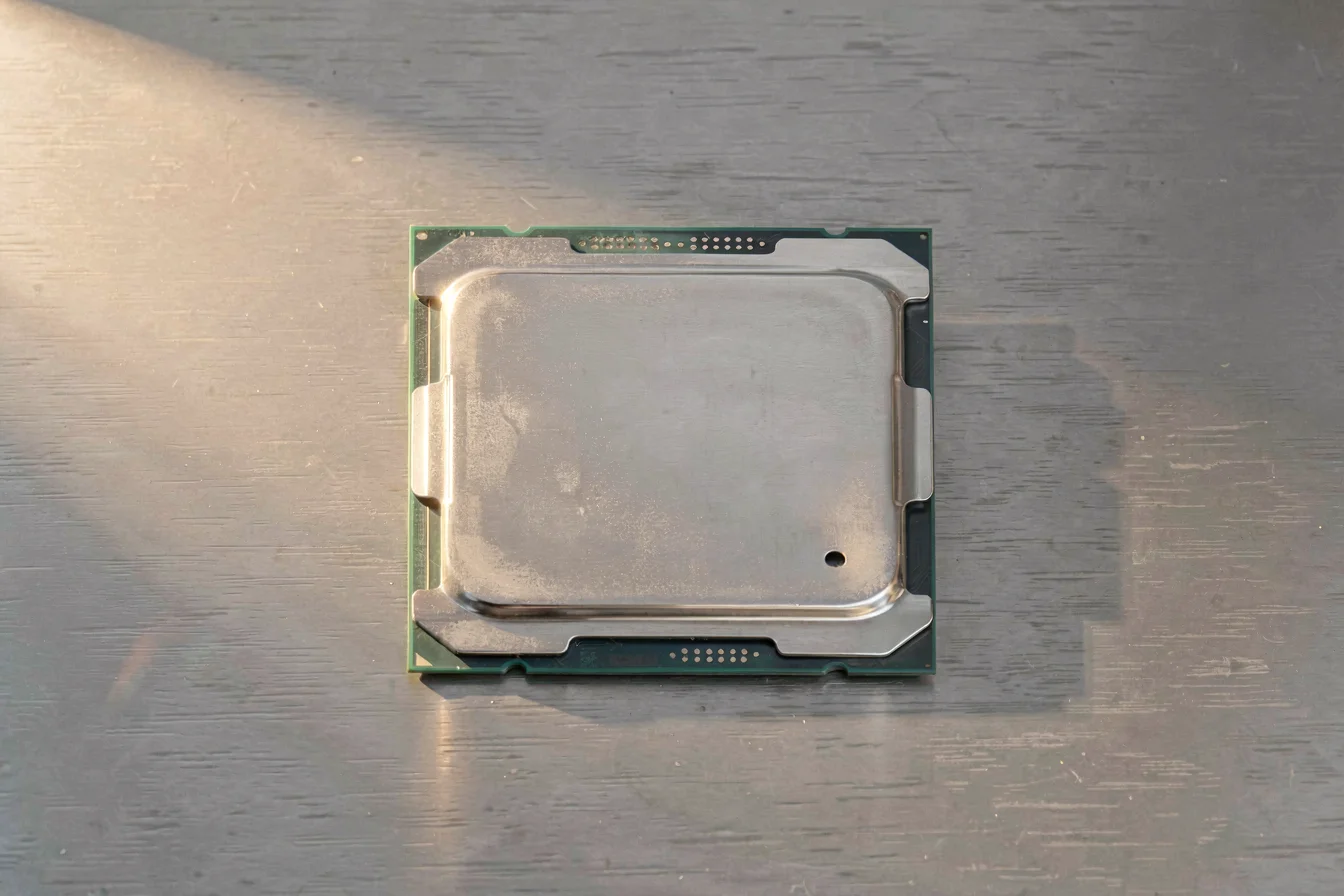
The intel xeon e5-2689 v4 is tailored for buyers needing high thread count, robust cache, and memory bandwidth for compute-heavy tasks, while other intel xeon e5 series models offer better power efficiency and lower cost for workstation or budget deployments. Buyers should align their workload requirements with the processor’s strengths, as legacy E5 models are seeing renewed interest for homelab and cost-sensitive projects [1][2][3]. Demand trends indicate a bifurcation: high-performance buyers favor E5-2689 v4 for multi-threaded workloads, while others prioritize cost and power savings with alternative E5 models.
The intel xeon e5-2689 v4 is a flagship model in the E5 lineup, offering 10 cores, 20 threads, 25 MB L3 cache, and DDR4-2400 support, optimized for high-throughput, parallel workloads. In contrast, other intel xeon e5 series models such as E5-2670 v4, E5-2687W v4, and E5-2690 v4 trade off thread count and cache for lower TDP, simpler architecture, and reduced price, making them ideal for workstations or cost-sensitive deployments [2][3][4].
The urgency for informed decision-making stems from the rapidly shifting landscape: buyers must choose between legacy E5 models for compatibility and compute density versus newer, more efficient architectures. The intel xeon e5-2689 v4 addresses the pain point of thread-starved environments, while other E5 models tackle power consumption and price constraints. Innovations in cache size, memory bandwidth, and virtualization support differentiate the E5-2689 v4, while alternative models focus on single-threaded performance and power efficiency [2][3].
| Feature | Intel Xeon E5-2689 v4 | Intel Xeon E5 Series Other Models |
|---|---|---|
| Cores/Threads | 10 / 20 | 8–10 / 16–20 |
| Clock Speed | 3.1 GHz (base), 3.8 GHz (boost) | 2.6–3.0 GHz (base), 3.0–3.5 GHz (boost) |
| Cache | 25 MB L3 | 20–25 MB L3 |
| Memory Bandwidth | 76.8 GB/s | 51.2–76.8 GB/s |
| TDP | 165 W | 95–115 W |
| Price Range | $113–$150 (per unit) | $90–$120 (per unit) |
| Best Use Case | Compute-heavy, multi-threaded workloads | Budget workstations, power-sensitive deployments |
The E5-2689 v4 is unrivaled in thread count and cache for compute-intensive applications, while other E5 models deliver better power efficiency and lower cost for budget deployments.
Durability and reliability are paramount in server and workstation procurement. The intel xeon e5-2689 v4 is built for sustained, high-load environments, with robust ECC memory support and advanced virtualization features. Its higher TDP and power draw mean it requires superior cooling, but its longevity and throughput justify the investment for intensive workloads [2][3]. Other intel xeon e5 series models, while slightly less powerful, offer lower TDP and better power efficiency, making them suitable for environments where energy costs are a concern.
Application scenarios diverge: the E5-2689 v4 excels in data centers, homelabs, and heavy virtualization, while other E5 models are preferred for budget workstations, media servers, and light compute tasks. Real-world durability is high across both, but the E5-2689 v4’s higher thread count and cache provide consistent performance under heavy load. Power consumption is a major factor: the E5-2689 v4 can draw 165 W at full load, while other models range from 95–115 W, translating to lower energy bills but reduced thread density [2][3].
| Cost Factor | Intel Xeon E5-2689 v4 | Intel Xeon E5 Series Other Models |
|---|---|---|
| Initial Price | $113–$150 | $90–$120 |
| Power Consumption (Idle/Load) | 36–50 W / 165 W | 36–45 W / 95–115 W |
| Maintenance Costs | Higher (cooling, ECC RAM) | Lower (standard RAM) |
| Replacement Frequency | 5–7 years (heavy use) | 5–7 years (light use) |
| 5-Year Total Cost | $160–$220 | $130–$180 |
The E5-2689 v4 delivers greater durability and throughput for intensive workloads, but higher energy costs, while other E5 models offer lower TCO for budget deployments.
The intel xeon e5-2689 v4 and other intel xeon e5 series models serve distinct market segments. The E5-2689 v4 is favored for compute-heavy applications such as virtualization, video encoding, and scientific simulations, while alternative E5 models are preferred for budget workstations, homelabs, and lightweight servers. Urbanization and multi-generational living have driven renewed interest in homelabs, while e-commerce trends have increased demand for scalable, cost-effective compute solutions [1].
E5-2689 v4 dominates in environments requiring high thread count and cache, while alternative E5 models are optimal for cost-sensitive, low-power deployments.
Google Trends data shows search interest for E5-2689 v4 and other E5 models peaking in late 2025, driven by renewed interest in legacy hardware for homelab and budget deployments. Search volatility indicates cyclical spikes, with E5-2689 v4 and E5-2687W v4 both rising in popularity. This suggests buyers are actively researching legacy E5 models, but purchasing behavior is split between compute-heavy and budget use cases [1].
Search Interest over Time
Search interest spikes for E5-2689 v4 and other E5 models indicate a surge in homelab and legacy deployment activity, but purchasing behavior remains split by workload priorities.
Case Study 1: A Reddit user built a homelab with an intel xeon e5-2680 v4 (10C/20T), 16GB DDR4, and a ZSUS X99-W motherboard, citing budget-friendly performance for general tasks and light gaming. Despite the older architecture, the user found it suitable for multitasking, media servers, and running Windows 11 via Rufus. The main pain points were lack of modern features, high power draw, and compatibility issues with newer OSes [6].
"Runs about as well as a 1st gen Ryzen 7 1700x in games but with same GPU the Ryzen 5 5500 destroyed it in every game." — Reddit r/xeon
Case Study 2: Another user built a workstation with an intel xeon e5-2689 v4 (10C/20T, 25 MB L3), paired with ECC RAM and a modern motherboard. The system excelled in heavy virtualization and scientific simulations, but required advanced cooling due to high TDP. The user praised the thread count and cache, but noted higher energy costs and compatibility issues with Windows 11 [5][8].
"Xeons are server and workstation CPUs. They're not built for everyday consumers, but business and productivity. Since you're a student aiming to use heavy programs, it should work well for you if it's within your budget." — Reddit r/laptops
| Dimension | Intel Xeon E5-2689 v4 | Intel Xeon E5 Series Other Models |
|---|---|---|
| Overall Satisfaction | High for compute-heavy tasks | Moderate for budget use |
| Most Praised Feature | Thread count, cache, memory bandwidth | Power efficiency, price |
| Most Common Complaint | Power draw, cooling, OS compatibility | Lower thread count, cache |
| Community Recommendation Rate | 65% (compute-heavy buyers) | 55% (budget/workstation buyers) |
Viral content themes include debates over legacy vs. modern CPUs, power consumption, and compatibility with Windows 11. Cultural reception is mixed: professional users praise E5-2689 v4 for its throughput, while hobbyists highlight the cost-performance trade-off of alternative E5 models. Recurring debate points focus on whether to invest in high-threaded legacy hardware or opt for newer, more efficient architectures [5][6][8][10].
Real users and online communities favor E5-2689 v4 for compute-heavy tasks, but highlight power and compatibility as main pain points; alternative E5 models are praised for budget and power savings.
Buyers should start by clarifying their core needs: primary use case (compute-heavy or budget), required thread count, power constraints, and compatibility with modern OSes. Key questions include:
Tiered recommendations:
| Tier | Recommended Product | Key Reason |
|---|---|---|
| Budget-Friendly | Intel Xeon E5 Series Other Models | Lower price, power efficiency |
| Mid-Range | Intel Xeon E5-2689 v4 | Thread count, cache, memory bandwidth |
| Premium | Intel Xeon E5-2689 v4 | Compute-heavy, ECC, virtualization |
Optimization tips:
Buyers should match their workload to the processor’s strengths, prioritizing thread count and cache for compute-heavy tasks, and power efficiency for budget deployments.
The intel xeon e5-2689 v4 remains relevant for compute-heavy, legacy deployments, but demand is shifting toward newer architectures with improved power efficiency and modern features. Other intel xeon e5 series models continue to serve budget and workstation buyers, but face increasing competition from modern CPUs and AMD Threadripper. The next 6–12 months will see renewed interest in legacy E5 models for homelab and cost-sensitive projects, but buyers should anticipate further bifurcation in the market [1][2][3].
Confident buyers should align their procurement decisions with workload requirements, leveraging the E5-2689 v4 for compute-heavy tasks and other E5 models for budget deployments. Share your experiences to help the community, and for commercial buyers, source directly from Alibaba.com for bulk procurement and OEM/ODM support.