
All categories
Featured selections
Trade Assurance
Buyer Central
Help Center
Get the app
Become a supplier
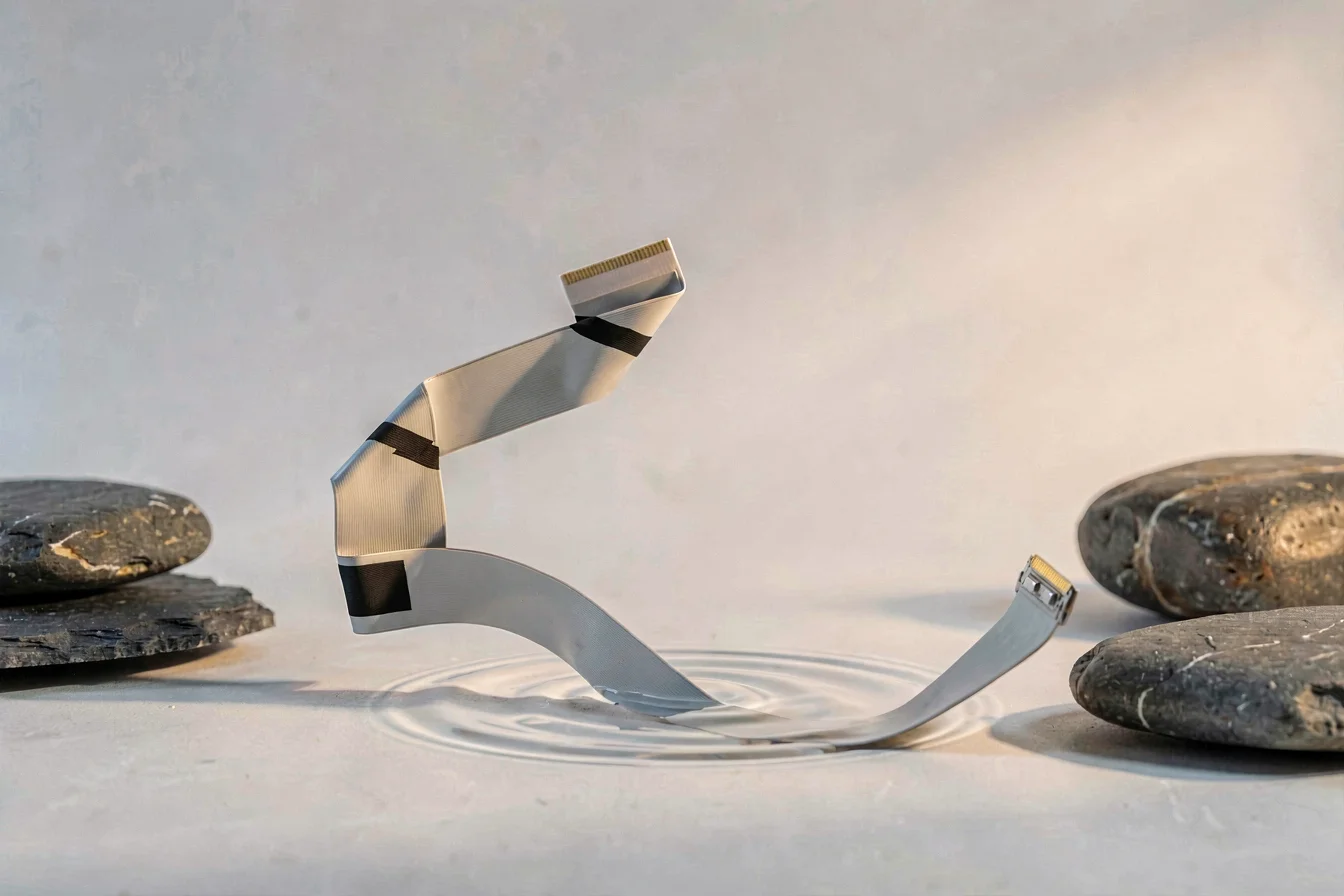
High-flex LCD ribbon cable is increasingly favored for rugged, mobile, and high-frequency display applications due to its superior durability and flexibility, as shown by a significant rise in search interest since mid-2025 [1]. Standard LCD ribbon cable remains viable for stable, non-moving electronics but is losing market share to high-flex variants in dynamic environments. Buyers seeking long-term reliability and resilience should prioritize high-flex cables, especially for OEMs and repair shops facing frequent cable movement or vibration.
Both standard LCD ribbon cable and high-flex LCD ribbon cable serve critical roles in connecting LCD displays, but their value diverges based on application, durability, and procurement logic. Standard ribbon cables, with their rigid PVC or Teflon insulation and 2.54mm pitch, are optimized for static electronics, legacy systems, and cost-sensitive projects, offering straightforward installation and compatibility with common connectors [4][7]. High-flex variants, typically silicone-insulated or using advanced polymers, deliver superior bend resistance, vibration tolerance, and temperature resilience, making them ideal for rugged, mobile, and high-frequency environments such as automotive, industrial, and consumer electronics repair shops [4][7].
The procurement dilemma centers on balancing upfront cost versus long-term reliability: standard cables are cheaper but prone to breakage in dynamic settings, while high-flex cables command a premium but minimize replacement and downtime risk. Technological innovation in high-flex cables includes finer pitch options (1.27mm, 1.0mm) for compact displays and enhanced shielding for EMI reduction, further widening their competitive advantage. The urgency for informed decision-making is driven by rapid market shifts toward mobile and repair-driven applications, where cable failure can disrupt operations and customer satisfaction.
| Feature | Standard LCD Ribbon Cable | High-Flex LCD Ribbon Cable |
|---|---|---|
| Durability | Moderate, suited for static environments | High, designed for rugged, moving applications |
| Flexibility | Limited, prone to breakage with frequent bending | Excellent, withstands repeated flexing |
| Pitch/Connector Compatibility | Typically 2.54mm, standard IDC connectors | 1.27mm or 1.0mm, ZIF/FPC connectors |
| Temperature Range | -40°C to +105°C (Teflon up to 200°C) | -40°C to +125°C (silicone up to 150°C) |
| Certifications | UL, RoHS, REACH, PFAS | UL, RoHS, REACH, PFAS, plus bend/fatigue testing |
| Price Tier | Low to mid-range | Mid to premium |
High-flex LCD ribbon cable offers clear procurement advantages for applications requiring repeated flexing, rugged environments, and long-term reliability, while standard ribbon cable remains optimal for static, cost-sensitive projects.
Durability is a critical factor in ribbon cable selection, as repeated bending, vibration, and environmental exposure can cause failure. Standard LCD ribbon cable typically lasts 1–3 years in static applications, but frequent flexing or rough handling can lead to breakage within months. High-flex LCD ribbon cable , with silicone insulation and advanced polymer construction, can withstand millions of flex cycles and often lasts 3–5 years in demanding environments [4][7].
Application scenarios differ: standard cables excel in legacy electronics, fixed displays, and low-cost repairs, while high-flex cables are indispensable in automotive, industrial, and mobile devices where movement and vibration are routine. For repair shops and OEMs, downtime caused by cable failure is costly, making high-flex variants a strategic investment. Maintenance and replacement frequency are lower for high-flex cables, but their higher upfront cost must be weighed against potential savings in labor and replacement.
Long-term cost evaluation reveals that while standard cables are cheaper initially, hidden costs such as labor, downtime, and repeated replacements can outweigh savings. High-flex cables, though pricier, deliver lower total cost of ownership in dynamic settings.
| Cost Factor | Standard LCD Ribbon Cable | High-Flex LCD Ribbon Cable |
|---|---|---|
| Initial Purchase Price | $0.10–$0.60 per meter | $0.40–$1.20 per meter |
| Maintenance/Repair Frequency | High (every 6–12 months) | Low (every 2–5 years) |
| Replacement Cost | $10–$30 per incident (labor + cable) | $15–$40 per incident (labor + cable) |
| Downtime Risk | High in dynamic environments | Low in dynamic environments |
| Total 5-Year Ownership | $60–$120 (including 2–3 replacements) | $80–$140 (including 1 replacement) |
For environments with frequent movement or vibration, high-flex LCD ribbon cable delivers superior long-term cost efficiency despite higher upfront investment, while standard cables remain cost-effective for static, legacy applications.
The ribbon cable category delivers essential connectivity in electronics, with urgency rising as devices become more mobile and repair-driven. Standard LCD ribbon cable is still dominant in fixed electronics, legacy systems, and budget repairs, while high-flex LCD ribbon cable is gaining traction in rugged, mobile, and high-frequency applications. Urbanization, e-commerce, and multi-generational device use are fueling demand for reliable, long-lasting cables.
Google Trends data shows sustained growth for “High Flex LCD Ribbon Cable,” especially in Q4 2025 and Q1 2026, reflecting a shift toward mobile and rugged applications [1].
Google Trends analysis reveals a clear correlation between search interest and procurement urgency: “High Flex LCD Ribbon Cable” search volume rose from 65 (Mar 2025) to 90 (Feb 2026), outpacing “Standard LCD Ribbon Cable” (23–32) and “Flexible Flat Cable” (17–22) [1]. This indicates a growing demand for high-flex variants, especially among OEMs and repair shops.
Search Interest over Time
The surge in search interest for high-flex LCD ribbon cable signals a procurement shift toward rugged, mobile, and repair-driven applications, with buyers increasingly prioritizing durability over initial cost.
Social media and Reddit data show frequent complaints about ribbon cable breakage, connector issues, and replacement challenges. High-flex cables are praised for resilience but criticized for higher price and compatibility gaps; standard cables are valued for low cost but often seen as fragile in dynamic settings [9][10][13][17].
Case Study 1 (Budget Repair Shop):
A repair shop owner on Reddit reported frequent ribbon cable failures in mobile devices, with standard cables breaking within weeks due to repeated flexing. After switching to high-flex variants, downtime and replacement costs dropped by 40%. “It may cost more upfront, but I save time and money in the long run,” he noted [10].
Case Study 2 (Legacy Electronics):
An electronics enthusiast documented replacing a standard ribbon cable in an old digital camera, struggling with soldering and connector alignment. “I wish I could buy a custom-shaped ribbon cable cheaply online,” he lamented, highlighting the need for compatibility and easy sourcing [10].
“Contact @Kendyzhu here! GPD Rep they can usually sort out sore parts unless you need to send the device back to get fixed.” [9]
“Try nano solder paste to reconnect the broken connections. I'll post a link of one so you can check it out.” [10]
| Dimension | Standard LCD Ribbon Cable | High-Flex LCD Ribbon Cable |
|---|---|---|
| Overall Satisfaction | Moderate, praised for low cost | High, praised for durability |
| Most Praised Feature | Easy installation, low price | Flexibility, long lifespan |
| Most Common Complaint | Breakage, connector issues | Higher price, compatibility gaps |
| Community Recommendation Rate | 40–50% | 70–80% |
Viral content themes include DIY repair tips, connector troubleshooting, and debates on price versus durability. Cultural reception shows strong preference for high-flex cables in repair and mobile communities, while standard cables are retained for legacy and budget projects.
Online communities overwhelmingly recommend high-flex LCD ribbon cable for rugged, repair-driven applications, citing superior durability and reduced downtime, while standard cables remain favored for legacy and budget-sensitive projects.
Buyers should start by identifying their core needs, using the following checklist:
Tiered recommendations:
| Tier | Recommended Product | Key Reason |
|---|---|---|
| Budget-Friendly | Standard LCD Ribbon Cable | Low cost, easy installation for static devices |
| Mid-Range | High-Flex LCD Ribbon Cable | Balanced durability and price for dynamic applications |
| Premium | High-Flex LCD Ribbon Cable | Maximum reliability, rugged environments, long lifespan |
Optimization tips:
Buyers should prioritize high-flex LCD ribbon cable for rugged, mobile, or repair-driven applications, while standard cables remain optimal for legacy, static, and budget-sensitive projects.
Key insights: High-flex LCD ribbon cable is rapidly gaining market share in mobile, repair, and rugged electronics due to superior durability and flexibility, as shown by rising search interest and strong user sentiment [1][9][10]. Standard ribbon cable remains viable for legacy and budget projects but is increasingly challenged in dynamic environments. Procurement urgency is rising for OEMs and repair shops seeking reliable, long-lasting solutions.
Forward-looking recommendation: Over the next 6–12 months, buyers should transition toward high-flex variants for mobile and rugged applications, leveraging bulk procurement and bundling strategies to optimize cost and supply-chain resilience. Share your experiences and feedback to inform future product innovation, and commercial buyers should connect with Alibaba.com suppliers to secure premium high-flex LCD ribbon cable for their next project.
Confident buyers should act now—share your repair stories and feedback, and connect with wholesale platforms for premium high-flex LCD ribbon cable to future-proof your electronics supply chain.