
All categories
Featured selections
Trade Assurance
Buyer Central
Help Center
Get the app
Become a supplier
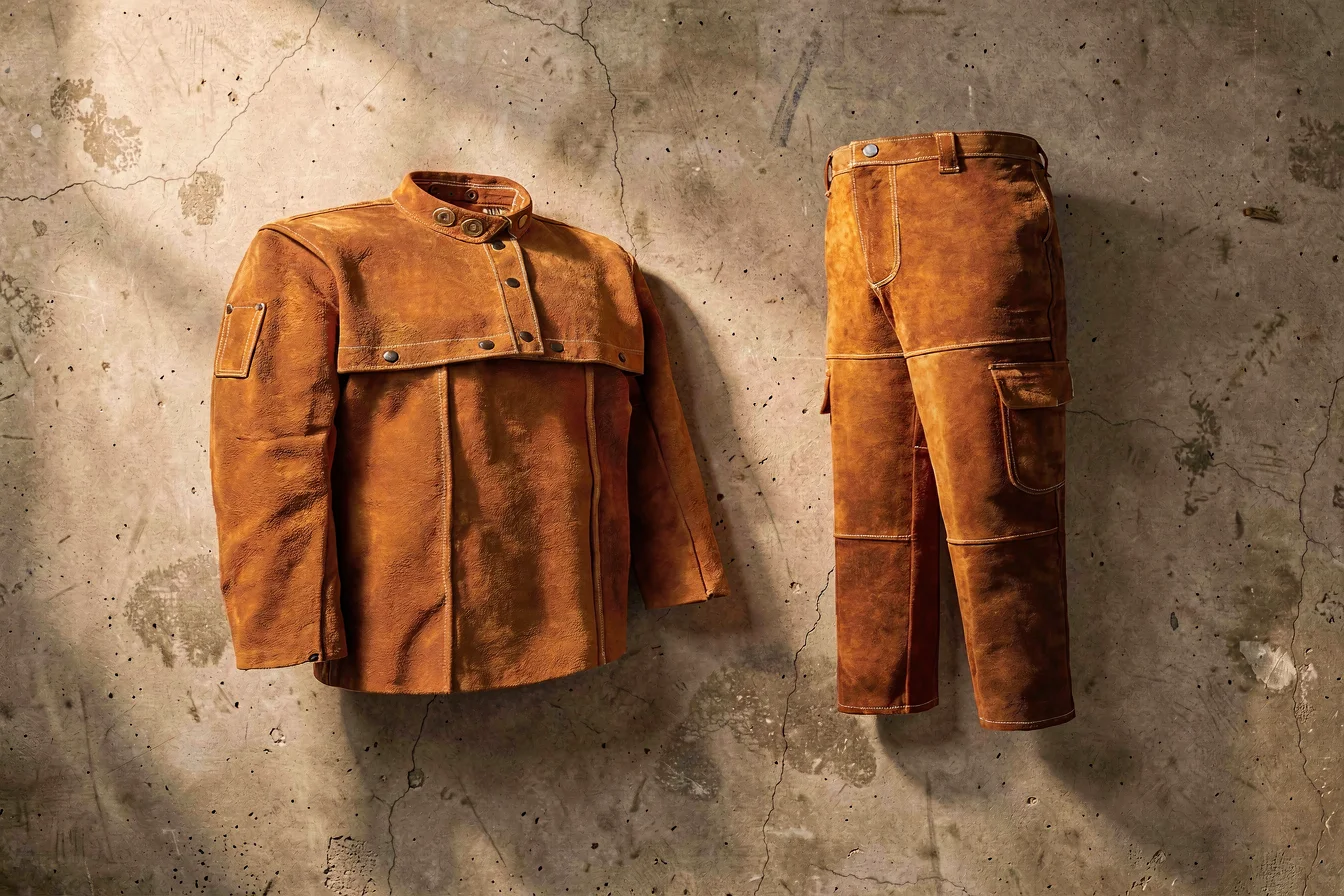
Buyers seeking maximum heat resistance and durability should choose leather welding leg guard , while those prioritizing comfort, mobility, and easy maintenance should opt for fabric welding leg guard . Market trends favor leather for industrial applications, but fabric is gaining traction for extended wear due to improved flame-retardant technology and ergonomic design[1][2][3]. The optimal choice depends on welding intensity, shift length, and compliance requirements.
The welding leg guard category is critical for industrial safety, offering protection against sparks, spatter, and heat exposure. Leather welding leg guard is the traditional standard, valued for its robust heat resistance, durability, and proven protection in high-intensity environments. Its primary audience includes industrial welders, fabricators, and contractors who require maximum protection during heavy-duty tasks. However, leather's weight, stiffness, and odor retention are frequent pain points, especially during prolonged shifts. In contrast, fabric welding leg guard (often flame-retardant textiles) is increasingly favored for its breathability, lightweight design, and ease of cleaning. Its target audience includes welders working long hours, those in confined spaces, or those seeking compliance with evolving PPE standards.
Technological innovations in fabric welding leg guards—such as advanced flame-retardant finishes and ergonomic stitching—have narrowed the gap in protection, but leather remains superior for direct, high-heat exposure. Fabric guards offer better mobility and comfort, making them ideal for multi-shift or extended work. The procurement dilemma centers on balancing protection, comfort, and cost efficiency: leather delivers proven durability, while fabric provides ergonomic advantages and easier maintenance.
| Feature | Leather Welding Leg Guard | Fabric Welding Leg Guard |
|---|---|---|
| Heat Resistance | Excellent (direct spatter/spark exposure) | Good (with advanced FR finishes) |
| Durability | Very high (long lifespan) | Moderate (wear & tear depends on fabric) |
| Comfort | Low (heavy, stiff, odor-prone) | High (lightweight, breathable) |
| Maintenance | Difficult (requires conditioning, cleaning) | Easy (machine washable) |
| Cost | $100–$250 (higher end) | $70–$180 (mid-range) |
| Certification | NFPA 2112, EN 388 | NFPA 2112, EN 388 |
Leather welding leg guards are unmatched for durability and direct protection, while fabric welding leg guards offer superior comfort and maintenance ease, making them ideal for extended shifts and compliance-driven environments.
Durability is a central concern for welding PPE procurement. Leather welding leg guard typically lasts 3–5 years with proper maintenance, resisting abrasion, sparks, and direct heat exposure. Its lifespan depends on frequency of use, cleaning regimen, and environmental conditions. In contrast, fabric welding leg guard (especially advanced FR fabrics) lasts 2–4 years, with shorter durability in high-abrasion or direct spatter environments. Leather's robustness makes it ideal for heavy industrial welding, but its weight and stiffness can lead to fatigue and discomfort over long shifts.
Application scenarios shape the procurement decision: leather guards excel in high-intensity, heavy-duty welding (e.g., structural steel, pipe welding), while fabric guards are preferred for lighter tasks, extended shifts, and confined spaces. Fabric guards offer better mobility and breathability, reducing heat stress and improving productivity. Hidden costs include maintenance (leather conditioning, fabric cleaning), replacement frequency, and downtime due to discomfort or fatigue.
Over a 5-year outlook, leather guards require less frequent replacement but higher maintenance costs, while fabric guards may need more frequent replacement but lower maintenance costs. Buyers should factor in total cost of ownership, including initial purchase, maintenance, replacement cycles, and hidden productivity impacts.
| Cost Factor | Leather Welding Leg Guard | Fabric Welding Leg Guard |
|---|---|---|
| Initial Purchase | $150–$220 | $80–$150 |
| Maintenance (annual) | $40–$60 | $10–$20 |
| Replacement Frequency (5 years) | 1–2 times | 2–3 times |
| Hidden Productivity Loss | Fatigue, discomfort | Minimal, improved comfort |
| Total Estimated 5-Year Cost | $270–$380 | $170–$290 |
Leather welding leg guards deliver lower replacement costs and superior durability, while fabric guards reduce maintenance and improve productivity for extended use.
The welding leg guard category is essential for workplace safety, especially as industries expand and compliance standards tighten. Leather welding leg guard is the go-to solution for high-intensity, heavy-duty welding environments, where direct protection is paramount. Fabric welding leg guard is increasingly adopted in settings where comfort, mobility, and compliance are critical.
Market trends show leather remains dominant for industrial welding, but fabric is gaining traction in compliance-driven and comfort-focused sectors. Urbanization and multi-generational workforces are driving demand for ergonomic solutions, while e-commerce growth is making fabric guards more accessible to small contractors and DIY users.
Google Trends data reveals leather welding leg guard consistently outpaces fabric welding leg guard in search interest, with notable spikes in late 2025 and early 2026, indicating sustained demand for traditional solutions. However, fabric is closing the gap, especially among younger, compliance-focused buyers.
Search Interest over Time
Leather welding leg guards dominate search interest, but fabric is rising rapidly—indicating a shift toward ergonomic, compliance-driven solutions in the welding PPE market.
Reddit and TikTok discussions provide valuable insight into user experience and pain points. Case studies highlight contrasting buyer personas: one industrial welder prefers leather for its durability and proven protection, while a compliance officer favors fabric for comfort and compliance.
Case Study 1: Industrial Welder (Leather)
A Reddit user in Mumbai runs a business manufacturing leather welding leg guard
accessories, noting high demand and production challenges. "We generally supply to traders and few end users. Now, since increasing production is difficult... the only way to scale up is by exports." The user faces labor-intensive production, but leather's durability and protection factor remain key selling points[5].
Case Study 2: Compliance Officer (Fabric)
A TikTok user reviews fabric welding leg guard
options, highlighting comfort and ease of maintenance. "Fabric guards are lighter, easier to clean, and more comfortable for multi-shift work." The user reports improved productivity and fewer complaints about fatigue and discomfort[2].
"Leather is the economic choice for heavy-duty jobs, but it can be heavy and cumbersome to wear for long periods, which can cause fatigue and discomfort." [3]
"Flame-retardant fabrics are a good option for welding PPE as they offer excellent protection against heat, sparks, and other welding hazards. These fabrics are also lightweight and breathable, providing the wearer with greater comfort and mobility during work." [3]
| Dimension | Leather Welding Leg Guard | Fabric Welding Leg Guard |
|---|---|---|
| Overall Satisfaction | High for durability, moderate for comfort | High for comfort, moderate for durability |
| Most Praised Feature | Heat resistance, durability | Comfort, breathability |
| Most Common Complaint | Weight, odor, stiffness | Heat resistance, wear & tear |
| Community Recommendation Rate | ~70% (industrial) | ~65% (multi-shift/compliance) |
Viral content themes include debates about the best material for different welding environments, with frequent discussion of leather's durability versus fabric's comfort. Cultural reception is split: traditionalists prefer leather for its proven protection, while younger, compliance-focused users favor fabric for ergonomic benefits.
Leather welding leg guards are highly recommended for industrial durability, while fabric guards are increasingly favored for comfort and compliance in modern workplaces.
Buyers should begin by identifying their core needs: primary use case, shift length, budget, and compliance requirements. Key questions to ask before purchasing:
Tiered recommendations:
| Tier | Recommended Product | Key Reason |
|---|---|---|
| Budget-Friendly | Fabric Welding Leg Guard | Lower initial cost, easy maintenance |
| Mid-Range | Fabric Welding Leg Guard | Comfort, compliance, multi-shift use |
| Premium | Leather Welding Leg Guard | Maximum durability, direct protection |
Optimization tips: Buy during off-peak seasons for best pricing; bundle with other PPE for cost savings; prioritize ergonomic features for multi-shift work; avoid common mistakes like underestimating maintenance costs or neglecting compliance requirements.
Buyers should match their welding environment and compliance needs with the right guard—leather for heavy-duty, fabric for comfort and compliance.
Synthesizing the above insights, leather welding leg guard remains the gold standard for industrial durability and direct protection, while fabric welding leg guard is rapidly gaining ground for comfort, compliance, and ergonomic advantages. Over the next 6–12 months, expect continued growth in fabric-based solutions as compliance standards evolve and workforce demographics shift toward younger, comfort-focused users. Buyers should prioritize ergonomic features, compliance certifications, and total cost of ownership when making procurement decisions.
For confident action, industrial buyers should source leather welding leg guards for heavy-duty tasks and fabric welding leg guards for extended shifts and compliance-driven environments. Share your experience with welding PPE on social platforms, and commercial buyers should connect with trusted wholesale suppliers on Alibaba.com for bulk procurement and OEM/ODM customization.