
All categories
Featured selections
Trade Assurance
Buyer Central
Help Center
Get the app
Become a supplier
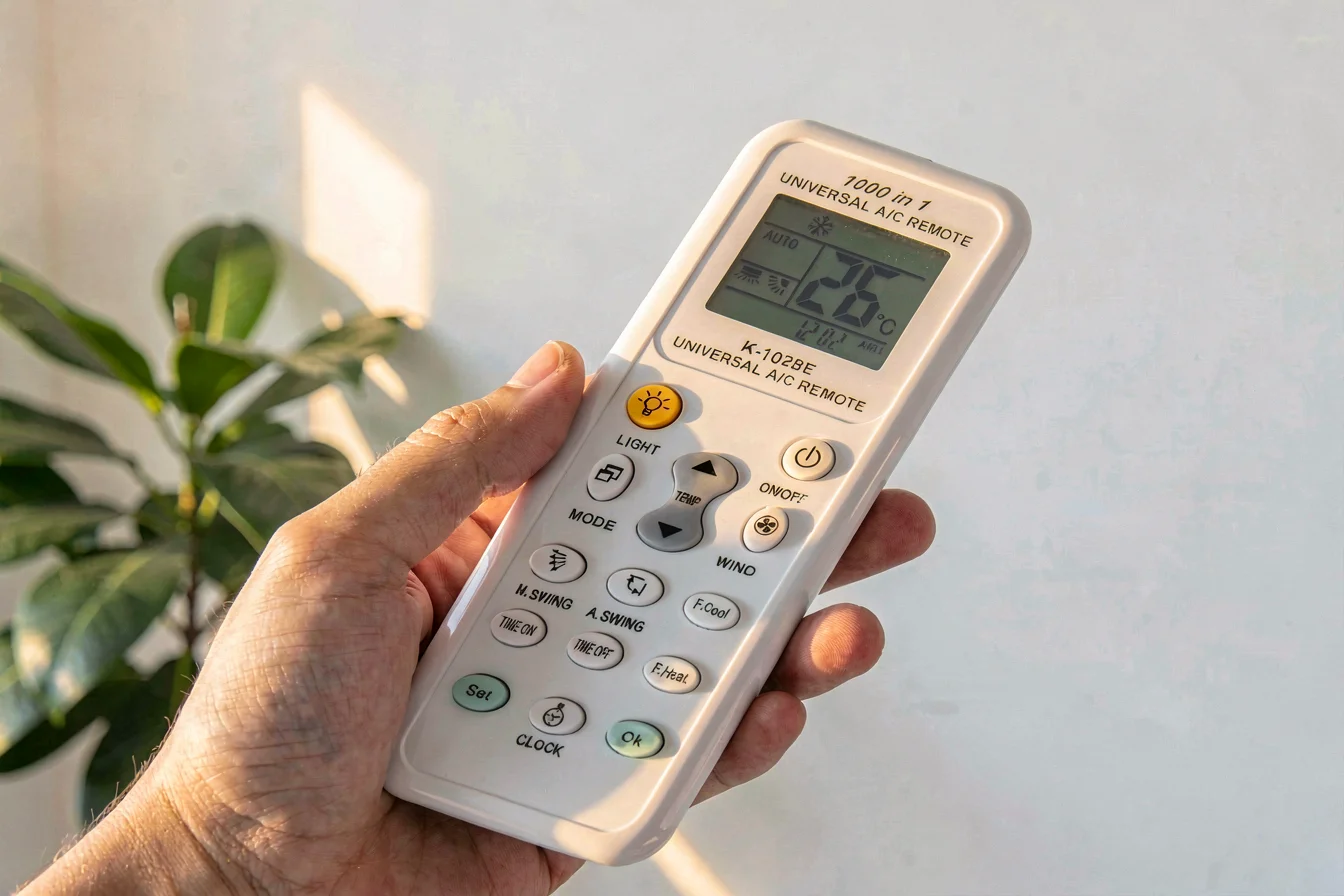
For buyers, the choice between LG air conditioner remote control and universal air conditioner remote control hinges on compatibility, feature depth, and cost efficiency. LG remotes deliver seamless integration and advanced controls for LG units, but universal remotes offer broader compatibility and lower price points, making them ideal for multi-brand environments. Recent trends favor universal remotes slightly for general use, but LG remotes remain the top choice for buyers prioritizing brand-specific features and future-proofing.
The primary value of this category is enabling precise control and automation of air conditioning systems, addressing pain points such as compatibility gaps, feature limitations, and cost inefficiencies. LG air conditioner remote control is tailored for LG AC units, offering direct integration with ThinQ smart home systems, mode selection, and precise temperature control [2]. It is favored by buyers who want full feature access and seamless integration, especially in commercial or high-end residential settings. In contrast, universal air conditioner remote control is engineered for compatibility across multiple brands, supporting legacy and new AC models alike, but often lacks advanced features and suffers from build quality or programming complexity [5].
Traditional challenges for LG remotes include limited availability for older models and occasional design flaws (scroll wheel failure, lack of media controls), while universal remotes face criticism for inconsistent button layout, missing features, and programming headaches. Technological innovations include universal remotes with LCD displays and smart integration, but LG remotes lead in deep integration and future-proofing for IoT-enabled homes. Buyers must weigh the trade-off between brand-specific feature access and broader compatibility.
| Feature | LG Air Conditioner Remote Control | Universal Air Conditioner Remote Control |
|---|---|---|
| Brand Compatibility | Exclusive LG ACs | Multi-brand, legacy/new ACs |
| Feature Depth | ThinQ integration, Wi-Fi pairing, advanced modes | Basic modes, limited smart features |
| Programming Complexity | Model-specific, easy setup | Code entry, sometimes challenging |
| Build Quality | Mixed; scroll wheel issues reported | Variable; some models lack durability |
| Price | Higher (premium features) | Lower (mass-market) |
| Smart Home Integration | Advanced (ThinQ, HA) | Basic (BroadLink, smart plugs) |
LG remotes excel in deep integration and feature-rich control, but universal remotes offer unmatched compatibility and cost savings for mixed-brand environments.
Durability is critical for remote controls, as frequent use and exposure to environmental factors (humidity, dust) can impact performance. LG air conditioner remote control is generally robust, but design flaws like scroll wheel collapse within months are reported, affecting reliability [5]. Universal remotes, while often budget-friendly, sometimes suffer from poor build quality and button wear, especially in high-traffic or commercial settings. Long-term reliability depends on the build material and user environment.
Application scenarios vary: LG remotes are best for environments where full feature access and smart home integration are essential (e.g., hotels, smart homes, corporate offices). Universal remotes thrive in multi-brand setups, rental units, and hospitality, where flexibility and cost are paramount. Buyers should assess the expected lifespan, frequency of use, and required features before deciding.
Cost analysis reveals that LG remotes carry a higher upfront price but offer fewer replacement cycles due to deeper integration and fewer compatibility issues. Universal remotes are cheaper to buy, but may need more frequent replacement or additional programming. Hidden costs include lost productivity (due to programming errors) and compatibility headaches, especially in mixed-brand environments.
| Cost Factor | LG Air Conditioner Remote Control | Universal Air Conditioner Remote Control |
|---|---|---|
| Initial Price | $25–$50 (premium) | $10–$20 (mass-market) |
| Maintenance | Low (occasional replacement) | Moderate (frequent replacement) |
| Replacement Frequency | Low (design flaws rare) | High (build quality issues) |
| Hidden Costs | Minimal | Programming errors, compatibility issues |
| 5-Year Total Cost | $30–$60 | $40–$80 |
LG remotes offer lower long-term costs in high-value environments, while universal remotes may incur higher replacement and compatibility costs over time.
This category delivers value by enabling seamless climate control, automation, and energy efficiency, with urgency driven by rapid smart home adoption and multi-brand environments. LG air conditioner remote control excels in environments prioritizing deep integration, such as corporate offices, smart homes, and hotels with LG ACs. Universal air conditioner remote control is preferred in rental units, hospitality, and mixed-brand settings where flexibility and cost efficiency are crucial.
Market trend data shows a steady rise in universal remote searches since mid-2025, with both types maintaining stable demand [1]. Urbanization and smart home adoption are driving the need for advanced remotes, while multi-generational living and e-commerce are increasing demand for universal remotes in mixed-brand environments.
Search Interest over Time
Universal remotes consistently edge out LG remotes in search interest, but both types remain stable, indicating steady demand and a lack of seasonality.
Social media and Reddit reveal contrasting buyer personas and outcomes. One case study features a home automation enthusiast who upgraded an older LG AC with a universal remote and BroadLink M4 Mini, achieving smart home integration and easy climate control [3]. The user reports seamless integration, but notes occasional sync issues when using the physical remote. Another case study highlights a hospitality owner struggling with finding a compatible remote for a mini-split, ultimately switching to a smart controller for energy savings and full temperature display [4].
“I did some research that there is already such a thing - BroadLink M4 Mini that is super cheap. I found used one on FB Marketplace for 10€, picked it up on the same day. I connected to HA within minutes. Then I used https://github.com/smartHomeHub/SmartIR to create a Climate entity that simulates the IR remote, and it works like a charm! Sure, it goes out of sync if I use physical remote, but other than that it's like native integration.” [3]
“I can’t even find an IR on this device to know if should go purchase and try a 3rd remote. I can’t find any pairing options and there is no buttons on this thing at all besides the power button. Any help would be appreciated.” [4]
Sentiment analysis reveals strong community preference for LG remotes when deep integration and feature richness are needed, while universal remotes are praised for compatibility and cost savings but criticized for build quality and missing features.
| Dimension | LG Air Conditioner Remote Control | Universal Air Conditioner Remote Control |
|---|---|---|
| Overall Satisfaction | High (feature-rich, integration) | Moderate (compatibility, cost) |
| Most Praised Feature | ThinQ integration, precise control | Multi-brand compatibility |
| Most Common Complaint | Scroll wheel failure, lack of media controls | Build quality, missing features |
| Community Recommendation Rate | High for smart home users | High for mixed-brand environments |
Viral content themes include smart home hacks, energy-saving tips, and debates over build quality. Cultural reception favors LG remotes for advanced users, while universal remotes are favored for budget and flexibility.
Social sentiment confirms LG remotes’ value for smart home integration, while universal remotes are preferred for cost and compatibility.
Buyers should start by identifying their core needs: primary use case (smart home, rental property, hospitality), budget range, and must-have features (ThinQ integration, LCD display, media controls). Key questions include:
Tiered recommendations:
| Tier | Recommended Product | Key Reason |
|---|---|---|
| Budget-Friendly | Universal Air Conditioner Remote Control | Low price, broad compatibility |
| Mid-Range | Universal Air Conditioner Remote Control with LCD Display | Balanced features, moderate price |
| Premium | LG Air Conditioner Remote Control | Deep integration, advanced features |
Optimization tips: Buy during off-season for best deals, consider bundling remotes with smart plugs for added value, prioritize models with LCD displays and smart integration, and avoid common mistakes like ignoring compatibility or underestimating hidden costs. Buyers should match their procurement strategy to their specific needs, budget, and environment for optimal results.
Key insights: LG remotes offer unmatched integration and advanced features for LG units, but universal remotes provide unmatched compatibility and cost savings for mixed-brand environments. Social and market trends confirm steady demand for both types, with universal remotes slightly edging out in search interest. For the next 6–12 months, buyers should anticipate rising demand for smart home integration and LCD display remotes, while multi-brand compatibility remains crucial in hospitality and rental sectors.
Emotional call-to-action: Buyers should confidently choose the remote that best fits their environment, budget, and feature needs. Share your experience on social platforms to help others, and commercial buyers should leverage Alibaba.com for bulk sourcing, OEM/ODM customization, and competitive pricing. Take action today: optimize your procurement strategy for maximum compatibility, value, and future-proofing.