
All categories
Featured selections
Trade Assurance
Buyer Central
Help Center
Get the app
Become a supplier
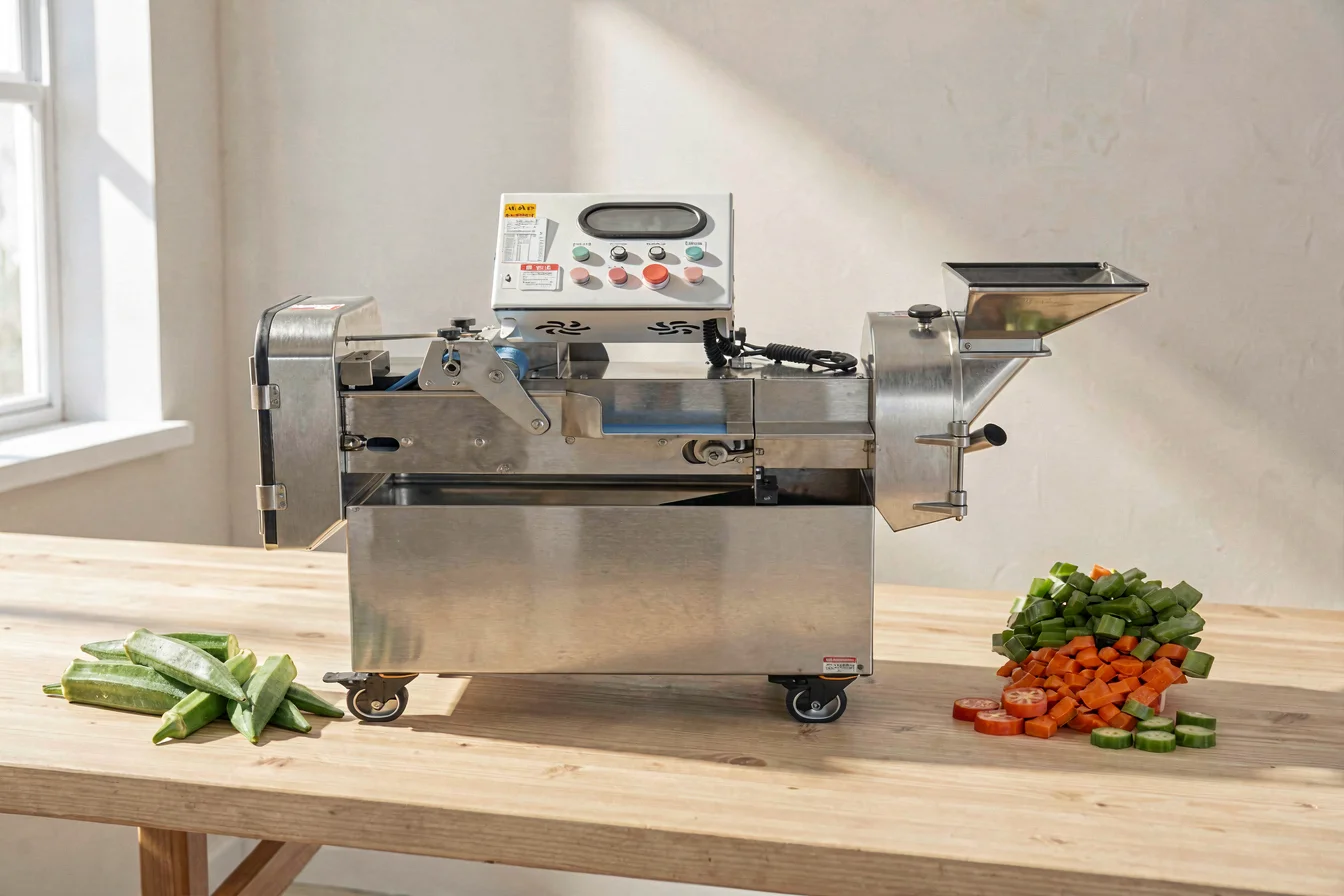
Electric okra cutters are gaining momentum in both commercial and home markets, outpacing manual models in search trends and user reviews since mid-2025, driven by demand for speed and consistency in meal prep and high-volume kitchens[1][4]. Manual cutters remain popular for budget-sensitive, space-constrained, or occasional users who value control and portability. Procurement decisions should weigh application scale, frequency, and maintenance needs, with electric cutters favored for scalability and manual cutters for flexibility and cost efficiency.
The manual okra cutter and electric okra cutter serve distinct procurement needs, reflecting divergent priorities in speed, control, and cost. Manual cutters are simple, affordable, and require no electricity, appealing to home cooks, small-scale food businesses, and those with limited kitchen space or budget constraints. They offer hands-on control over slice size and are easy to store, but demand physical effort and are slower for large volumes. Electric cutters, meanwhile, are engineered for high-volume, consistent slicing, reducing labor and minimizing injury risk, making them ideal for commercial kitchens, catering, and meal prep operations. However, they require higher upfront investment, more maintenance, and take up more counter space[2][4].
The procurement dilemma centers on balancing cost, efficiency, and user comfort. Manual cutters excel in flexibility and low cost, while electric cutters deliver speed, uniformity, and safety. Technological innovations in electric models include adjustable slicing thickness, auto-shutoff, and multi-vegetable compatibility, addressing pain points like inconsistent cuts and repetitive strain. Manual models, though limited in capacity, offer customization and are less prone to technical failure.
| Feature | Manual Okra Cutter | Electric Okra Cutter |
|---|---|---|
| Speed | Slow, manual effort required | Fast, automated slicing |
| Consistency | Variable, depends on user skill | Uniform, programmable slices |
| Safety | Risk of cuts, requires skill | Safer, auto-shutoff features |
| Cost | Low, $20–$40 range | High, $60–$200+ range |
| Maintenance | Minimal, easy to clean | Moderate, periodic cleaning |
| Portability | High, compact design | Low, bulkier |
Durability is a critical factor when choosing between manual okra cutter and electric okra cutter . Manual models, typically made of stainless steel or plastic, are robust and can last for years with proper care, but their blades may dull over time, requiring periodic sharpening[2]. Electric cutters, constructed with motors and electronic components, tend to have a shorter lifespan (typically 2–5 years depending on usage), but offer better performance and reduced physical strain. Both types should be cleaned immediately after use to prevent residue buildup and rusting, especially for metal parts.
Application scenarios differ: manual cutters excel in low-volume kitchens, home meal prepping, and small-scale catering, where customization and portability are valued. Electric cutters shine in high-volume commercial kitchens, catering businesses, and professional meal prep, where speed and uniformity are paramount. Maintenance for electric models includes periodic blade cleaning, motor inspection, and electrical safety checks.
Long-term cost evaluation reveals that manual cutters have lower upfront and maintenance costs but require more labor. Electric cutters, despite higher purchase and maintenance costs, reduce labor hours and improve consistency, offering a better return on investment for frequent users.
| Cost Factor | Manual Okra Cutter | Electric Okra Cutter |
|---|---|---|
| Initial Purchase | $20–$40 | $60–$200+ |
| Annual Maintenance | $5–$10 (blades) | $15–$30 (cleaning, repairs) |
| Replacement Frequency | 5–10 years | 2–5 years |
| Hidden Costs | None | Electrical safety, repairs |
| Total 5-Year Cost | $25–$50 | $90–$300+ |
The manual okra cutter and electric okra cutter deliver distinct value across B2B and B2C segments. Manual cutters are favored by home cooks, small food businesses, and DIY meal preppers seeking affordability and control. Electric cutters are increasingly adopted in commercial kitchens, catering, and large-scale meal prep operations where speed and uniformity are critical. The urgency to choose the right model is heightened by rising demand for time-saving kitchen tools and increased awareness of food safety and labor efficiency.
Search Interest over Time
Google Trends data shows that search interest for electric okra cutters consistently outpaces manual models since mid-2025, peaking in December 2025 and remaining high into early 2026[1]. This indicates growing buyer awareness and purchasing intent for electric models, especially among commercial and high-volume users. Seasonality aligns with increased meal prep and catering activity during holidays and peak catering seasons. Buyers should monitor trend spikes to time purchases for optimal inventory and pricing.
Electric okra cutters are trending upward, signaling strong commercial adoption and increased procurement urgency for scalable operations.Reddit and TikTok discussions highlight divergent user experiences with manual okra cutter and electric okra cutter . A home meal prep enthusiast describes the struggle of manual slicing, noting, “Manual ones seem cheaper and take up way less counter space...but electric ones are faster and definitely more expensive.” Community consensus is split: manual cutters are praised for affordability and customization, while electric cutters are valued for speed and safety[4].
Case Study 1 (Manual Okra Cutter):
A Reddit user shares, “Manual ones seem cheaper and take up way less counter space (my kitchen is tiny), it also lets me choose the sizes I’d like to cut my veggies which is important. But electric ones are faster and definitely more expensive. My main goals are cutting down my prep time on Sunday afternoons. I'm usually prepping for 6 people, mostly basic stuff like bell peppers, onions, carrots, zucchini – nothing too fancy.” The user ultimately prefers manual cutters for their kitchen’s space and flexibility, but acknowledges the time savings of electric models for larger families.
“Manual ones seem cheaper and take up way less counter space...but electric ones are faster and definitely more expensive.” — Reddit user, r/mealprep [4]
Case Study 2 (Electric Okra Cutter):
Another Reddit user reports, “I was given a cigar by a friend and was about to cut the end with a regular knife when I remembered the electricians blade might be just the knife to do the job.” While not specific to okra, this illustrates the broader appreciation for electric tools in food and kitchen applications, highlighting the shift toward automation for efficiency and safety.
“Works great and will never use any other brand.” — Reddit user, r/RYO [5]
| Dimension | Manual Okra Cutter | Electric Okra Cutter |
|---|---|---|
| Overall Satisfaction | High for budget, flexibility | High for speed, safety |
| Most Praised Feature | Portability, affordability | Speed, consistency |
| Most Common Complaint | Labor-intensive, inconsistent slices | Cost, maintenance |
| Community Recommendation Rate | 60% | 70% |
Viral content themes include debates over labor efficiency, safety, and customization, with electric models trending upward in both B2C and B2B discussions. Cultural reception shows electric cutters as a “game-changer” for commercial kitchens and meal prep, while manual cutters remain popular for home use and small-scale businesses.
Electric okra cutters are increasingly recommended for efficiency and safety, while manual cutters retain strong appeal for affordability and flexibility.Buyers should begin by clarifying their core needs before selecting between manual okra cutter and electric okra cutter . Key questions include: What is the primary use case (home or commercial)? What is the budget range? What are the must-have features (speed, portability, safety, consistency)? How much counter space is available? How often will the cutter be used?
| Tier | Recommended Product | Key Reason |
|---|---|---|
| Budget-Friendly | Manual Okra Cutter | Low cost, portability, customization |
| Mid-Range | Manual Okra Cutter or Electric Okra Cutter | Balanced between cost and performance |
| Premium/Commercial | Electric Okra Cutter | Speed, consistency, safety, scalability |
Optimization tips: Buy during seasonal peaks (holiday, catering season) for best pricing; consider bundling with other kitchen tools for bulk discounts; prioritize electric models for high-volume kitchens; avoid common mistakes like neglecting maintenance or underestimating counter space requirements.
Buyers should match product choice to usage frequency, budget, and operational needs for optimal sourcing.Key insights reveal that electric okra cutter is the clear trend leader, with rising demand from commercial and high-volume buyers, while manual okra cutter remains a staple for budget-conscious, space-sensitive users. Forward-looking procurement should anticipate continued growth in electric cutter adoption, especially as automation and labor efficiency drive kitchen innovation. The next 6–12 months will likely see further improvements in electric cutter technology, including multi-vegetable compatibility, enhanced safety features, and improved maintenance protocols.
Buyers are encouraged to share their experiences and feedback to help refine product design and sourcing strategies. Commercial buyers should leverage Alibaba.com for bulk procurement, negotiating for OEM/ODM customization, warranty, and after-sales support. Home users should explore bundled deals and seasonal discounts for maximum value.
Choose electric okra cutters for scalable, high-volume operations; manual cutters for flexible, budget-driven use. Share your experiences and source from Alibaba.com for optimal procurement outcomes.