
All categories
Featured selections
Trade Assurance
Buyer Central
Help Center
Get the app
Become a supplier
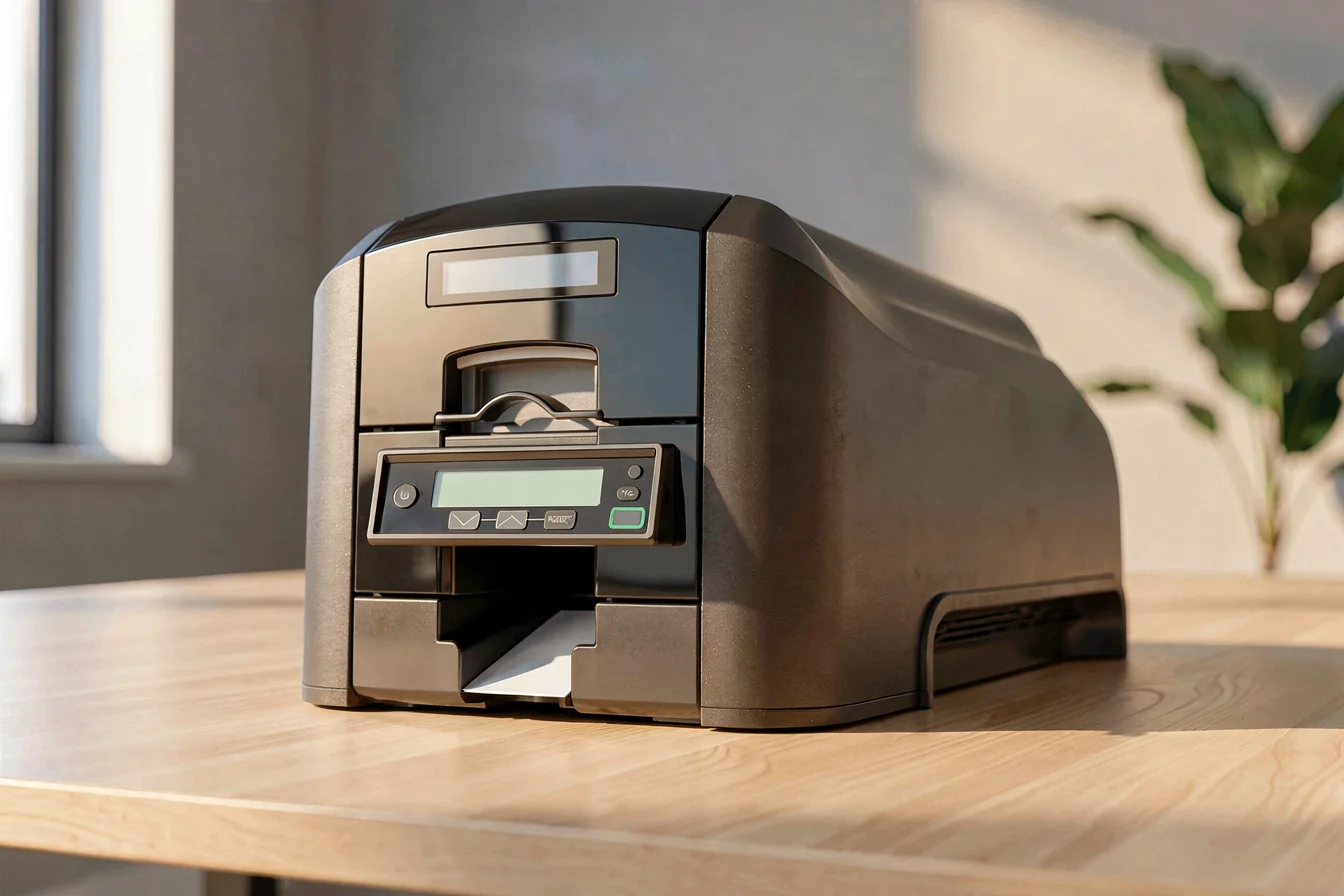
For buyers seeking secure, compliant document production, the choice between a passport printer and an ID card printer hinges on use case: passport printers are vital for government and border control, while ID card printers offer versatile, cost-effective solutions for business, education, and access control. Market data shows ID card printers dominate in demand and flexibility, but passport printers remain critical for regulated sectors. Strategic sourcing should align with compliance, volume, and application needs.
The document printing market is split between two critical categories: passport printer and ID card printer . Passport printers are engineered for high-security, government-grade output, delivering stringent compliance and advanced anti-counterfeiting features such as RFID chips, micro-printing, and holographic overlays[13]. Their target audience is government agencies, border control, and regulated institutions requiring strict adherence to international standards. ID card printers, meanwhile, serve a broader spectrum, from schools and corporations to event organizers and healthcare facilities, offering scalable, cost-effective solutions for access control, staff badges, and student IDs[2][3][4][6].
The procurement dilemma centers on balancing security, volume, and cost. Passport printers excel in security but are expensive, complex, and require specialized maintenance. ID card printers are more flexible, easier to use, and support a wide range of card types (PVC, RFID, smart cards) with options for single- or dual-sided printing, lamination, and encoding[2][4][5]. Technological innovations in ID card printers, such as retransfer printing, have closed the gap on image quality and durability, making them suitable for high-security applications outside government contexts[5].
| Feature | Passport Printer | ID Card Printer |
|---|---|---|
| Security Features | RFID, Micro-printing, Holograms, Compliance | RFID, Smart Card Encoding, Lamination, Dual-Sided |
| Target Audience | Government, Border Control, Regulated Sectors | Businesses, Schools, Healthcare, Events |
| Cost Range | $10,000–$50,000+ | $1,000–$8,000 |
| Maintenance Complexity | High, Requires Specialist | Medium, User-Friendly |
| Application Flexibility | Niche, Compliance-Driven | Broad, Scalable |
| Procurement Urgency | Critical, Regulatory Deadlines | Routine, Budget-Driven |
Passport printers are indispensable for government and regulated sectors, while ID card printers deliver unmatched flexibility and cost efficiency for business and education contexts.
Durability is a decisive factor for both passport printer and ID card printer . Passport printers are built for maximum security and longevity, using advanced materials and encryption, but require rigorous maintenance and compliance checks[13]. ID card printers offer robust durability, especially with retransfer or lamination options, making them suitable for high-traffic environments and frequent card replacement[4][5]. Typical lifespan for ID card printers is 3–7 years with regular maintenance, while passport printers can last 5–10 years but demand specialized care.
Application scenarios differ: passport printers are used in government offices, embassies, and border control, where compliance and tamper-proof output are non-negotiable. ID card printers excel in schools, corporations, hospitals, and event venues, supporting rapid, high-volume production of staff, student, and access cards[3][6]. Hidden costs for passport printers include regulatory audits, consumables, and software upgrades, while ID card printers incur ongoing ribbon, ink, and card supply expenses.
| Cost Factor | Passport Printer (5-Year) | ID Card Printer (5-Year) |
|---|---|---|
| Initial Purchase | $30,000–$50,000 | $3,000–$7,000 |
| Maintenance | $5,000–$10,000 | $1,500–$3,000 |
| Consumables | $2,000–$5,000 | $1,000–$2,500 |
| Software & Compliance | $1,500–$4,000 | $500–$1,000 |
| Hidden Costs | Regulatory audits, upgrades | Card supplies, upgrades |
| Total 5-Year Cost | $40,000–$70,000 | $6,000–$13,500 |
ID card printers offer lower total cost and greater application flexibility, while passport printers command a premium for compliance and security.
The document printing market is defined by distinct application scenarios. Passport printer dominates government, border control, and regulated sectors, where security and compliance are paramount. ID card printer is the go-to solution for businesses, schools, healthcare, and events, offering scalable, flexible document production at a lower cost[2][3][6].
ID card printers are favored for volume, flexibility, and ease of use, while passport printers are indispensable for high-security, compliance-driven applications.
Google Trends data shows ID card printers outpace passport printers in search volume, with ID card printers consistently scoring 70–100 vs. passport printers at 14–17 (March 2025–Feb 2026)[1]. Peaks in ID card printer searches align with school enrollment and corporate onboarding cycles, indicating stable, predictable demand. Passport printer searches remain low but steady, reflecting niche, government-driven procurement.
Search Interest over Time
ID card printers exhibit strong, stable demand, while passport printers are niche and driven by government cycles.
Social media and Reddit discussions reveal distinct user experiences. ID card printers are praised for affordability, reliability, and ease of integration with software and access control systems[7][8][10]. Users report challenges with budget constraints and consumable costs, but overall satisfaction is high. Passport printers, while rarely discussed outside government circles, are perceived as essential but expensive, with procurement focused on compliance and security[13].
Case Study 1: School IT Administrator (ID Card Printer)
A K-12 IT admin transitioned from old Zebra printers to Evolis Zenius, praising automated integration with SIS and SQL databases. The team created a streamlined workflow, enabling staff to take student photos via phone/webcam and automatically generate ID cards. The result: reduced manual effort and improved card accuracy[8].
“Our schools never reach out for ID issues now. We completely automated the process and schools are very happy with the results.”
Case Study 2: Government Agency Procurement (Passport Printer)
A government office evaluated passport printer options, emphasizing compliance, security, and durability. Staff highlighted the need for advanced features like RFID, holograms, and micro-printing, but noted high costs and complex maintenance. Procurement was driven by regulatory deadlines and the need for tamper-proof output[13].
“Passport printers are indispensable for compliance and security, but maintenance and regulatory audits are a major challenge.”
| Dimension | Passport Printer | ID Card Printer |
|---|---|---|
| Overall Satisfaction | High (compliance-driven) | Very High (cost-driven) |
| Most Praised Feature | Security & Compliance | Ease of Use & Integration |
| Most Common Complaint | Cost & Maintenance | Consumable Costs |
| Community Recommendation Rate | Niche, Government-Only | Broad, Business & Education |
ID card printers are widely recommended for schools, businesses, and events, while passport printers are niche but essential for government compliance.
Viral content themes on TikTok and Reddit highlight DIY passport photo printing and card label hacks for ID cards. Cultural reception for ID card printers is positive, focusing on budget and usability. Passport printers are discussed mainly in government and border control contexts, with debates over compliance and procurement timelines.
Before purchasing, buyers should clarify their needs by asking:
| Tier | Recommended Product | Key Reason |
|---|---|---|
| Budget-Friendly | ID Card Printer | Low cost, high flexibility |
| Mid-Range | ID Card Printer (with lamination/encoding) | Durability, advanced features |
| Premium | Passport Printer | Compliance, security, government use |
Optimization tips:
Tailor your choice to your compliance, volume, and budget needs — ID card printers for flexible business use, passport printers for government security.
The secure document printing market is evolving rapidly, with ID card printers dominating in volume and flexibility while passport printers remain essential for compliance-driven sectors. For the next 6–12 months, expect continued innovation in retransfer printing, lamination, and RFID encoding for ID card printers, expanding their use into high-security applications outside government. Passport printers will see incremental upgrades in security features and regulatory compliance, driven by global travel and border control needs.
Buyers should confidently choose based on application, compliance, and budget — share your experiences to help others, and commercial buyers should leverage wholesale platforms like Alibaba.com for optimized sourcing and procurement.
Dual call-to-action: Consumers, share your ID card and passport printing experiences to drive community insights; commercial buyers, source directly from Alibaba.com to access certified suppliers, bulk pricing, and tailored solutions.