
All categories
Featured selections
Trade Assurance
Buyer Central
Help Center
Get the app
Become a supplier
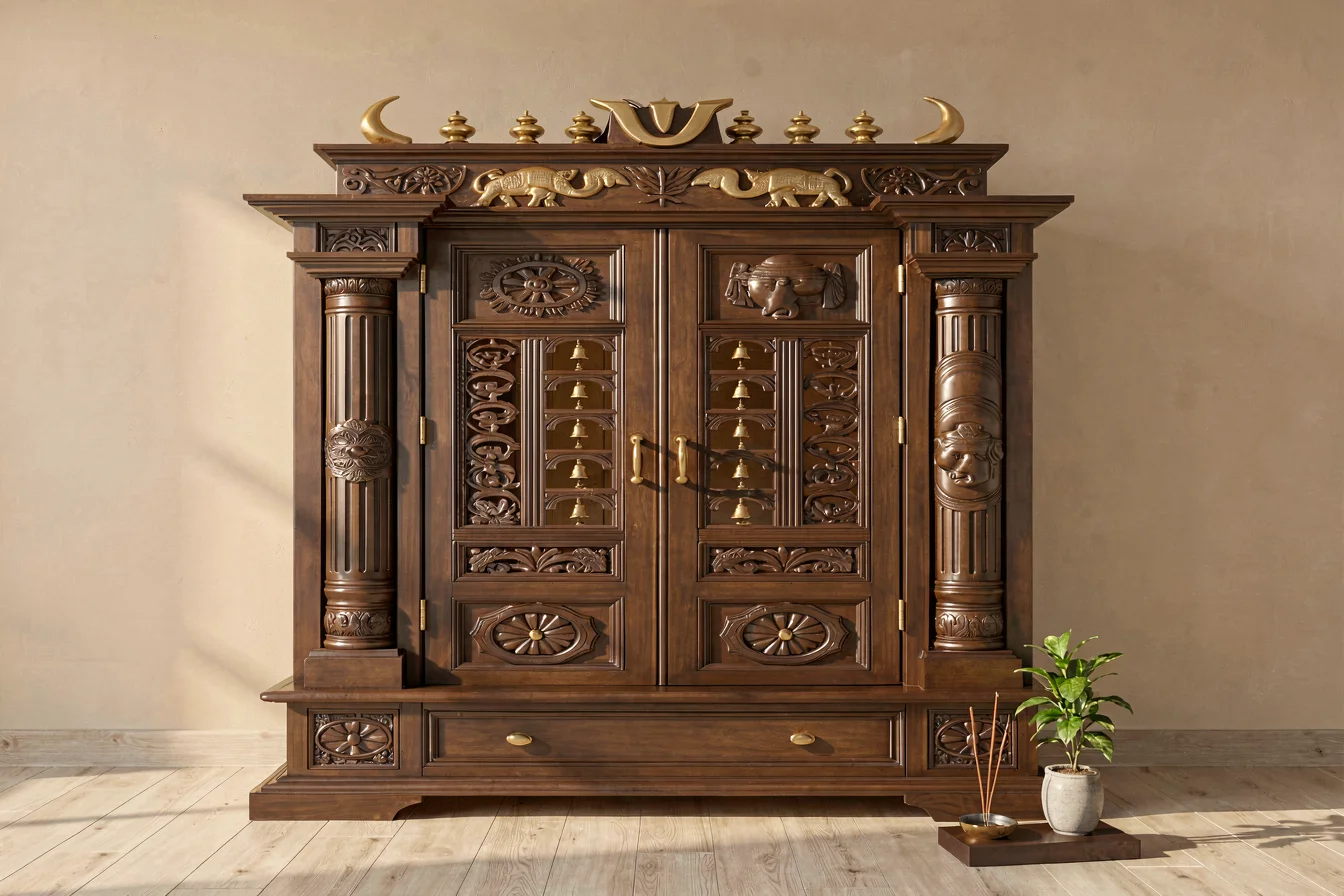
Buyers face a pivotal choice between traditional pooja room doors and modern pooja room doors : modern options are trending higher in global search interest, offering space efficiency and contemporary aesthetics, while traditional doors remain preferred for durability, cultural resonance, and spiritual symbolism. Procurement logic favors modern designs for urban and new builds, but traditional doors retain niche appeal in heritage or Vastu-driven projects. Demand is shifting toward modern styles, yet traditional doors are resilient in specific markets[1][2][3][7].
The choice between traditional pooja room doors and modern pooja room doors is central to procurement decisions in the Indian home and commercial design sector. Traditional doors, crafted from solid wood with intricate carvings and brass accents, deliver a timeless, spiritual ambiance and are often favored by buyers seeking cultural authenticity and Vastu compliance[2][3][7]. Modern doors, typically featuring minimalist wood or glass panels, etched motifs, and CNC-cut designs, excel in space efficiency, light transmission, and ease of maintenance, appealing to urban buyers and new builds[2][3][7].
Traditional doors solve the challenge of maintaining cultural sanctity and long-term durability, but their bulkiness and weight can be limiting in small spaces. Modern doors address the pain points of contemporary living—lighting, airflow, and easy cleaning—but may lack the spiritual symbolism and craftsmanship of traditional designs. Innovations in CNC technology and glass engineering have enabled modern doors to offer intricate motifs and custom patterns, bridging the gap between tradition and modernity[3][6].
In summary, buyers must weigh the cultural resonance and durability of traditional doors against the practical benefits and aesthetics of modern doors, as each addresses distinct pain points and design priorities.
| Feature | Traditional Pooja Room Doors | Modern Pooja Room Doors |
|---|---|---|
| Material | Solid wood, brass, copper | Glass, MDF, CNC wood, metal |
| Design | Intricate carvings, motifs, Vastu symbols | Minimalist, etched, geometric patterns |
| Target Audience | Heritage homes, Vastu-driven buyers | Urban, contemporary buyers, new builds |
| Durability | High; lasts decades | Moderate; depends on material |
| Maintenance | Low; wood upkeep | Low; glass cleaning, metal corrosion |
| Price Range | ₹4,000–₹20,000 | ₹6,000–₹25,000 |
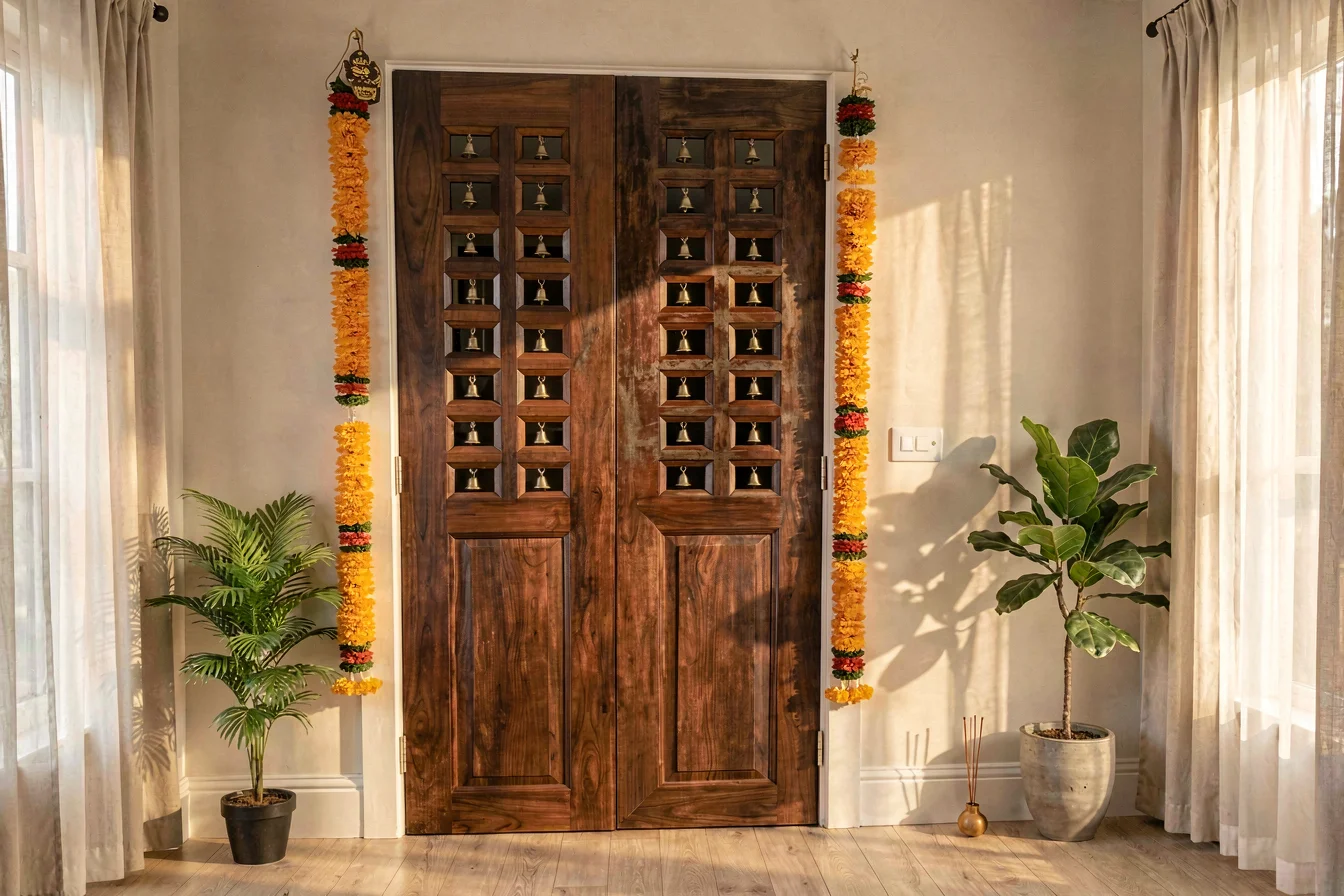
Durability is a critical factor in choosing between traditional pooja room doors and modern pooja room doors . Traditional doors, typically made of solid teak or walnut wood, are renowned for their longevity, resistance to pests, and resilience against wear and tear, often lasting decades with minimal maintenance[3][7]. Modern doors, featuring glass panels and CNC-cut wood, offer moderate durability—glass can break if mishandled, and metal accents may corrode over time. Buyers must weigh these trade-offs against their expected lifespan and usage conditions.
In terms of real-world applications, traditional doors excel in heritage homes, Vastu-driven projects, and larger spaces where their weight and bulk are less of a concern. Modern doors are ideal for urban homes, new builds, and small spaces, where light transmission and space-saving features are paramount[2][3].
Long-term cost evaluation reveals that traditional doors have a lower maintenance cost and higher resale value, but their upfront price is higher. Modern doors, while often cheaper initially, may incur replacement costs due to glass breakage or metal corrosion. However, advancements in toughened glass and anti-corrosive metal have improved their value proposition.
Buyers should prioritize traditional doors for high durability and cultural resonance, while modern doors suit buyers seeking cost efficiency and space optimization.
| Cost Factor | Traditional Pooja Room Doors | Modern Pooja Room Doors |
|---|---|---|
| Initial Purchase Price | ₹4,000–₹20,000 | ₹6,000–₹25,000 |
| Maintenance Cost (5 Years) | Low (wood polishing) | Moderate (glass cleaning, metal repair) |
| Replacement Frequency | Rare (decades) | Moderate (glass breakage, corrosion) |
| Hidden Costs | None | Potential for glass replacement |
| Resale Value | High | Moderate |
The market for traditional pooja room doors and modern pooja room doors is shaped by evolving consumer preferences, urbanization, and the dual demand for cultural resonance and practicality. Traditional doors continue to dominate heritage homes and Vastu-driven projects, while modern doors are rapidly gaining traction in urban and contemporary builds, especially among younger buyers seeking minimalism and light-filled spaces[2][3][7].
Both types find strong relevance in their respective segments, but modern doors are increasingly preferred for new builds and urban applications.
Google Trends data from March 2025 to March 2026 shows a clear upward trend for modern pooja room doors , with search values rising from 58 to 79, while traditional pooja room doors fluctuate between 41 and 56[1]. This indicates a growing consumer interest in modern designs, particularly in urban markets, but traditional doors retain steady demand in cultural and heritage segments.
Search Interest over Time
Actionable insight: Buyers should prioritize modern designs for new builds and urban applications, while traditional doors remain viable for heritage projects and cultural buyers.
Case Study 1: "Heritage Home Renovation" – A buyer in Mumbai chose traditional pooja room doors for a heritage home renovation, citing cultural authenticity and Vastu compliance as key drivers. The door, crafted from teak wood and brass, was praised for its craftsmanship and longevity, but the buyer noted the challenge of fitting it in a small space. On Reddit, one user wrote: "The traditional door transformed our mandir into a sacred space. It's worth every rupee for the spiritual ambiance and lasting quality." Another user on TikTok highlighted: "Traditional doors are heavy but they carry the soul of our family. Cleaning is easy and the brass accents last forever."
Case Study 2: "Urban Apartment Build" – A young couple in Bangalore opted for modern pooja room doors featuring glass panels and CNC-cut wood. They valued the light-filled space and easy cleaning, but faced complaints about glass breakage and metal corrosion. On Reddit, a user shared: "Modern doors are perfect for small apartments, but the glass is fragile. I had to replace it after a year." Another TikTok user said: "Modern designs are trendy, but sometimes lack spiritual depth. The minimalist look is great, but the brass handles corrode if not maintained."
"The traditional door transformed our mandir into a sacred space. It's worth every rupee for the spiritual ambiance and lasting quality." — Reddit
"Modern doors are perfect for small apartments, but the glass is fragile. I had to replace it after a year." — Reddit
| Dimension | Traditional Pooja Room Doors | Modern Pooja Room Doors |
|---|---|---|
| Overall Satisfaction | High (cultural resonance, durability) | Moderate (practicality, aesthetics) |
| Most Praised Feature | Craftsmanship, spiritual symbolism | Light transmission, minimalist look |
| Most Common Complaint | Bulkiness, weight | Glass breakage, metal corrosion |
| Community Recommendation Rate | High (heritage buyers) | High (urban buyers) |
Viral content themes include debates about spiritual depth versus practicality, cultural authenticity versus modern aesthetics, and maintenance challenges for both types. TikTok and YouTube feature tutorials on cleaning and maintenance, while Reddit hosts discussions about Vastu compliance and resale value.
Social pulse confirms that traditional doors are valued for their craftsmanship and spiritual resonance, while modern doors are favored for practicality and aesthetics, but both face distinct maintenance challenges.
Buyers should begin by identifying their core needs before purchasing. Key questions include: What is your primary use case (heritage home, new build, urban apartment)? What is your budget range? Is cultural resonance or practicality more important? Are Vastu principles a must-have or nice-to-have? What are your maintenance expectations?
Tiered recommendations:
| Tier | Recommended Product | Key Reason |
|---|---|---|
| Budget-Friendly | Modern Pooja Room Doors | Lower initial price, easy maintenance |
| Mid-Range | Modern Pooja Room Doors | Space efficiency, light transmission |
| Premium | Traditional Pooja Room Doors | Cultural authenticity, durability |
Optimization tips: Buy during festive seasons for best deals, consider bundling with Vastu-compliant accessories, prioritize toughened glass for modern doors, and ensure proper wood sealing for traditional doors. Avoid common mistakes like overlooking maintenance needs or ignoring Vastu requirements.
Actionable insights: Buyers should match their choice to their budget, space, and cultural priorities, and optimize procurement timing and bundling strategies for maximum value.
Synthesizing all insights, modern pooja room doors are trending higher in global search interest and urban applications, but traditional pooja room doors retain strong niche appeal in heritage and Vastu-driven projects. Buyers should anticipate a continued shift toward modern designs, but also recognize the enduring value of traditional doors for cultural authenticity and durability. In the next 6–12 months, expect further innovation in CNC technology, glass engineering, and hybrid designs that blend tradition and modernity.
Emotional call-to-action: Buyers should confidently choose based on their needs and priorities, share their experiences to help others, and commercial buyers should source directly from wholesale platforms like Alibaba.com to access the best options, certifications, and bulk pricing.