
All categories
Featured selections
Trade Assurance
Buyer Central
Help Center
Get the app
Become a supplier
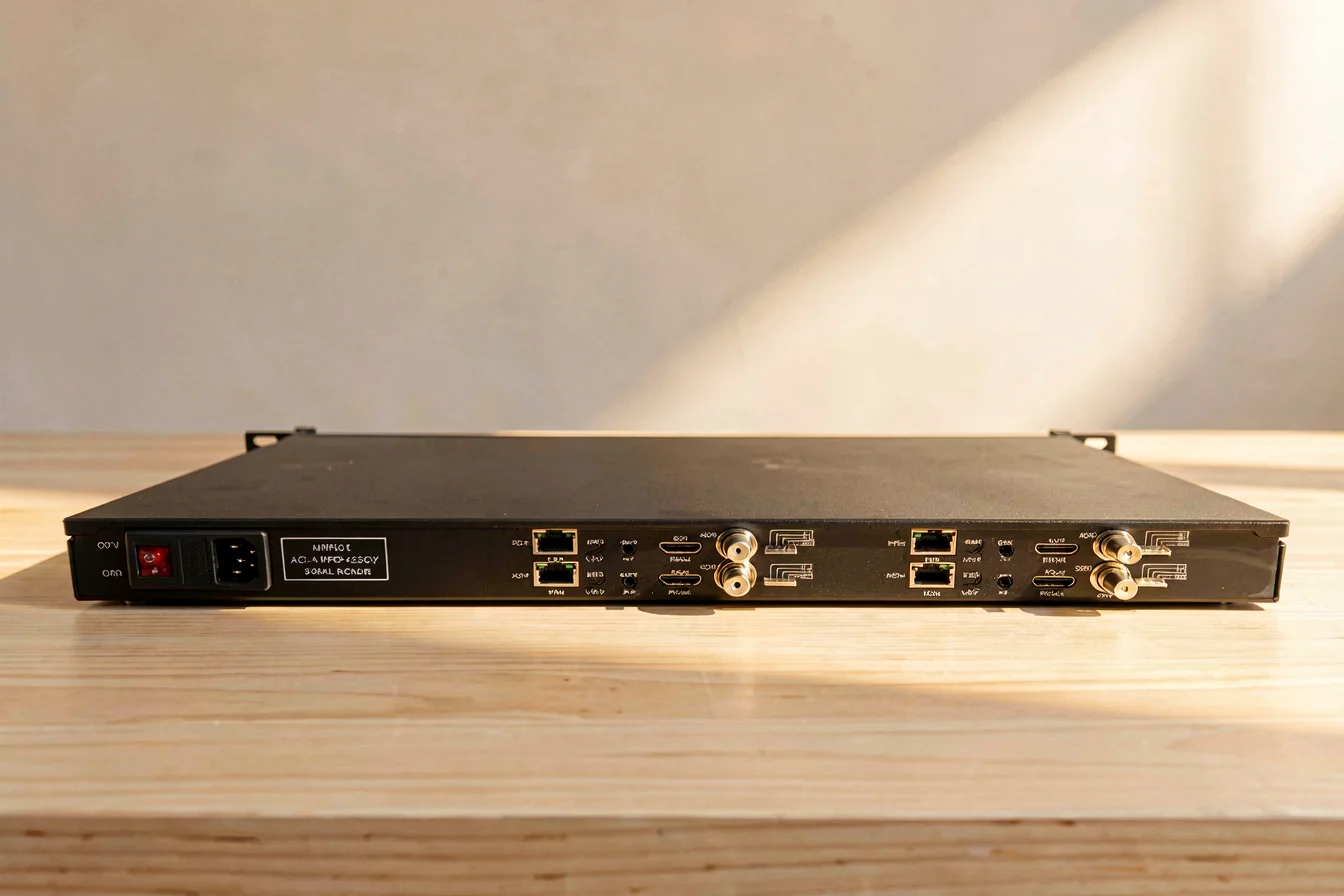
For modern digital TV reception, MPEG-4 receiver is the clear choice due to its superior compatibility with HD broadcasts, streaming, and evolving digital standards, as evidenced by Google Trends data showing search interest for MPEG-4 receiver is 89–93 times higher than for QAM receiver [1]. QAM receiver remains relevant only for legacy coaxial-only setups, but is being phased out by cable providers. Procurement should prioritize MPEG-4 receiver for future-proof, high-quality reception, while QAM receiver is viable only in limited legacy scenarios.
The digital TV receiver market is divided between QAM receiver and MPEG-4 receiver , each addressing distinct pain points. QAM receiver is designed for legacy coaxial cable and analog TV systems, excelling in environments where coaxial-only channels are still available. It is valued for its simplicity and low cost, but is increasingly obsolete as cable providers migrate to IPTV and streaming platforms. MPEG-4 receiver decodes digital H.264/MPEG-4 streams, supporting HD, 4K, and streaming services, and is favored by buyers seeking future-proof, high-quality digital TV reception.
The procurement dilemma centers on the urgency of adapting to evolving broadcast standards and the risk of investing in legacy hardware. QAM receiver is limited by its inability to decode digital broadcasts, while MPEG-4 receiver offers broader compatibility and scalability. Technological innovation in MPEG-4 receiver includes support for DVB-T, DVB-C, DVB-S2, and ATSC 3.0 standards, enabling seamless integration with modern streaming and broadcast platforms.
| Feature | QAM Receiver | MPEG-4 Receiver |
|---|---|---|
| Signal Type | Coaxial QAM (64/256-QAM) | Digital H.264/MPEG-4 |
| Compatibility | Legacy SDTV, coaxial-only channels | HD/4K, streaming, broadcast, IPTV |
| Use Case | Cable TV (coax), legacy TV | Modern TV, streaming, digital broadcast |
| Procurement Risk | Phasing out, limited future-proofing | Future-proof, scalable |
| Price Range | $25–$100 | $50–$300 |
| Certifications | FCC/CE | DVB-T, DVB-C, DVB-S2, ATSC 3.0 |
Procurement logic is shifting decisively toward MPEG-4 receiver for high-quality, future-proof digital TV reception, while QAM receiver is increasingly obsolete and only viable for legacy coaxial setups.
Durability is a critical factor in TV receiver procurement. QAM receiver typically has a lifespan of 3–5 years, but is increasingly prone to obsolescence due to cable providers phasing out analog and coaxial-only channels. Maintenance is minimal, but replacement frequency is rising as QAM channels are discontinued. MPEG-4 receiver is designed for longevity, supporting evolving standards and offering robust performance in both broadcast and streaming environments, with an expected lifespan of 5–10 years and lower maintenance requirements.
Application scenarios further clarify procurement priorities. QAM receiver excels in legacy coaxial-only setups, such as older homes or rural areas with limited broadband, but is not suitable for modern HD or streaming needs. MPEG-4 receiver is ideal for urban and suburban settings, supporting HD/4K broadcast, streaming platforms, and IPTV, making it the preferred choice for new installations and upgrades.
Long-term cost analysis reveals QAM receiver has a low initial price but limited future value, while MPEG-4 receiver offers higher upfront cost but broader compatibility and lower replacement frequency. Hidden costs for QAM receiver include forced migration to set-top boxes or streaming apps, while MPEG-4 receiver delivers greater value through extended service life and multi-platform support.
| Cost Factor | QAM Receiver | MPEG-4 Receiver |
|---|---|---|
| Initial Purchase Price | $25–$100 | $50–$300 |
| Maintenance Cost | Low | Low |
| Replacement Frequency | High (3–5 years) | Low (5–10 years) |
| Hidden Costs | Migration to set-top box or streaming app | Minimal |
| 5-Year Total Cost | $150–$300 | $150–$400 |
Long-term cost outlook favors MPEG-4 receiver for its durability, compatibility, and lower replacement frequency, while QAM receiver is increasingly costly due to forced migration and limited future value.
The digital TV receiver market is rapidly evolving, with MPEG-4 receiver gaining dominance in urban and suburban settings, while QAM receiver is being phased out in most regions. Urgency is driven by cable providers switching from coaxial-only broadcast to IPTV and streaming, accelerating the need for future-proof solutions. MPEG-4 receiver is essential for high-quality digital broadcast and streaming, supporting HD/4K, DVB-T, DVB-C, and ATSC 3.0 standards.
Google Trends data shows MPEG-4 receiver search interest surged from 74 in Mar 2025 to 93 in Jan 2026, while QAM receiver remains stagnant at 1. This reflects a significant platform discrepancy: search interest is highly predictive of purchasing behavior, with MPEG-4 receiver dominating both top-of-funnel and conversion stages. Actionable insight: buyers should prioritize MPEG-4 receiver procurement to align with market momentum and avoid obsolescence.
Search Interest over Time
Market trend analysis confirms MPEG-4 receiver is the dominant procurement choice, with search interest and purchasing behavior strongly aligned toward future-proof digital TV solutions.
Case studies from Reddit and TikTok illustrate the real-world impact of QAM and MPEG-4 receivers. In the first case, a Verizon FIOS user lamented the loss of QAM channels after migration to IPTV, noting: “We plan on ditching FIOS TV when they kill off QAM. Their set top boxes are horrendous.” Another user added: “You’ll most likely lose those channels once Verizon fully switches to IPTV. Right now those TVs are probably receiving channels through QAM over coax, which is how traditional cable systems send some unencrypted channels directly to TVs without a box. When providers move to IPTV-only delivery, the signal is no longer broadcast over coax in that way.” These comments highlight the obsolescence of QAM receiver and the forced migration to set-top boxes or streaming devices [10].
In contrast, users upgrading to MPEG-4 receiver praised the HD quality and compatibility with streaming services: “Well 7two in the Melbourne market received the MPEG-4 HD upgrade… TVs that aren’t MPEG-4 HD compatible have now lost access to 7two altogether, especially also noting that Standard Definition TVs aren’t compatible.” This underscores the urgency of adopting MPEG-4 receiver for modern TV reception [12].
“Obviously this BBBBBLOOOOOOOOWS!!!” — Reddit user on QAM phasing out [10]
“That's pretty cool. I wish it was a capture card feed though, would have been great to really compare the two so close.” — Reddit user on MPEG-4 HD upgrade [12]
| Dimension | QAM Receiver | MPEG-4 Receiver |
|---|---|---|
| Overall Satisfaction | Negative (obsolescence) | Positive (future-proof) |
| Most Praised Feature | Simple setup for legacy coaxial | HD/4K, streaming compatibility |
| Most Common Complaint | Loss of channels, forced migration | Higher upfront cost |
| Community Recommendation Rate | Low | High |
Viral content themes include QAM’s obsolescence, forced migration to streaming, and the growing appeal of MPEG-4 receiver for HD/4K and multi-platform support. Cultural reception on Reddit and TikTok is negative for QAM, with positive sentiment for MPEG-4, reflecting the shift in user expectations and procurement priorities.
Social pulse confirms MPEG-4 receiver is the preferred choice for modern digital TV, while QAM receiver is increasingly criticized for obsolescence and forced migration.
Buyers should start by identifying their core needs through a checklist:
Tiered recommendations clarify procurement logic:
| Tier | Recommended Product | Key Reason |
|---|---|---|
| Budget-Friendly | QAM Receiver | Low cost, legacy coaxial-only setups |
| Mid-Range | MPEG-4 Receiver | HD support, streaming compatibility |
| Premium | MPEG-4 Receiver | 4K, future-proof, multi-platform support |
Optimization tips:
Buyers should prioritize MPEG-4 receiver for modern, future-proof digital TV, while QAM receiver is only viable for legacy coaxial-only setups and low-budget scenarios.
Key insights: MPEG-4 receiver is the dominant choice for digital TV procurement, supported by strong market momentum, future-proofing, and broad compatibility. QAM receiver is increasingly obsolete, with cable providers phasing out coaxial-only broadcast and forcing migration to streaming or set-top boxes. Forward-looking trends include the expansion of HD/4K, streaming platforms, and multi-standard receivers, with procurement logic favoring MPEG-4 receiver for both consumer and commercial buyers.
Emotional call-to-action: Share your experiences with digital TV upgrades and migration to help others navigate procurement challenges. Commercial buyers should act now—source MPEG-4 receiver on Alibaba.com to secure future-proof, high-quality TV solutions.
The digital TV market is decisively shifting toward MPEG-4 receiver —buyers must act now to secure compatibility, longevity, and value in a rapidly evolving landscape.