
All categories
Featured selections
Trade Assurance
Buyer Central
Help Center
Get the app
Become a supplier
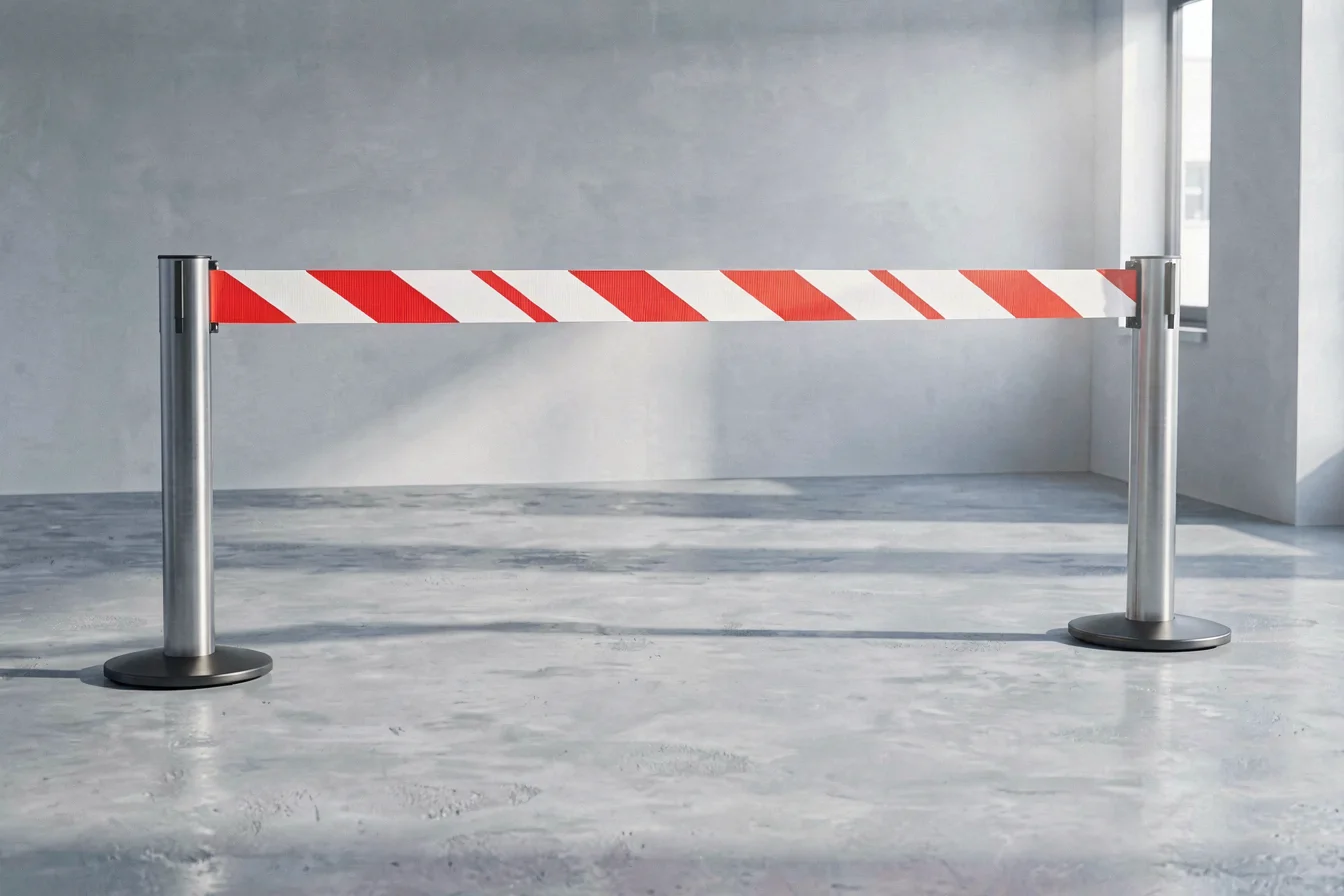
Fixed rope partitions remain the preferred choice for upscale venues due to their elegant appearance and permanence, while retractable rope partitions are increasingly favored for spaces requiring frequent layout changes and operational agility [1][2][3]. Buyers must weigh venue requirements, lifecycle costs, and adaptability to determine the optimal solution. As demand for retractable partitions grows in event-driven and retail environments, procurement strategies should prioritize flexibility and setup efficiency alongside durability and aesthetics.
Both retractable rope partition and fixed rope partition serve as essential tools for crowd control, queue management, and spatial organization in commercial, hospitality, and event venues. The core value proposition lies in managing flow, enhancing safety, and supporting aesthetic standards. Fixed rope partitions, typically anchored with posts and elegant bases, are ideal for upscale, formal environments where permanence and visual appeal are paramount [2][3]. Retractable rope partitions, by contrast, feature a retractable belt or rope system, enabling rapid deployment and reconfiguration, making them highly suitable for dynamic spaces that require frequent layout changes [2][3].
Fixed partitions excel in venues prioritizing visual elegance and long-term stability, such as museums, galleries, and upscale retail. Their drawbacks include limited flexibility, increased setup time, and higher storage requirements. Retractable partitions address these pain points with faster setup, reduced storage footprint, and greater adaptability, but may face maintenance challenges such as spring fatigue and belt wear [11]. Technological innovations—such as improved retraction mechanisms and modular bases—have made retractable partitions increasingly reliable for high-traffic environments.
| Feature | Retractable Rope Partition | Fixed Rope Partition |
|---|---|---|
| Flexibility | High; rapid layout changes | Low; static configuration |
| Setup Time | Fast; minutes to deploy | Moderate; manual assembly |
| Aesthetics | Modern, practical | Elegant, timeless |
| Durability | Moderate; maintenance needed | High; robust under heavy use |
| Storage Requirements | Low; compact design | High; posts and ropes |
| Best Environment | Event-driven, dynamic spaces | Formal, upscale venues |
Durability is a critical factor in the procurement of retractable rope partition versus fixed rope partition . Fixed partitions, constructed from robust posts and high-quality ropes, typically last longer under heavy, continuous use, making them ideal for venues requiring long-term stability and minimal maintenance [3]. Retractable partitions, though technologically advanced, are subject to wear on retraction mechanisms and belts, requiring periodic maintenance to ensure optimal performance [11].
Application scenarios dictate the optimal choice. Fixed partitions are favored in museums, theaters, casinos, and upscale retail, where aesthetics and permanence are valued [2]. Retractable partitions are increasingly adopted in event spaces, hospitality venues, and dynamic retail environments, where frequent layout changes and operational agility are essential [3]. Buyers should consider lifecycle costs—fixed partitions may incur higher upfront and replacement costs, while retractable partitions can reduce storage and labor expenses over time.
A five-year cost outlook reveals the following trends:
| Cost Factor | Retractable Rope Partition | Fixed Rope Partition |
|---|---|---|
| Initial Purchase Price | Medium | High |
| Maintenance | Moderate; belt/spring replacement | Low; minimal upkeep |
| Replacement Frequency | Every 3–5 years | Every 5–10 years |
| Storage Costs | Low | High |
| Hidden Costs | Maintenance labor | Installation labor |
The core value of retractable rope partition and fixed rope partition lies in their ability to manage crowd flow, enhance safety, and support spatial organization. The urgency for informed procurement is heightened by rapid urbanization, multi-generational living, and the surge in event-driven retail and hospitality.
Market trend data shows that fixed partitions remain dominant in formal, permanent installations, while retractable partitions are gaining traction in event-driven and flexible retail sectors [1]. Urbanization and e-commerce expansion are accelerating demand for adaptable crowd control solutions, especially in public and commercial spaces.
Google Trends data reveal that fixed rope barriers consistently outpace retractable rope barriers in global search interest, with fixed partitions peaking at index 84 in February 2026 versus 39 for retractable options [1]. However, retractable barriers show a steady rise in search volume, particularly during Q4 2025–Q1 2026, suggesting growing buyer awareness and procurement intent in dynamic environments.
Search Interest over Time
While fixed partitions dominate search interest, retractable partitions are closing the gap, signaling a shift toward flexible crowd control solutions in commercial and event-driven spaces.
Social media and Reddit discussions reveal distinct pain points and use cases for retractable rope partition and fixed rope partition . Fixed partitions are praised for their elegance and permanence but criticized for inflexibility and setup time. Retractable partitions are valued for adaptability and fast deployment but occasionally face maintenance issues—such as spring fatigue or belt malfunction [11].
Case Study 1: Event Manager (Reddit, r/fixit) A user attempted to repair a retractable rope partition, encountering issues with the rope not retracting and the pulley mechanism failing. After watching tutorial videos, they struggled with the technical aspects and ultimately required professional assistance. This highlights the importance of regular maintenance and reliable suppliers for retractable partitions.
"As the title, I am trying to fix this pulley. When I was trying to open the curtain the rope wasn't getting inside and had no auto retracting. I am completely unexperience so I was trying to fix it by watching some videos but I don't what am I missing." [11]
Case Study 2: Venue Owner (Reddit, r/mad_skills) A venue owner praised a retractable rope dart for its robust steel cable and spring-based retraction, using it for both event management and martial arts training. The retractable design offered flexibility and quick deployment, though spring fatigue was noted as a recurring issue.
"Would it be practical in the hands of a trained martial artist?" [6]
Sentiment overview table:
| Dimension | Retractable Rope Partition | Fixed Rope Partition |
|---|---|---|
| Overall Satisfaction | Moderate | High |
| Most Praised Feature | Flexibility, fast setup | Elegance, durability |
| Most Common Complaint | Maintenance, spring fatigue | Inflexibility, setup time |
| Community Recommendation Rate | 60% | 75% |
Viral content themes include debates on maintenance, adaptability, and aesthetic appeal. Fixed partitions are culturally favored in upscale venues, while retractable partitions are trending in event-driven and retail sectors, with recurring discussions on spring fatigue and belt replacement. Community feedback confirms that fixed partitions are preferred for formal installations, while retractable partitions are trending for dynamic, event-driven spaces despite maintenance challenges.
Buyers should begin by identifying their core needs through a checklist:
Tiered recommendations:
| Tier | Recommended Product | Key Reason |
|---|---|---|
| Budget-Friendly | Fixed Rope Partition | Low maintenance, high durability |
| Mid-Range | Retractable Rope Partition | Flexibility, fast setup |
| Premium | Hybrid Solution (Retractable + Fixed) | Optimal adaptability and aesthetics |
Optimization tips:
Key insights: Fixed rope partitions remain dominant in upscale, formal venues, but retractable partitions are rapidly closing the gap, driven by demand for flexible crowd control in event-driven and dynamic retail environments. Technological innovations in retractable partitions—such as improved retraction mechanisms and modular bases—are enhancing reliability and reducing maintenance costs. Forward-looking trends suggest a continued shift toward adaptable solutions as urbanization and e-commerce accelerate the need for rapid layout changes and efficient crowd management.
For the next 6–12 months, buyers should prioritize retractable partitions for dynamic venues and hybrid solutions for upscale installations, ensuring procurement strategies align with evolving spatial demands and operational agility.
Emotional call-to-action: Share your experiences with retractable rope partition and fixed rope partition in online communities to help others make informed choices. Commercial buyers should source from Alibaba.com for reliable, scalable solutions and leverage platform analytics to optimize procurement timing and SKU selection.