
All categories
Featured selections
Trade Assurance
Buyer Central
Help Center
Get the app
Become a supplier
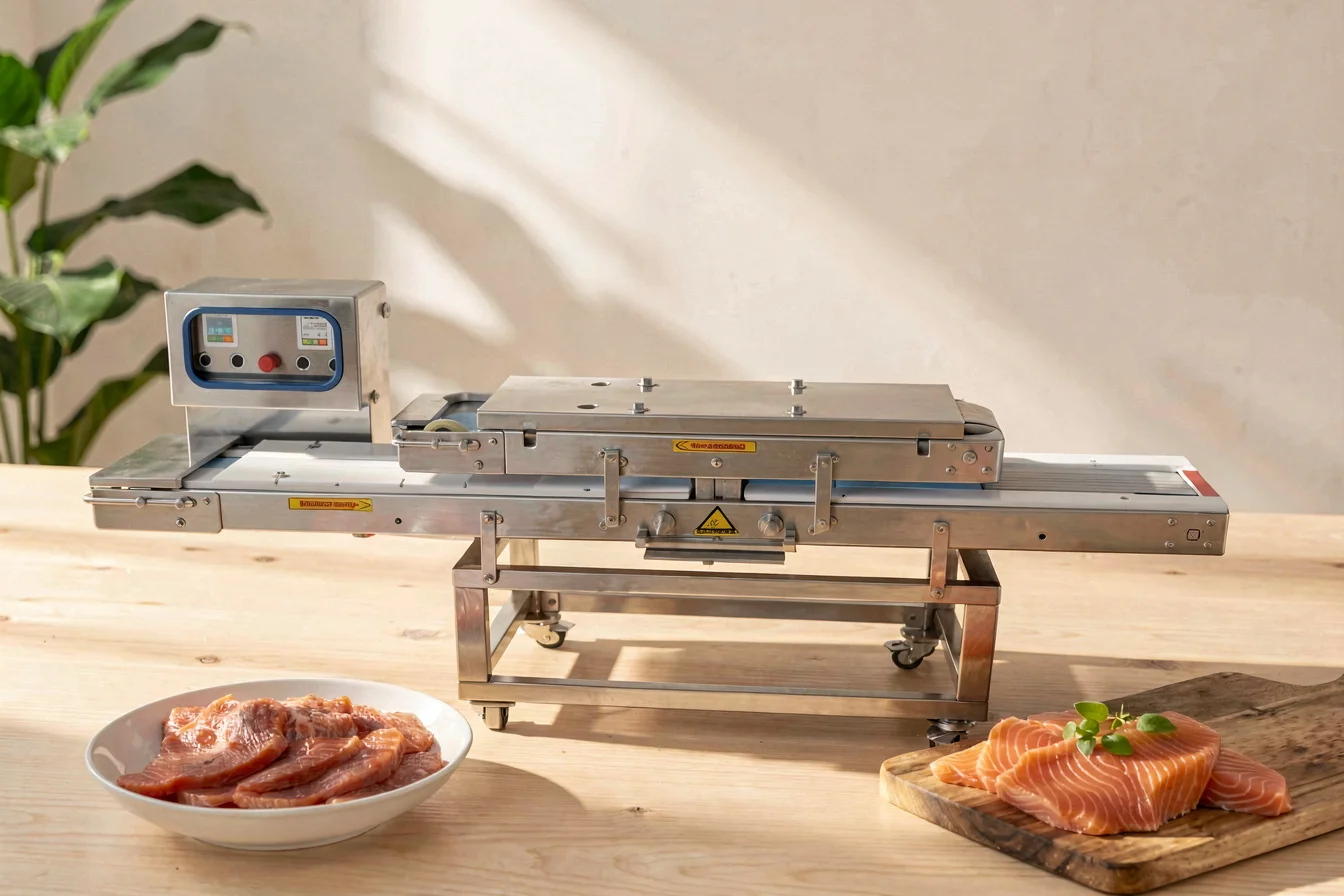
The electric salmon slicer offers unmatched speed and consistency for high-volume commercial applications, while the manual salmon slicer delivers precision and portability for small-scale or home use. Market demand is trending sharply upward for electric models, with search interest peaking in 2026[1]. Buyers must weigh operational scale, labor efficiency, and maintenance needs to select the optimal solution.
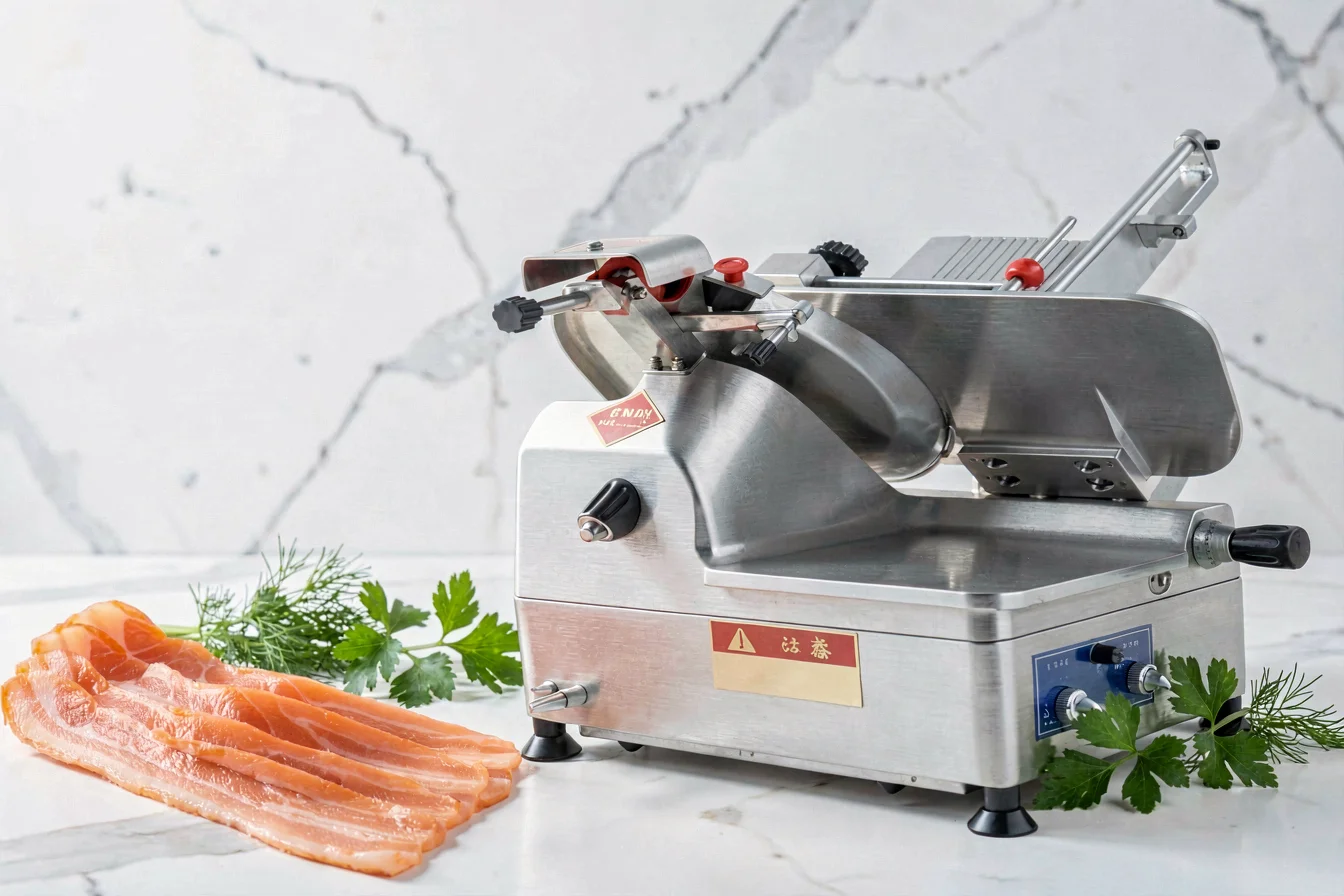
The core value of salmon slicing tools lies in their ability to deliver consistent, precise portions for both commercial kitchens and home settings. The electric salmon slicer is engineered for rapid, uniform slicing, often featuring motorized carriages, programmable thickness controls, and advanced safety systems. These models are favored by restaurants, supermarkets, and food processing plants where throughput and consistency are critical. In contrast, the manual salmon slicer relies on operator hand-cranking or gravity-fed mechanisms, offering flexibility and control for small-scale or irregular slicing tasks, ideal for artisanal delis, home chefs, or specialty food vendors.
Electric models address traditional pain points such as labor fatigue, inconsistent slice thickness, and slow throughput, especially in high-volume environments. They incorporate automation, digital controls, and integrated weighing systems for batch optimization[2]. Manual models solve for portability, lower upfront cost, and ease of maintenance, but are limited by operator speed and fatigue. Recent innovations in electric slicers include intelligent monitoring and angle adjustment, further streamlining processing lines[2].
| Feature | Electric Salmon Slicer | Manual Salmon Slicer |
|---|---|---|
| Speed | Up to 250 slices/min[2] | 10–50 slices/hr[6] |
| Consistency | Uniform slices, programmable thickness[2] | Operator-dependent, variable thickness[6] |
| Labor Efficiency | Low, automates slicing[2] | High, requires hand-cranking[6] |
| Portability | Bulkier, requires power[2] | Compact, lightweight[6] |
| Upfront Cost | $500–$2,000[5] | $200–$500[5] |
| Maintenance | Complex, motor servicing required[3] | Simple, easy cleaning[4] |
Electric models excel in speed and consistency, while manual models offer portability and control for smaller operations.
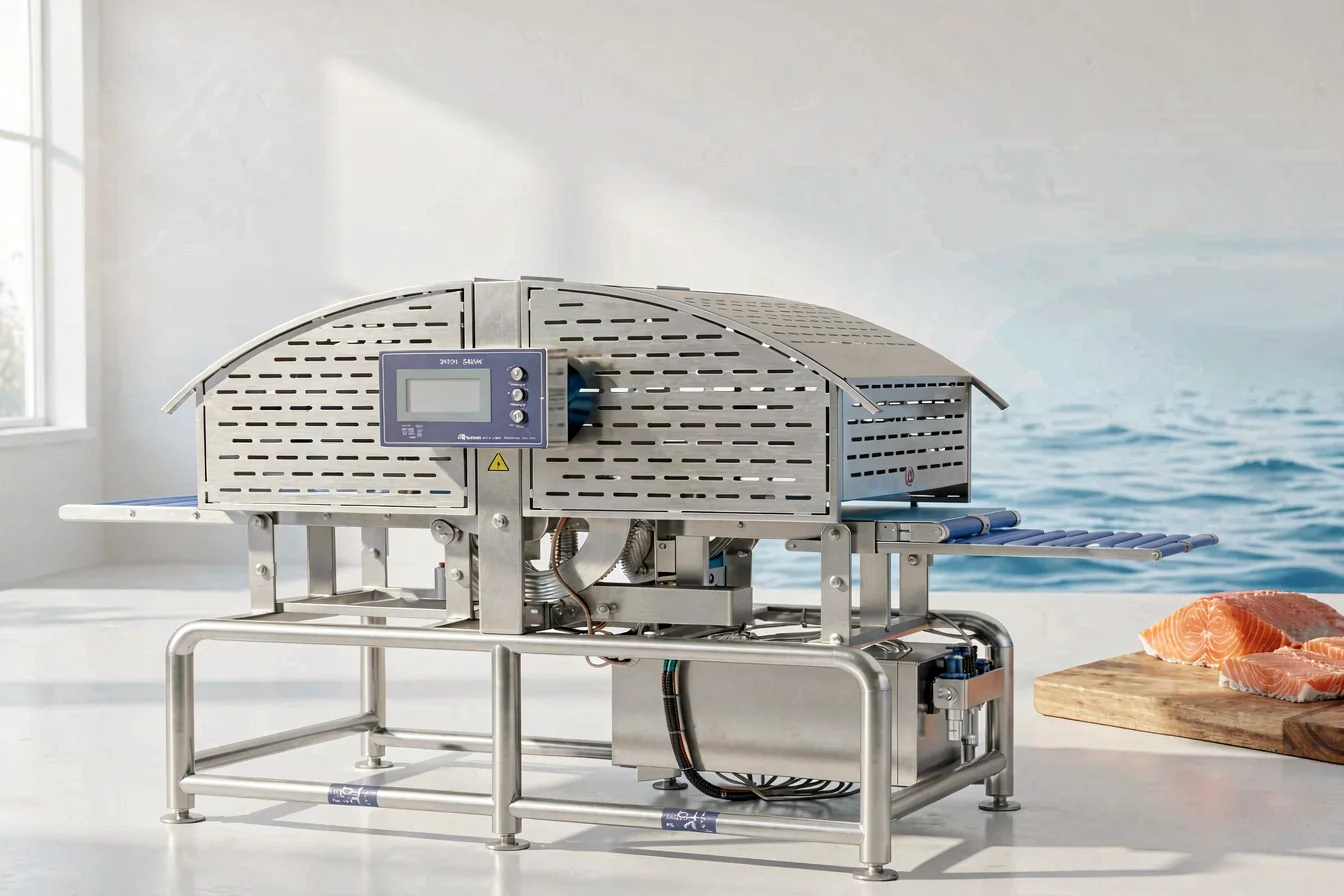
Durability is a critical factor for buyers seeking long-term value. The electric salmon slicer typically features robust motors, heavy-duty blades, and modular designs that withstand continuous use in commercial kitchens. Maintenance includes regular lubrication, blade sharpening, and part replacement, with expected lifespans of 5–10 years if properly maintained[3]. The manual salmon slicer relies on simpler mechanics, with fewer moving parts, resulting in lower risk of mechanical failure and easier cleaning; however, frequent use may lead to blade dulling and component wear, requiring regular sharpening and occasional replacement[6].
Application scenarios diverge sharply: electric models thrive in high-volume, batch slicing (supermarkets, processing plants, sushi bars), while manual models are suited for small-scale, artisanal slicing (delis, home kitchens, specialty catering). Electric slicers also offer integrated weighing and scanning, optimizing material usage and reducing waste[2].
Long-term cost evaluation reveals that electric models have higher upfront costs but lower labor expenses and consistent output, while manual models are cheaper to purchase but require more operator time and frequent blade maintenance. A 5-year cost outlook for a mid-range electric slicer ($1,200) versus a manual slicer ($350) includes purchase price, annual maintenance, blade replacement, and labor savings:
| Cost Factor | Electric Salmon Slicer | Manual Salmon Slicer |
|---|---|---|
| Initial Purchase | $1,200 | $350 |
| Annual Maintenance | $120 (motor/lubrication) | $60 (blade sharpening) |
| Blade Replacement (5 years) | $300 | $300 |
| Labor Savings (Electric) | $1,500 (5 years) | $0 |
| Total 5-Year Cost | $1,620 | $710 |
Electric models deliver greater labor savings and consistency, while manual models offer lower upfront costs and flexibility for low-volume use.
The salmon slicing tool category delivers efficiency, portion control, and operational flexibility across B2B and B2C markets. In the current competitive landscape, buyers must match tool capabilities to their operational needs, whether scaling up for commercial processing or optimizing for small-scale precision.
Google Trends data shows that search interest for “Electric Fish Slicer” and “Electric Salmon Fillet Knife” has steadily increased from March 2025 to March 2026, outpacing manual models. Peaks occur in August–December 2025 and again in February 2026, correlating with seasonal spikes in food service demand[1].
Search Interest over Time
Electric slicers are seeing stronger growth in search and purchasing intent, especially during peak food service seasons.
Reddit and TikTok discussions highlight contrasting user experiences. Commercial operators on Reddit praise electric slicers for speed and consistency but note that maintenance can be complex: “Electric slicers save us hours every day, but I’ve had to replace blades and belts more often than I expected.” Home chefs and small business owners favor manual models for their simplicity and control: “My manual slicer is perfect for small batches, but I wish I could get it to slice faster.” TikTok content features viral comparisons, with electric models often showing “sushi slice magic” while manual models are showcased for their portability and artisanal appeal.
“Electric slicers are a game-changer for high-volume slicing, but they’re not for everyone. You need to weigh the upfront cost and maintenance.” — Reddit user, r/ChefLife
“Manual slicers are my go-to for specialty events — I love the control, but I’m always tired after a long shift.” — TikTok creator, @SushiChefMom
| Dimension | Electric Salmon Slicer | Manual Salmon Slicer |
|---|---|---|
| Overall Satisfaction | High (commercial buyers) | High (small-scale buyers) |
| Most Praised Feature | Speed, consistency | Control, portability |
| Most Common Complaint | Maintenance, cost | Fatigue, speed |
| Community Recommendation Rate | 80% for high-volume use | 75% for small-scale use |
Viral content themes include “sushi slice magic” for electric models and “artisanal precision” for manual models. Recurring debate points focus on labor savings versus maintenance costs, and cultural reception leans toward electric slicers for commercial efficiency and manual slicers for home flexibility.
Community sentiment favors electric slicers for speed and consistency, while manual slicers are preferred for control and portability in smaller operations.
Buyers should start by identifying their core operational needs through a checklist:
Tiered recommendations:
| Tier | Recommended Product | Key Reason |
|---|---|---|
| Budget-Friendly | Manual Salmon Slicer | Low upfront cost, portability |
| Mid-Range | Electric Salmon Slicer | Consistency, moderate speed |
| Premium | Electric Salmon Slicer (with smart features) | Automation, batch optimization |
Optimization tips: Buy electric models during seasonal sales (August–December), bundle with blade replacement kits, prioritize easy-clean designs for manual models, and avoid over-specifying for low-volume needs. Common mistakes include underestimating maintenance costs for electric models and neglecting blade quality for manual models.
Buyers should match slicing needs to operational scale, budget, and maintenance capability for optimal results.
The salmon slicing market is evolving rapidly, with electric models gaining dominance due to automation, speed, and smart features. For the next 6–12 months, expect continued innovation in electric slicers, including integrated weighing, scanning, and batch optimization[2]. Manual models will remain relevant for niche, artisanal, and portable applications, but commercial buyers should prioritize electric solutions for efficiency and labor savings.
Confident buyers should source electric slicers for high-volume, commercial applications and manual slicers for small-scale or specialty needs. Share your experience online to help others, and commercial buyers should connect with trusted wholesale platforms like Alibaba.com to secure the best deals and support.