
All categories
Featured selections
Trade Assurance
Buyer Central
Help Center
Get the app
Become a supplier
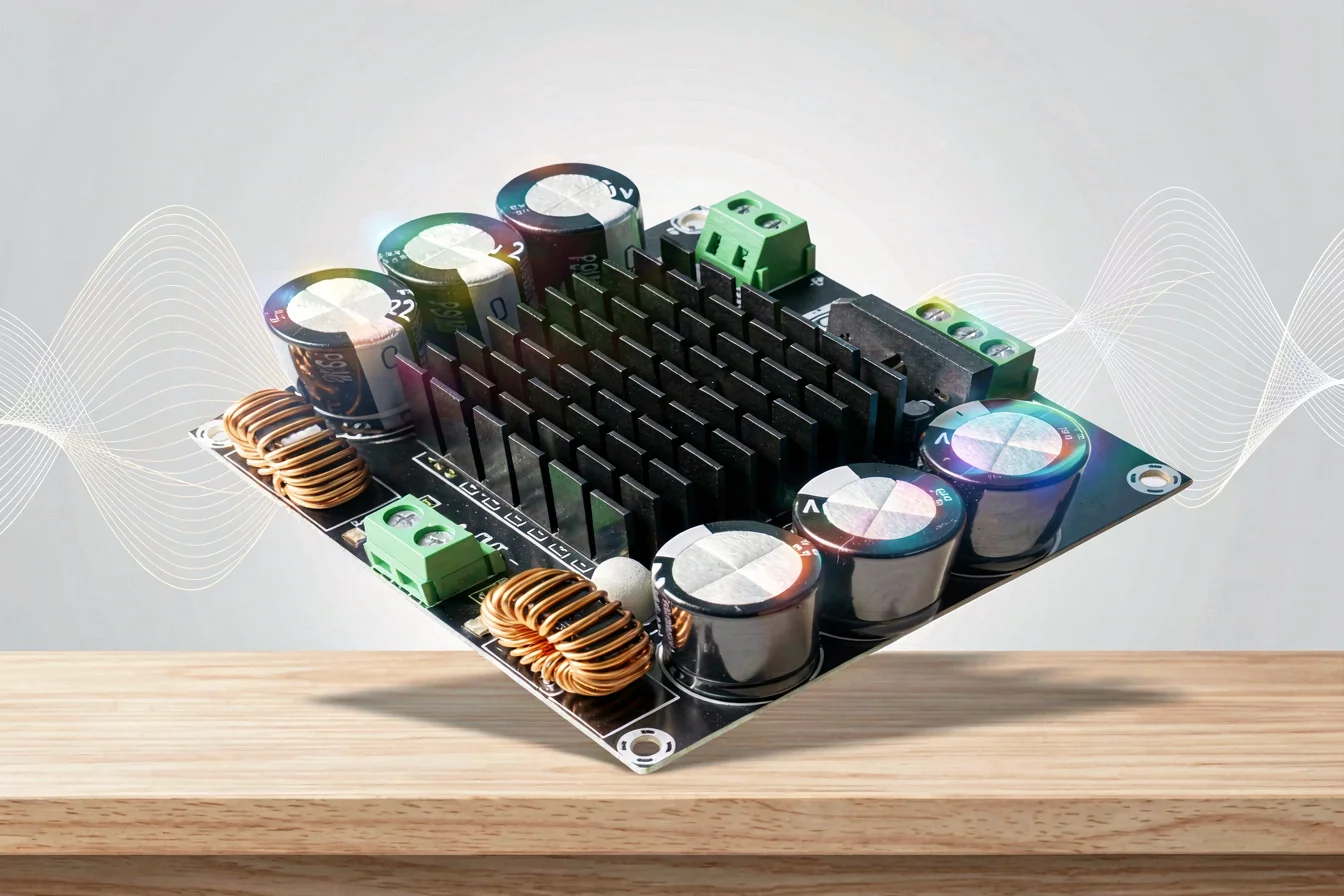
The TDA8954 amplifier board excels in high-power, audiophile-grade applications with advanced protection and efficiency, but the generic class d amplifier board dominates mainstream and DIY projects due to broader compatibility, lower cost, and easier sourcing. Market momentum, as shown by Google Trends, heavily favors generic boards, with normalized search values nearly 20 times higher [1]. Buyers should choose based on power requirements, reliability needs, and budget constraints, as each board addresses distinct pain points for audio project procurement.
Both amplifier board types serve the audio market but target different buyer profiles. The TDA8954 amplifier board is designed for audiophiles and professional installers who demand high output power, advanced diagnostics, and reliability, especially in demanding environments [2]. Its core value is delivering 2×210W output, up to 93% efficiency, and robust protection circuits such as thermal foldback and overcurrent protection [2]. In contrast, the generic class d amplifier board is optimized for broad compatibility, lower cost, and ease of integration, making it ideal for entry-level, DIY, and mass-market audio projects [1].
The TDA8954’s advantages include superior audiophile-grade sound quality, wide supply voltage range, and advanced diagnostics for troubleshooting and reliability. However, sourcing can be challenging, and its higher price point may be a barrier for budget-conscious buyers. Generic boards, while less powerful, are more accessible and easier to replace, but may lack advanced features and suffer from inconsistent quality. Technological innovation in Class D amplifiers has made them ubiquitous in modern audio and vehicle systems, with efficiency and reliability improvements driving mainstream adoption [5].
| Feature | TDA8954 Amplifier Board | Generic Class D Amplifier Board |
|---|---|---|
| Output Power | 2×210W (stereo), 420W (mono) | 50–100W |
| Efficiency | ≈93% | 85–90% |
| Protection Features | Thermal FoldBack, Overcurrent, Short-Circuit Protection | Basic Overcurrent, Limited Thermal |
| Supply Voltage Range | ±12.5V to ±42.5V | Typically ±12V to ±24V |
| Audiophile Sound Quality | High, comparable to Class AB | Moderate, varies by model |
| Certifications | RoHS, CE | Varies, often less uniform |
| Price | Higher (premium audiophile segment) | Lower (DIY and mainstream) |
The TDA8954 board offers unmatched power and protection, but generic boards are more accessible and affordable for mainstream audio applications.
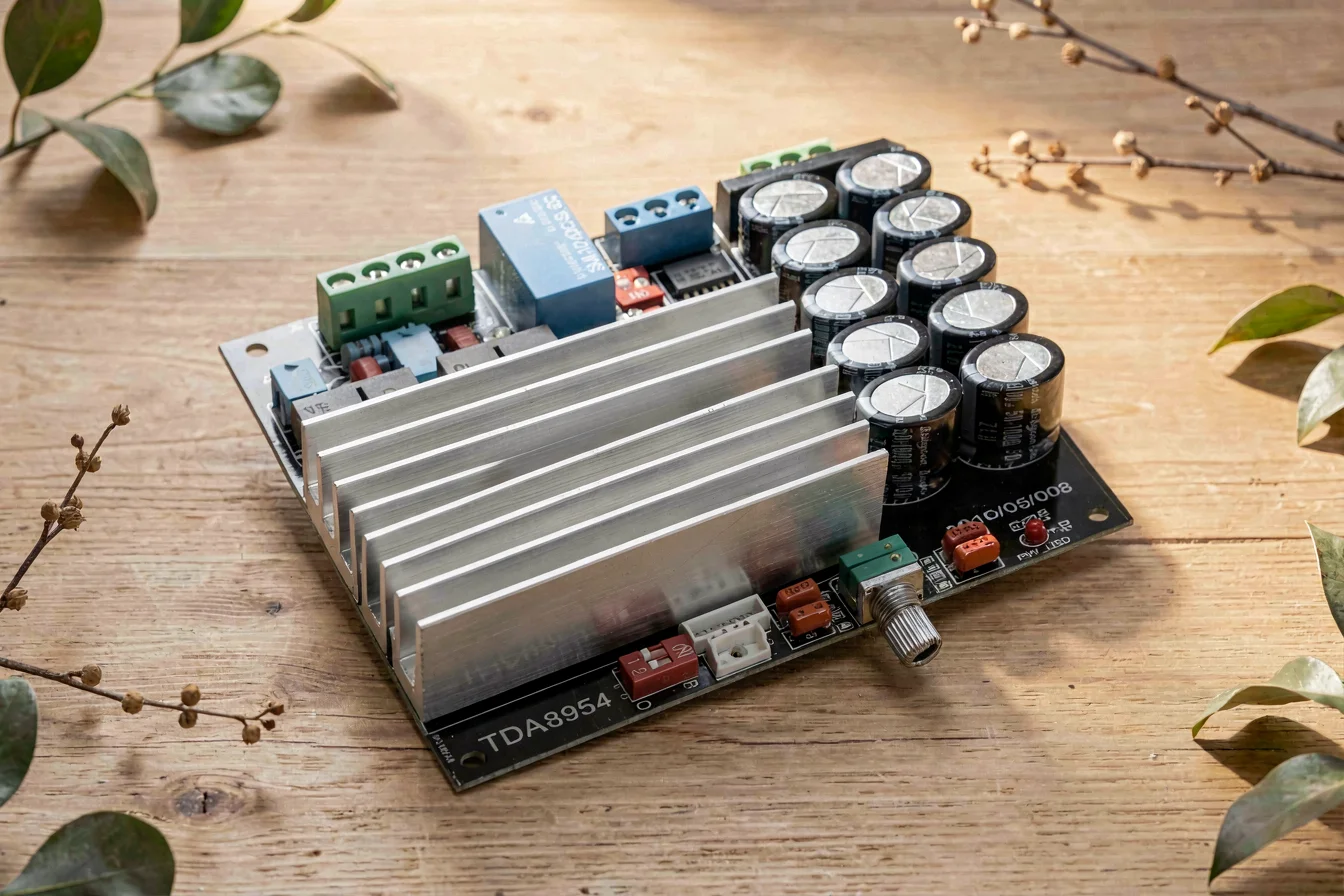
Durability is a critical factor for audio projects, especially in environments where amplifier boards face frequent use, fluctuating voltages, or harsh conditions. The TDA8954 amplifier board is engineered for long-term reliability, with advanced protection circuits that minimize failures and extend lifespan. It is often used in professional installations and high-end audio equipment, where downtime and reliability are paramount [2]. In contrast, generic class d amplifier board models tend to be less robust, with simpler protection and lower thermal tolerance, making them more susceptible to failures in demanding environments [1][6].
Application scenarios shape the choice: TDA8954 boards excel in audiophile setups, professional studios, and high-power installations requiring advanced diagnostics and reliability. Generic boards are best suited for entry-level audio, mass-market devices, and DIY projects where cost and ease of replacement are prioritized. The TDA8954’s advanced diagnostics and protection make it ideal for applications where troubleshooting and maintenance are frequent, while generic boards are better for environments where replacement is easier and less costly.
Long-term cost evaluation reveals that generic boards are cheaper upfront and have shorter replacement cycles (2–3 years), but may incur higher maintenance and replacement costs over time. TDA8954 boards, while more expensive initially, often require fewer replacements and offer superior reliability, reducing total cost of ownership in high-demand applications.
| Cost Factor | TDA8954 Amplifier Board | Generic Class D Amplifier Board |
|---|---|---|
| Initial Purchase Price | High ($150–$300) | Low ($50–$100) |
| Maintenance Frequency | Low (advanced diagnostics) | Moderate (basic protection) |
| Replacement Cycle | 5–10 years | 2–3 years |
| Hidden Costs (Downtime, Repairs) | Minimal | Moderate |
| Total 5-Year Cost | Lower (fewer replacements) | Higher (more replacements) |
For high-demand and professional applications, the TDA8954 board delivers lower total cost of ownership and superior reliability over five years, despite higher upfront investment.
The amplifier board category delivers critical value by enabling efficient, reliable, and high-quality audio amplification across a spectrum of applications. The urgency is driven by rapid adoption of Class D technology in both consumer and professional markets, with TDA8954 boards standing out in high-end and audiophile use cases.
Market trends show that Class D amplifiers are now the dominant technology in modern vehicle and audio systems, with efficiency and reliability improvements driving adoption [5]. Urbanization and multi-generational living have increased demand for compact, reliable audio solutions, favoring generic boards for mainstream applications. Professional and audiophile markets continue to value TDA8954 boards for their advanced features and reliability.
Google Trends data highlights a significant gap between search interest and purchasing behavior: generic Class D amplifier boards consistently outpace TDA8954 boards in search volume, with normalized values of 82 versus 4 as of February 2026 [1]. This indicates that mainstream buyers are more likely to search for generic boards, while audiophiles and professionals drive interest in TDA8954 boards.
Search Interest over Time
Search momentum for generic boards is much higher, indicating broader mainstream demand, while TDA8954 boards remain niche but highly valued in professional and audiophile markets.
Reddit and TikTok discussions reveal contrasting buyer experiences. TDA8954 boards are praised for reliability and advanced diagnostics, but sourcing and repair can be challenging [7]. Generic Class D boards are favored for efficiency and low cost but often criticized for clinical sound and bass limitations in budget models [6].
Case Study 1: Professional Repair (TDA8954) A Reddit user repairing a powered subwoofer with a TDA8950 Class-D amp encountered a DC bias issue and noted the board’s advanced diagnostics made troubleshooting easier, but sourcing replacement parts was difficult [7]. “The TDA8950 does NOT have internal input bias resistors, so both INxP and INxM must be biased externally...I suspect a missing / damaged external bias network.” This highlights the board’s reliability and diagnostic strength but also its sourcing challenges.
Case Study 2: DIY Budget Amp (Generic Class D) A Reddit user replaced a budget Monacor SA-50 amp with a generic Class D board and found the sound “clinical” and bass lacking, with frequent clipping and power supply limitations. “Bass requires some current at times so what you might be hearing is a limitation of the power supply. You might prefer class A/B.” This reflects common pain points in budget Class D boards: sound quality and power supply constraints [6].
“Most recently tried one of the cheap fosi amps with tone control, with the bass tone all the way up and the treble almost at 0 it sounds almost as dark as my Monacor amp...but why is there such a significant difference in sound?” [6]
“I think the tinny-ness is your cheap, sub standard speakers. But as for amps, that's pretty typical of those budget Chi fi amps. You'd need to get two Fosi V3 monoblock amps and change the op amps to warmer ones to start sounding like a mid tier Class AB amp.” [6]
| Dimension | TDA8954 Amplifier Board | Generic Class D Amplifier Board |
|---|---|---|
| Overall Satisfaction | High (reliability, diagnostics) | Moderate (cost, efficiency) |
| Most Praised Feature | Advanced protection, audiophile sound | Efficiency, low cost |
| Most Common Complaint | Sourcing, repair complexity | Sound quality, power supply limitations |
| Community Recommendation Rate | High for professional/audiophile | High for mainstream/DIY |
Viral content themes include debates over audiophile sound quality, repair challenges for TDA8954 boards, and cost vs. performance trade-offs in generic boards. TikTok and YouTube discussions focus on sound quality, reliability, and repair tips, with Class D boards dominating mainstream content and TDA8954 boards featured in professional repair and audiophile circles.
Social pulse indicates that Class D boards are mainstream favorites, but TDA8954 boards are preferred for reliability and audiophile-grade performance, despite sourcing and repair challenges.
Buyers should start by identifying their core needs through a checklist:
Tiered recommendations:
| Tier | Recommended Product | Key Reason |
|---|---|---|
| Budget-Friendly | Generic Class D Amplifier Board | Low cost, broad compatibility, easy replacement |
| Mid-Range | Generic Class D Amplifier Board | Balanced cost, efficiency, moderate sound quality |
| Premium/Audiophile | TDA8954 Amplifier Board | High power, advanced diagnostics, superior reliability |
Optimization tips:
Key insights from this analysis reveal that the TDA8954 amplifier board remains the gold standard for professional and audiophile applications, offering unmatched reliability and diagnostics. However, mainstream and DIY buyers overwhelmingly favor the generic class d amplifier board for its efficiency, cost, and compatibility [1][5]. Google Trends confirms that generic boards dominate search momentum, but audiophile and professional markets continue to value TDA8954 boards for their advanced features [1].
Looking forward, market trends indicate that Class D amplifiers will continue to dominate mainstream audio and vehicle markets, with efficiency and reliability improvements driving adoption. TDA8954 boards are expected to remain niche but highly valued for professional and audiophile applications, with sourcing and repair challenges persisting. Buyers should monitor supply chain disruptions, prioritize advanced diagnostics for reliability-critical projects, and leverage bulk purchasing during off-peak seasons for best pricing.
For confident procurement, buyers should share their experiences with amplifier boards and engage with wholesale platforms like Alibaba.com for bulk sourcing and custom solutions. Commercial buyers should act decisively, leveraging market momentum and supply chain resilience for optimal results.