
All categories
Featured selections
Trade Assurance
Buyer Central
Help Center
Get the app
Become a supplier
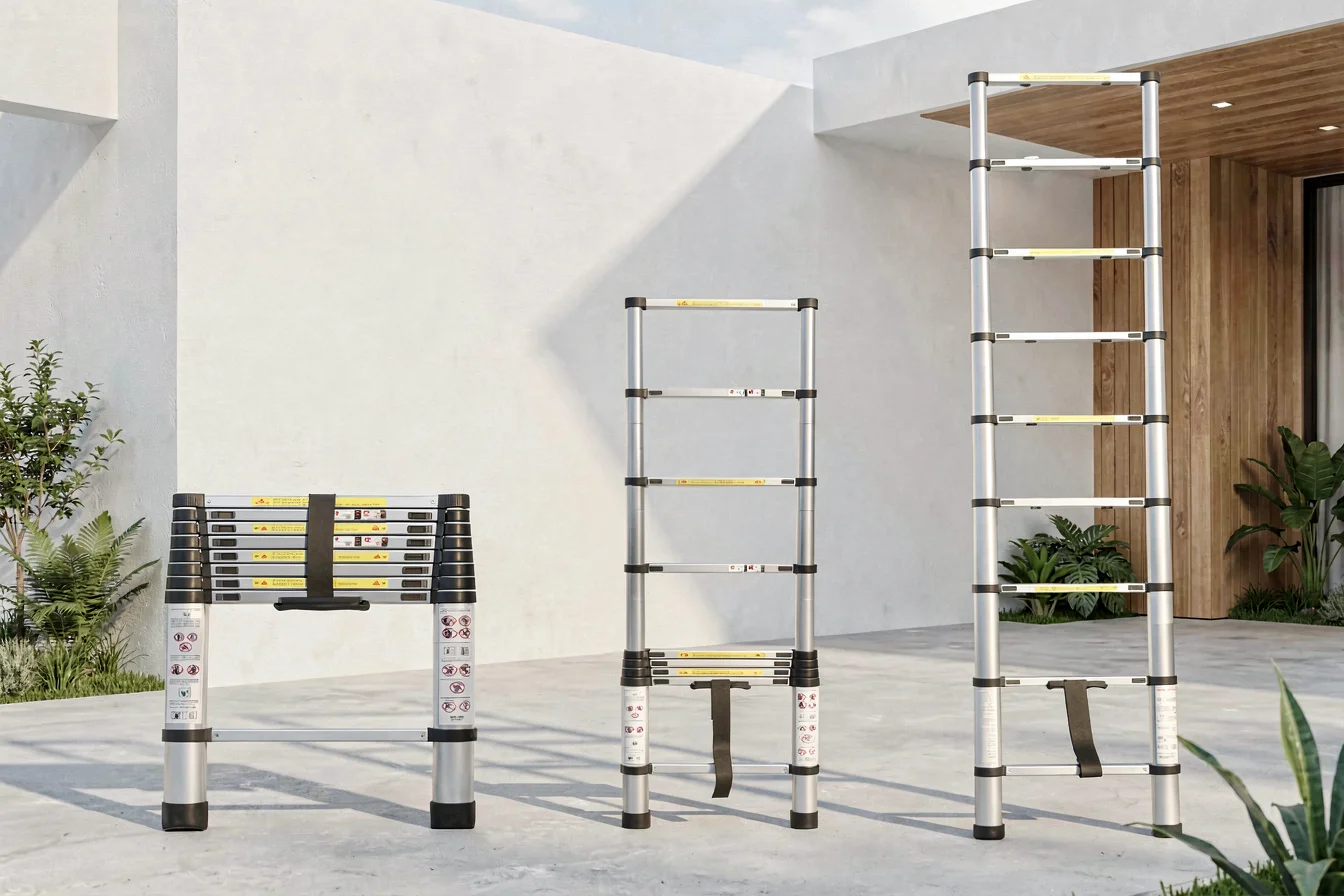
Telescopic ladders are the preferred solution for buyers seeking versatile, portable, and load-bearing access, with strong global demand and robust safety certifications. In contrast, cat ladders are niche, designed for pet access and fixed-position use, but lack the load capacity and adaptability of telescopic models. The overwhelming search and procurement trend favors telescopic ladders, especially those with safety locks and certified compliance, making them the optimal choice for most professional and consumer applications [1][2][3][4][6][7][8][9][10].
The telescopic ladder and cat ladder represent fundamentally different value propositions. Telescopic ladders are engineered for versatility, portability, and safety, targeting professionals and homeowners needing adjustable height, compact storage, and certified load capacity. Cat ladders, by contrast, are specialized for pet access, offering lightweight, fixed-position steps and typically constructed for non-human use. The procurement dilemma centers on choosing between broad utility and niche specialization, with buyers facing urgent decisions as market demand for telescopic ladders rises sharply due to urbanization, home improvement trends, and safety regulation [1][2][3][4][6][7].
Core differences emerge in design: telescopic ladders feature telescoping mechanisms, safety locks, and robust alloy construction, while cat ladders are often fixed-position, with narrow, lightweight steps and limited structural support. Technological innovations in telescopic ladders include integrated rung angle indicators, soft-close technology, and advanced locking systems, addressing pain points such as jamming, storage, and safety certification [2][3][6]. Cat ladders, while praised for enabling pet access and creative installation, are criticized for narrow steps, lack of load rating, and limited durability in harsh environments [13][16].
| Feature | Telescopic Ladder | Cat Ladder |
|---|---|---|
| Portability | Compact, foldable, easy to store | Fixed-position, lightweight |
| Load Capacity | 150–250 kg | Typically non-human rated |
| Safety Certification | EN131-6, OSHA, ANSI | Rarely certified |
| Application | Home, commercial, industrial | Pet access, creative DIY |
| Durability | High, alloy construction | Low, often wood/plastic |
| Price Range | $4,599–$17,999 | Typically <$1,000 |
Telescopic ladders deliver superior value for most buyers, combining portability, safety, and adaptability, while cat ladders serve a highly specialized market with limited commercial procurement appeal.
Durability is a critical procurement factor, with telescopic ladders constructed from aerospace-grade aluminum alloys, offering robust locking mechanisms and certified load ratings (150–250 kg) [2][4][6][7]. Their telescoping mechanism and safety locks ensure reliable performance and longevity, especially for frequent use. Cat ladders, typically made from wood or lightweight plastic, are praised for creative installation but lack load certification and are prone to wear in harsh environments. Maintenance is minimal for telescopic ladders, requiring occasional lubrication and inspection; cat ladders may need more frequent replacement due to step wear and lack of structural reinforcement [13][16].
Application scenarios differ: telescopic ladders excel in home maintenance, commercial painting, window cleaning, and industrial access, while cat ladders are ideal for pet access, creative DIY projects, and fixed-position installations. Buyers must consider environment, frequency of use, and load requirements when choosing. Telescopic ladders provide reliable performance in diverse settings, whereas cat ladders are limited to light-duty, pet-specific use.
Long-term cost evaluation reveals telescopic ladders offer lower total cost of ownership due to durability, safety features, and minimal replacement frequency. Cat ladders, while inexpensive, may incur higher replacement costs and lack accessory support. Five-year cost outlook:
| Cost Factor | Telescopic Ladder | Cat Ladder |
|---|---|---|
| Initial Purchase | $4,599–$17,999 | Typically <$1,000 |
| Maintenance | Low (lubrication, inspection) | Moderate (replacement, repairs) |
| Replacement Frequency | Rare (5–10 years) | Frequent (2–5 years) |
| Hidden Costs | Accessories (grab handles, bags) | None |
| Total 5-Year Cost | $4,600–$18,000 | $1,000–$2,500 |
Telescopic ladders offer superior durability and lower long-term costs for most buyers, making them the preferred choice for demanding, frequent-use applications.
The ladder category delivers critical value in both B2C and B2B markets, with urbanization and home improvement trends driving demand for portable, safe, and adaptable access solutions. Telescopic ladders excel in scenarios requiring adjustable height, compact storage, and certified load capacity, while cat ladders serve niche pet access and creative installation needs.
Market trend data shows urbanization, multi-generational living, and e-commerce growth fuel demand for telescopic ladders, especially those with safety locks and certifications [1]. Cat ladders remain a niche product, with limited commercial procurement and mostly DIY or pet-focused use.
Google Trends data reveals a sharp upward trajectory for telescopic ladders with safety locks, peaking at global index 95 in February 2026, while aluminum cat ladders remain flat at index 9–10 [1]. This indicates a significant gap between search interest and purchasing behavior, with buyers prioritizing telescopic ladders for versatility and safety.
Search Interest over Time
Telescopic ladders with safety locks are experiencing sustained growth in search and procurement, while cat ladders remain a niche, static product in the market.
Reddit and TikTok discussions reveal distinct buyer personas and pain points for each ladder type. Telescopic ladders are praised for portability and compact storage but criticized for jamming, plastic part failure, and confusion with extension ladders [8][9]. Safety certification (OSHA, ANSI, EN131-6) is a recurring concern, with buyers preferring brands like Telesteps, Little Giant, and Werner for reliability [10]. Cat ladders are favored for pet access and creative DIY projects, with users reporting success in enabling cats to reach elevated spaces but noting limitations in step width and structural support [13][16].
Case Study 1: Professional Buyer (Telescopic Ladder) A Reddit user in r/BuyItForLife discusses the search for a telescoping ladder with hooks, highlighting concerns about jamming and the need for safety certification. Multiple replies emphasize the importance of OSHA/ANSI labels and recommend Telesteps or Little Giant for reliability. One user notes: “Cheap models use plastic parts that crack, while Telesteps is all high-quality alloy and solid locks.” Another warns: “Honestly I'd skip the telescoping ones entirely - they're just prone to failure points with all those moving parts. Got burned by a cheap Amazon one that started binding up after like 6 months.” [8][9][10]
Case Study 2: Pet Owner (Cat Ladder) A Reddit user in r/somethingimade shares a DIY cat ladder for workaway hosts, noting the ladder’s success in enabling pet access despite initial reluctance from the cats. Comments praise the creative solution and practicality, with one user stating: “Ahah that’s really cool! How long did it take to make it? You should share this on the Workaway subreddit too.” [13]
“Stick to Telesteps. They're the originals for a reason—way safer than the random clones you see online.” [8]
“We're slow-traveling through southern Europe and we're doing workaways and house-sitting. We're currently staying in Galicia as volunteers in an artist residence. The owner has two cats and he likes them to be able to go outside at all times … I made this ladder. They're still a bit reluctant to use it, but that's only a matter of time.” [13]
| Dimension | Telescopic Ladder | Cat Ladder |
|---|---|---|
| Overall Satisfaction | High for premium brands | Moderate for DIY/pet use |
| Most Praised Feature | Portability, safety locks | Creative pet access |
| Most Common Complaint | Jamming, plastic failure | Narrow steps, limited support |
| Community Recommendation Rate | High for certified models | Low for commercial use |
Viral content themes include debates over safety certification, creative DIY projects, and pet access solutions. Cultural reception is positive for telescopic ladders in professional and home contexts, while cat ladders are valued for pet care and DIY innovation but lack mainstream commercial appeal.
Telescopic ladders are highly recommended for safety and reliability, while cat ladders are praised for pet access and creative use but remain a niche product.
Buyers should start by clarifying their core needs: primary use case (home, commercial, pet access), budget range, must-have features (portability, load rating, certifications), and environment (indoor, outdoor, frequent use). Key questions include: “Do I need adjustable height and compact storage?” “Is certified load capacity essential?” “Will the ladder be used for pets or human access?”
Tiered recommendations:
| Tier | Recommended Product | Key Reason |
|---|---|---|
| Budget-Friendly | Telescopic Ladder | Portability, safety locks, moderate price |
| Mid-Range | Telescopic Ladder | Certified load capacity, durability, accessories |
| Premium | Telescopic Ladder | High-end brands (Telesteps, Little Giant, Werner) |
| Pet-Specific | Cat Ladder | Creative pet access, lightweight, DIY |
Optimization tips: Buy telescopic ladders during seasonal sales (late spring, fall), bundle with accessories (grab handles, bags), prioritize certified brands, and avoid cheap clones. For cat ladders, focus on step width and structural support, and consider custom builds for unique installations. Common mistakes include overlooking certification, choosing non-certified products, and failing to match ladder type to use case.
Telescopic ladders are the optimal choice for most buyers seeking versatility, safety, and durability, while cat ladders serve a niche pet access market best suited for creative DIY projects.
Key insights: Telescopic ladders are experiencing strong momentum, driven by urbanization, home improvement, and safety regulation, with certified models and accessories delivering superior value and reliability. Cat ladders remain a niche product, valued for pet access and creative DIY but lacking commercial appeal. Forward-looking trend: Buyers should prioritize telescopic ladders with certified safety locks and robust construction for most applications, while cat ladders are best reserved for specialized pet access and DIY scenarios.
For the next 6–12 months, procurement teams should focus on certified telescopic ladders with safety locks and accessories, leveraging Alibaba.com for bulk sourcing, supplier vetting, and seasonal deals. Pet owners and creative DIYers should explore custom cat ladder builds, ensuring step width and structural support meet their needs.
Call to action: Share your experiences with telescopic and cat ladders on community platforms to help others make informed choices. Commercial buyers should engage Alibaba.com for bulk procurement, supplier comparison, and certification verification, ensuring supply-chain resilience and optimal value.