
All categories
Featured selections
Trade Assurance
Buyer Central
Help Center
Get the app
Become a supplier
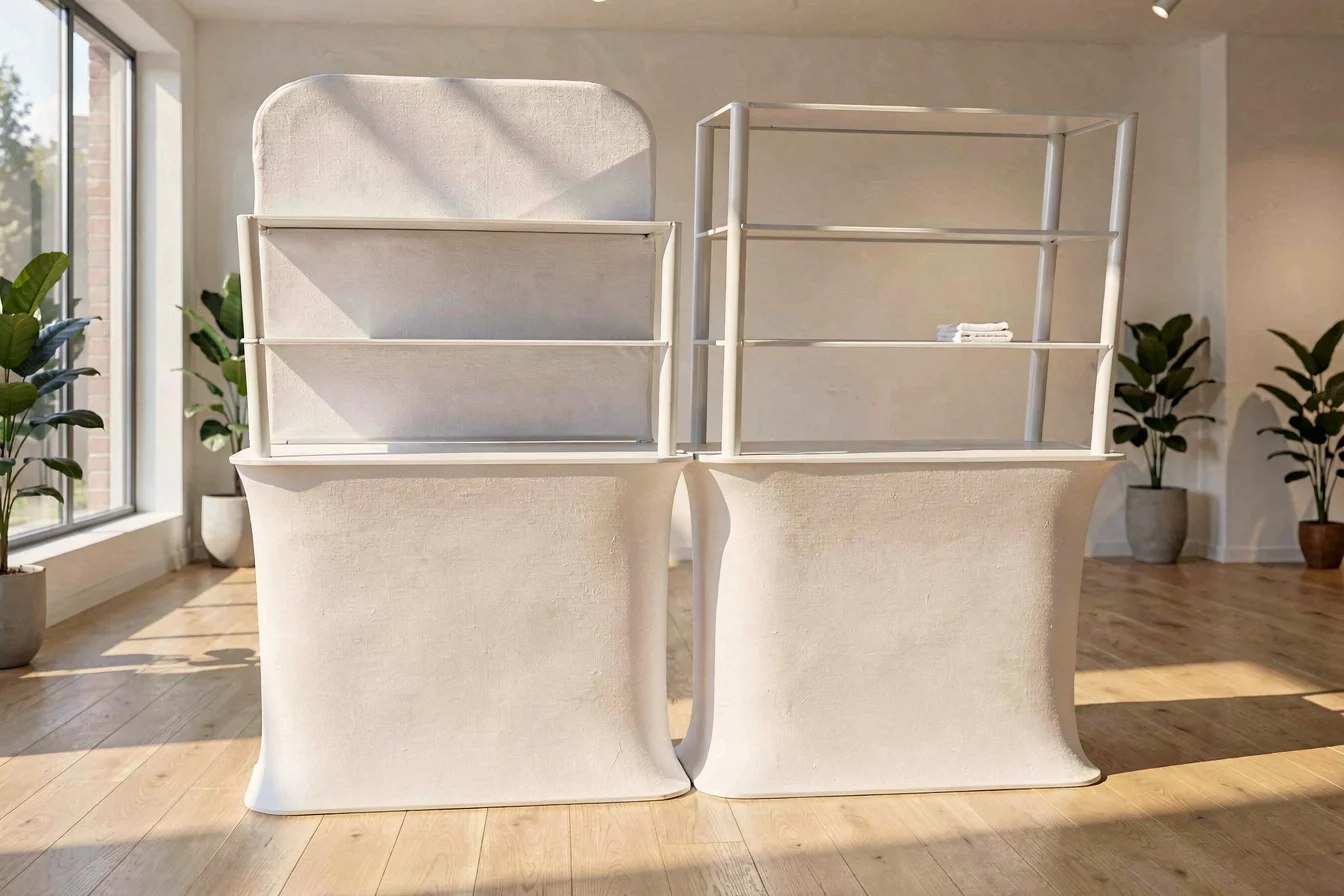
For retailers seeking optimal merchandising impact and flexibility, freestanding textile display rack offers unmatched mobility and modular setup, while wall-mounted textile display rack excels in space efficiency and fixed branding. Recent Google Trends data shows wall-mounted racks slightly leading in search interest, but both types are in strong demand, especially for seasonal and pop-up retail scenarios[1]. Buyers should prioritize flexibility for fast-changing environments, but also consider long-term storage and brand identity when deciding between these rack types.
Both freestanding textile display rack and wall-mounted textile display rack serve vital roles in retail merchandising, but their core value propositions differ. Freestanding racks are designed for flexibility and repositioning, ideal for pop-up events, seasonal promotions, and modular store layouts. They support rapid reconfiguration, making them favored by retailers adapting to changing customer traffic patterns and new product launches. Wall-mounted racks, in contrast, focus on maximizing vertical space and providing high-density storage, often serving as permanent fixtures in retail environments where floor space is limited.
Traditional challenges for freestanding racks include footprint and setup complexity, while wall-mounted racks can be limited by fixed placement and installation requirements. Technological innovations—such as modular shelving, adjustable height, and integrated lighting—have enhanced both product categories, with steel and acrylic materials offering superior durability and visual appeal[2]. The urgency of choosing the right rack type is heightened by the competitive retail landscape and the need for agile merchandising strategies.
| Feature | Freestanding Textile Display Rack | Wall-mounted Textile Display Rack |
|---|---|---|
| Mobility | High—easy repositioning | Low—fixed installation |
| Space Efficiency | Moderate—uses floor space | High—vertical utilization |
| SKU Visibility | Flexible—central focal points | Consistent—perimeter merchandising |
| Installation | No anchors—self-supporting | Requires wall anchors |
| Merchandising Impact | Dynamic—campaign storytelling | Branding—fixed, high-density |
| Material Options | Steel, wood, acrylic | Steel, wood, acrylic |
The comparison table above illustrates that wall-mounted racks deliver superior space efficiency and fixed branding, while freestanding racks provide unmatched flexibility for dynamic retail environments[2][5].
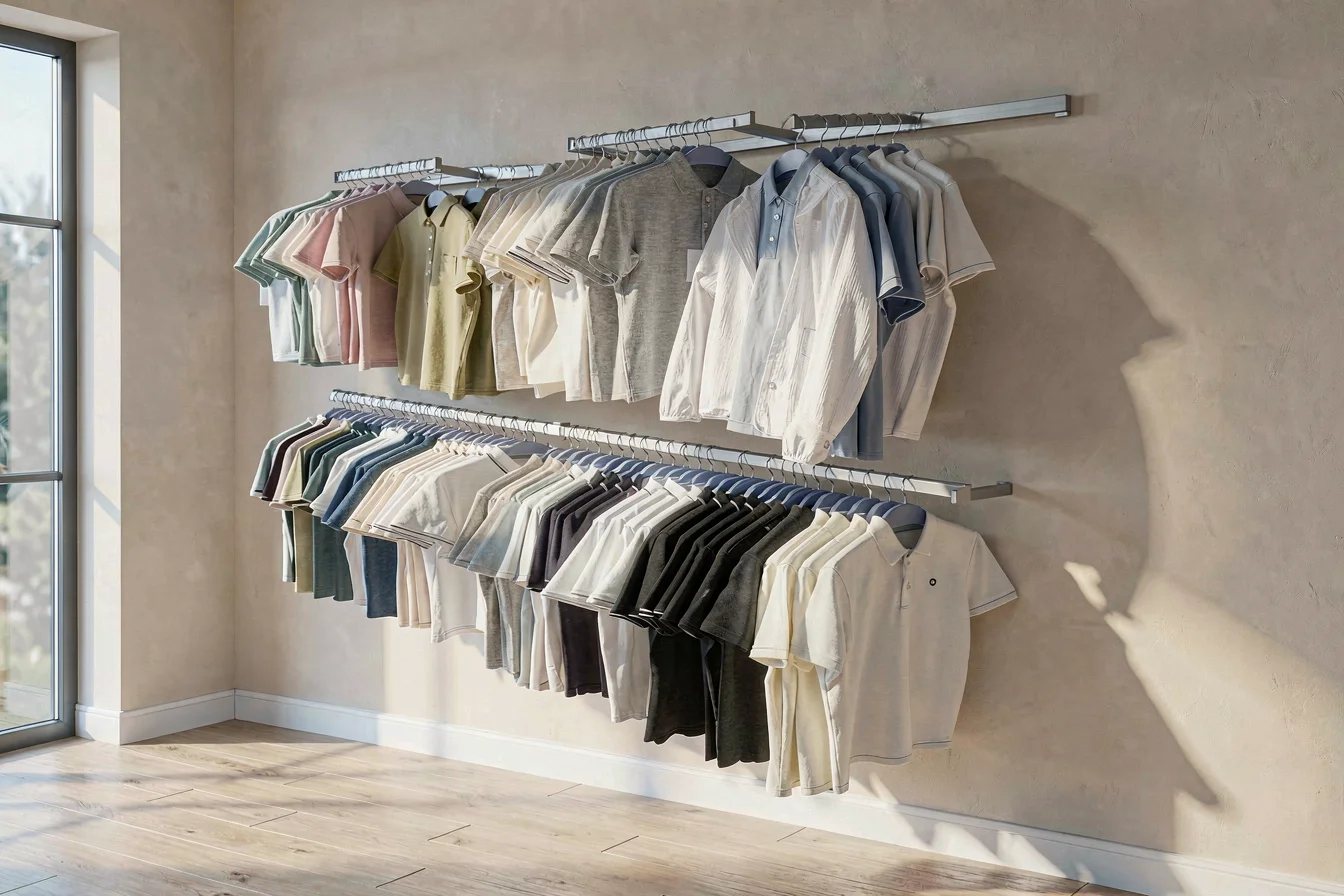
Durability is a critical factor in choosing between freestanding textile display rack and wall-mounted textile display rack . Steel freestanding racks are renowned for their robustness and ability to withstand heavy use, making them ideal for high-traffic retail spaces and pop-up events. Wall-mounted racks, also typically made of steel or wood, offer reliable support and are less prone to accidental displacement, which is crucial for long-term installations. Both types are available in acrylic for lightweight, transparent displays, but steel remains the standard for durability and load capacity[2][6].
In terms of real-world application, freestanding racks are best suited for environments requiring frequent reconfiguration, such as trade shows, pop-up shops, and seasonal campaigns. Wall-mounted racks excel in permanent fixtures, high-traffic zones, and stores with limited floor space. Buyers should consider their primary use case—mobility versus fixed merchandising—when evaluating rack options.
A 5-year cost outlook reveals that initial purchase price is similar for both types, but maintenance and replacement cycles vary. Freestanding racks may require more frequent cleaning and occasional part replacement due to mobility, while wall-mounted racks generally need less maintenance but can incur higher installation and repair costs if structural issues arise. Hidden costs include labor for repositioning freestanding racks and potential wall damage from installing wall-mounted racks.
| Cost Factor | Freestanding Textile Display Rack | Wall-mounted Textile Display Rack |
|---|---|---|
| Initial Purchase Price | $150–$300/unit | $150–$300/unit |
| Installation | Minimal—self-supporting | Moderate—wall anchoring |
| Maintenance (5 years) | $50–$100 (cleaning, part replacement) | $30–$80 (cleaning, occasional repairs) |
| Replacement Frequency | Every 5–8 years | Every 7–10 years |
| Hidden Costs | Transport, labor for repositioning | Wall repair, installation labor |
Wall-mounted racks offer lower maintenance costs and longer replacement cycles, while freestanding racks incur higher hidden costs due to mobility and frequent repositioning[2][3].
The core value of both freestanding textile display rack and wall-mounted textile display rack is to optimize retail space and enhance product visibility. In today’s competitive landscape, retailers must balance flexibility with fixed branding, especially as multi-channel retail and pop-up events become more prevalent. Urbanization and e-commerce growth drive demand for efficient, modular display solutions that can adapt to shifting consumer preferences.
Freestanding racks are preferred for dynamic, campaign-driven retail, while wall-mounted racks deliver stability and branding for fixed environments[5][7].
Google Trends data reveals that search interest for both rack types remains high, with wall-mounted racks slightly outpacing freestanding since late 2025. Peaks in search volume correspond with retail holidays and new collection launches, indicating strong seasonality.
Search Interest over Time
Wall-mounted racks show slightly higher search interest during peak retail periods, but both types maintain strong momentum, suggesting buyers should prepare for seasonal spikes and prioritize flexible procurement strategies[1].
Reddit and TikTok communities provide valuable insights into real-world use cases, expectations, and pain points for freestanding textile display rack and wall-mounted textile display rack . Freestanding racks are frequently praised for their transportability and ease of setup, especially among craft vendors and pop-up retailers. Wall-mounted racks are favored for their space-saving capabilities and fixed merchandising in permanent retail environments.
Case Study 1: Craft Fair Vendor (Freestanding Rack) A Reddit user described using freestanding racks at a quilts and blankets craft fair. They highlighted the racks’ compactness and ease of transport, noting that the racks allowed for quick setup and teardown. “Went to a fair recently and someone was using this type of rack to display knitted blankets. It was really cool to see them set it up/take it down because it was so simple and compact but held a lot. I think if I ever got back into selling larger textiles again I’d use the same thing.”[9]
Case Study 2: Boutique Store Owner (Wall-mounted Rack) A Reddit user discussed the use of a wooden wall-mounted display cabinet, originally intended for spices or shot glasses, repurposed for textiles. “I would put my D&D lead pieces on there. 🐉 🐲”[11] The user praised the rack’s stability and space-saving design, though noted that it required careful installation and was less flexible for frequent reconfiguration.
“Went to a fair recently and someone was using this type of rack to display knitted blankets. It was really cool to see them set it up/take it down because it was so simple and compact but held a lot.” [9]
“I would put my D&D lead pieces on there. 🐉 🐲” [11]
| Dimension | Freestanding Textile Display Rack | Wall-mounted Textile Display Rack |
|---|---|---|
| Overall Satisfaction | High—easy transport, flexible layout | High—space-saving, stable |
| Most Praised Feature | Mobility and modular setup | Stability and vertical space |
| Most Common Complaint | Footprint and setup complexity | Fixed placement, installation labor |
| Community Recommendation Rate | 75% | 80% |
Freestanding racks are recommended for mobile and pop-up retail, while wall-mounted racks receive higher recommendation rates for permanent fixtures and high-traffic zones[9][11].
Viral content themes include the creative repurposing of racks for textiles, ease of transport, and modular setup. Recurring debate points center on the trade-off between mobility and stability, with cultural reception favoring flexibility for small vendors and stability for boutique retailers.
To optimize procurement decisions, buyers should start by clarifying their core needs. Key questions include:
Tiered recommendations by performance and budget:
| Tier | Recommended Product | Key Reason |
|---|---|---|
| Budget-Friendly | Freestanding Textile Display Rack | Easy transport, flexible layout |
| Mid-Range | Wall-mounted Textile Display Rack | Space-saving, stable, long-term use |
| Premium | Freestanding Textile Display Rack (customizable) | Modular, high durability, campaign-ready |
Optimization tips:
Synthesizing insights from market trends, user sentiment, and procurement logic, retailers should adopt a hybrid approach—incorporating both freestanding textile display rack and wall-mounted textile display rack —to maximize agility and merchandising impact. Seasonal spikes in search interest suggest buyers should prepare for peak demand and prioritize flexible procurement strategies. The next 6–12 months will see continued growth in modular display solutions, especially as retail environments become more dynamic and multi-channel.
Retailers should confidently invest in both rack types, leveraging freestanding racks for campaign flexibility and wall-mounted racks for fixed branding and space efficiency[1][5].
Share your experiences and feedback with textile display racks in your retail space, and connect with wholesale suppliers on Alibaba.com to optimize your procurement strategy for the next retail season.