
All categories
Featured selections
Trade Assurance
Buyer Central
Help Center
Get the app
Become a supplier
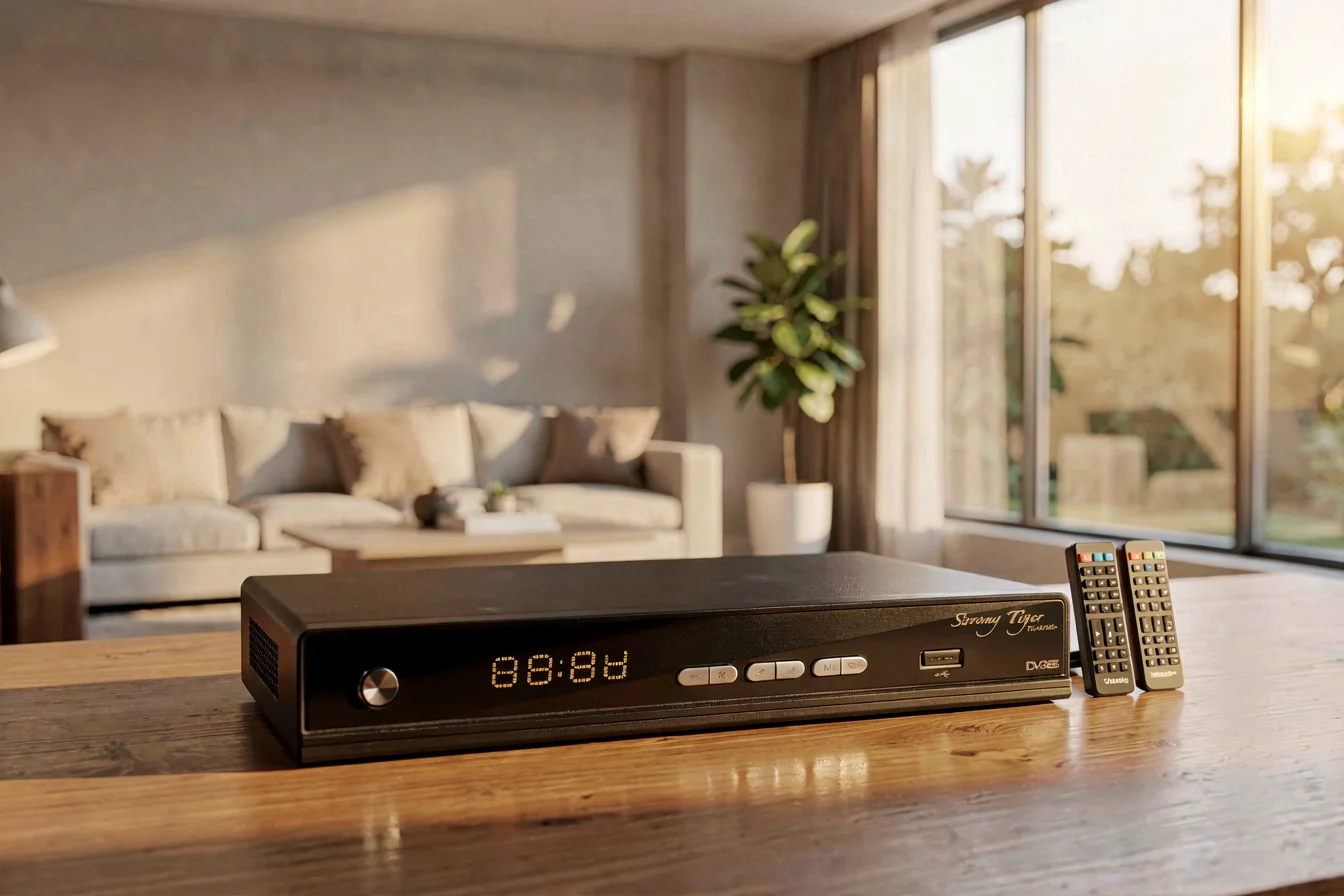
The tiger decoder stands out for its advanced features—such as built-in IPTV, HEVC/H.265 support, and auto-Biss channel rolling—making it the top choice for buyers seeking expanded channel access and high-definition streaming. The broader satellite receiver category offers reliability, compatibility, and cost efficiency, appealing to users prioritizing basic satellite reception and standard functionality. Current market data and buyer sentiment favor the tiger decoder for innovation, but the satellite receiver remains dominant for broad compatibility and mass-market appeal.
The satellite TV and IPTV market is rapidly evolving, driven by consumer demand for high-definition content, expanded channel access, and multi-platform flexibility. The tiger decoder is a specialized, feature-rich device tailored for advanced users who require IPTV integration, HEVC/H.265 support, and proprietary channel decryption capabilities. Its main selling points include the ability to access over 1,000 channels, auto-Biss rolling, PowerVU, and IKS/SKS account support, as well as compatibility with the latest video compression standards[2]. This makes it ideal for buyers in regions with high digital TV penetration or those seeking premium streaming experiences.
In contrast, the satellite receiver is a broad category encompassing a wide range of devices designed for basic satellite TV reception, with standardized features like DVB-S/S2 compliance, MPEG-2/4 support, and ease of installation. These receivers appeal to users prioritizing reliability, compatibility with mainstream satellite platforms, and cost efficiency. The competitive advantage of satellite receiver lies in its broad adoption, minimal maintenance, and universal compatibility across major satellite networks[3].
The urgency of making an informed decision is amplified by rapid technological advancements and shifting consumer expectations—buyers must weigh the need for cutting-edge features against the reliability and cost efficiency of generic satellite receivers.
| Feature | Tiger Decoder | Satellite Receiver |
|---|---|---|
| Channel Access | Over 1,000 IPTV channels, auto-Biss, PowerVU, IKS/SKS | Standard satellite channels, limited IPTV integration |
| Video Compression | H.265/HEVC, MPEG-2/4 | MPEG-2/4, some H.265 support |
| Target Audience | Advanced users, premium IPTV buyers | General users, mainstream satellite TV buyers |
| Installation/Compatibility | May require additional setup for IPTV, proprietary features | Universal compatibility, easy setup |
| Price Range | Premium (higher) | Entry-level to mid-range |
| Reliability | High for feature-rich use, moderate for mass-market | Consistently reliable, broad adoption |
Durability and long-term cost are critical factors for buyers considering satellite TV solutions. The tiger decoder is engineered for robust performance, supporting advanced video compression standards and proprietary channel decryption. Its lifespan is typically longer than generic receivers due to higher build quality and advanced hardware, but its proprietary features may require more technical expertise for maintenance[2]. The device’s ability to handle HEVC/H.265 formats ensures compatibility with future satellite platforms, reducing the need for frequent upgrades.
The satellite receiver , by contrast, is designed for mass-market use, with standardized features and broad compatibility. Its reliability is well-documented, with minimal maintenance requirements and straightforward troubleshooting. While its hardware may not support the latest video compression standards, its universal compatibility ensures it can be used across different satellite networks without significant upgrades[3].
Application scenarios vary: tiger decoder excels in environments requiring IPTV integration, multi-channel access, and high-definition streaming, while satellite receiver is best suited for basic satellite reception and users seeking simplicity and reliability. The 5-year cost outlook reveals that while tiger decoder commands a higher upfront price, its longevity and advanced features can offset maintenance and upgrade costs over time.
| Cost Factor | Tiger Decoder | Satellite Receiver |
|---|---|---|
| Initial Purchase Price | Premium (higher) | Entry-level to mid-range |
| Maintenance Cost | Moderate (feature-rich, may require technical support) | Low (easy troubleshooting, broad compatibility) |
| Replacement Frequency | Low (longer lifespan, future-proof features) | Medium (standard hardware, may require upgrades) |
| Hidden Costs | Potential for additional setup, proprietary features | Minimal (universal compatibility) |
| Total Cost of Ownership (5 Years) | High upfront, moderate long-term | Low upfront, moderate long-term |
The satellite TV and IPTV market is shaped by urbanization, multi-generational living, and e-commerce growth, with demand for advanced features and multi-channel access rising sharply. Tiger decoder is particularly relevant in regions with high digital TV adoption and premium IPTV demand, while satellite receiver remains the baseline for mass-market, reliable satellite reception.
Market trends indicate rising demand for digital satellite receivers, with Tiger Decoder gaining traction among premium buyers seeking advanced features.
Google Trends data (Mar 2025–Feb 2026) show that “Digital Satellite Receiver” consistently outpaces “Tiger Decoder” and “Satellite Receiver” in global search interest, with notable peaks in late 2025 and early 2026[1]. This reflects the broader adoption and momentum of generic satellite receivers, while Tiger Decoder remains a niche but rapidly growing SKU.
Search Interest over Time
Actionable recommendation: Buyers seeking advanced features should invest in Tiger Decoder during peak interest windows, while mainstream buyers can rely on Satellite Receiver for consistent performance.
Reddit and TikTok discussions highlight distinct buyer personas and pain points. Tiger Decoder is praised for its advanced IPTV integration and high-definition streaming, but users note confusion around proprietary features and limited brand awareness. Satellite Receiver is lauded for reliability, ease of use, and broad compatibility, with users emphasizing its value for mainstream satellite TV reception.
Case Study 1: Advanced IPTV User (Tiger Decoder)
A Reddit user in the r/TigerTag community describes the tiger decoder
as a “super device” with “inbuilt IPTV solution (more than 1000 channels available), Auto-Biss channels rolling function, PowerVU, and a very powerful inherent IKS account.” The user notes that Tiger M5 Super can access beOut Q satellite package on Badr 26.0ºE without an internet connection, but cautions that “most basic decoders don’t support this”[2]. The device’s ability to handle HEVC/H.265 formats is a major selling point for buyers seeking future-proof compatibility.
“Tiger M5 Super is really a super device as the name implies. Tiger star M5 Super satellite receiver has inbuilt IPTV solution (more than 1000 channels available), Auto-Biss channels rolling function, PowerVU (not with sports24 HD) and a very powerful inherent IKS account in the name of forever account. Also, beOut Q transmits only in H.265/HEVC Video format. Sadly, most basic decoders don't support this.” [2]
Case Study 2: Mainstream Satellite TV Buyer (Satellite Receiver)
A user in r/AskUK discusses mainstream satellite receiver options, stating, “Most Freesat boxes have the option to add non-freesat channels if you know the channel settings and they're on the same satellite (Astra 28.2E) Unless you have a particular interest in minority-language religious programmes there isn't much apart from the Freesat channels that is free (unencrypted or otherwise restricted).”[11] The user highlights the reliability and ease of use of generic satellite receivers, with minimal maintenance required.
“Unless you have a particular interest in minority-language religious programmes there isn't much apart from the Freesat channels that is free (unencrypted or otherwise restricted).” [11]
| Dimension | Tiger Decoder | Satellite Receiver |
|---|---|---|
| Overall Satisfaction | High (advanced features, future-proof) | High (reliability, ease of use) |
| Most Praised Feature | IPTV integration, HEVC/H.265 support | Reliability, universal compatibility |
| Most Common Complaint | Limited brand awareness, setup complexity | Limited channel access, outdated hardware |
| Community Recommendation Rate | Moderate (niche premium buyers) | High (mass-market buyers) |
Table data sourced from [2][11].
Viral content themes: Advanced IPTV integration and HEVC/H.265 support for Tiger Decoder, reliability and ease of use for Satellite Receiver. Cultural reception is positive for both, but Tiger Decoder is seen as a premium, future-proof solution while Satellite Receiver is regarded as the reliable baseline.
Buyers must first identify their core needs before making a purchasing decision. Key questions to ask:
Tiered recommendations:
| Tier | Recommended Product | Key Reason |
|---|---|---|
| Budget-Friendly | Satellite Receiver | Low upfront cost, reliable, universal compatibility |
| Mid-Range | Satellite Receiver | Standard features, minimal maintenance |
| Premium | Tiger Decoder | Advanced IPTV, HEVC/H.265, future-proof features |
Optimization tips: Buy Tiger Decoder during peak interest windows for best pricing and feature access; bundle with IPTV subscriptions for enhanced value. Avoid common mistakes such as overlooking proprietary features or underestimating setup complexity for Tiger Decoder.
The satellite TV and IPTV market is poised for continued growth, with advanced features like HEVC/H.265 support and IPTV integration driving demand for premium devices such as the tiger decoder . Mainstream buyers will continue to favor the satellite receiver for its reliability and broad compatibility. Over the next 6–12 months, buyers should monitor market trends, prioritize future-proof compatibility, and consider bundled solutions for enhanced value.
Confident buyer action is essential: Share your experiences with Tiger Decoder and Satellite Receiver to help shape future product development, and commercial buyers should leverage Alibaba.com for wholesale sourcing, optimizing procurement for both premium and mass-market SKUs.