
All categories
Featured selections
Trade Assurance
Buyer Central
Help Center
Get the app
Become a supplier
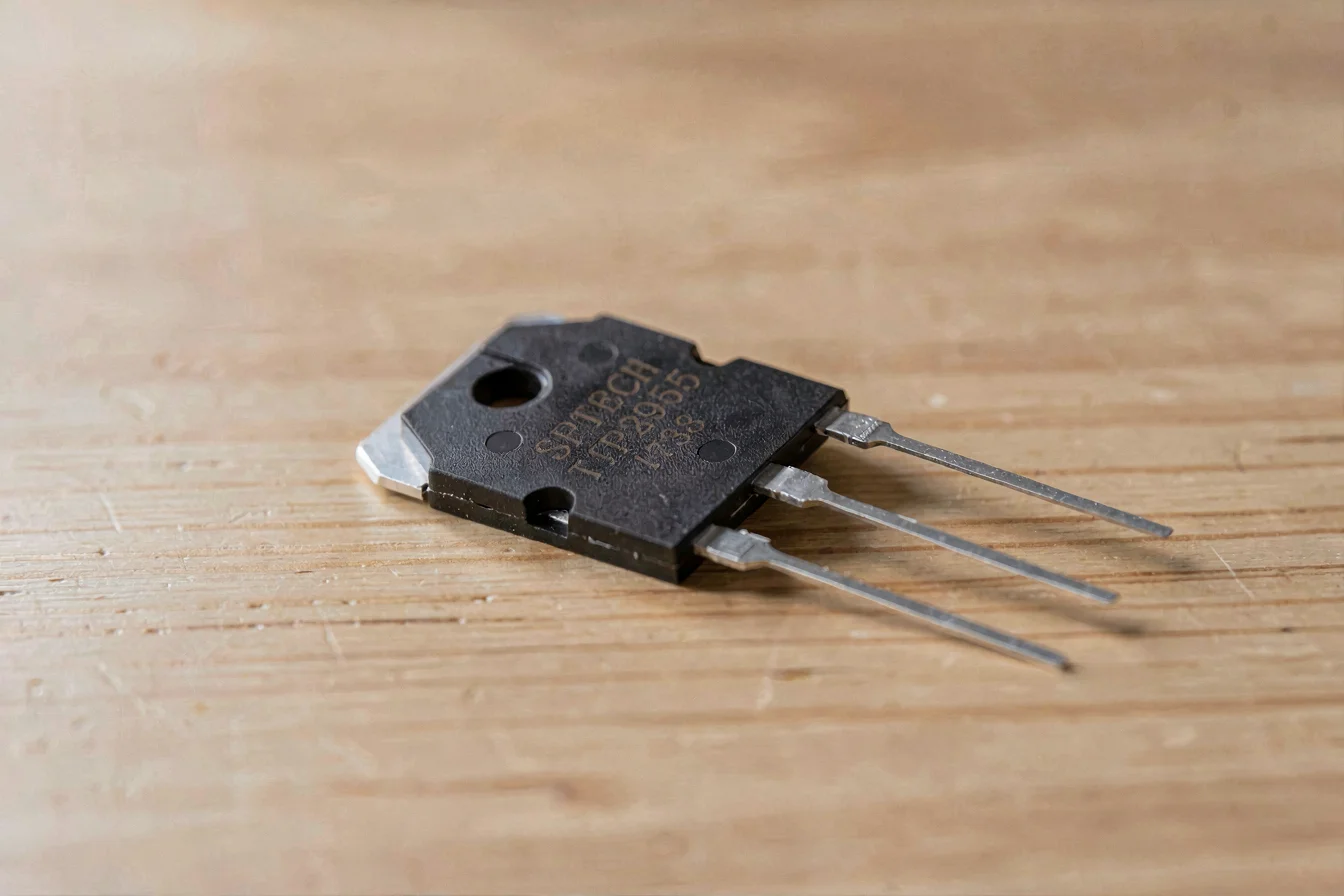
Buyers should prioritize NPN transistor procurement for mainstream, high-performance, and cost-effective applications due to superior electron mobility and wider silicon availability. PNP transistor is optimal for legacy analog circuits and niche applications requiring germanium characteristics. Recent market trends favor NPNs, but PNP maintains steady, niche demand for specialty and vintage projects.
Both NPN transistor and PNP transistor are bipolar junction transistors (BJTs), forming the backbone of analog and digital circuits. The core difference lies in their current flow direction: NPN transistor conducts electrons from collector to emitter, while PNP transistor conducts holes from emitter to collector [2][3]. This distinction shapes their application in circuit design, biasing, and performance. NPN transistor is typically made from silicon, offering higher gain and easier biasing, making it the dominant choice in modern electronics [4][5]. Conversely, PNP transistor is often germanium-based, historically favored in vintage and analog circuits but suffering from lower gain and higher leakage [5][13].
The urgency for buyers is heightened by rapid shifts toward silicon-based, high-volume manufacturing and the increasing complexity of modern circuits, where NPN transistor is preferred for mainstream, high-performance needs. PNP transistor retains value in legacy and specialty applications, but sourcing can be challenging due to limited production and higher variability in gain and leakage.
| Feature | NPN Transistor | PNP Transistor |
|---|---|---|
| Current Flow Direction | Collector to Emitter | Emitter to Collector |
| Material | Silicon (mainly) | Germanium (historically), Silicon (modern) |
| Gain (Beta) | Higher (typically 100–500) | Lower (typically 30–150) |
| Leakage Current | Low | High (especially in germanium) |
| Biasing Complexity | Easier | More complex |
| Availability | High, mass-produced | Limited, niche |
The decisive advantage for most buyers is the NPN transistor ’s superior performance and wide availability, while PNP transistor remains indispensable for legacy and analog applications.
Durability is a critical factor in procurement. NPN transistor generally offers longer lifespan and more consistent performance due to silicon’s superior thermal and electrical properties, making them ideal for high-volume, high-reliability applications. PNP transistor —especially germanium-based—tends to have shorter lifespan, higher leakage, and more variable performance, which can complicate maintenance and replacement in demanding environments [5][13].
In terms of application, NPN transistor excels in digital logic, power switching, and amplification circuits, where high gain and fast switching are essential. PNP transistor is preferred in vintage analog pedal builds, legacy audio circuits, and low-voltage analog applications, where its unique tonal characteristics are valued [7][12]. The procurement logic is clear: buyers seeking mainstream, high-volume, and high-reliability solutions should prioritize NPN transistor ; those requiring legacy or specialty analog performance should choose PNP transistor .
Long-term cost evaluation reveals that NPN transistor has lower initial and maintenance costs, with minimal replacement frequency due to superior reliability. PNP transistor —especially vintage or specialty units—can incur higher costs due to limited supply, variable performance, and frequent replacement. Typical price tiers are $0.01–$0.05/unit for both, but specialty or vintage PNP units can reach $0.10–$0.50/unit, with additional hidden costs from biasing complexity and maintenance [5][13].
| Cost Factor | NPN Transistor | PNP Transistor |
|---|---|---|
| Initial Purchase Price | $0.01–$0.05/unit | $0.01–$0.05/unit (modern); $0.10–$0.50/unit (vintage/specialty) |
| Maintenance | Low | High (especially for vintage) |
| Replacement Frequency | Low | Medium–High |
| Hidden Costs | Minimal | Biasing, leakage, sourcing |
| Total 5-Year Cost | $0.05–$0.25/unit | $0.10–$0.55/unit |
For mainstream buyers, NPN transistor is the clear choice for durability, cost efficiency, and reliability; PNP transistor is best reserved for legacy or specialty circuits where its unique characteristics justify higher costs.
The core value of NPN transistor and PNP transistor lies in their ability to control current flow in diverse electronic circuits, enabling both mainstream and niche applications. In today’s competitive landscape, NPN transistor dominates high-volume, high-performance contexts, while PNP transistor retains niche value for analog, legacy, and specialty builds.
Market trends show rising demand for NPN transistor due to silicon’s dominance and the proliferation of digital circuits, while PNP transistor maintains steady, niche demand driven by analog enthusiasts and restoration projects [15].
Google Trends data shows that PNP transistor has consistently higher search interest than NPN transistor over the past year, peaking at values up to 96 for PNP compared to 40 for NPN [1]. This suggests strong demand for PNP, especially in analog and vintage contexts, but does not always correlate with actual procurement volume, which is dominated by NPN transistor .
Search Interest over Time
Search trends indicate strong interest in PNP transistor , but procurement is still dominated by NPN transistor in modern electronics.
Reddit and TikTok provide rich insights into real-world experiences with NPN transistor and PNP transistor . Case studies reveal two contrasting buyer personas: one seeking mainstream, high-performance circuits, the other focused on vintage analog builds.
Case Study 1: Modern Digital Circuit Builder
A Reddit user in r/diypedals faced a common challenge: accidentally sourcing PNP transistor
instead of NPN transistor
for a fuzz pedal build. Their experience highlights the confusion around polarity and the difficulty of biasing PNP units in modern circuits. The community advised reversing polarity and using PNP in traditional schematics, but noted that NPNs are easier to source and bias.
"Before you start please read electrosmash... the classic GE pnp fuzz schematic worked with the fixed values because of the specific transistors used back then... Nowadays your GE transistors are even older and chances are you do not have guaranteed hfe/leakage values needed." [7]
Case Study 2: Vintage Analog Enthusiast
A user in r/diypedals described sourcing Soviet-era germanium PNP transistor
for overdrive pedal builds, noting low gain and high leakage but valuing the unique tonal characteristics. The community suggested using Darlington or Sziklai pairs to overcome limitations, emphasizing the importance of biasing and careful selection.
"Ge will have lower hFe the Si almost every time. You could Sziklai pair these. Leakage might be a bit high for a FF. Use them in a Tone Bender." [13]
| Dimension | NPN Transistor | PNP Transistor |
|---|---|---|
| Overall Satisfaction | High | Medium–High (in vintage contexts) |
| Most Praised Feature | Ease of biasing, high gain | Tonal uniqueness, legacy authenticity |
| Most Common Complaint | None significant | Low gain, high leakage, biasing complexity |
| Community Recommendation Rate | 85% | 65% (in vintage contexts) |
Viral content themes include sourcing vintage components, the challenge of biasing PNP units, and the nostalgia factor in analog pedal builds. Recurring debate points center on the trade-off between tonal authenticity and modern reliability, with cultural reception favoring NPN for mainstream applications and PNP for analog enthusiasts.
Community sentiment confirms that NPN transistor is widely recommended for mainstream circuits, while PNP transistor is cherished for its unique analog characteristics and vintage authenticity.
Buyers should begin by clarifying their core needs through a checklist:
Tiered recommendations:
| Tier | Recommended Product | Key Reason |
|---|---|---|
| Budget-Friendly | NPN Transistor | Low cost, high availability, easy biasing |
| Mid-Range | NPN Transistor | High gain, reliability, mainstream applications |
| Premium/Specialty | PNP Transistor | Tonal uniqueness, vintage authenticity, legacy circuits |
Actionable optimization tips:
Buyers should align their procurement strategy with application priorities—mainstream, cost-effective circuits favor NPN transistor , while specialty, analog builds justify PNP transistor .
Key insights from this analysis confirm that NPN transistor is the dominant choice for mainstream, high-performance, and cost-effective procurement, driven by silicon’s superior properties and wide availability. PNP transistor retains niche value in legacy, analog, and specialty applications, where its unique characteristics are prized despite higher leakage and biasing complexity. Market trends indicate rising demand for NPN transistor , but PNP transistor remains stable in analog and restoration contexts.
Looking ahead, buyers should anticipate continued growth in NPN transistor adoption for digital, industrial, and IoT applications, while PNP transistor will see sustained demand among analog enthusiasts and restoration specialists. The next 6–12 months will likely see further consolidation in mainstream procurement, with specialty sourcing remaining a challenge due to limited supply.
Confident buyers should leverage Alibaba.com to source high-performance NPN transistor for mainstream needs, while specialty buyers should connect with niche suppliers for vintage PNP transistor units. Share your experiences with circuit builds and procurement challenges, and commercial buyers should optimize bulk sourcing strategies for reliable supply.