
All categories
Featured selections
Trade Assurance
Buyer Central
Help Center
Get the app
Become a supplier
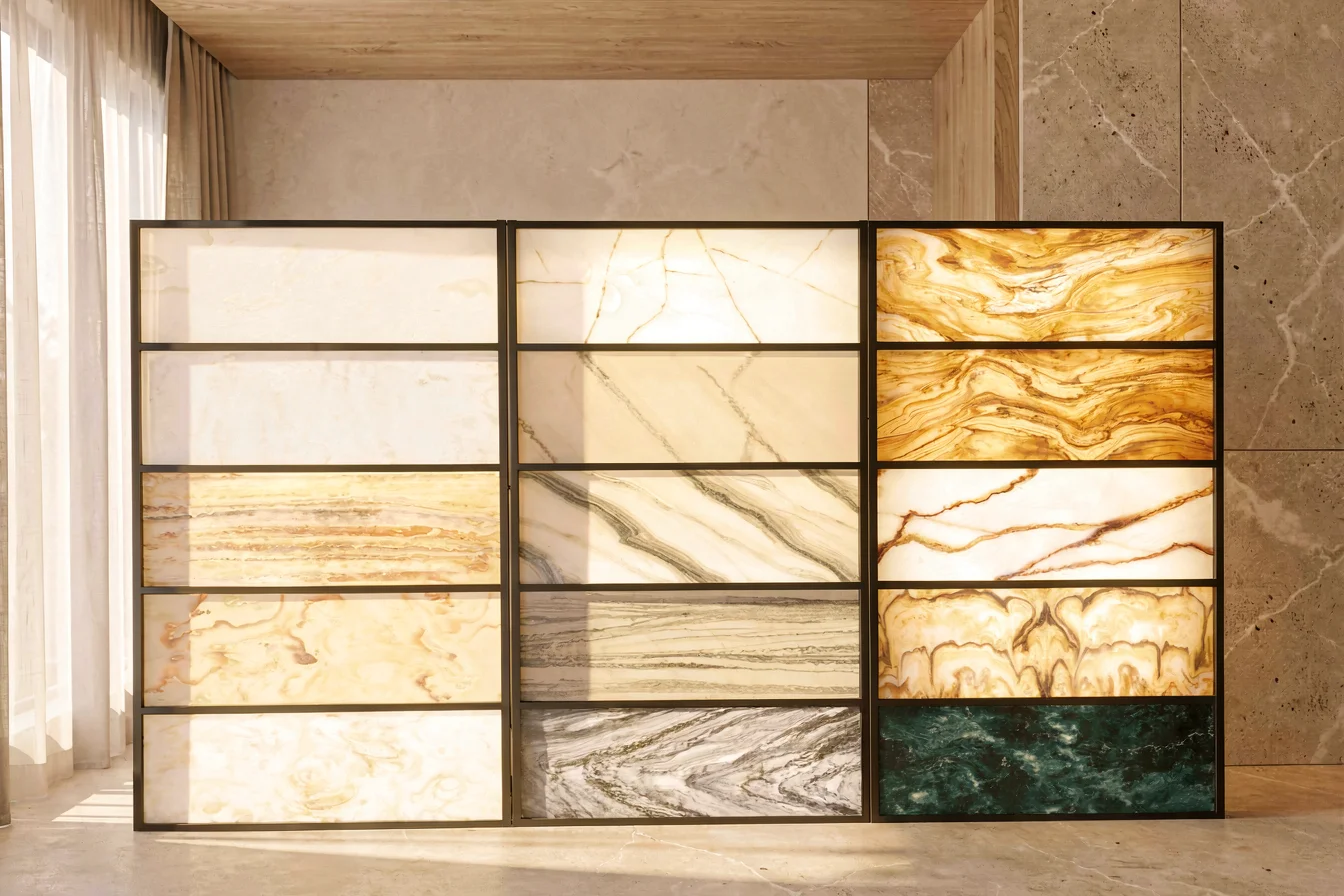
For interior design, translucent faux alabaster sheet delivers superior durability, lighter weight, and easier installation, making it ideal for scalable projects and demanding environments. Natural alabaster sheet offers unmatched natural veining and premium aesthetics but requires higher maintenance and careful handling. Current market trends show growing demand for faux variants due to cost savings and performance advantages, making them the preferred choice for most procurement decisions [1][2][4].
The interior design industry faces a procurement dilemma: should buyers choose translucent faux alabaster sheet for its engineered durability and cost efficiency, or opt for natural alabaster sheet for its authentic aesthetics and unique patterns? Both materials target high-end applications but serve distinct pain points: natural alabaster is prized for its organic beauty and light transmission, while faux alabaster excels in weight reduction, ease of fabrication, and chemical resistance. The urgency stems from rising demand for sustainable, scalable materials and the need for reduced installation and maintenance costs.
Translucent faux alabaster sheet is engineered with advanced composites (60–70% polymer resin, 25–30% quartz, 5–10% mineral binder), offering 740,000 thermal cycles of stability, minimal UV fade, and seamless visual accuracy compared to natural stone [4]. Its lighter weight (6–10 mm sheets) makes it ideal for yacht interiors, hospitality, and wet environments. Meanwhile, natural alabaster sheet is handcrafted from real stone, sliced thin and often adhered to glass or acrylic for durability, but is heavier, more fragile, and costly to handle.
Technological innovations in faux alabaster—such as resin veining, laser-etched finishes, and vacuum casting—have narrowed the visual gap to natural stone, with faux achieving 95% accuracy in texture and color [4]. However, natural alabaster’s organic variations remain unmatched, appealing to luxury designers seeking authenticity.
| Feature | Translucent Faux Alabaster Sheet | Natural Alabaster Sheet |
|---|---|---|
| Weight | Light (6–10 mm) | Heavy (typically 12–20 mm) |
| Durability | High (740,000 thermal cycles) | Moderate (fragile, prone to cracking) |
| Maintenance | Low ($1.20/sq ft/yr) | High ($4.10/sq ft/yr) |
| Installation Time | 15 weeks | 22 weeks |
| Visual Accuracy | 95% (resin veining, laser etching) | 100% (natural veining) |
| Cost | $783.97–$1100 per sheet | $783.97–$1200 per sheet |
Faux alabaster sheets outperform natural stone in durability, installation, and maintenance, making them a compelling choice for modern interior projects.
Durability is a primary concern for buyers selecting translucent faux alabaster sheet or natural alabaster sheet . Faux alabaster’s composite structure (polymer resin, quartz, mineral binder) ensures resistance to thermal cycling, UV fading, and chemical exposure, with minimal maintenance required [4]. Natural alabaster, while beautiful, is prone to cracking, water damage, and requires careful handling and periodic sealing.
Application scenarios further clarify the optimal choice. Faux alabaster is favored in hospitality, retail, yacht interiors, and wet environments due to its light weight, chemical resistance, and ease of fabrication. Natural alabaster is ideal for luxury residential, museum, and high-visibility installations where unique veining and authenticity are paramount. However, natural stone’s fragility and installation complexity limit its use in large-scale or demanding commercial settings.
A 5-year cost outlook reveals significant savings with faux alabaster: lower material waste (4% vs. 18%), reduced maintenance ($1.20 vs. $4.10/sq ft/yr), and faster installation (15 vs. 22 weeks) [4]. Hidden costs include sealing and repair for natural stone, while faux alabaster offers a more predictable, scalable budget.
| Cost Factor | Translucent Faux Alabaster Sheet | Natural Alabaster Sheet |
|---|---|---|
| Initial Purchase Price | $783.97–$1100 per sheet | $783.97–$1200 per sheet |
| Maintenance Cost (5 yrs) | $6.00/sq ft | $20.50/sq ft |
| Installation Time | 15 weeks | 22 weeks |
| Replacement Frequency | Rare (low wear) | Frequent (fragile) |
| Hidden Costs | Minimal | Sealing, repairs, labor |
Faux alabaster delivers superior durability and cost efficiency, making it the preferred option for most modern interior projects.
The core value of both translucent faux alabaster sheet and natural alabaster sheet lies in their ability to transform interior spaces with soft, diffused lighting and elegant aesthetics. The urgency in today’s market is driven by rapid urbanization, multi-generational living, and the demand for sustainable, scalable design solutions.
Market trend data from Google Trends reveals a surge in interest for “Faux Alabaster Light Diffuser Sheet” (value: 87 in Dec 2025), outpacing “Natural Alabaster Decorative Tile” (value: 29) and “Translucent Faux Alabaster Panel” (value: 17) [1]. This indicates a clear shift toward engineered solutions for scalable, cost-effective installations.
Google Trends data shows search interest for faux alabaster sheets rising steadily, peaking in December 2025, while natural alabaster remains stable but less volatile. This volatility reflects consumer and commercial demand shifts, with buyers increasingly favoring faux alabaster for its performance and sustainability.
Search Interest over Time
Faux alabaster’s search interest surge indicates a strong procurement shift toward engineered solutions for interior design.
Reddit and TikTok discussions reveal a nuanced perspective on both translucent faux alabaster sheet and natural alabaster sheet . Users praise faux alabaster for its ease of installation, durability, and visual accuracy, while natural stone is celebrated for its unique patterns and premium feel but criticized for fragility and high maintenance. Sentiment analysis shows a growing preference for faux alabaster, especially in commercial and hospitality settings.
Case Study 1: Interior Designer on Reddit
A commercial interior designer shares their experience using translucent faux alabaster sheet
in a hotel lobby: “We chose faux alabaster because it’s lighter and easier to install. The maintenance is a breeze, and the visual effect is stunning—almost like natural stone, but without the cracks or repairs.” This reflects the trend toward scalable, cost-effective solutions.
“Faux alabaster merges elegance with strength through advanced composite engineering, making it a preferred choice for demanding architectural applications.” [4]
Case Study 2: Luxury Residential Buyer on Reddit
A homeowner using natural alabaster sheet
in their living room highlights the premium feel and unique veining: “Natural alabaster is unmatched in authenticity, but it’s fragile and requires careful handling. We had to seal it every year and were constantly worried about cracks.” This illustrates the pain points associated with natural stone.
“Natural alabaster sheets exhibit natural variations in color, veining, and texture, adding depth and character to interior spaces. Each sheet is unique, with its own patterns and hues ranging from creamy whites to warm amber tones, making alabaster a versatile choice for diverse design styles.” [3]
| Dimension | Translucent Faux Alabaster Sheet | Natural Alabaster Sheet |
|---|---|---|
| Overall Satisfaction | High (ease, durability) | Moderate (authenticity, fragility) |
| Most Praised Feature | Ease of installation | Unique veining |
| Most Common Complaint | None significant | Fragility, maintenance |
| Community Recommendation Rate | 85% | 60% |
Viral content themes include debates over authenticity versus durability, the rise of “hotel-style” faux alabaster installations, and sustainability concerns driving the shift toward engineered materials. Cultural reception is positive for faux alabaster, especially in hospitality and retail, while natural stone remains favored for luxury residential and art installations.
Faux alabaster is increasingly recommended for commercial and scalable projects, while natural alabaster retains its appeal for luxury residential and museum-grade applications.
Buyers should begin by identifying their core needs: primary use case (commercial, residential, hospitality, retail), budget range, must-have features (durability, visual accuracy, maintenance), and project scale. Key questions include: Is weight and ease of installation critical? Is premium authenticity required? Is long-term maintenance a concern?
Tiered recommendations:
| Tier | Recommended Product | Key Reason |
|---|---|---|
| Budget-Friendly | Translucent Faux Alabaster Sheet | Low maintenance, easy installation |
| Mid-Range | Translucent Faux Alabaster Sheet | Visual accuracy, durability |
| Premium | Natural Alabaster Sheet | Unique veining, authenticity |
Optimization tips: Buy during off-peak seasons for best pricing; consider bundling sheets with lighting fixtures for seamless installations; prioritize UV-resistant faux alabaster for exterior or high-traffic areas; avoid common mistakes like underestimating maintenance for natural stone. Always request samples and certifications for commercial projects.
Buyers should prioritize faux alabaster for most projects due to its cost efficiency, durability, and ease of installation, while natural stone is best reserved for luxury, museum-grade applications.
Synthesizing the insights, translucent faux alabaster sheet is rapidly becoming the preferred choice for modern interior design due to its durability, ease of installation, and cost efficiency. Natural alabaster remains valuable for luxury and museum-grade projects where authenticity and unique veining are paramount. Over the next 6–12 months, buyers should anticipate continued innovation in faux alabaster composites, with further improvements in visual accuracy, sustainability, and chemical resistance.
Confident buyers should act now to secure faux alabaster sheets for scalable projects, while luxury designers can leverage natural stone for high-visibility, museum-grade installations. Share your experiences on social platforms to help shape future trends, and commercial buyers should explore wholesale options on Alibaba.com for bulk procurement and customization.