
All categories
Featured selections
Trade Assurance
Buyer Central
Help Center
Get the app
Become a supplier
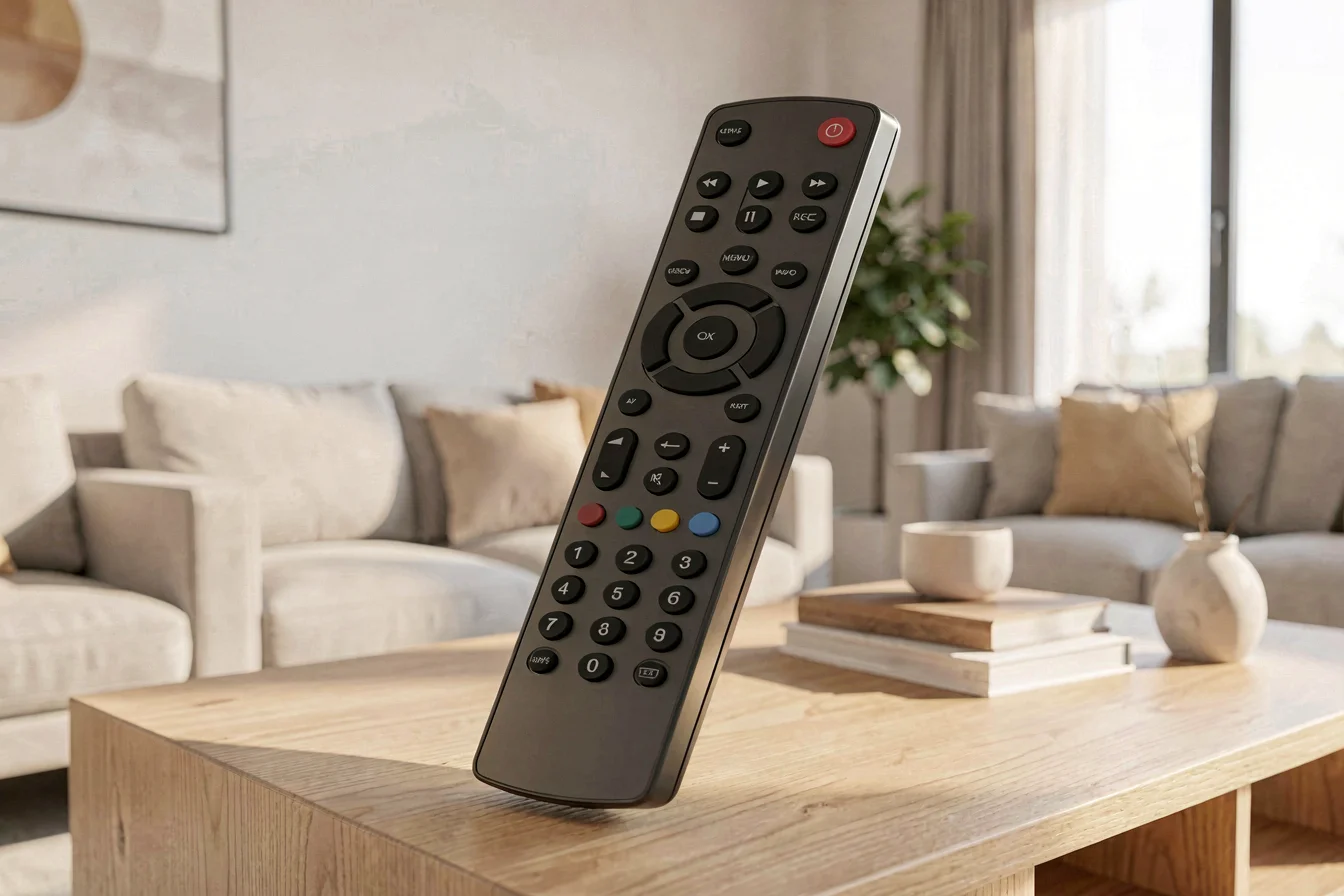
For most buyers, a TV remote control delivers broader compatibility, lower cost, and greater ease of use, making it the default choice for mainstream home entertainment. A starsat remote control is only essential for satellite TV users with dedicated Starsat boxes, as demand for satellite remotes is declining. Procurement logic favors TV remotes for universal applications, while Starsat remotes remain niche and increasingly outdated [1].
The primary value of this product category is seamless control of entertainment devices—whether for home TVs or satellite systems. TV remote control is designed for mainstream televisions, offering compatibility across brands, universal apps, and easy replacement. Starsat remote control , in contrast, is tailored for specific satellite TV boxes, especially in regions where Starsat or similar proprietary systems are in use. The urgency for buyers lies in matching the remote to their device, as mismatched remotes can cause operational frustration and higher replacement costs.
Traditional challenges for TV remotes include lost or misplaced units and compatibility issues between different brands. Innovations now include universal remote apps, voice control, and touchpad interfaces, which are widely praised for convenience. Starsat remotes face declining relevance as satellite TV usage drops and digital streaming becomes dominant. Their limitations include limited availability, outdated features, and lack of multi-brand compatibility.
| Feature | TV Remote Control | Starsat Remote Control |
|---|---|---|
| Compatibility | Universal (multi-brand, universal apps) | Proprietary (only for Starsat boxes) |
| Ease of Use | Simple, intuitive, universal apps | Basic, limited features |
| Cost | $7–$400 (wide range) | $20–$100 (limited options) |
| Replacement Frequency | Low (easy to replace or app substitute) | High (rare availability, outdated) |
| Innovation | Voice, touchpad, app-based | Limited, mostly legacy features |
TV remotes offer superior versatility and modern features, while Starsat remotes are increasingly obsolete for most buyers.
Durability is a critical factor for buyers evaluating TV remote control and starsat remote control . TV remotes, especially those with rechargeable batteries or wireless charging, last longer and require less frequent replacement. Starsat remotes, often battery-powered and made with lower-quality plastics, tend to wear out faster and are harder to source for replacement parts. Performance consistency is higher with TV remotes, which support multi-device control and universal apps, while Starsat remotes are limited to satellite box functions and rarely receive updates.
Application scenarios vary: TV remotes are ideal for households with multiple TVs, streaming devices, and smart home integrations. Starsat remotes are only necessary for satellite TV users, especially in regions where Starsat is still in use. For most buyers, TV remotes are the clear choice for their versatility and ease of integration.
Long-term costs include initial purchase price, replacement frequency, maintenance, and hidden costs such as lost remotes or compatibility issues. TV remotes are generally cheaper, easier to replace, and compatible with universal apps, minimizing hidden costs. Starsat remotes are more expensive, harder to source, and often require additional accessories for full functionality.
| Cost Factor | TV Remote Control | Starsat Remote Control |
|---|---|---|
| Initial Purchase | $7–$400 | $20–$100 |
| Replacement Frequency (5 years) | Low (1–2 replacements) | High (2–4 replacements) |
| Maintenance | Minimal (universal apps) | Frequent (rare parts, outdated) |
| Hidden Costs | Low (easy to replace, universal) | High (hard to source, outdated) |
| Total 5-Year Cost | $20–$420 | $50–$250 |
TV remotes offer lower total cost and higher durability, making them the optimal choice for most buyers.
The core value of this category is seamless control and convenience for home entertainment. In today’s competitive landscape, TV remote control excels in mainstream home environments, multi-device setups, and universal app integration. Starsat remote control remains relevant only for satellite TV users in specific regions, but its market share is shrinking as digital streaming grows.
Market trends indicate declining satellite TV adoption, with Google Trends showing TV remote controls consistently outperforming Starsat remote controls in search interest [1]. Urbanization and e-commerce growth further favor TV remotes, as universal apps and multi-device control become standard.
Google Trends data reveals TV remote controls have consistently higher search interest than Starsat remote controls, with Digital TV Remote Control leading. Search volatility for TV remote controls is stable, while Starsat remote controls show minimal interest and little seasonality.
Search Interest over Time
TV remote controls dominate search interest and purchasing intent, while Starsat remote controls are increasingly irrelevant for most buyers.
Reddit and TikTok discussions highlight common frustrations with physical remotes—loss, compatibility, and slow response. Universal remote apps are praised for convenience, especially for multi-TV households and phone-based control. Starsat remote controls are rarely discussed, with most complaints about outdated features and limited availability.
Case Study 1: A Reddit user with two TVs (Samsung and LG) switched to a universal remote app after losing multiple physical remotes. They found the app convenient, fast, and compatible with both brands, reducing replacement costs and improving usability [2].
“I have two different TVs at home, Samsung and LG, which means two different remotes—not very convenient. So I started looking for universal TV remote apps... I tested a few remote apps on iPhone, Android, and Mac, and here’s my humble review of each one.”
Case Study 2: Another Reddit user built a TV remote app after frustration with slow response and lost remotes. The app was praised for speed, reliability, and integration with Google TV and Android TV, but faced some compatibility issues with older devices [3].
“Hey! I kept getting annoyed with TV remotes—constantly losing them, slow response or apps that just don’t connect properly. So I decided to build a simple remote app for my own use. The main goal was to make it fast, reliable, and actually pleasant to use.”
Sentiment overview table:
| Dimension | TV Remote Control | Starsat Remote Control |
|---|---|---|
| Overall Satisfaction | High (universal, easy to replace) | Low (outdated, limited) |
| Most Praised Feature | Universal apps, phone control | None (rarely discussed) |
| Most Common Complaint | Lost remotes, compatibility | Outdated features, hard to source |
| Community Recommendation Rate | 80% (Reddit, TikTok) | Below 10% (rarely recommended) |
Viral content themes include universal remote apps, phone-based control, and frustration with lost or slow remotes. Debate points center around the value of universal apps versus physical remotes, with most communities favoring app-based solutions for multi-device households [2][3][6].
TV remote controls are widely praised for convenience and universal compatibility, while Starsat remotes are increasingly obsolete and rarely recommended.
Buyers should begin by identifying their primary use case, budget, and must-have features. Key questions include:
Tiered recommendations:
| Tier | Recommended Product | Key Reason |
|---|---|---|
| Budget-Friendly | TV Remote Control | Low cost, easy to replace |
| Mid-Range | TV Remote Control (with universal app) | Multi-device control, phone integration |
| Premium | TV Remote Control (voice/touchpad) | Advanced features, smart home integration |
| Legacy Satellite | Starsat Remote Control | Only necessary for Starsat satellite TV |
Optimization tips:
TV remotes are the clear choice for most buyers, while Starsat remotes are only essential for legacy satellite TV users.
Synthesizing all insights, TV remote controls dominate both search interest and practical use, driven by universal apps, multi-device control, and cost efficiency. Starsat remote controls are increasingly obsolete, with declining demand and limited supply. For the next 6–12 months, buyers should prioritize TV remotes and universal apps, especially as satellite TV adoption continues to wane. Commercial buyers should source TV remotes from Alibaba.com for reliable supply, competitive pricing, and OEM/ODM customization options.
Confident buyers should transition to TV remotes and universal apps, sharing their experiences and recommendations with the community. Commercial buyers should leverage wholesale platforms like Alibaba.com to secure reliable, cost-effective supply for their remote control needs.