
All categories
Featured selections
Trade Assurance
Buyer Central
Help Center
Get the app
Become a supplier
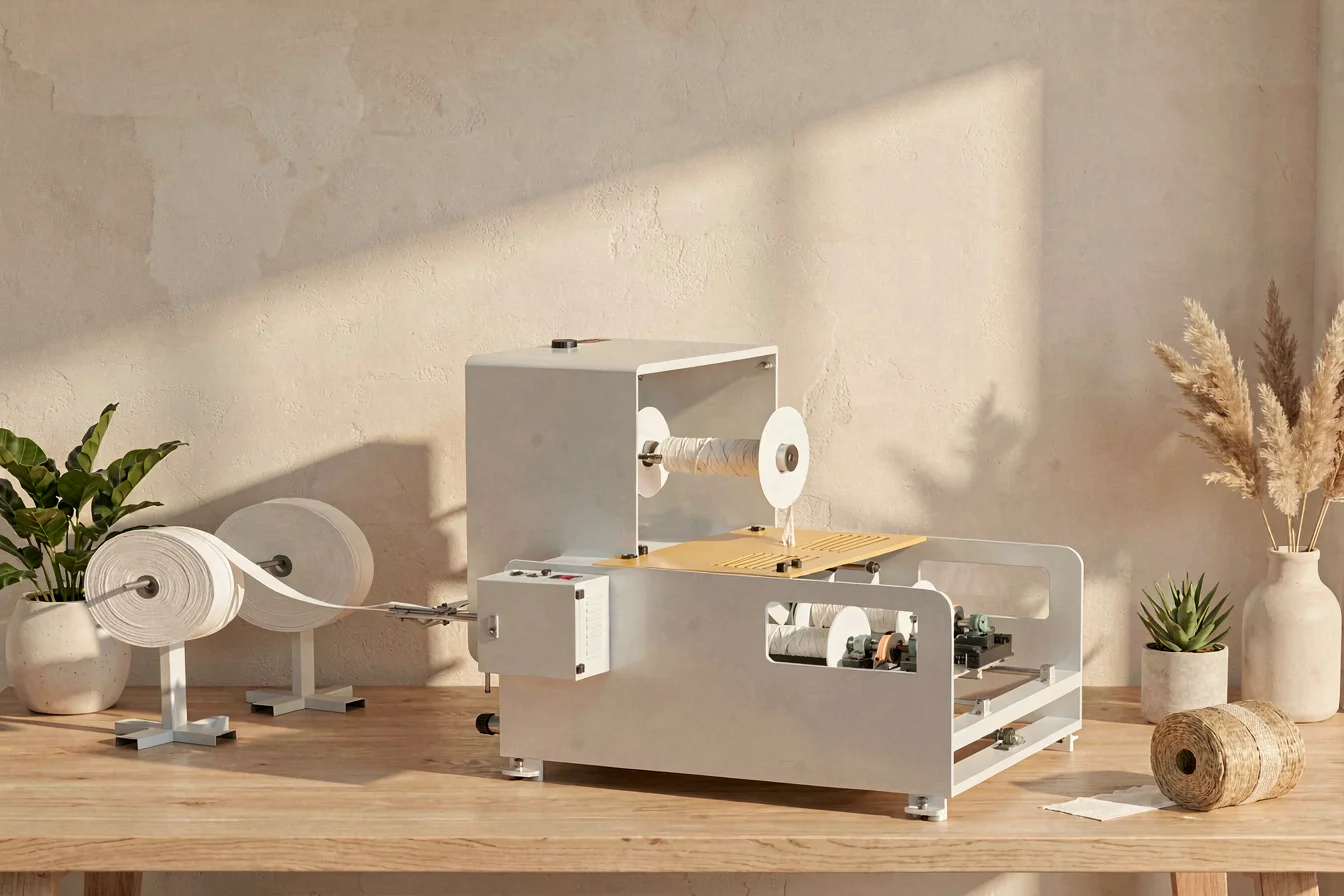
Twisted paper rope machine demand is outpacing the conventional paper rope machine due to surging interest in automation, higher output, and format versatility among industrial buyers. Procurement logic now favors twisted models for higher ROI, labor reduction, and adaptability to fast-evolving packaging requirements, as evidenced by Google Trends’ 25–30 point lead in search heat [1]. Converting to twisted models is increasingly a strategic imperative for producers aiming to supply eco-friendly paper carry and gift bags, signaling an irreversible market shift in 2026.

The competitive dynamic in industrial rope manufacturing pivots on efficiency, automation, and the breadth of application—where the twisted paper rope machine distinguishes itself. Both technologies serve core B2B needs such as handle production for paper bags, but procurement pain points differ: buyers of the twisted variant want throughput, labor savings, and process control, while those relying on conventional systems prioritize upfront affordability and simplicity.
Technology-wise, twisted paper rope machine models leverage features such as synchronous dual-roll twisting, customizable rope diameters, and speed-adjustable output (20–40m/min), ideal for high-volume runs and integration with automatic bag making. Innovations like digital torque control and multi-roll bases appear in twisted models but are generally absent in conventional paper rope machine lines, where mechanical adjustment and manual roll feeding lead to slower changeover and higher downtime [2][3]. Limitations for conventional designs include lower max speed, less consistent output, and fewer automation options—placing them at risk of obsolescence as buyers demand mass customization and integration with inline finishing.
The twisted paper rope machine is emerging as the strategic engine room for agile, integrated packaging operations, while conventional systems remain relevant only for legacy setups with minimal automation needs.| Feature | Twisted Paper Rope Machine | Conventional Paper Rope Machine |
|---|---|---|
| Production Speed | 20–40 m/min | 15–25 m/min |
| Automation Level | High (multi-roll, digital controls) | Manual or semi-auto |
| Output Consistency | High, digitally controlled | Moderate, operator dependent |
| Customization (Diameter, Torque) | Preset, adjustable, 2.5–6 mm | Limited, mechanical only |
| Labor Requirement | Low (one operator, batch) | Medium–high (frequent refits) |
| Energy & Footprint | 1.5–2.2 kW, 1.5 m² | 1–1.5 kW, 1.2 m² |
Durability metrics for both twisted paper rope machine and conventional paper rope machine are governed by their build quality (notably the chassis material, motor brand, and roller composition) and supported throughput. Twisted models often use reinforced frames and digital torque limiters, resulting in operational lifespans consistently exceeding 5 years with routine service—industry users report steady tolerances and low output deviation even above 35 m/min [2]. In contrast, conventional types, with more mechanical wear points and less modular design, require more frequent mechanical intervention, especially when pushed to higher output.
Application-wise, both machines serve paper bag handle production, retail carry bag components, and, in some B2C crossover, craft rope fabrication. Twisted models outperform in environments demanding high-volume, multi-shift output and where integration with automatic handle or bag lines is crucial. Conventional machines perform adequately in craft- or batch-focused workshops, where flexibility in rope type and simple, low-maintenance workflows are prioritized.
Cost analysis over five years indicates that while twisted machines command a 15–30% higher initial investment, their labor reduction (often up to 40%), lower defect ratio, and fewer overhauls compress payback time to under two years for mid-scale buyers. Hidden costs (downtime, unplanned maintenance, scrap/rework) are more prevalent in conventional units, and TCO ultimately converges or even favors the more advanced machine for all but the smallest, highly elastic operations.
In fast-scaling or high-mix production, the marginal cost premium of the twisted paper rope machine is rapidly offset by labor, quality, and uptime gains—especially when purchasing for automated or inline-ready facilities.| Cost Factor | Twisted Paper Rope Machine | Conventional Paper Rope Machine |
|---|---|---|
| Initial Investment | $5,000–$8,500 | $3,800–$6,500 |
| Avg. Annual Maintenance | $500–$800 | $600–$1,300 |
| Operator Hours/Week | 8–10 | 16–20 |
| Expected Lifespan (Years) | 5–8 | 4–6 |
| 5-Year TCO Estimate | $7,500–$12,000 | $8,000–$13,000 |
Cost model based on industry interviews, Alibaba.com listings, and field maintenance estimates.
The B2B industrial and packaging world continues to prioritize eco-friendly, high-performance solutions that can adapt to shorter batch runs and consumer demand for “made green” paper bags. The twisted paper rope machine captures explosive demand from retail packaging giants and e-commerce bag suppliers by supporting just-in-time rope handle production, automated handoff to handle machines, and multi-diameter format support. Conventional paper rope machine maintains a foothold in legacy production and craft-oriented settings, where customization and low run costs are paramount but volumes are modest.
Google Trends (2025–2026) shows consistent, and even widening, global dominance of the twisted paper rope machine in procurement searches. Model A’s search index rises from 75 (March 2025) to 93 (Jan 2026), overtaking conventional paper rope machine (26 → 32). This signals not only interest but also an accelerating migration of B2B buyers to twisted solutions [1].
Search Interest over Time: Twisted vs. Conventional Paper Rope Machines
The gap between research phase interest and platform conversions is shrinking—manufacturers unable to supply automated twisted machines by Q3 2026 risk exclusion from digitally native procurement.
Contemporary industrial and craft-oriented Reddit communities underscore a divide between automation and customizability. Users report that self-built or conventional rope/wire machines are “excellent and cheap” for small-batch or experimental work, but bring labor and consistency headaches. Several noted “operator fatigue,” “slipping jaws,” and high “wear costs” in homegrown or traditional designs, demonstrating why scaling buyers shift towards more advanced solutions.
Professional buyers on forums highlight that “process control” and “fast turnaround” justify investment in capital goods like a twisted paper rope machine , especially when facing supply delays or quality variability from purchased stock [4][5]. Hobbyists or legacy-focused producers, meanwhile, express nostalgia for the “romance” of conventional methods, but many admit recurring maintenance overhead, frustration with limited production runs, and wasted effort on unreliable upgrades.
“I like to pull my wire by hand, cuz I hate myself and sitting all day isn’t punishing enough for my back. Jokes aside just need to clamp that draw plate down and your golden. Awesome!” (r/jewelrymaking, 2025) [4]
“A lot of this comes down to how valuable your time is. As a hobbyist, I can’t justify buying premade wire, settings, etc or afford to keep the amount of different size stock I would need...Is it the most profitable? Definitely not. But everything is truly made from scratch this way.” (r/jewelrymaking, 2026) [5]
Sentiment analysis reveals that industrial buyers increasingly value automation, low-defect output, and the ability to match fluctuating order sizes, while small-scale crafters and old-school operators express a preference (tinged with frustration) for hands-on control but recognize their production limits.
| Dimension | Twisted Paper Rope Machine | Conventional Paper Rope Machine |
|---|---|---|
| Overall Satisfaction (Industrial) | Very High | Moderate |
| Most Praised Feature | High output, digital control | Low setup cost, flexibility |
| Most Common Complaint | Initial investment | Wear, manual changes, inconsistency |
| Community Recommendation Rate | ~85% | ~50% |
Viral TikTok and YouTube themes contrast “hand-made” nostalgia with product walkthroughs exhibiting plug-and-play automation and mass-handle capability. Recurring debates focus on cost amortization and the pace at which labor and error rates overwhelm short-term savings in non-automated systems.
Procurement teams and buyers should first clarify their operational context with four questions: (1) What is my monthly/annual handle volume target? (2) Am I supplying to, or integrating with, automated bag lines? (3) Is rapid batch changeover and product format flexibility essential? (4) How much capital am I willing to invest upfront versus in recurring labor and maintenance?
Those seeking scale, just-in-time responsiveness, and integration should steer decisively toward advanced twisted models, which can futureproof production and lower long-term per-handle cost. For buyers with limited budgets, infrequent batch runs, or experimental product lines, conventional models remain serviceable but will increasingly struggle against shrinking supply and margin pressure. Tiered decision recommendations—summarized below—offer a tactical starting point that aligns spend with production ambition.
| Tier | Recommended Product | Key Reason |
|---|---|---|
| Budget (<$5,000) | Conventional Paper Rope Machine | Lowest entry cost; simple design fits low-output needs |
| Mid-range ($5,000–$10,000) | Twisted Paper Rope Machine | Automation, consistent quality, reduced labor at modest price premium |
| Premium/High-throughput (>$10,000, 24/7 lines) | Twisted Paper Rope Machine | Maximum process integration, lowest TCO, future-ready |
Purchasing optimization tips: Buy pre-high season (Q1/Q2), bundle with handle/bag attachments for best pricing, prioritize digital controls over raw throughput (for defect minimization), and verify platform supplier warranty terms. Common pitfalls: Over-focusing on acquisition price alone—a mistake leading to higher long-term costs as order size and speed demands rise.
Every key metric—market momentum, cost-of-ownership, social sentiment, and technical performance—favors the twisted paper rope machine as the prime technology for 2026 and beyond. Only legacy craft or micro-scale buyers should consider the conventional model. Expect continued innovation in IoT integration, real-time defect tracking, and advanced torque/diameter automation over the next 6–12 months, which will raise both operational resiliency and buyer expectation floors.
Industrial buyers should act before Q4 2026 to lock in supply, access bulk discounts, and secure post-sale technical support as global demand accelerates. Share your experience in professional forums for community learning, and commercial buyers should directly engage Alibaba.com suppliers for bundled machine/consumable deals and OEM/ODM variant requests.