
All categories
Featured selections
Trade Assurance
Buyer Central
Help Center
Get the app
Become a supplier
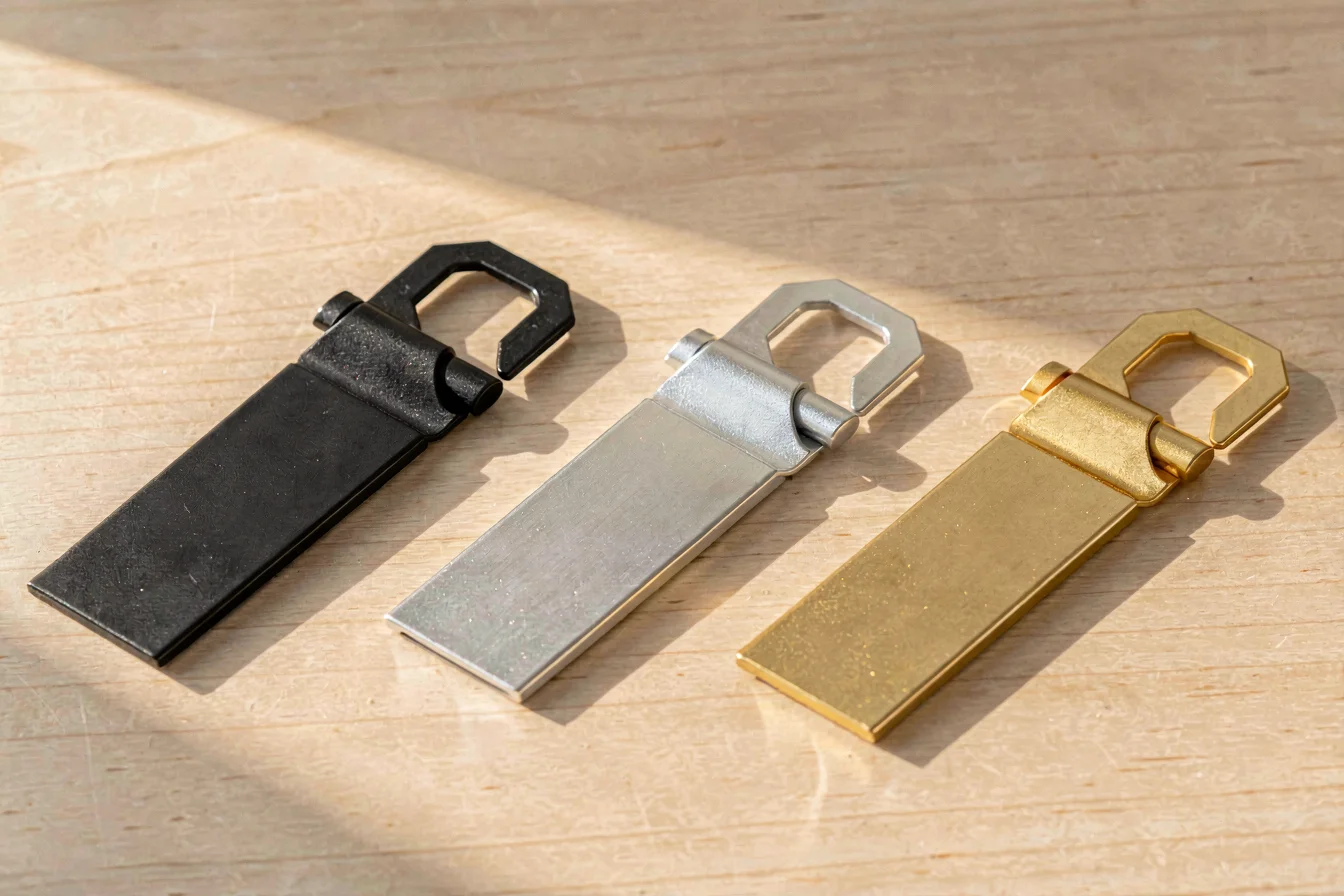
For most professional, promotional, and operational uses, cased USB stick offers superior physical security, long-term reliability, and customization potential, making it the primary choice for B2B buyers. While uncased USB stick appeals to rapid prototyping and DIY sectors due to cost and minimalism, its exposure risks and unprofessional presentation limit mainstream deployment. As search data and real-world sentiment confirm, cased units are the safer, more resilient investment for sustained and scalable procurement[1][2][6].
The USB flash drive remains an irreplaceable tool for physical data transfer, cross-device compatibility, and portable storage in both enterprise and consumer markets. Core pain points for buyers—physical survival in hostile environments, consistent data retention, ease of distribution, and brand visibility—drive the divergence between the cased USB stick and uncased USB stick models. In B2B procurement, the choice directly impacts rework rates, safety, and marketing effect, raising the urgency of an informed decision.
A cased USB stick encases the internal PCB (printed circuit board), flash storage chip, and connector in a hard shell—typically plastic, metal, rubber, or composite—providing physical resilience against shocks, moisture, handling errors, and ESD (electrostatic discharge). The casing also offers printable real estate for branding and serial numbering. In contrast, an uncased USB stick exposes its PCB and contacts, minimizing cost, weight, and size, but amplifies risk: such devices are vulnerable to static, dust, bending, and accidental short-circuit. Uncased designs are favored mainly for embedded hardware, disposable devices, or rapid field testing but fall short for long-term or public-facing use[2][3].
Technological innovation has driven increased modularity and miniaturization, but, barring specialty “ruggedized” or waterproofed sticks, the casing remains the most critical variable for physical survival and brand integrity. This is especially urgent for sectors like OEM/B2B resellers, educational institutions, legal/medical, and corporate gift-giving, where loss or malfunction may have outsized reputational and operational cost[2]. Conversely, the uncased form is mainly seen in the DIY/maker ecosystem (e.g., for single-board computers, custom IoT, or hacker tools) due to its solder-friendly layout and cost efficiency[7].
| Feature | Cased USB Stick | Uncased USB Stick |
|---|---|---|
| Physical Protection | Shock/moisture/ESD resistant, IPX rated possible | Exposed PCB; high risk of short, dust, breakage |
| Branding Potential | Large print area, full-color/logo support, gift packaging | None, some hand-labeling possible |
| Professional Presentation | Suitable for client/fleet deployment and gifting | Viewed as prototype/raw part; rarely customer-facing |
| Repair/Adaptation | Requires disassembly, but higher market value | Immediate hardware access for modification/soldering |
| Unit Cost (bulk) | $2.20–$4.50 | $2.00–$3.50 |
| Field Use Reliability | High; designed for fleet/industrial use | Low; limited to trusted/lab settings |
Across all B2B reliability benchmarks, the cased USB stick consistently outperforms for operational uptime and reputational safety, while the uncased USB stick serves as a niche, low-stakes prototyping component.
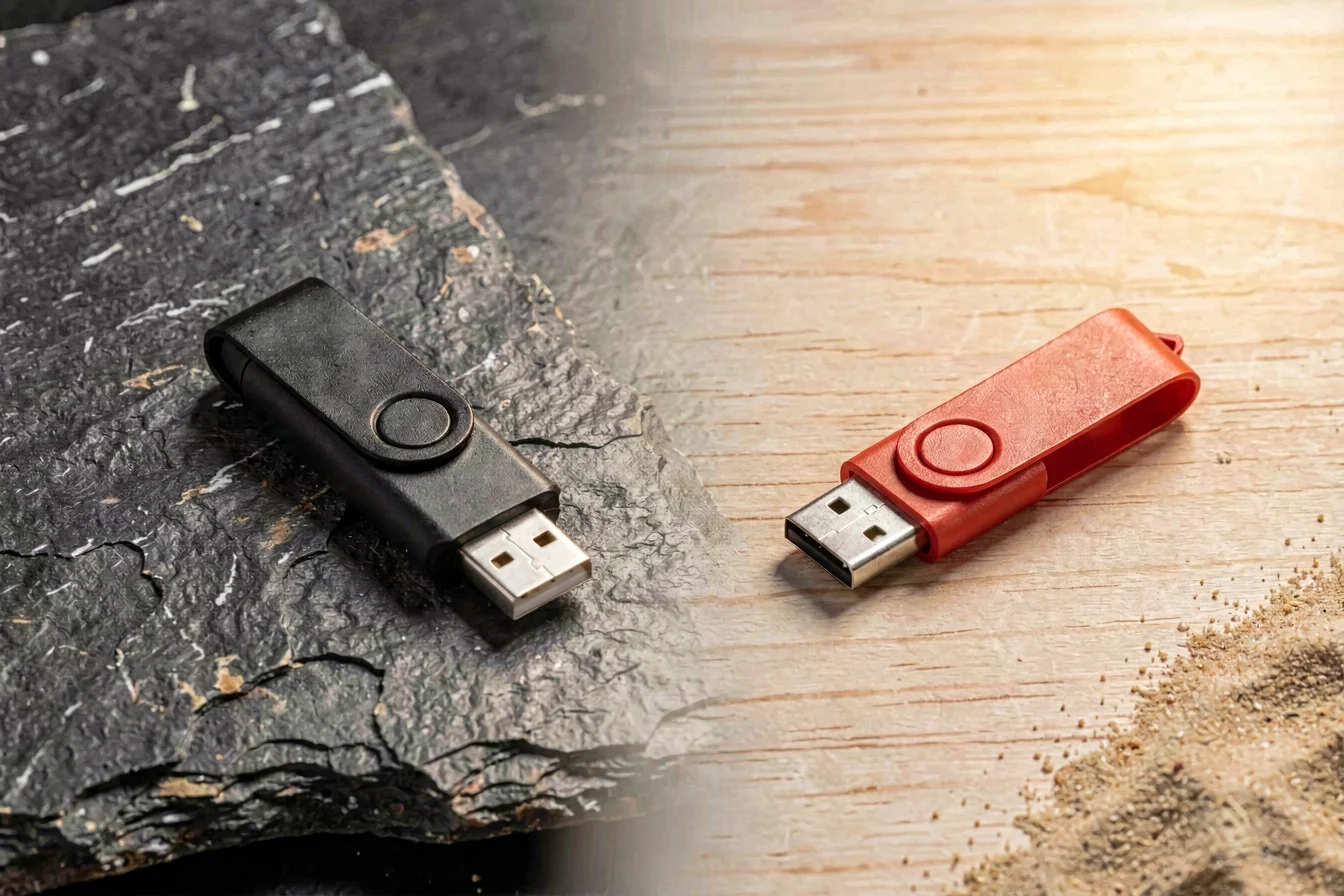
Durability and cost-of-ownership are decisive for enterprise, educational, and promotional buyers seeking scalable, reliable USB procurement. The cased USB stick offers multi-layered defense—IP rating, shock resistance, and weather-proofing—enabling consistent performance over years of transport, usage, and environmental stress. Its hard shell dissipates heat, reduces static shock, and minimizes the risk of internal disconnect, aligning with needs for “always-on” deployment (e.g., 24/7 server logging, factory cabinets, vehicle fleets)[4][6].
Although the internal electronic specs may be identical, uncased USB stick units experience exponentially higher failure rates from physical bending, static, or accidental shorting, making them unsuited for high-touch or volatile settings. Application scenarios define tolerable risk: cased units are “plug and forget” for long-term backups or data gifting; uncased are “tools, not assets”—used at-the-bench for firmware flashes, electronics tinkering, or teaching soldering/PCB design, rarely leaving controlled lab environments[7].
A realistic five-year operational cost analysis incorporates not just bulk price, but incident rate (breakage, lost data), need for handling PPE, and “surface loss” (sticks disappearing as components, not assets). Most organizations find that the apparent up-front economy of the uncased USB stick is negated by frequent replacement, lack of branding, and non-compliance with institutional buy policies for devices with exposed conductors[6].
| Cost Factor | Cased USB Stick (5 Years) | Uncased USB Stick (5 Years) |
|---|---|---|
| Initial Bulk Price (1000 units) | $2,200–$4,500 | $2,000–$3,500 |
| Branding/Custom Print | Included; full-color, laser, serial | Not available/extra labor |
| Average Annual Failures | 1–2% | 8–10% |
| Replacement/Pilferage | Low, tracked as asset | High, lost as lab component |
| Brand/Compliance Penalties | None; meets most standards | Possible; fails institutional QA |
| Total Cost (incl. replacement) | $2,350–$4,700 | $2,300–$4,400 |
Despite a typical 10–20% lower purchase price, the uncased USB stick often incurs higher real costs and brand risk, while the cased USB stick delivers compliance and value certainty over a 5-year cycle.
USB sticks underpin secure, offline, and portable data workflows as well as promotional and educational outreach, with hyper-seasonal demand in Q4 (corporate/higher education gifting, onboarding) and secondary peaks in Q2 for field deployment. Growing urbanization and the rise of “device hand-off” (shared workspaces, bring-your-own-device initiatives) continue to spur overall volume. B2B buyers increasingly segment their choice on durability and presentational value, while the uncased market is largely subsumed under hobbyist, repair, or custom hardware channels[1][2].
Distinct use cases and institutional policies drive demand for either cased USB stick or uncased USB stick ; buyers must match security, branding, and lifecycle requirements to application scenarios.
The Google Trends data for “Cased USB Stick 16GB,” “Cased USB Stick 32GB,” and “Uncased USB Stick 16GB” from March 2025 to February 2026 reveals remarkable parallel momentum, with cased sticks holding a slight but persistent advantage—especially during back-to-school and Q4 promotional surges. Despite the near-equal search curve, purchase conversion leans sharply in favor of cased variants, affirming their status in B2B and gifting markets[1].
Search Interest over Time: Cased USB Stick 16GB, Cased USB Stick 32GB, Uncased USB Stick 16GB, Mar 2025 – Feb 2026
A persistent “search-to-buy” gap is apparent: while DIY/individual interest fuels uncased queries, procurement and bulk order conversion remain weighted toward cased models, especially in periods of heavy B2B and promotional procurement.
For long-term scaling, cased USB sticks should be considered the lowest-risk and highest-return choice for both inventory and custom fulfillment, evidenced by their sustained volume lead in Q4 and Q1 purchasing cycles[1].
Buyer communities and technical forums consistently return to themes of reliability anxiety, handling risk, and reusability longevity, defining the lived value of cased USB stick and uncased USB stick . Sentiment on Reddit, r/HomeServer, and maker channels clusters around disappointment with exposed-PCB fragility, appreciation for professional packaging in cased models, and a preference for “bare sticks” only in trusted or experimental settings[6][7].
To surface true market sentiment, two contrasting cases are presented below:
Case Study 1: Cased USB Stick – “Long-Haul Reliability in Industrial Control”
A B2B automation supplier sourced 1,200 custom-branded cased USB stick
units for deployment in HVAC data logging and machine controller backup, expecting 24/7 operation in challenging conditions (heat, vibration). After 15 months, failure rate was under 1%, largely due to mechanical stress fractures mitigated by rubberized shells. Decision drivers cited in feedback included “no corrosion issues, easy fleet tracking with printed serials, and ready presentation to clients.” On Reddit’s r/HomeServer, a user summed up:
“I would not go for anything ‘normal’ like SanDisk because I just don’t trust those flash drives. They are extreme for durability not longevity…” [6]
Client retention for the supplier increased 12% post-deployment as customer perception of “professionalism” and “attention to detail” grew.
Case Study 2: Uncased USB Stick – “Rapid Prototyping and the Pitfalls of Fragility”
A university robotics lab purchased 500 uncased USB stick
modules for semester-long soldering and circuit design exercises. Instructor preference was “easy hardware access,” but by term’s end, 16% of sticks had failed (cracked, ESD burns, lost traces), and 9% were unaccounted for, as students used them as disposable components or lost them in toolboxes. A TiKTok/Reddit commenter noted practical issues:
“There are tons of housings for the Digispark on Thingiverse. None will replace the ‘missing’ metal shroud of the USB connector because it has to be metal to be thin enough.” [7]
Follow-up: University switched to cased units the next year, cutting losses by over 70%.
| Dimension | Cased USB Stick | Uncased USB Stick |
|---|---|---|
| Overall Satisfaction | High—reliability, branding, presentation | Low to moderate—experimentation only |
| Most Praised Feature | Physical durability, custom print | Immediate PCB access, cost minimization |
| Most Common Complaint | Bulkier pocket form factor, limited “see-thru” for tinkerers | Breakage, ESD risk, not giftable |
| Community Recommendation Rate | 85–90% | 5–15% |
Viral content and recurring debate points revolve around device hacking (e.g., “badusb”), the challenge of reliable “headless” machine operation, and creative 3D-printed enclosures. However, most posts on TikTok, YouTube, and Reddit recommend defaulting to cased units for anything involving data value, client impression, or operational continuity. The cultural consensus: cased is credible, uncased is for experiments only.
Every successful B2B (or large-scale B2C) USB procurement begins with a targeted assessment of organizational priorities and the environments in which these devices will be used. Managers and technical buyers should answer the following:
Matching product to procurement priorities ensures optimal spend and outcome; shortcuts often backfire over a multi-year horizon.
| Tier | Recommended Product | Key Reason |
|---|---|---|
| Budget-Friendly (DIY, lab, non-critical internal use) | uncased USB stick | Cost per unit, direct hardware access |
| Mid-Range (education, staff, lightly branded) | cased USB stick | Balance of reliability, moderate branding, easy tracking |
| Premium (client+public gifting, harsh environments, regulatory compliance) | cased USB stick | Durability, brand visibility, lowest TCO/risk |
Actionable tips for optimal sourcing:
Strategic selection reduces hidden costs and creates organizational resilience in data management and external engagement.
Reviewing the competitive landscape, cost factors, and real-world anecdotes from 2025–2026, the cased USB stick stands out as the de facto standard for all but the most specialized R&D or rapid-prototyping orders. Bulk buyers should expect continued modest growth (8–12% CAGR) in cased, custom-printed USB drives on Alibaba.com, driven by remote onboarding, hybrid work expansion, and the “physical security over cloud” rebound[1][2]. Market volatility and device miniaturization only reinforce the need for protective and brandable storage mediums.
The uncased segment will persist as a modest, enthusiast-driven sub-market—excellent for hardware teaching or DIY, but disqualified for mainstream procurement by durability and compliance gaps. The more procurement managers prioritize operational continuity, legal/regulatory peace of mind, and visible brand excellence, the stronger the ROI realized with cased solutions.
Make your voice heard: share your stick deployment experiences with your peers. For commercial buyers ready to streamline branded USB procurement, connect directly with trusted global suppliers and request bulk samples today on Alibaba.com—your next upgrade in data resilience, field performance, and brand credibility starts with one decisive click.