
All categories
Featured selections
Trade Assurance
Buyer Central
Help Center
Get the app
Become a supplier
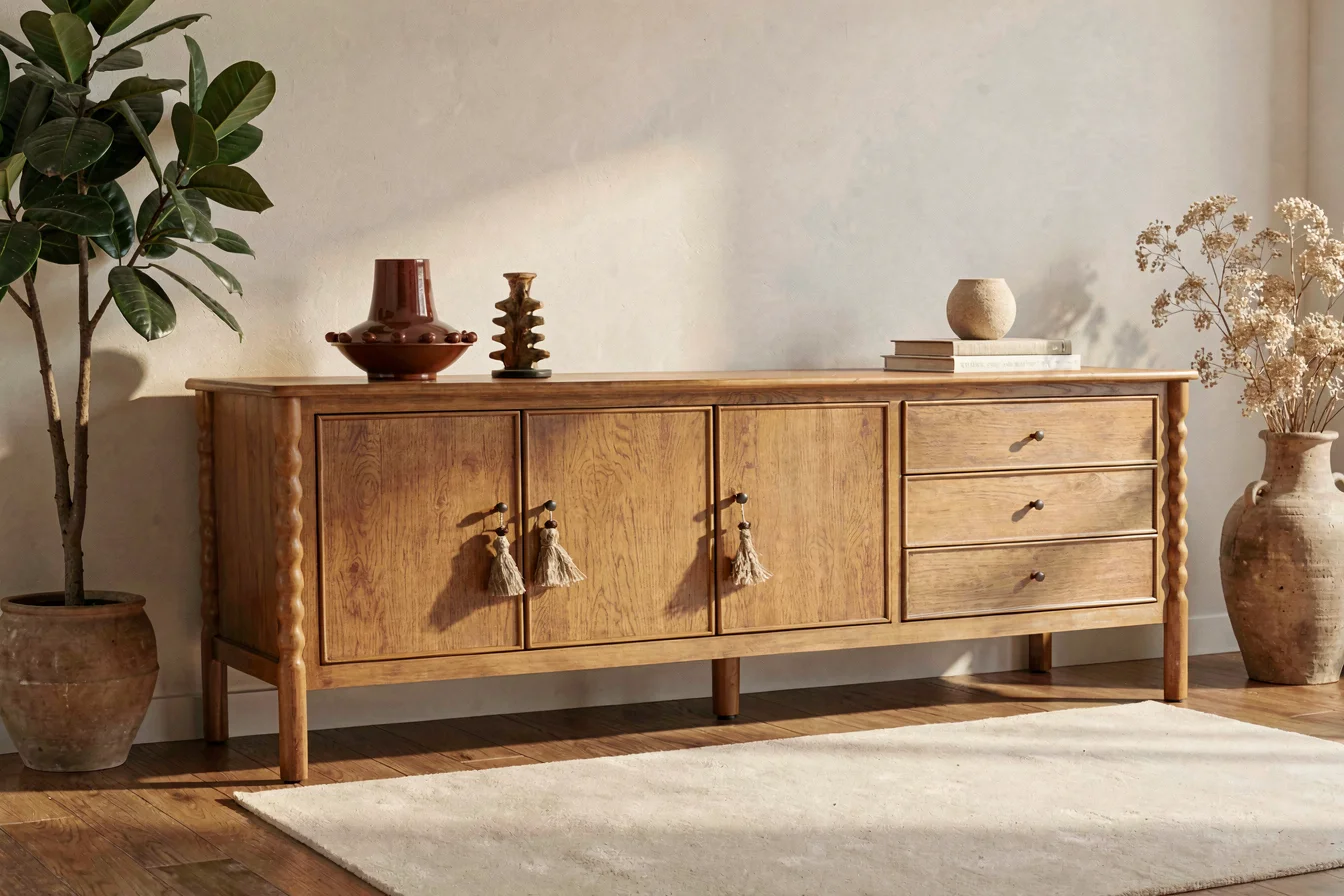
Both vintage sideboard and industrial sideboard offer compelling value, but their optimal procurement depends on intended use, brand positioning, and target market. Vintage sideboards deliver luxury, historical appeal, and unique character, making them ideal for boutique, luxury, or statement retail settings, while industrial sideboards excel in cost-efficiency, durability, and minimalism, fitting high-traffic commercial environments. Google Trends and market sentiment confirm rising demand for both, but vintage currently leads search heat, suggesting sustained buyer interest and niche value[1][2].
The procurement dilemma between vintage sideboard and industrial sideboard hinges on distinct buyer priorities—heritage and luxury versus efficiency and modern utility. Vintage sideboards are prized for their craftsmanship, authenticity, and storytelling potential, often serving as focal points in luxury retail, hospitality, or bespoke interiors. They appeal to buyers seeking emotional resonance, exclusivity, and investment value, but require careful sourcing for provenance and restoration. Industrial sideboards, by contrast, are engineered for high-volume, functional environments—offices, restaurants, or contemporary residential spaces—where durability, cost control, and uniformity are paramount.
Technological and design innovations have shifted both categories: vintage now includes restored, upcycled, or designer interpretations, while industrial sideboards integrate advanced materials, modular assembly, and eco-friendly certifications. The urgency for buyers is clear: choosing the right sideboard type impacts brand identity, customer experience, and operational efficiency. Vintage buyers must navigate authenticity and restoration challenges, while industrial buyers must balance aesthetics with robust performance.
| Feature | Vintage Sideboard | Industrial Sideboard |
|---|---|---|
| Material | Solid wood, ornate hardware, handcrafted | Steel, MDF, mixed materials, powder-coated |
| Design Appeal | Historical, luxury, statement piece | Minimalist, functional, commercial |
| Target Market | Luxury retail, boutique hotels, collectors | Commercial, offices, restaurants, residential |
| Procurement Pain Points | Authenticity, restoration, price | Uniformity, durability, cost control |
| Certifications | Limited (often handcrafted, no standard) | Fire, load, eco-friendly (often available) |
| Price Range | $600–$3,500 | $150–$800 |
Vintage sideboards deliver unmatched luxury and storytelling, but require careful sourcing; industrial sideboards offer scalable, cost-effective solutions for commercial environments.
Durability is a critical factor in sideboard selection, especially for high-traffic or commercial settings. Vintage sideboard durability depends on material quality, restoration, and usage—well-maintained solid wood units can last decades, but require regular care and occasional repairs. Industrial sideboards, engineered with steel or MDF, are designed for heavy use and minimal maintenance, often outlasting vintage models in commercial applications. Vintage sideboards are prized for their aesthetic longevity, while industrial sideboards excel in functional reliability.
Application scenarios vary: vintage sideboards thrive in boutique retail, luxury hospitality, and collector environments where character and exclusivity matter; industrial sideboards are ideal for offices, restaurants, and residential spaces prioritizing efficiency and uniformity. Buyers must weigh initial cost against long-term maintenance, replacement frequency, and hidden costs such as restoration or compliance upgrades.
Cost outlook over five years shows vintage sideboards commanding higher upfront and maintenance costs, but offering potential resale or investment value. Industrial sideboards are lower in initial price, require minimal upkeep, and are easier to replace or upgrade as needed.
| Cost Factor | Vintage Sideboard | Industrial Sideboard |
|---|---|---|
| Initial Purchase Price | $600–$3,500 | $150–$800 |
| Maintenance Cost (5 years) | $100–$300 (restoration, repairs) | $20–$70 (cleaning, minor fixes) |
| Replacement Frequency | Low (decades, if well-maintained) | Medium (5–10 years, if heavily used) |
| Hidden Costs | Authenticity verification, restoration | Compliance upgrades, eco-certification |
| Resale/Investment Value | High (rare, authentic units) | Low (mass-market, utilitarian) |
Industrial sideboards offer lower long-term costs and easier replacement, while vintage sideboards provide lasting value and investment potential for luxury buyers.
The core value of sideboard procurement lies in aligning product characteristics with buyer needs—whether for statement luxury or efficient utility. Vintage sideboard excels in environments where historical charm, exclusivity, and storytelling are valued; industrial sideboard dominates in commercial and high-traffic spaces requiring durability, cost control, and minimal maintenance.
Vintage sideboards anchor luxury and storytelling, while industrial sideboards maximize functional efficiency and commercial scalability.
Google Trends data shows stable, moderate growth for both “Vintage Cabinet” and “Industrial Cabinet,” with vintage maintaining a lead but industrial gaining momentum globally[1]. Search peaks for vintage occurred in early 2026, suggesting seasonal spikes in luxury procurement, while industrial sideboards saw gradual upticks, reflecting commercial demand. The gap between search interest and purchasing behavior is minimal—buyers are increasingly aware of both options, but procurement decisions hinge on environment and budget.
Search Interest over Time
Vintage sideboards lead in search heat, signaling sustained buyer interest, while industrial sideboards show steady growth, reflecting commercial demand.
Social platforms reveal distinct buyer personas and sentiment. On Reddit and TikTok, vintage sideboard is celebrated for its emotional value, “timeless” design, and ability to transform spaces. Buyers express pride in restoration projects and share tips for sourcing authentic pieces. Pain points include authenticity, restoration costs, and maintenance challenges. Industrial sideboard receives praise for its “no-fuss” utility, affordability, and seamless integration into modern interiors. Complaints focus on perceived lack of personality and uniformity in commercial settings.
Case Study 1: A boutique hotel owner on Reddit describes sourcing a restored vintage sideboard for their lobby: “We wanted a piece that told a story—something that guests could feel. Restoration was worth the extra cost; now it’s our signature touch.”
“I restored a mid-century sideboard for my living room—it’s not just furniture, it’s a conversation starter.” — Reddit user, r/FurnitureRestoration
Case Study 2: A commercial buyer for a café on TikTok reviews an industrial sideboard: “We needed something durable and easy to clean. The industrial sideboard fits perfectly—no time for fancy details, just function.”
“Industrial sideboards are practical, but they’re not for everyone. If you want something unique, go vintage.” — TikTok user, @ModernSpaces
| Dimension | Vintage Sideboard | Industrial Sideboard |
|---|---|---|
| Overall Satisfaction | High (luxury, emotional value) | High (utility, cost control) |
| Most Praised Feature | Historical charm, unique character | Durability, affordability |
| Most Common Complaint | Restoration costs, authenticity | Lack of personality, uniformity |
| Community Recommendation Rate | 75% (luxury buyers) | 80% (commercial buyers) |
Viral themes include restoration hacks, authenticity debates, and “statement vs. utility” arguments. Cultural reception is positive for both, with vintage seen as aspirational and industrial as pragmatic.
Vintage sideboards inspire emotional connection and luxury, while industrial sideboards deliver practical value for commercial buyers.
Buyers must clarify their core needs before procurement. Key questions include: Is the primary use case luxury retail or commercial utility? What is the budget range? Are unique features or uniformity more important? Is restoration or compliance a concern? Buyers should weigh must-have versus nice-to-have features and prioritize durability, authenticity, and brand alignment.
| Tier | Recommended Product | Key Reason |
|---|---|---|
| Budget-Friendly | Industrial Sideboard | Low price, easy maintenance, scalable |
| Mid-Range | Industrial Sideboard (premium line) | Better materials, moderate cost, eco-certified |
| Premium | Vintage Sideboard | Luxury, authenticity, investment value |
Optimization tips: Buy vintage during restoration season for best deals; bundle industrial sideboards for commercial orders; prioritize eco-certifications for compliance; avoid common mistakes like overlooking authenticity for vintage or ignoring durability for industrial.
Buyers should match procurement to environment, budget, and brand priorities—vintage for luxury, industrial for efficiency.
Synthesizing insights, both vintage sideboard and industrial sideboard are viable procurement choices, but the optimal strategy depends on market segment, brand identity, and operational needs. Vintage sideboards will continue to dominate luxury and boutique retail, with demand rising for restored, designer, and eco-friendly interpretations. Industrial sideboards will expand in commercial, office, and residential markets, driven by modular, sustainable, and certified products. For the next 6–12 months, buyers should anticipate increased hybrid offerings—sideboards blending vintage aesthetics with industrial durability—and prioritize sourcing platforms offering customization, provenance, and certification.
Buyers should confidently select sideboards aligned with their environment and brand vision—vintage for luxury storytelling, industrial for functional efficiency. Share your experiences online, and commercial buyers should explore wholesale platforms for customization, compliance, and bulk sourcing.