
All categories
Featured selections
Trade Assurance
Buyer Central
Help Center
Get the app
Become a supplier
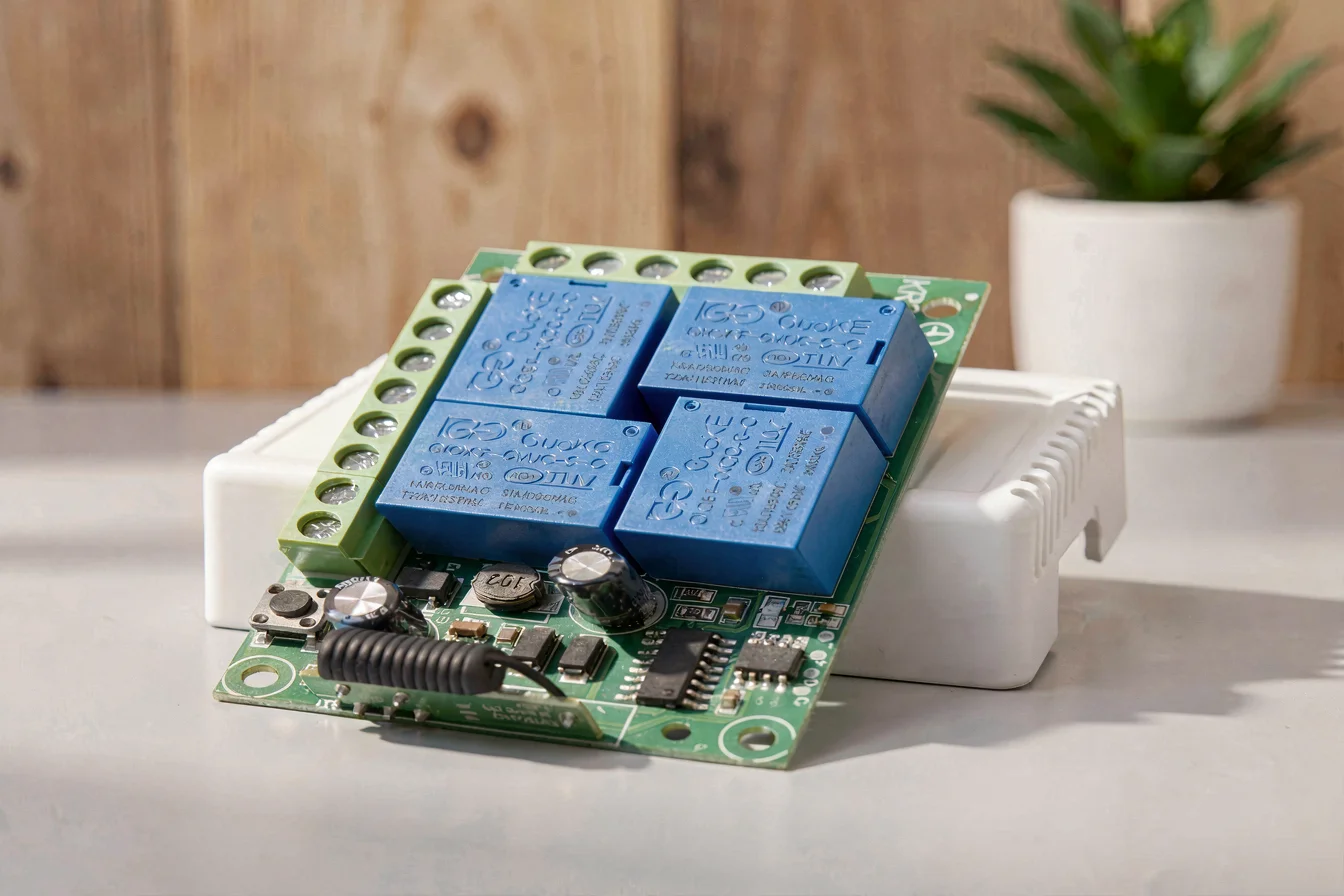
In industrial automation, dry contact relay remains the preferred choice due to its proven reliability, ease of integration, and minimal maintenance, especially in harsh environments and mission-critical applications. Wireless receiver modules offer flexibility for retrofitting and wire-free control, but face persistent challenges with signal interference and latency, limiting their suitability for high-stakes operations. Google Trends confirms sustained demand for dry contact relay , with search volume consistently outpacing wireless receiver module and wireless sensor receiver by over 2x, signaling ongoing industrial preference[1].
The core value of industrial automation is reliable, scalable, and maintainable control—both wireless receiver and dry contact relay address this, but with distinct strengths and pain points. Dry contact relay is a staple in industrial control panels, offering physical switch or sensor interface for high-voltage, high-current loads, with minimal latency and robust integration into legacy and modern PLC systems. It is favored for environments where physical durability, compliance (UL/ATEX/CE), and long-term reliability are paramount. Wireless receiver modules, on the other hand, enable wire-free control and remote management, supporting protocols like RF, Wi-Fi, Bluetooth, Zigbee, and Z-Wave, making them ideal for retrofitting or locations where physical wiring is impractical or cost-prohibitive.
The urgency of decision-making is pronounced: dry contact relay is the default for mission-critical applications, while wireless receiver is increasingly adopted in smart home, temporary, or retrofit scenarios. Key differences: dry contact relay is immune to wireless interference and offers direct, deterministic control; wireless receiver provides flexibility but risks latency and signal loss, especially in high-noise environments. Technological innovations in wireless receivers include advanced encryption (256-bit), multi-protocol support, and extended range (up to 21 miles), but these do not fully mitigate reliability concerns.
| Feature | Wireless Receiver | Dry Contact Relay |
|---|---|---|
| Signal Type | RF, Wi-Fi, Bluetooth, Zigbee, Z-Wave | Physical Switch/Sensor Interface |
| Latency | Moderate-High (subject to interference) | Ultra-Low (direct physical control) |
| Integration | Requires pairing, software, protocol compatibility | Plug-and-play, direct PLC/panel integration |
| Maintenance | Periodic firmware updates, interference checks | Minimal; periodic mechanical inspection |
| Certifications | CE, FCC, RoHS | UL, CE, ATEX, IEC |
| Best Use Case | Retrofitting, temporary setups, smart home | Industrial automation, mission-critical, legacy systems |
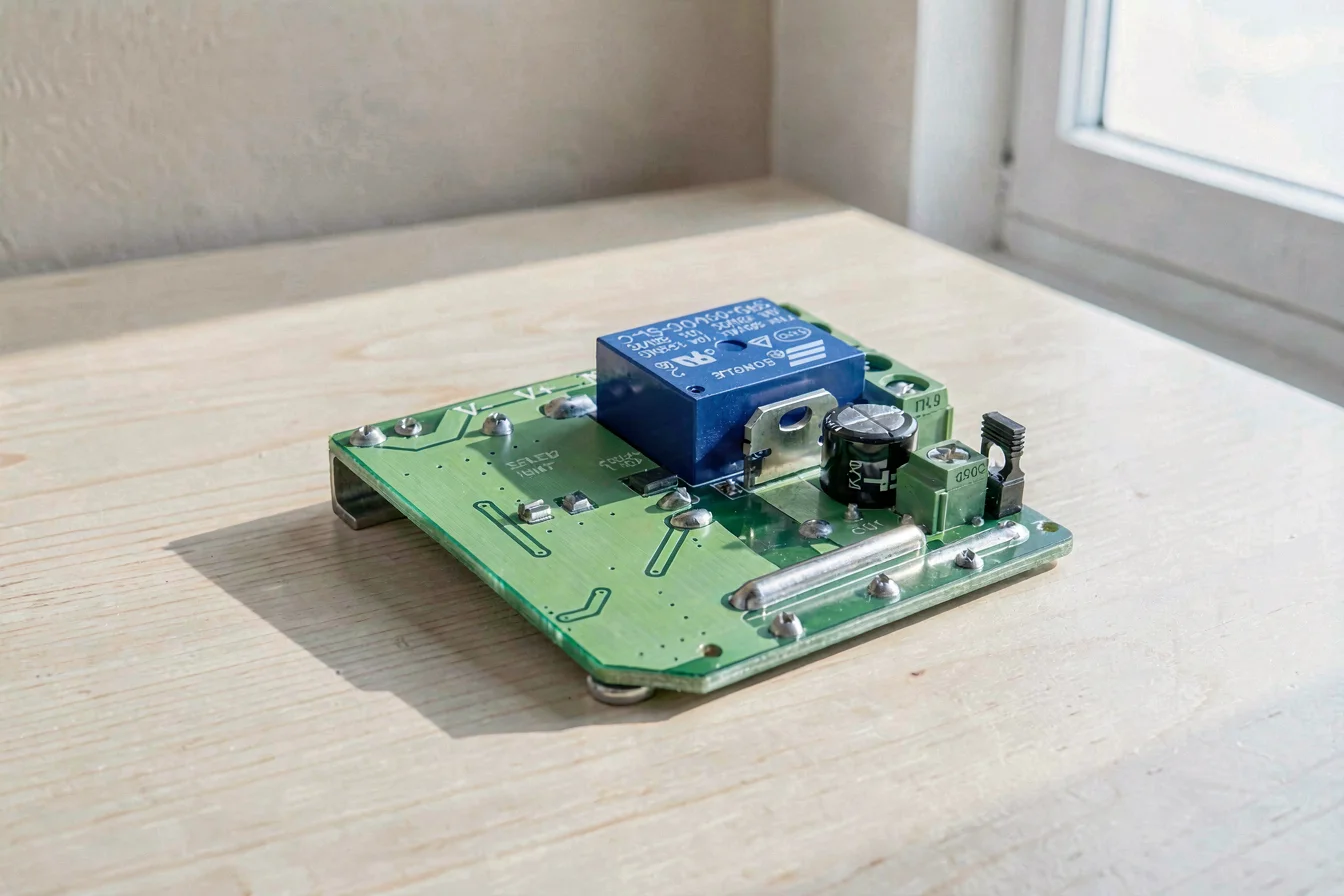
Durability is a critical procurement factor: dry contact relay units are engineered for industrial environments, often rated for 5–10 years of continuous operation, with robust mechanical switches and minimal moving parts. Their reliability is further reinforced by certifications (ATEX, UL, CE), making them ideal for hazardous and high-voltage applications. Wireless receiver modules, while increasingly ruggedized, face challenges with signal interference, protocol compatibility, and periodic firmware updates. Their lifespan is typically 3–5 years, with maintenance required for antenna alignment, encryption updates, and protocol upgrades.
Application scenarios dictate the right choice: dry contact relay excels in environments demanding direct, deterministic control—such as manufacturing lines, process automation, and legacy PLC integration. Wireless receiver is best suited for retrofitting, temporary installations, or locations where wiring is impractical, such as rental spaces, event setups, or smart home integrations.
Long-term cost outlook: dry contact relay has a lower initial cost ($5–$35/unit), minimal maintenance, and rare replacement needs. Wireless receiver modules typically cost $20–$120/unit, require periodic firmware updates, and face replacement due to signal degradation or protocol obsolescence. Hidden costs include interference troubleshooting, signal loss, and compatibility issues.
For mission-critical applications, dry contact relay delivers superior long-term value; wireless receiver is cost-effective only in scenarios where wire-free control outweighs reliability concerns.
| Cost Factor | Wireless Receiver | Dry Contact Relay |
|---|---|---|
| Initial Purchase Price | $20–$120/unit | $5–$35/unit |
| Maintenance | Firmware updates, signal checks | Minimal; mechanical inspection |
| Replacement Frequency | 3–5 years | 5–10 years |
| Hidden Costs | Interference, compatibility, signal loss | Rare; mostly compliance checks |
| Total 5-Year Cost | $50–$200 (including updates) | $10–$40 (including inspection) |
The core value of the wireless receiver and dry contact relay category is enabling reliable, scalable control in industrial automation, with urgency driven by evolving compliance, retrofit needs, and digital transformation. Dry contact relay dominates in environments requiring deterministic control, robust integration, and minimal downtime; wireless receiver is increasingly viable for retrofitting, temporary setups, and smart home applications.
Google Trends analysis shows sustained search interest for dry contact relay , with peaks in Q4 2025 and Q1 2026, indicating ongoing industrial procurement momentum. Wireless receiver module and wireless sensor receiver show moderate, steady growth but remain far behind dry contact relay in search volume.
Search Interest over Time
Actionable insight: dry contact relay demand is stable and high, reflecting industrial preference; wireless receiver module and wireless sensor receiver show niche, growing interest but are unlikely to displace dry contact relays in core industrial procurement.
Real-world case studies and social media sentiment reveal distinct buyer personas and expectations. Reddit and TikTok users consistently praise dry contact relay for its reliability and simplicity, while wireless receiver modules are valued for flexibility but criticized for latency, interference, and reliability issues.
Case Study 1 (Reddit): A home theater user considered wireless receivers for surrounds due to installation constraints but received strong feedback against wireless for hi-fi fidelity. Most users discouraged wireless for mission-critical audio, citing distortion and latency as deal-breakers. One user wrote:
"I would never use wireless speakers for home theater surround sound. It will ruin the fidelity of the sound." [5]
Case Study 2 (Reddit): A lab technician explored wireless transceivers for data control in a radiation hot cell, facing challenges with USB port reliability and interference. Wireless solutions were considered but ultimately, wired solutions were preferred for reliability. One user suggested:
"I am thinking you could convert the USB to Ethernet with a Silex USB Device Server or Similar, then transmit the Ethernet data with a Gigabit wireless WiFi bridge relay. At the other end," [8]
Sentiment overview:
| Dimension | Wireless Receiver | Dry Contact Relay |
|---|---|---|
| Overall Satisfaction | Moderate (flexibility valued, reliability criticized) | High (reliability, simplicity) |
| Most Praised Feature | Wire-free control, easy retrofit | Direct, deterministic control |
| Most Common Complaint | Signal interference, latency, reliability | Rare; mostly compliance checks |
| Community Recommendation Rate | Low (for mission-critical applications) | High |
Viral content themes: wireless receivers spark debate on latency, interference, and reliability; dry contact relays are celebrated for their simplicity and robustness. Cultural reception: dry contact relay is seen as the “industrial standard,” while wireless receiver is viewed as a “niche solution” for retrofitting or temporary setups.
Community consensus: dry contact relay is the default for reliability; wireless receiver is increasingly adopted for flexibility, but not for mission-critical automation.
Buyers should start with a needs assessment before choosing between wireless receiver and dry contact relay . Key questions:
Tiered recommendations:
| Tier | Recommended Product | Key Reason |
|---|---|---|
| Budget-Friendly | Dry Contact Relay | Low cost, minimal maintenance, reliable integration |
| Mid-Range | Dry Contact Relay | Certifications, robustness, scalable for automation |
| Premium | Wireless Receiver (for niche scenarios) | Wire-free flexibility, advanced protocol support |
Optimization tips:
For mission-critical industrial applications, dry contact relay is the clear winner; for wire-free flexibility, wireless receiver is a viable niche solution.
Synthesizing the insights: dry contact relay remains the industrial standard for reliability, integration, and long-term value; wireless receiver is increasingly viable for retrofitting and temporary setups, but faces persistent reliability challenges. Forward-looking trend: industrial demand for dry contact relay will remain stable, with growing adoption of wireless receiver modules in smart home, event, and rental contexts. Over the next 6–12 months, buyers should prioritize certified, robust dry contact relay solutions for mission-critical applications and selectively deploy wireless receiver modules where wire-free control is essential.
Confident buyers should act now: share your experiences with wireless receiver and dry contact relay to inform the community, and commercial buyers should source certified, high-performance units from Alibaba.com for scalable, resilient automation solutions.