
All categories
Featured selections
Trade Assurance
Buyer Central
Help Center
Get the app
Become a supplier
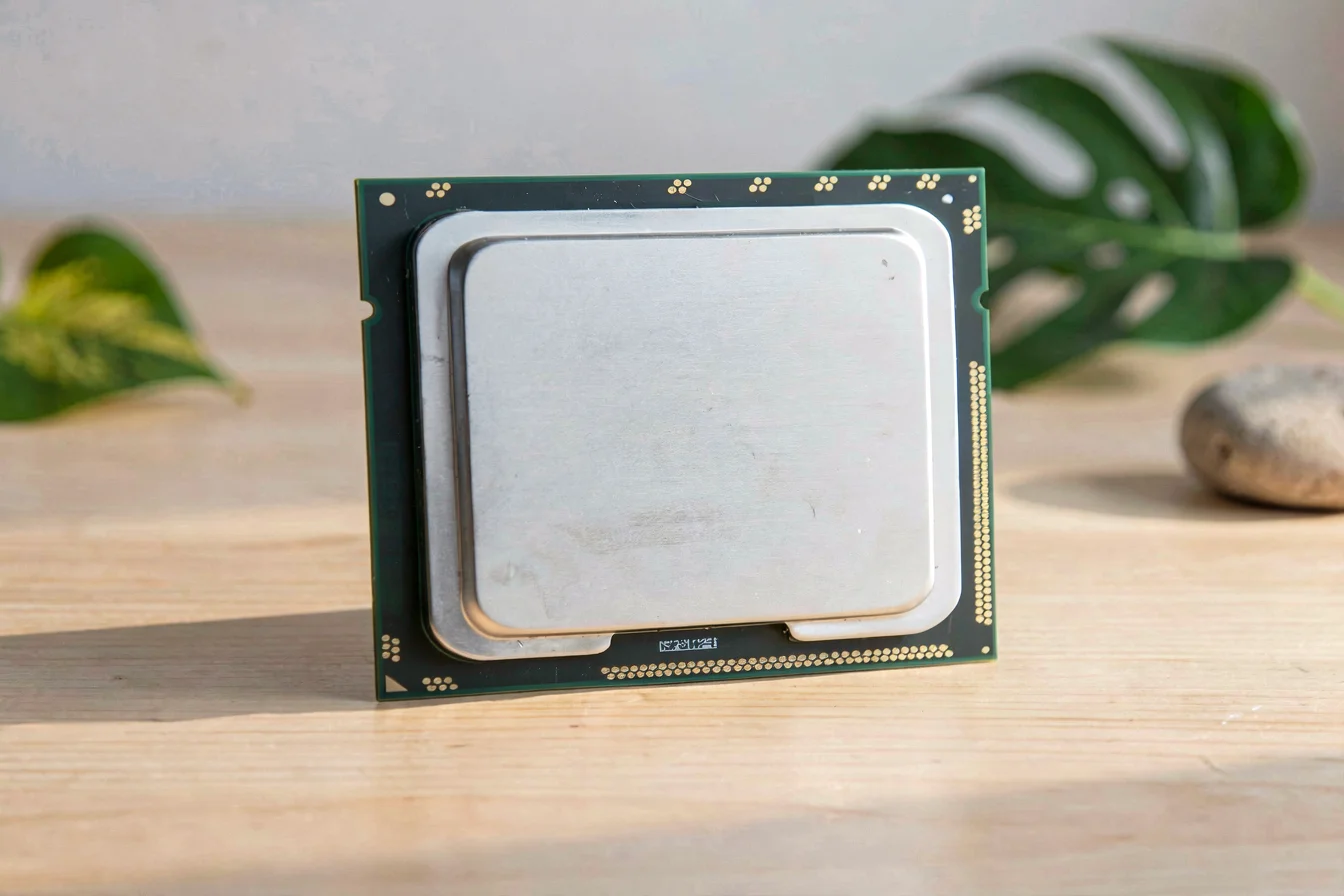
The intel xeon x5690 is a legacy processor with robust multi-threaded performance but suffers from high power consumption and limited modern support, making it suitable only for niche, legacy, or specialized workloads. In contrast, newer intel xeon series (E5, E7, Scalable) offer superior efficiency, scalability, and advanced features for modern server and workstation environments. For most buyers, choosing newer Xeon models ensures future-proofing, better performance, and lower total cost of ownership[3][4][7].
The intel xeon x5690 was launched in 2011 as a high-end server/workstation processor, offering 6 cores, 12 threads, a 3.46 GHz base clock, and 130 W TDP. Its Westmere-EP architecture and support for ECC memory made it ideal for mission-critical systems requiring reliability and multi-threaded performance[3]. However, its high power draw and lack of modern features (e.g., PCIe 4.0, advanced virtualization) limit its viability for current deployments.
In contrast, newer intel xeon series (E5, E7, Scalable) bring more cores (up to 86 in Granite Rapids), lower TDP, and support for DDR4/DDR5, PCIe 4.0/5.0, and advanced instruction sets (AMX, AVX-512). These processors are optimized for cloud, AI, and enterprise workloads, offering greater scalability and energy efficiency[14][15]. The procurement dilemma centers on balancing legacy compatibility with modern performance and feature sets.
Buyers must weigh the X5690’s niche strengths against the broader advantages of newer Xeon series, especially as legacy systems face support limitations and power efficiency requirements rise.
| Feature | Intel Xeon X5690 | Intel Xeon E5/E7/Scalable |
|---|---|---|
| Cores/Threads | 6/12 | 8–86/16–172 |
| Clock Speed | 3.46 GHz (3.73 GHz boost) | 2.0–3.8 GHz (up to 4.5 GHz boost) |
| TDP | 130 W | 80–250 W |
| Memory Support | DDR3 (ECC) | DDR4/DDR5 (ECC) |
| PCIe Version | PCIe 2.0 | PCIe 4.0/5.0 |
| Advanced Features | Hyper-Threading, Virtualization | Hyper-Threading, AVX-512, AMX, CXL |
| Price (2026) | $189.95 USD | $7699–$8300 (Granite Rapids) |
Durability and reliability are critical for server/workstation deployments. The intel xeon x5690 is built on a 32 nm process, offering solid multi-threaded performance but suffers from high TDP and heat output, requiring robust cooling solutions[3]. Its lifespan is limited by end-of-life status, and support for legacy DDR3 and PCIe 2.0 further restricts future upgrades. In contrast, newer intel xeon series (E5, E7, Scalable) leverage advanced manufacturing (10 nm, 7 nm), lower TDP, and improved memory support, enabling longer operational lifespans and easier upgrades.
Application scenarios differ: the X5690 is best suited for legacy virtualization, database workloads, and older CAD environments. Newer Xeons excel in cloud computing, AI/ML, enterprise databases, and high-concurrency web services. The cost outlook must account for initial purchase, maintenance, cooling, and potential upgrades—especially as DDR3 and PCIe 2.0 components become obsolete.
Long-term, newer Xeon series deliver superior cost efficiency, lower power costs, and greater flexibility for evolving workloads, while the X5690’s legacy status and higher power consumption make it less attractive for most buyers.
| Cost Factor | Intel Xeon X5690 | Intel Xeon E5/E7/Scalable |
|---|---|---|
| Initial Price (2026) | $189.95 USD | $7699–$8300 USD |
| Power Consumption (TDP) | 130 W | 80–250 W |
| Cooling Requirements | High (good cooling needed) | Moderate to High (modern cooling) |
| Upgrade Path | Limited (DDR3, PCIe 2.0) | Wide (DDR4/DDR5, PCIe 4.0/5.0) |
| Expected Lifespan | Legacy (limited support) | Modern (multi-year support) |
| Total Cost of Ownership (5 years) | $250–$300 USD (used market) | $8,000–$10,000 USD |
The intel xeon processor category delivers reliable, scalable performance for mission-critical applications, with urgency rising as businesses migrate to cloud-native and AI-driven workloads. The X5690’s niche strength is in legacy environments, while newer Xeon series dominate in modern enterprise, cloud, and AI deployments.
Market trends show growing demand for scalable, energy-efficient processors, with search interest peaking for E5 and Scalable series in late 2025[1]. Urbanization and multi-generational living drive demand for powerful, reliable workstations, while e-commerce and cloud services boost server procurement.
Google Trends data reveals that search interest for “Intel Xeon E5 processors” and “Intel Xeon Scalable processors” surged in August–September 2025, indicating strong market momentum for newer series[1]. Search volatility shows that while the X5690 remains relevant for legacy users, procurement intent is shifting toward modern Xeons.
Search Interest over Time
Procurement strategy should prioritize newer Xeon series for future scalability, aligning with market trends and search momentum.
Reddit and TikTok discussions highlight both practical and emotional pain points for intel xeon x5690 and other Xeon series. Users report the X5690’s high power consumption and heat output, but praise its reliability and multi-threaded performance for legacy CAD and virtualization tasks[8][11]. Sentiment for newer Xeon series is overwhelmingly positive, with users valuing efficiency, scalability, and advanced features for cloud, AI, and enterprise workloads[9][14][15].
Case Study 1: Legacy CAD Workstation
A student in aerospace engineering sought a workstation for SolidWorks and found a used ThinkPad with X5690. While the processor’s ECC memory and reliability were praised, high power consumption and heat output were cited as drawbacks. Reddit users advised the Xeon W series for heavy CAD tasks, noting that AMD Threadripper offers lower prices but limited mobile workstation options[8].
“Xeons are server and workstation CPUs. You're not going to see many laptops with a Xeon CPU as that results in a system that is the opposite of what most people want in a laptop .e.g. is relatively thin and runs cool. They're in what are coined workstation laptops.” [8]
“There's nothing inherently wrong with Xeons. They might have features meant for workstations or servers that don't really provide a benefit to the user depending on their use case. Maybe they trade clock frequency for higher thread count.” [8]
Case Study 2: Cloud Server Build
A user building a hybrid inference server for MoE models chose a newer Xeon Scalable processor, praising its AMX instructions and memory bandwidth for low-latency inference. The discussion emphasized the importance of AMX support for prompt processing and the need for custom kernels to maximize performance[9].
“Some Xeon models have AMX instructions, which is significantly more efficient on a per-core basis for matmul. This drives faster prompt processing times, while the actual token generation is then based on memory bandwidth.” [9]
“EPYC chips appear to have, on average, more cores than Xeon chips. I have heard that core/thread count has an upper bound for accelerating PP. In theory, the core count does not affect t/s, since that is memory bandwidth-bound. It only affects PP, which is not a fair core-for-core comparison between the two assuming that AMX support is present.” [9]
| Dimension | Intel Xeon X5690 | Intel Xeon E5/E7/Scalable |
|---|---|---|
| Overall Satisfaction | Moderate (legacy users) | High (enterprise, cloud, AI) |
| Most Praised Feature | Reliability, ECC memory | Efficiency, scalability, AMX |
| Most Common Complaint | High power consumption, heat | High price, complex upgrades |
| Community Recommendation Rate | Low (legacy only) | High (modern deployments) |
Table data sourced from Reddit and TikTok discussions[8][9][10][11].
Viral content themes include debates over power efficiency, legacy vs. modern procurement, and the impact of AMD Threadripper on workstation markets. Cultural reception is positive for newer Xeons, especially in cloud and AI communities, while legacy Xeon models are viewed as “good enough” but not future-proof[10][14][15].
Buyer sentiment is shifting toward newer Xeon series, with legacy models remaining viable only for specific, low-cost use cases.
To optimize procurement, buyers should first clarify their core requirements:
| Tier | Recommended Product | Key Reason |
|---|---|---|
| Budget-Friendly | Intel Xeon X5690 | Low cost, legacy compatibility, ECC memory |
| Mid-Range | Intel Xeon E5/E7 | Balanced performance, DDR4 support, improved efficiency |
| Premium | Intel Xeon Scalable (Granite Rapids) | High scalability, AMX, AVX-512, DDR5, PCIe 5.0 |
Table data sourced from technical reviews and procurement guides[3][4][14][15].
Optimization tips:
Buyers should prioritize newer Xeon series for modern, scalable deployments, while legacy models remain viable only for specific, low-cost use cases.
Synthesizing insights from market trends, technical benchmarks, and user sentiment, the procurement landscape for intel xeon x5690 and other series is shifting decisively toward newer Xeon models. Google Trends and Reddit data confirm that search and purchase momentum is strongest for E5 and Scalable series, with legacy models like the X5690 facing declining relevance[1][8][11]. Future roadmap for Intel Xeon includes continued innovation in AMX, AVX-512, CXL, and DDR5/DDR6, with Granite Rapids offering up to 86 cores for hyperscale and AI deployments[14][15].
For the next 6–12 months, buyers should prioritize newer Xeon series for future-proofing, scalability, and cost efficiency, while legacy models should be considered only for low-cost, niche applications.
Call-to-action: Share your experience with intel xeon processors in forums and communities to help others make informed decisions. Commercial buyers should leverage Alibaba.com for wholesale sourcing, bundling, and advanced procurement strategies, ensuring compatibility and optimal performance for their deployments.